
It is the Last Supper and the disciples were under a lot of stress. They were worried about the Jewish leaders’ plot to arrest and kill Jesus, and that they might be arrested and killed too. They were under a lot of stress because Jesus had been hinting more and more strongly that He was going to be leaving them, and they didn’t really understand. The Messiah was supposed to establish an eternal, worldwide government, wasn’t He?

They could also tell that Jesus was very troubled by what was about to happen to Him, even if they weren’t exactly sure what that was going to be. Jesus knew about His upcoming betrayal, His arrest, abandonment, mistreatment, rejection and ultimate crucifixion–and His general angst infected them too.
What a burden such foreknowledge must have been for Jesus as a man! How difficult it must have been to focus on accomplishing His final tasks with His disciples.
In the middle of this almost overwhelming tension, Jesus, being sensitive to what His disciples were experiencing, speaks words of comfort.

I like the amplified versions of the Bible that try to help us understand the meanings from the original language. Some other translations of the Greek could be:
“Do not let your hearts be agitated, disturbed, shaken up…”
The Greek word for ‘believe’ is another one that can benefit from being amplified. It can be interpreted in English in three ways. The other two ways would be,
“You trust in God, trust also in Me…”
“You have faith in God, have faith also in Me…”
Now Jesus has their attention. Here is the caring Teacher they have so faithfully followed for so long! Like drowning men clinging to a piece of driftwood, I imagine these men hanging on Jesus’ every word.

Thomas said to Him, “Lord, we don’t know where you are going, how could we possibly know the way?” John 14:5
Jesus deals with this question and gives them a lot of quality teaching, most of which probably didn’t penetrate the disciples’ understanding at the time, but that was okay, because God had a plan for that. Then comes:

Helper” translated here is the first use of the Greek word “Parackletos,” Anglicized as ‘Paraclete.’ We see several things right here:
The Paraclete will come from Father God,
The Paraclete is referred to as ‘another’ one,
The Paraclete will always be with them,
They know who He is because He already lives with them,
The Paraclete is called “The Spirit of Truth,” and
The Paraclete will live INSIDE of them.
There is a lot more that Jesus teaches about the Paraclete / Spirit, but I’ll save following that strand through the next chapters for another time.
Here’s a look at the more common translations for “Parakletos.”

ADVOCATE: ‘Paraclete’ was mainly used in Greek to refer to a legal advocate who accompanied a person to court to argue their case on their behalf. The Roman word for that person is where we get the English word ‘advocate’ from.
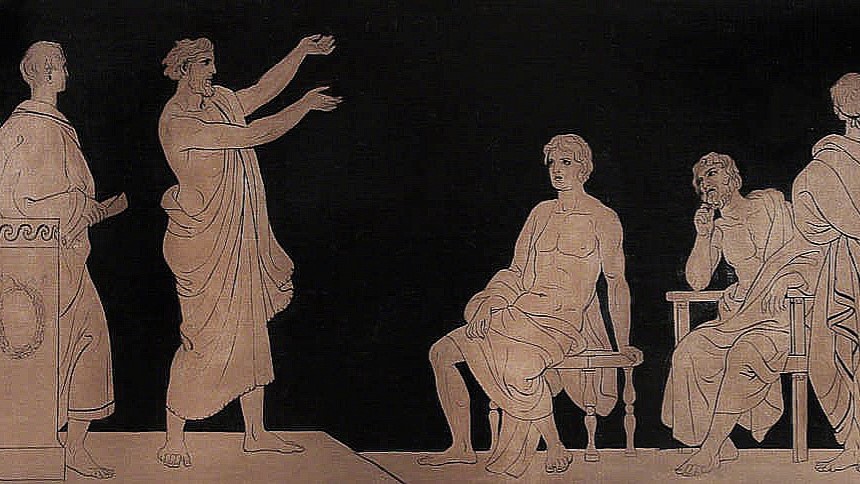
The actual Greek is a combination of ‘para-‘, alongside, like PARAlell lines run alongside each other and ‘kaleo’ which means to call. So technically, it means someone who is called, asked or invited to come stand alongside you. An Advocate certainly fits that description and matches the context of John 14, and is also used that way in John’s first epistle to refer to one of Jesus’ roles in heaven, but there is much, much more.

COMFORTER: The translators of the Old Testament Hebrew into the Greek Septuigent used parakaleo (the verb form) in Job to mean ‘to comfort, ‘ as when his friends came to be with him and console Job in his misery. Hence some translate Paraclete in John as ‘Comforter.’


Parakletos is also often translated “Counselor,’ which can be used as a synonym for an attorney–just another variation of a legal advocate, but can also be more general like a “life coach,” someone who advises you in every aspect of life and personalizes the advice for you.
Following the logic chain back, God’s Spirit is “God WITHIN us.”
Jesus was the ‘other’ Paraclete, so He had to have been “God WITH them,” in other words, the Hebrew ‘Immanuel.’ It was not a name as we think of them. It was a description of who He was…and I’m okay with that answer.

Waiting for decades for an answer was a principle of faith that I learned a long time ago. That is, when I see things happen in the world that I don’t understand, especially to me and to those I love, when I read something in the Bible that doesn’t make sense to me, instead of letting my questions stew in my mind causing doubt and disbelief to creep in and shake up my faith, I go back to my decision to trust God. I put my questions on the ‘back burner,’ and then move on.
Sometimes God will answer those questions to my satisfaction later. There are still many He hasn’t. That is why Jesus spoke those words of faith, “Trust Me…” to His shaken disciples, and that is when those words mean the most to me.

I have to be honest, I’ve been in and out of the faith, up and down in my fervor, and frankly, just all over the place in my life. But every time when I reach a point of realization that, “THIS is NOT how I want to live my life!”, I’ve felt the call of God to return to Him and I felt like He welcomed me with open arms and a heart full of love.

I think I know how the core disciples felt when Jesus asked them, “Will you leave Me too?” Peter answered for them all:

Only God/Jesus Christ has given me an abundant life now–a life that is fullfilling and worth living–and a promised eternal life of joy with Him after this one.
Where are you right now as a Christian? More on the trusting side or more on the troubled side? You CAN choose to trust…

 Bill's Bible Blog
Leave a comment