Luke 16 contains a parable about a dishonest manager (steward) who cleverly secures his future after being fired. Jesus’ moral is “The children of this world are wiser in their generation than the children of light,” and suggests we can learn to be better ‘children of light’ from them.

Now Jesus said to the disciples, “There was a rich man who had a manager, and this manager was reported to him as squandering his possessions. Therefore the rich man summoned the manager and said to him, ‘What is this I hear about you? Give an accounting of your management, for if it is true, you can no longer be my manager.’

While the manager was gathering the accounts, he said to himself, ‘What am I to do since my master will take the management away from me? I am not strong enough to dig; I am ashamed to beg… I know what I can do so that when I am removed from managing, people will welcome me into their homes…’
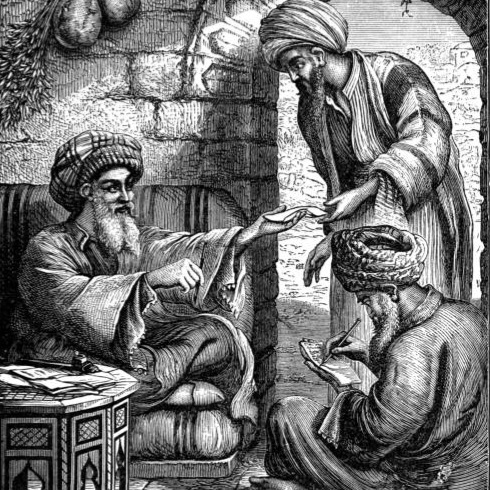
The manager then summoned each one of his master’s debtors, and he said to the first, ‘How much do you owe my master?’ And he said, ‘A hundred jugs of oil.’ And the manager said to him, ‘Take your bill, sit and write fifty.’ Then the manager said to another debtor, ‘How much do you owe?’ And he said, ‘A hundred bushels of wheat.’ The manager said to him, ‘Take your bill, and write eighty.’
And when his master found out, he actually complimented the unrighteous manager because he had acted shrewdly. For the sons of this age are more shrewd in relation to their own kind than the sons of light.

So, I was recently reading this article entitled, ‘Why Threat Actors Win.’ I was struck by the qualities the article described that lead to Threat Actors’ success and thought, maybe we could learn a little something from them that we could use in our approach to carrying the Gospel of Jesus Christ throughout the world? Those characteristics in general were described as being, “Threat Actors approach their objectives with relentless focus, strategic adaptability, patience, and an unwavering commitment to success.” Let’s look at each of these as described in the article in more detail and I’ll contrast them with how the Bible says we should be as Christians.

I. Threat Actors are committed to success. They exhibit a steadfast commitment to engage in their deceptive behaviors and to carry out their bad acts.
Compare that with this command to Christians:
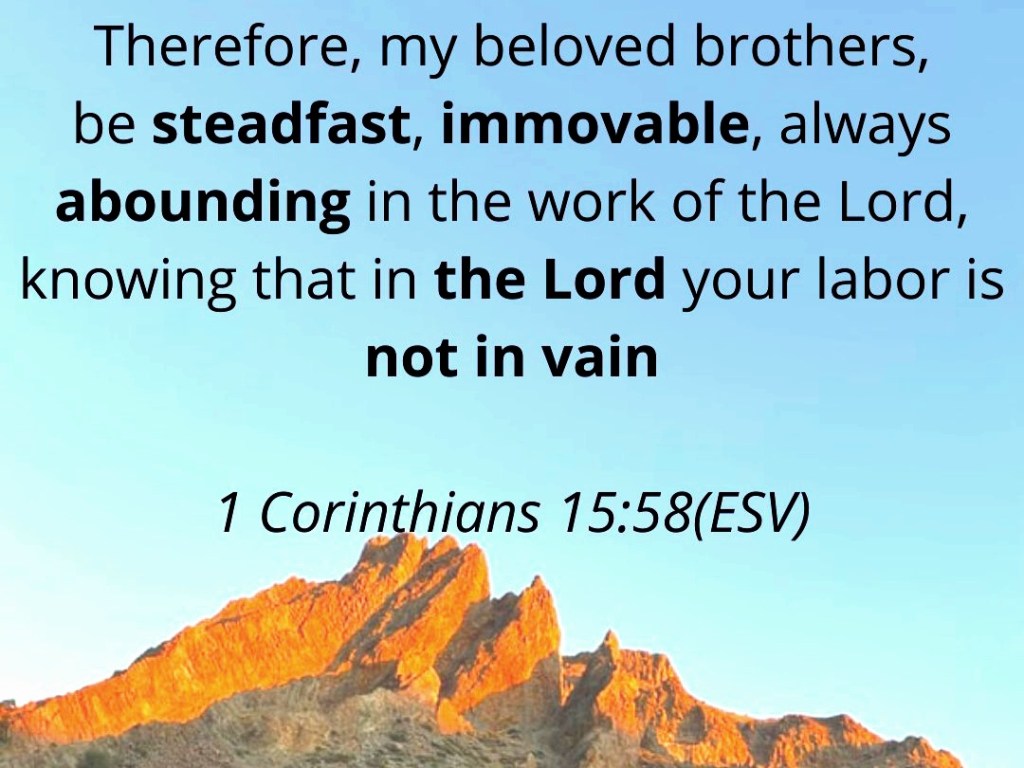
The steadfast commitment is not different, but where it is applied is worlds apart, bad acts versus the good works of our Lord Jesus Christ.
A. Intrinsic Motivation: Threat Actors are motivated not only by the extrinsic reward of monetary gain, but from the intrinsic reward of outsmarting others.

Our intrinsic reward as Christians is supposed to be the experience of being in a personal relationship with Jesus Christ, more than anything else we might value in this world.
B. Psychological Traits: Psychologists Paulhus and Williams (2002) identified three traits common to Threat Actors, which they referred to as “The Dark Triad.”
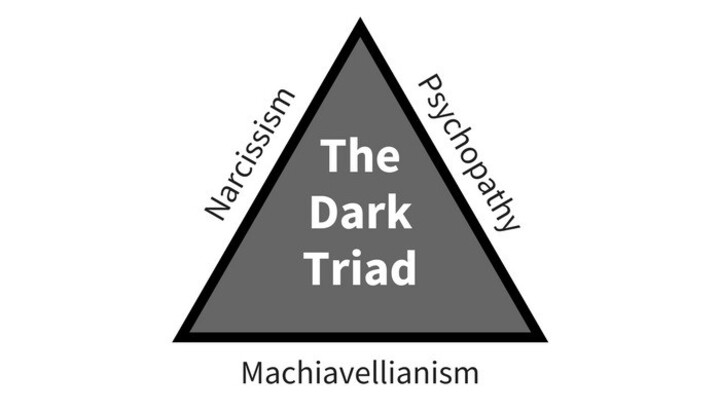
1) Narcissism: That is an overinflated view of one’s importance, and an almost exclusive self love and admiration, which gives them a sense of being superior to everyone else, for whom they feel no sense of care or of their being important in any other way, except to fulfill the desires of the Threat Actor.

In contrast, we as Christians are supposed to be lovers of God first (the Greatest Commandment), put others second (the Second Greatest Commandment) and ourselves third. In 2 Timothy 3:1-4, Paul contrasts these as being opposite qualities–people being lovers of themselves rather than loving God.

2) Machiavellianism: Characteristics based on the worst of the ruling advice in Machiavelli’s ‘The Prince.’ Such as an obsession with manipulating people to meet their own ends and they constantly refine their skills to be able to do so. Threat Actors get great intrinsic reward from the exhilaration of outsmarting others.
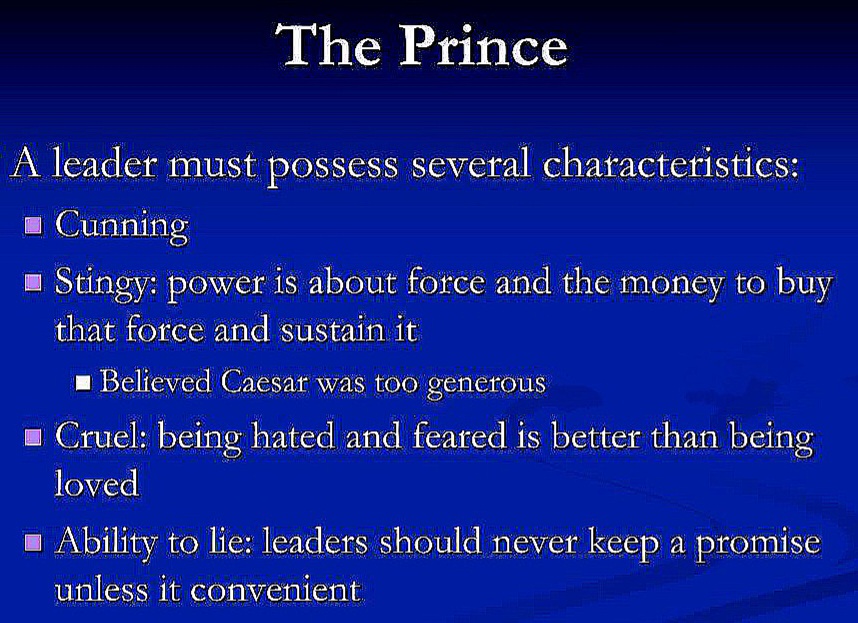
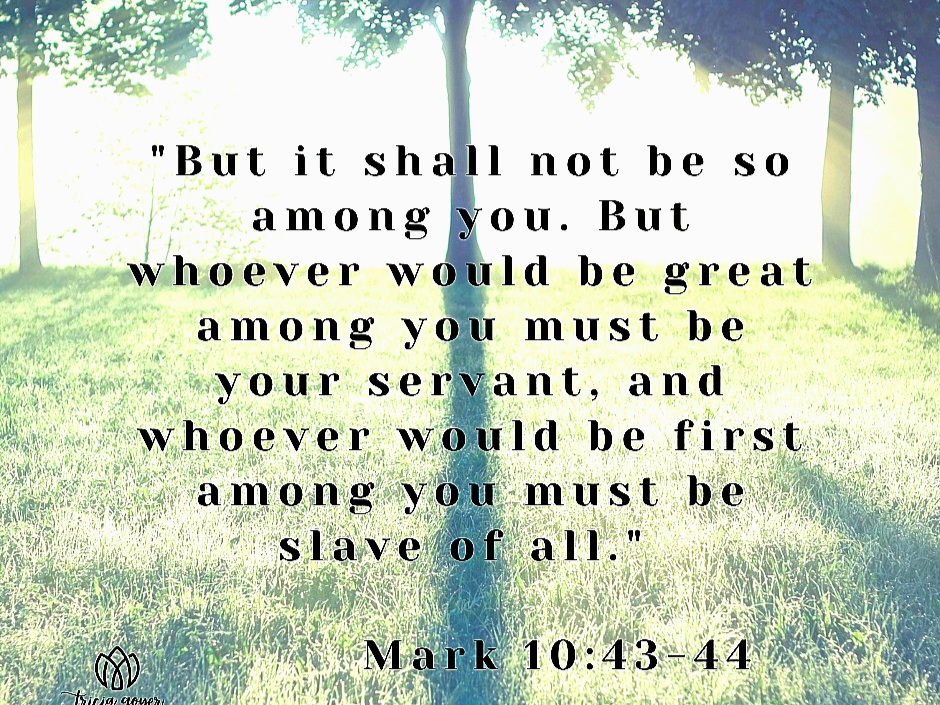
In contrast we as Christians are supposed to serve God and one another. Jesus taught His disciples that Christian leaders should not lead in the same way as worldly leaders:
3) Psychopathy: Supression of feelings of sympathy or remorse allows Threat Actors to exploit others without reservations of conscience.
Sometimes it’s hard to tell the difference between a psychopath and a sociopath:

The “-path” comes from ‘pathology,’ meaning these are psychologically ‘diseased’ or socially ‘diseased’ people. Honestly, despite how far off center these conditions are from how God intends us to be, we all have some of these tendencies, because they are just the natural, but extreme, expression of our fallen, sinful state.
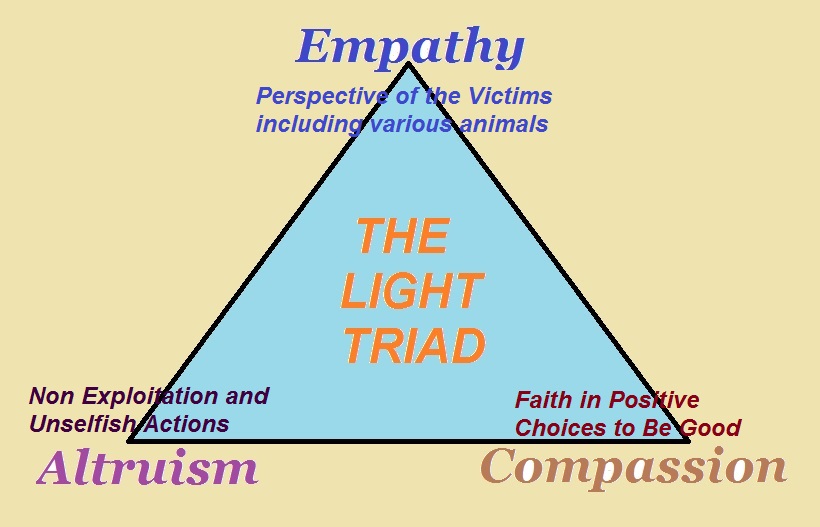
Just as psychologists have developed the concept of “The Dark Triad,” they have developed what would be the opposite qualities called “The Light Triad,” which essentially are the positive qualities that the Bible says we should have in our lives, but psychologists do it without the Christian’s God-centered emphasis.
1. Instead of Machiavellian manipulation, we should be Altruistic = unselfish regard for the welfare of or devotion to improving the life of others. (from Merriam-Webster).
2. Instead of Psychopathic, we’re to be Empathic = sensitive to, awareness of, and understanding about the feelings, thoughts, and experiences of others. (from Merriam-Webster).
3. Instead of Narcissistic, we’re to be Compassionate = a sympathetic awareness of others’ distress, that leads to a desire and actions to alleviate it. (from Merriam-Webster).

As Christians, if we wish to grow away from the ‘dark’ qualities and toward the ‘light’ qualities, we need to double down on our relationship with God. As we grow close to Him and He grows within us, we truly earn Jesus’ appellation in this parable as being ‘children of light.’
II. Threat Actors are adaptable and innovative.

A. ADAPTABLE: Threat Actors quickly learn from failures, pivot and employ other “best practices” to keep them ahead of their targets. Their ability to quickly pivot and change their tactics keeps them ahead of the defenses of their target.

B. INNOVATIVE; Threat Actors are continually learning and evolving their tactics. They quickly adjust to changes in technology, prevailing opinion, and other changing conditions to stay one step ahead of their targets’ perception of threat.
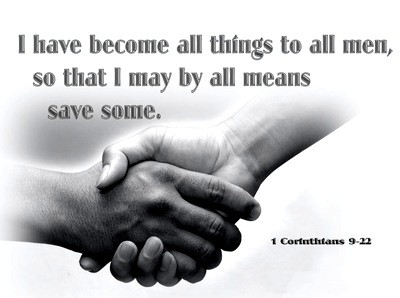
Paul talked about his adaptability in sharing the gospel with different kinds of people in 1 Corinthians 9: 19-23.
“Though I am free and belong to no one, I have made myself a slave to everyone, to win as many as possible. To the Jews I became like a Jew, to win the Jews. To those under the Law I became like one under the Law (although I myself am not under the Law), so as to win those under the Law. To those not having the Law, I became like one not having the Law (though I am not free from God’s Law, but am under Christ’s Law), so as to win those not having the Law. To the weak I became weak, to win the weak. I have become all things to all people so that by all possible means I might save some. I do all this for the sake of the gospel, that I may share in its blessings.”
III. Consistency in Efforts.

A. Persistent Targeting. Threat Actors are not discouraged even when they are initially unsuccessful or it appears their efforts have been thwarted. They will continue their efforts until they find a way to carry out their intended action. Their commitment to be successful often outlasts the target’s commitment to defense.
We are also commanded to be persistent, but instead of trying to harm people, we should be working with God to bring them to salvation, which is for their good not only for eternity, but for their life in this world as well. (1 Timothy 4:8)
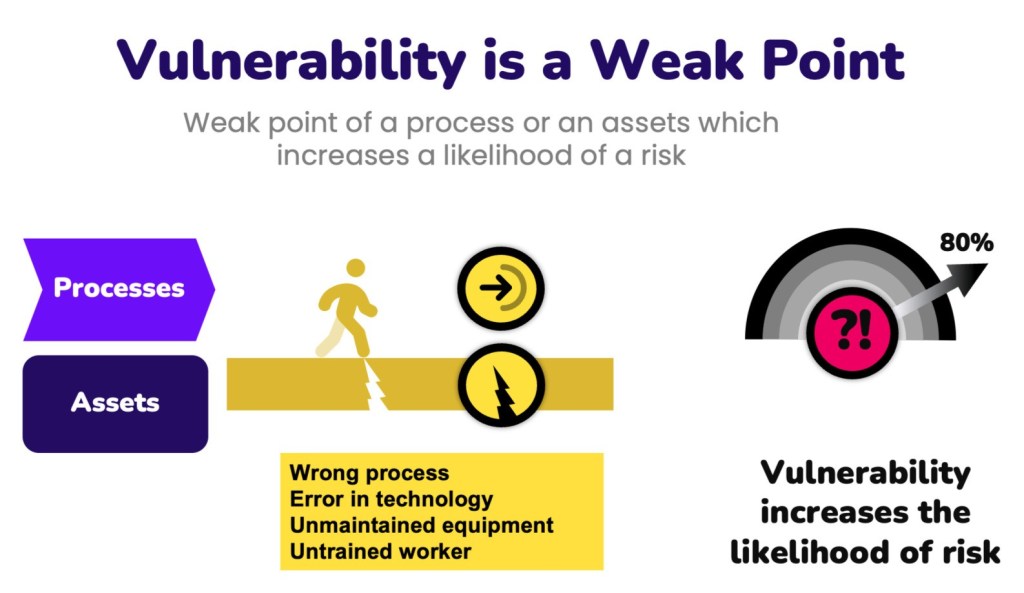
B. Exploiting Vulnerabilities. Threat Actors systematically probe for weaknesses, whether it is in systems, processes or human behavior. They are willing to invest their patience to identify and exploit vulnerabilities.

Our vulnerabilities are an opportunity for God’s power to shine through us, but we have to take them to Him in faith and submission, through prayer.

The vulnerabilities of our brothers and sisters in the faith, who might not be at the point of being able to take them to God by themselves, are an opportunity for us to come alongside them and comfort them with the comfort we have received (2 Corinthians 1:4), to pray with them, and to guide them through the process of trusting God, even during their bad times.
The vulnerable times in the non-Christians we know may call for us to do something more practical, as in the compassion ministries (Matthew 25:31-46), but also to pray for them, especially that the situation will help them realize their need to be in relationship with God and be ready to share the gospel with them when it seems God is using the circumstances to lead them to Him.

C. Learning From Failure. Threat Actors view failure as a learning opportunity. They carefully analyze unsuccessful attempts in order to refine their techniques, thus increasing their success rate over time.

I’m sure we can all learn a lesson about not letting failure keep us down, but instead, we should learn from it and move on. I’ve found that as my faith in God has grown, i don’t fear failure as much as I used to. I think that fear of failure is a holdover from childhood or adolescence when we needed a lot of positive feedback to help us develop a positive self image. If we don’t receive enough praise from our parents or others, then we tend to go for the ‘big score.’ We try to accomplish something so big, so great, that we are certain it will get us recognized as the great person we want to be thought of as.
When we fail or seem to fail by not getting the great admiration we are seeking, then it paralyzes us and can lead us to obsess about how others think about us, causing us to live on an emotional roller coaster. Obviously not a healthy situation, and it can lead to other emotional extremes.
After coming to a right relationship with God through Jesus Christ and being assured of His love for me, I am more concerned now about God’s greatness than my greatness. That short circuits that whole emotional unbalance thing for me.
IV. APPLICATION / EVALUATION
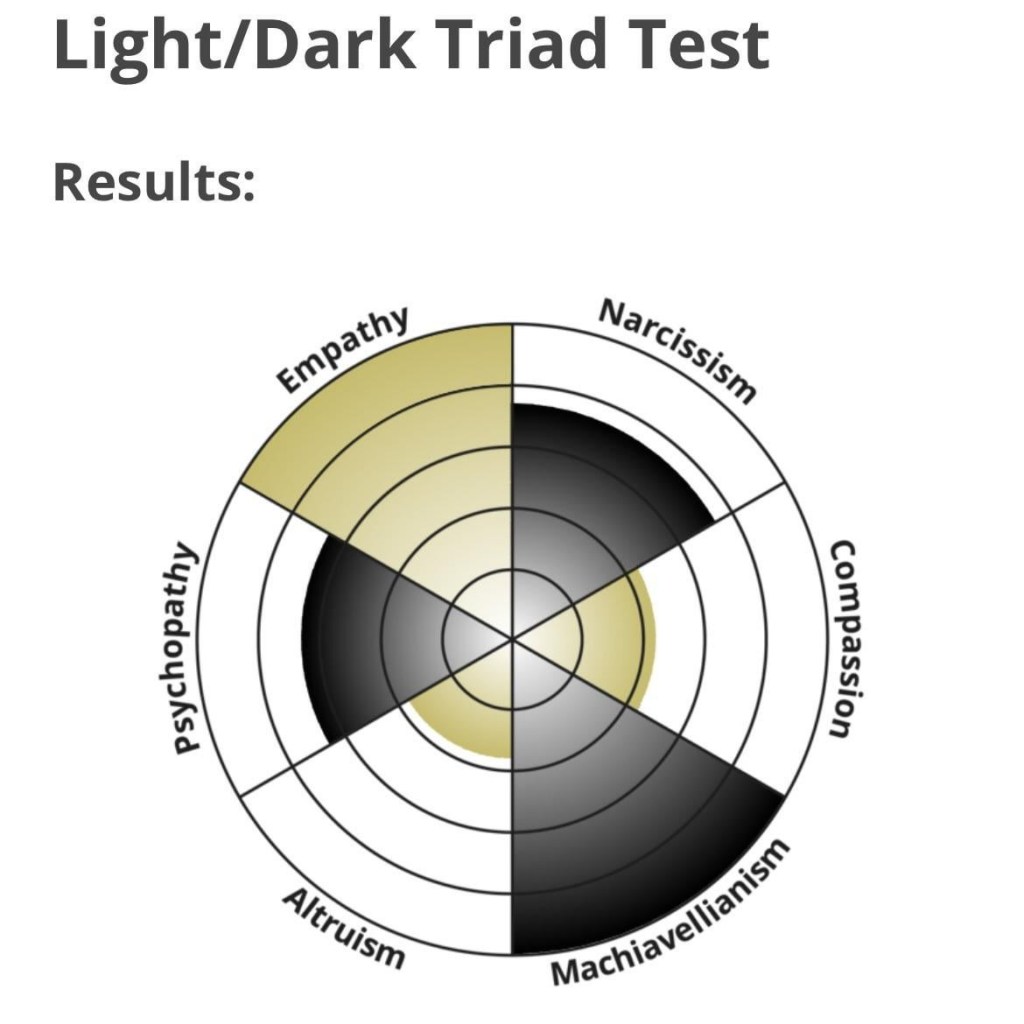
To be honest, everyone is somewhere on a continuum between each pair of dark and light qualities. That is because the dark qualities simply represent the extreme effects of sin. Hopefully we are moving away from this sinful self toward God’s light at the other end of the continuum as ‘children of light.’

We do that by focusing on the character of God as revealed by Jesus Christ, and strive to grow toward Him, which will automatically move us away from the bad end and toward the good end.
Evaluate where you think you are for each of the ten positive qualities as related to sharing the gospel using this 5-point scale, then total at the end to see where you are overall in your life right now.
1. Rarely (1-2 per year)
2. Occasionally (1-2 per quarter)
3. Often (1-2 per month)
4. Regularly (1-2 per week)
5. All the time (1-2 most days)
1. I am committed to the Great Commission and I share the gospel with the unsaved I know.
2. Intrinsic motivation: The love of Jesus Christ moves me to share the gospel with people around me and that I meet.
3. I love God more than I love myself or anything else in this world, and put him first when opportunities arise to share the gospel with others.
4. I seek to serve others rather than try to get something from them.
5. I am persistent in sharing the gospel with someone, even when they say they’re not interested.
6. When I am unsuccessful in sharing the gospel with someone, I pivot and try a different approach.
7. I learn new ways to relate to people from different backgrounds so that I can more effectively share the gospel with them.
8.A. God has pointed out at least one unsaved person in my life that I pray about and am trying to lead them to Jesus Christ.
9. When people that I know are vulnerable due to loss or tragedy, I step in and offer them God’s comfort and pray with them, and also pray for their consolation.
10. I use my failures in sharing the gospel as motivation to seek and learn new ways to share it better the next time.

How did you do? I’ll be honest, I rated only an 18. This is what I see the results as meaning:
10 to 19 = You are minimally involved in sharing the gospel. You are mostly a spectator. (That’s me!)
20 to 29 = You are a beginning laborer in God’s harvest, dedicated, active in sharing the gospel, but still learning how to do it more successfully. (That was me in the Navigators.)
30 to 39 = You are an experienced laborer in God’s harvest. You’ve led others to Christ and you mentor other young Christians in learning how to do so.
40 to 49 = You are a Master Laborer in God’s harvest, and should be leading an evangelism ministry, as well as teaching others how to share the gospel successfully.
Would you like to improve in sharing the gospel as a regular part of your life? Prayerfully read back over the 10 evaluation statements and ask God to point out an area that He’s ready to help you improve in. Then commit yourself to step out in faith in that area, trusting that God will help you in your obedience.

For me I think it is #3. I need to grow more in my love for God and Jesus Christ, so that His love and the gospel will just gush out from within me as a ‘super’-natural part of my life.
Check out this song about the gospel and what it means to people in different situations. Maybe it will help motivate you to share it more. I find it does that for me.
The Gospel by Ryan Stevenson
https://share.google/nDKjn4nKsS0AQA41O

 Bill's Bible Blog
Leave a comment