
This blog is dedicated to my dear Christian brother Marcus, who has finally found his “Sarah,” and her name means “Blessedly Beautiful.” On their journey together with God, may they find joy, even in difficulties; may they always support each other, even when not exactly in the right; and may they give each other the courage to follow where God leads them, especially when the way seems frightening. Amen.
Genesis chapter 20 – The Story
After witnessing the destruction of Sodom and Gomorrah, Abraham journeyed toward the fertile territory of the Negeb and lived between Kadesh and Shur. One day he decided to visit the city state of Gerar, ruled by King Abimelech, taking his wife, Sarah, with him.
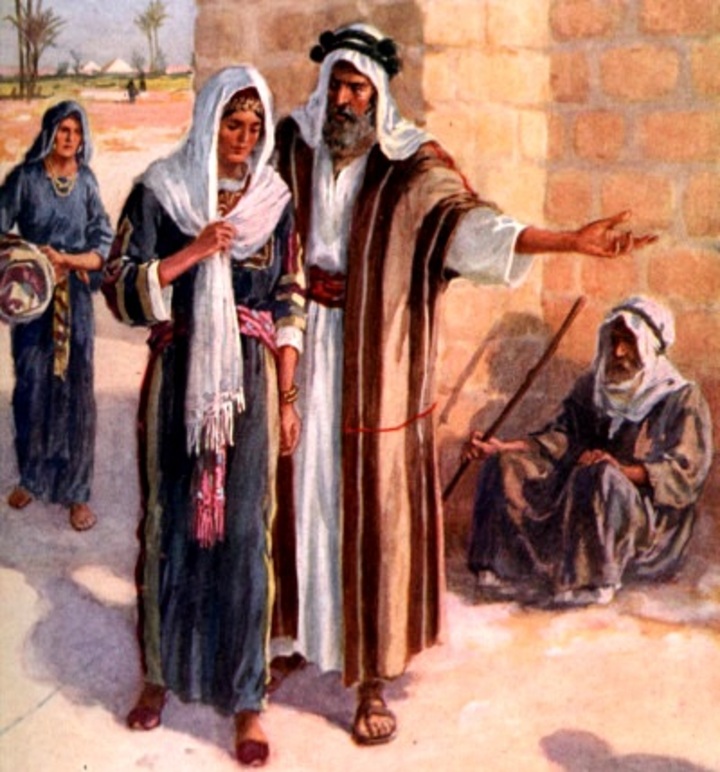
When they entered the city, Abraham said of Sarah his wife, “She is my sister.” When Abimelech, king of Gerar, heard about this new beautiful woman in his city, he sent some soldiers and took Sarah for his own harem.

But God came to Abimelech in a dream by night and said to him, “Behold, you are as good as dead because of the woman who you have taken as one of your wives, because she is another man’s wife.”
Now Abimelech had not yet gone near her, so he said, “Lord, will you kill a righteous person? Did he himself not say to me, ‘She is my sister’? And did she herself not say, ‘He is my brother.’ In the integrity of my heart and the innocence of my hands I have done this.”
Then God answered him in the dream, “Yes, I know that you have done this in the integrity of your heart, and it was I who kept you from sinning against Me. Therefore, I did not let you touch her.
Now then, return the man’s wife to him, for he is a prophet, so that he will pray for you, and you shall live. But if you do not return her, know that you shall surely die, you and all who are yours, even to your kingdom.”
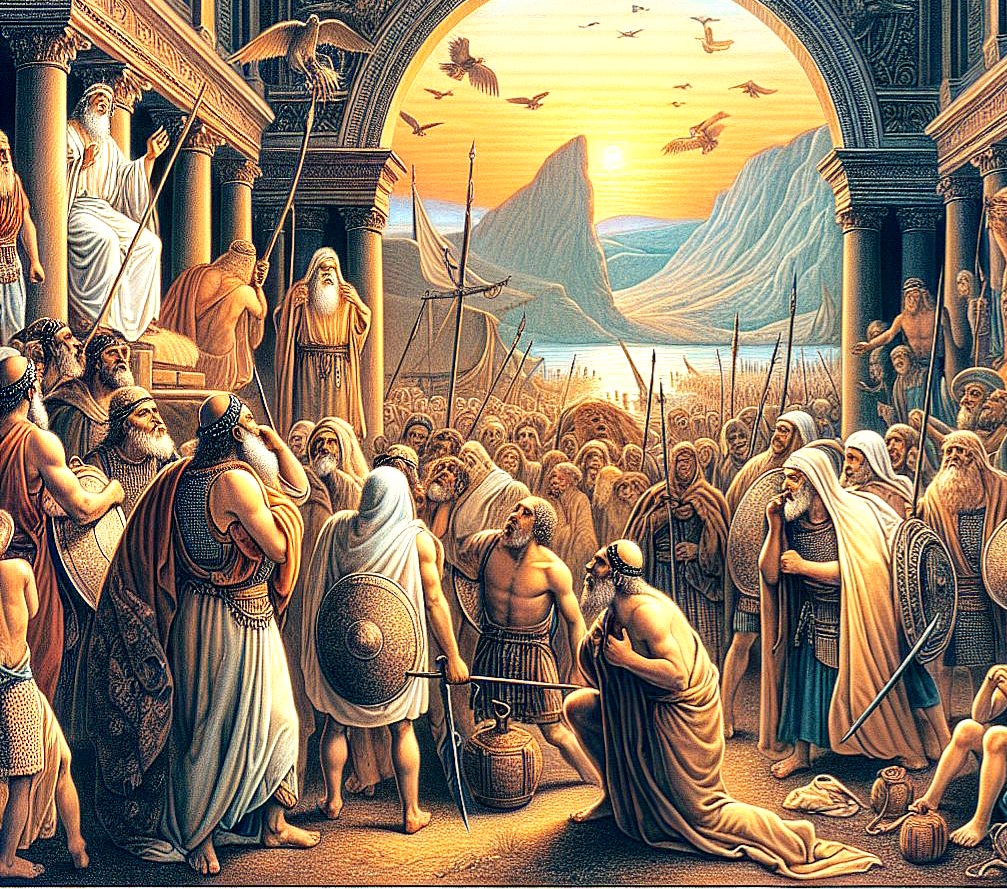
So Abimelech rose early in the morning and called all his people and his manservants together, and told them all these things. And the men were very much afraid.
Then Abimelech called Abraham to join them and said to him, “What have you done to us? And how have I sinned against you, that you have brought on me and my kingdom such a great curse? You have done things to me that should not to be done to another man.” And further, Abimelech said to Abraham, “What did you see in us that caused you to do this thing?”

Abraham said, “I did it because I thought, ‘There is no fear of God at all in this place, and they will kill me because of my beautiful wife.’ Besides, she is indeed my sister, the daughter of my father, though not the daughter of my mother, and she became my wife.
And when God caused me to wander from my father’s house, I said to her, ‘This is the favor you must do for me: at every place to which we come, say of me, “He is my brother.”’”
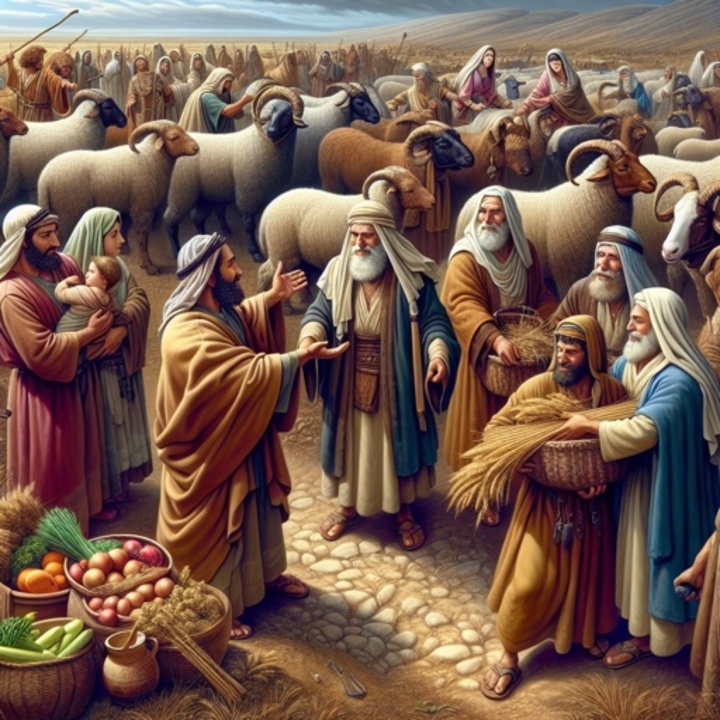
Then Abimelech took sheep and oxen, and male and female servants to tend them, and gave them to Abraham as recompense, and returned Sarah his wife to him. And Abimelech said, “Behold, my entire land is before you; live in it wherever you please.” (Just not here.)
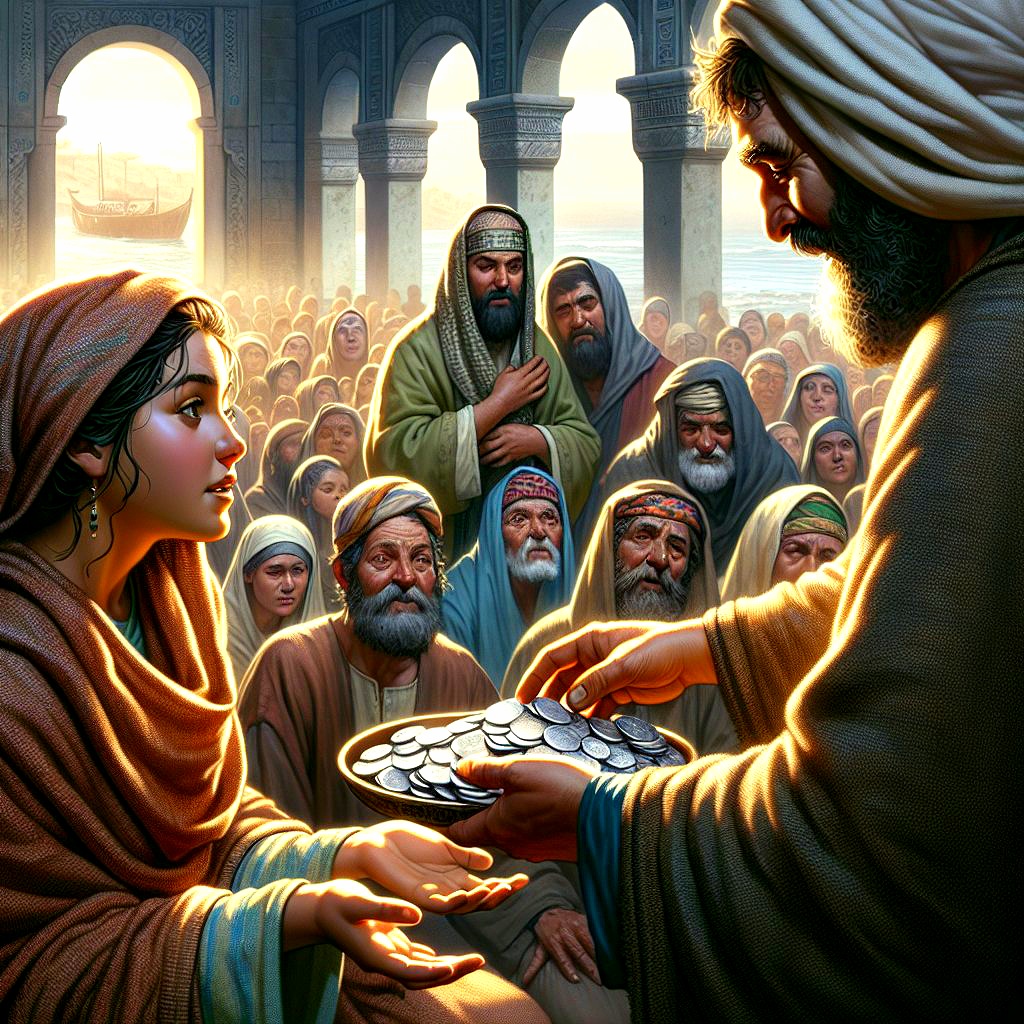
To Sarah he said, “See this? I have given you and your brother a thousand pieces of silver. It is a sign of your innocence in the eyes of all who are with you, and a sign before everyone here that you are vindicated.”

Then Abraham prayed to God, and God healed Abimelech, and also healed his wives and servants so that they bore children again. For the Lord had closed all the wombs of the women in the household of Abimelech, because he had taken Sarah, Abraham’s wife, to be his own.
SUMMARY:
As mentioned in the last blog, Abraham and Sarah (renamed since Genesis chapter 12) faced 10 tests of their faith in God. This chapter details test number 8 – The abduction of Sarah by a Philistine king named Abimelech. (From Inspired Scripture, (open source) see more at inspiredscripture.com)
Although Abraham’s faith had grown, he failed this test. Even worse, this was a repeat of his prior failure when Pharaoh Senusret III abducted Sarah. Abraham showed that he had not learned from his prior mistake. (Sometimes it takes more than once to get it for all of us, right?)
In my introduction to this Genesis series, I mentioned that I had noticed a few things in our Bible study. Let’s look at those general observations as they apply to Genesis chapter 20.

1. We shouldn’t be surprised that sinful people act sinfully. Abraham and Sarah were not any kind of special sanctified saints who lived completely holy and blameless lives. They were sinners, like the rest of us, that God had chosen as the Patriarch and Matriarch of His promised nation that would eventually produce His Annointed One, who would bring God’s blessing to all the nations.So, why did Abraham decide to go to the big city? Was he tired of sitting around and watching his sheep, goats, donkeys, camels and cattle eat grass? Was he tired of settling the squabbles between his servants who were tired of sitting around watching Abraham’s sheep, goats donkeys, camels, etc…?
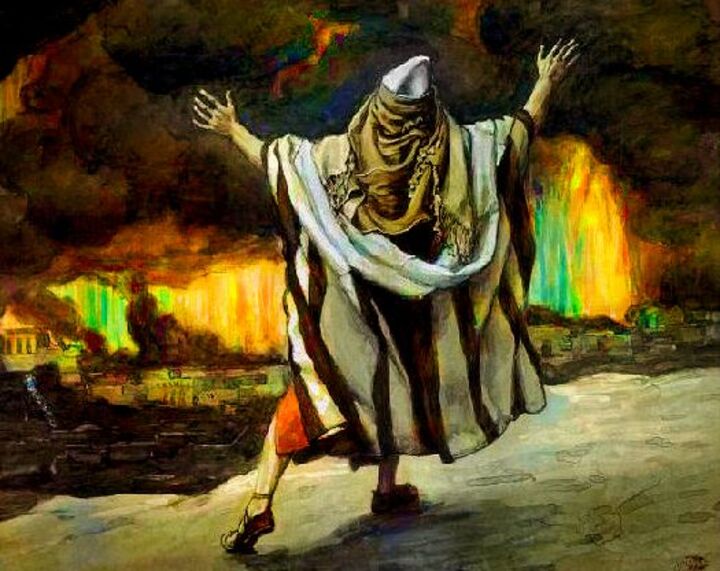
Also, Abraham had just been through a very stressful and traumatic event trying to save the city where his nephew Lot lived from God’s judgment and destruction, but instead, having to settle for just saving Lot’s family. Maybe Abraham needed something to replace the horror in his mind of watching God rain down destruction on the two sinful cities. I suspect this was a side of God, the judgmental and vengeful side, that Abraham had not seen in action before.
Maybe the memory of the trip to Pharaoh’s city–the hustle and bustle, the excitement of new sights, sounds and smells, the myriad riches, the unexpected wonders around the next corner–had stayed with Abraham and he craved some of that excitement amid the boredom of life out on the sameness of the open plains? If so, there was some serious selective memory going on!
For whatever reason, like his prior trip to Egypt that was unsanctioned by God, Abraham made an unsanctioned trip to the nearby city in southern Canaan, Gerar, capital of the local king. In both places, the theft of wives was common. In both places, Abraham had Sarah lie to protect himself. Abraham had apparently failed to learn his lesson in Egypt. Are we any different?

2. The second thing I realized is, Genesis isn’t just about the characters, it is really ‘His-story.’ The real story in Genesis is about God shepherding those He chose from one generation to the next as He furthered His plan for salvation of the world along. Therefore to really understand what is going on, look for when God ‘shows up.’

The first thing that stuck out to me in Genesis chapters 12 and 20 was how and when God acted. Here in Chapter 20, I kept wondering, where was God? For example:
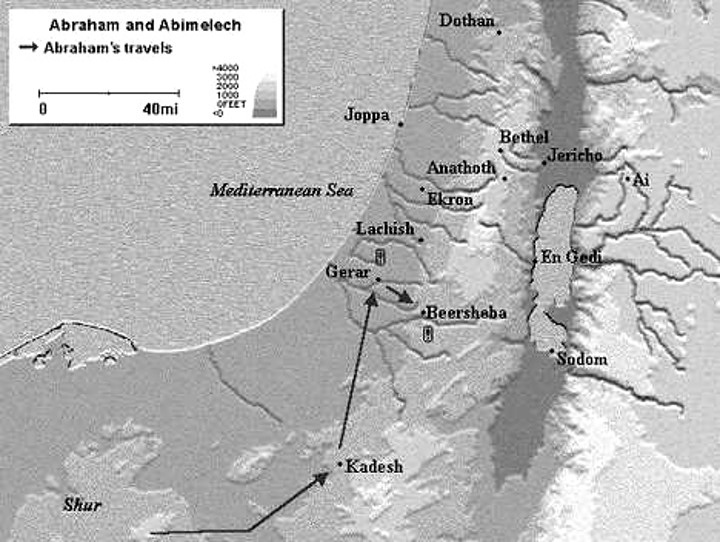
A. Abraham decided to take Sarah and go to what he knew was a “godless city’ where his life would be in danger because of his beautiful wife, and she would be in danger of abduction. No excuse of a famine this time. GOD DID/SAID NOTHING.

B. Abraham and Sarah lied about their relationship when they reached the city. GOD DID/SAID NOTHING.
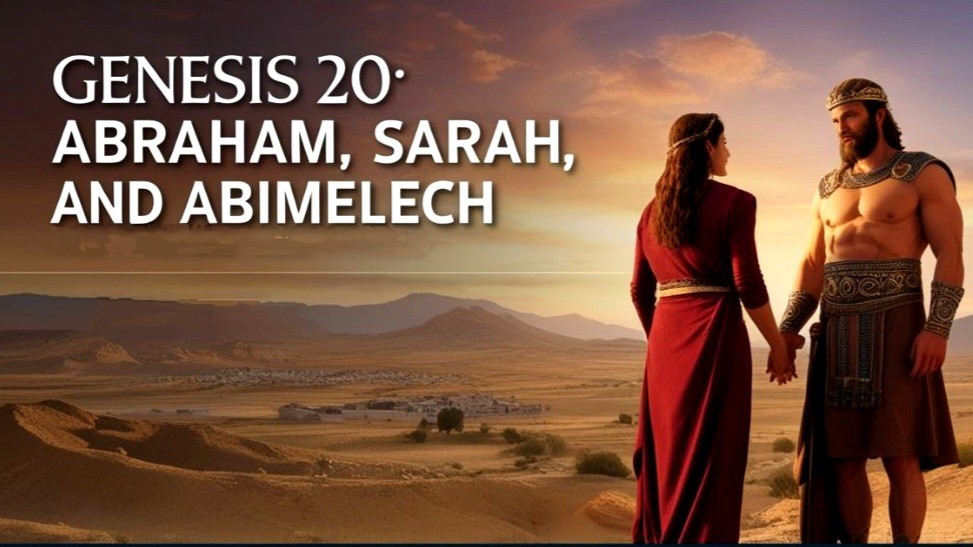
C. The king took Sarah from Abraham to be his own wife. GOD DID/SAID NOTHING.
God (finally) showed up im the night in a dream to the king. I’m sure it gets your attention when God speaks to you in a dream, but when God leads off with, “YOU ARE A DEAD MAN!”, it really gets your attention. So, let’s look at the dialogue between God and the king again.

GOD: Behold, you are a dead man because of the woman whom you have taken, for she is the man’s wife.KING: (Now Abimelech had not yet gone near her, so he replied ) “Lord, will you kill an innocent person? Did the man not himself say to me, ‘She is my sister’? And did she not herself say, ‘He is my brother.’ In the integrity of my heart and the innocence of my hands I have done this.GOD: Yes, I know that you have done this in the integrity of your heart, and it was I who kept you from sinning against Me; therefore I did not let you touch her. Now then, restore the man’s wife to him, for he is a prophet, so that he will pray for you, and you shall live. But if you do not return her, know that you shall surely die, you and all who are yours.POSTSCRIPT: After the king returned Sarah, his wife, to Abraham, then Abraham prayed to God, and God healed Abimelech, and also healed his wives and female servants so that they bore children again. For the Lord had closed all the wombs of the house of Abimelech because of Sarah, Abraham’s wife.WOW! Are you as blown away by the things God said and did as I am? When the king took Sarah to be his latest wife, it didn’t look like God was doing anything about it, but we now can see God did two things behind the scenes:First, God supernaturally restrained the king from becoming intimate with Sarah.Second, God also supernaturally prevented the King’s wives and female servants from conceiving any more children.

First let me say that the punishment very well fit the crime. God’s sense of justice is appropriate, maybe even a little ironic. The king had grabbed up another beautiful woman for his pleasure, but also for the purpose of having quality children. You can get a hint as to how important having children was to them at that time in history by their reaction to their women losing the ability to conceive. So, first, the king was prevented by God from having that pleasure. King 0, God 1.
Next, God prevented every woman there from being able to conceive. King 0, God 2.

So, not only was the King’s immediate purpose thwarted, but his long-term purpose was thwarted, and because everyone under his authority was included in the judgment, he was penalized maybe a thousand times. Moral of the story? You you don’t mess with those who God has chosen for Himself, because then, you’ll find out you’re messing with God, and He wins, every time. King -1,000, God wins!
It is also suggestive here that the events stretched over a longer period than the brief narrative seems to indicate if they had realized that none of the women were conceiving, then after Abraham prayed for their healing, that the women had begun conceiving again.
But the whole thing about supernaturally restraining the king from intimate relations with Sarah says a lot more than that.

In our modern ‘enlightened’ society, people say that premarital and even extramarital sexual relationships don’t matter–they’re okay, they don’t mean a thing. However, it is very clear that the sanctity of Sarah’s womb was important to God.
‘Why was it important to Him that Sarah not have sexual relations with anyone but her husband,’ you might ask?
I think partly because that is the way God made things to be between a man and a woman who join in ‘holy matrimony.’ Not only does God sanctify the couple as man and wife, but everything unique to a marriage; i.e., having sexual relations and producing children, becomes holy to Him too.
But I think there was also the element that God had chosen the couple for His Divine purpose. That apparently meant protecting them not only from dangers outside of them, but it also meant protecting them from the dangers of their own sinful self within them!
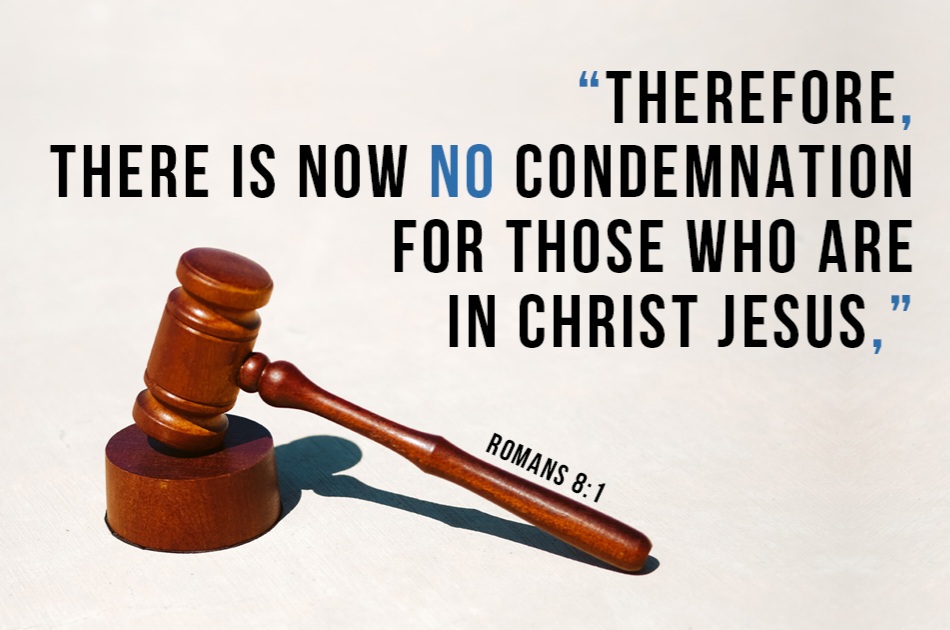
3. My third takeaway from Genesis last Spring was that we should not spend a lot of time condemning the characters if God doesn’t condemn them. Note in the exchange between God and Abimelich that God never mentions a word of condemnation for Abraham or Sarah. In fact, God actually honored Abraham by calling him His prophet and then by placing the means of healing God’s curse in his hands. I’m sure this elevated Abraham very highly in the King’s estimation.
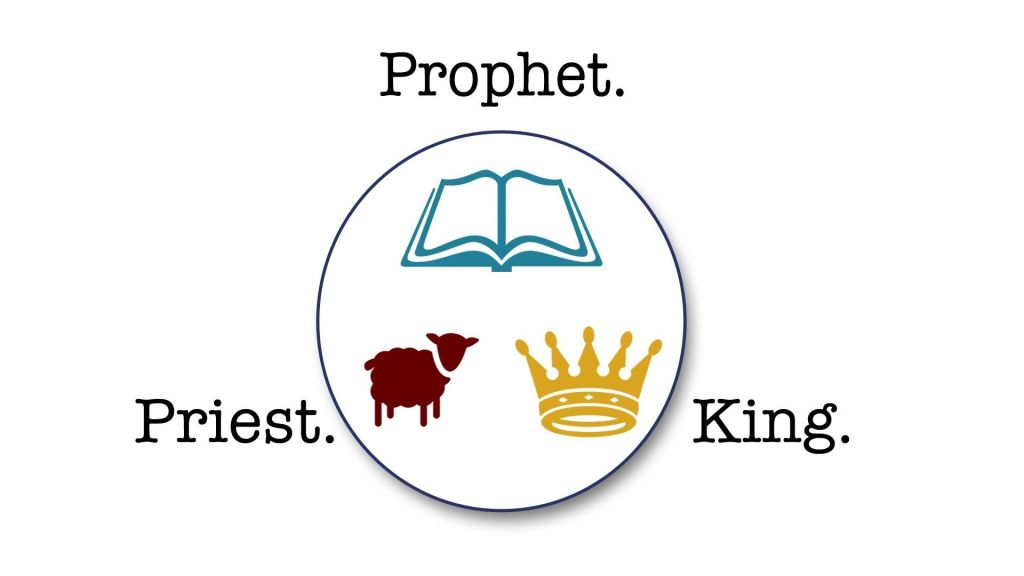
We learn in the Bible that the three highest positions in a God-centered society–equal, but very different in their functions–are Prophet, Priest and King. By naming Abraham as a prophet, God elevated him to be equal to the king in God’s eyes, and in the eyes of those who revere and honor God, which it seems Abimelech did more than Abraham had thought.

It’s also interesting that there is no record of Abraham having done anything exactly like this before. We saw Abraham negotiate with God’s angel to save Sodom and Gomorrah from punishment, for his nephew Lot’s sake. (Although that didn’t turn out well.) That conversation between Abraham and the angel was not dissimilar from the pushback the king showed when God was speaking to him in that dream.
But for that same God to say that Abraham, once he got his wife back, could pray for the king and his household to be delivered from the curse and then for it to happen! Well, I suspect that not only the king was impressed.
So, it seems interesting that God used the situation that was caused by Abraham’s sin to show him a new supernatural ability that came with God’s calling. I guess it’s really true that God does not waste our suffering. As a result, at the end of Genesis 20, we also get a glimpse of something other than ‘sinners being sinful’–we saw a man whose voice God would listen to. We saw a man of compassion who prayed for the needs and hurts of others. At the end of Genesis 20, we got a glimpse of what a godly man should look like.

The question still remains, though, why no condemnation for Abraham and Sarah? From my previous blog, the answer was that God had chosen them for His plan. There are some implications for that choosing explained by Paul in Romans 8:30 (New Living Translation):
“And having chosen them, He called them to come to Him. And having called them, He gave them right standing with Himself. And having given them right standing, He gave them His glory.”
Paul is saying this about us as Christians, but I think we can see the same things here in God’s relationship with Abraham and Sarah:
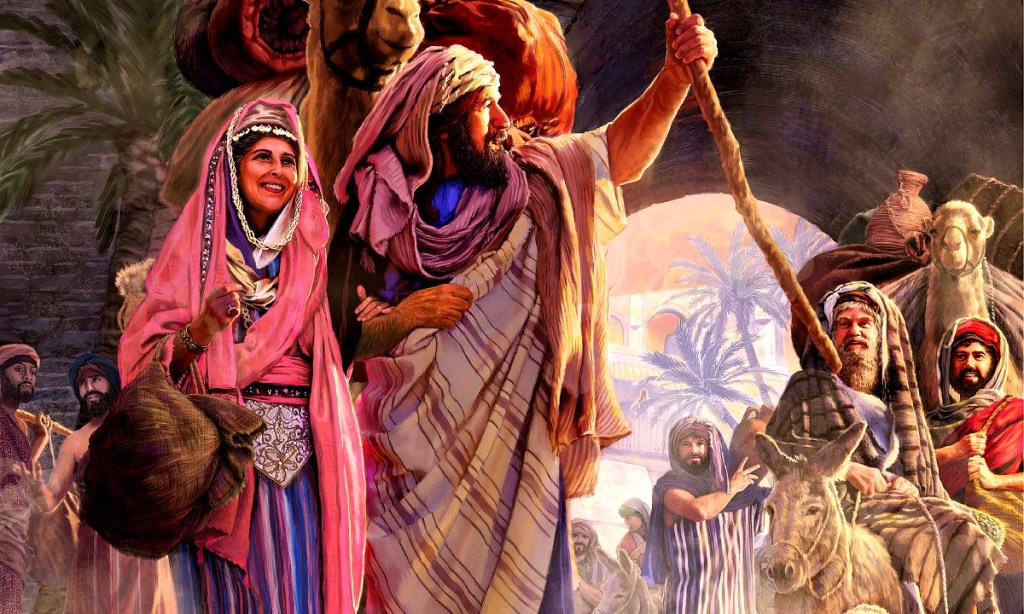
First, God chose Abraham and Sarah, and then He called them to leave Haran and go to an unrevealed land.

Second, Abraham believed the promise of God and God counted it as righteousness. Even these two times that Abraham and Sarah were deceitful, there was no condemnation from God, because He had awarded them right-standing with Him.

And third, God gave Abraham part of His glory when He allowed him to pray for the healing of Abimelich and the cursed women, and then did heal them after Abraham prayed for them.
APPLICATION:
So, who are you going to follow in your life? Are you going to live life based on your fears? Are you going to live a life of lies and deceit? Are you going to live for personal gain, no matter what the cost to others? Or are you going to follow Jesus?

If you follow the call of God in Jesus Christ, you have to deny your fears, you have to give up lies and deceit, you have to give up seeking to benefit yourself. You have to follow Jesus willingly, joyfully, obediently and selflessly. Not an easy thing to do, one might say impossible, but all things are possible with God. And the greatest thing is, even when you fail, THERE IS NO CONDEMNATION FROM GOD!
Instead there is forgiveness, there is a chance to learn and grow, there is still a chance to be used by God in His plan. Can you think of anything more awesome than that to give your life to?
THIS WEEK’S SONG:
Godliness for us is defined as ‘Christlikeness.’ Jesus calls us to follow Him, to become like Him. Just like Abraham was called by God and followed that call to Canaan, so too must we follow wherever Jesus leads us.
Here is a simple song of dedication to do just that from my favorite worship song writer. Listen to his message in an attitude of commitment to following our Lord and Savior, Jesus Christ.

 Bill's Bible Blog
Leave a comment