
I. REVIEW:
In Week 1, we saw WHO Jesus was:
• He was the prophesied Messiah, the special Annointed One from God, heralded and identified by John the Baptist.
• He was/is the actual Son of God, acclaimed by God the Father’s own voice from the heavens.
• He was the singular receptacle of the Holy Spirit, seen descending in the form of a dove and remaining on Him, John 3:21.
• Jesus demonstrated His worthiness to be God’s personal representative on earth by passing the three tests/temptations of lust of the flesh, lust of the eyes, and pride, that our penultimate ancestors, Adam and Eve failed.
We were left with the question, ‘Was Jesus worthy enough for us to follow Him?’ This week’s lesson looked more in depth at that.
II. PREPARATION:
After Jesus established His bona fides as the Christ, the Messiah, the Anointed One from God, He began to call some men to follow Him as disciples. Mark says:

A. What did you leave behind when you answered the call to become a Christian?
In my traditional church background, we were called to give up sinning in order to identify as Christian. ‘Sinning’ was defined as doing those things the Ten Commandments say not to do. (And I apologize for the King James Bible language, it was how I learned this.)
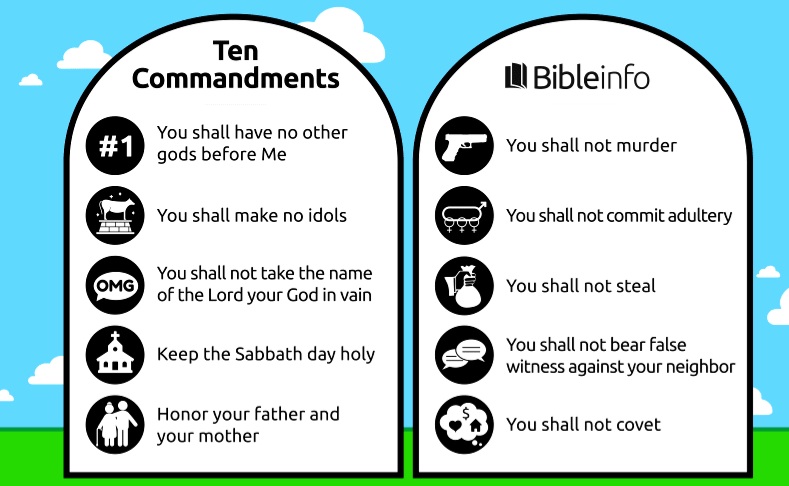
2. Thou shalt not take the Name of the Lord thy God in vain. (In other words, no cussing using the name God or Jesus Christ.)
6. Thou shalt not kill.
7. Thou shalt not commit adultery.
8. Thou shalt not steal.
9. Thou shalt not bear false witness. (Lie)
10. Thou shalt not covet. (Want what is not yours.)
The positive Commandments were the new things that I was supposed to do instead:
4. Remember the sabbath day, to keep it holy.
5. Honor thy father and thy mother.

Now, there were those singular individuals who felt a deeper call to become missionaries. They literally gave up everything they knew and had in their life in America and went to live in some distant, heathen, third-world country that didn’t know who Jesus was, in order to proclaim the gospel to them.
I always felt like these men and women were the ‘A team’ of Christians. The rest of us just kept muddling around with our daily lives here and made sure we gave enough beyond our tithes to support them.
There really weren’t any sacrifices for us ‘run-of-the-mill’ Christians. No leaving the life we knew behind, no daily following of Jesus wherever He led, no sacrificial discipleship. Thinking back, although I am grateful for having heard the Gospel of Jesus Christ through my traditional denomination, I now feel like I was robbed of the life I might have had as a Christian if I had also known how to follow Jesus as a disciple.
III. THE STORY:
A. Jesus Announces the Good News

B. Jesus Calls His First Disciples

IV. CROSS REFERENCES, SUMMARY:
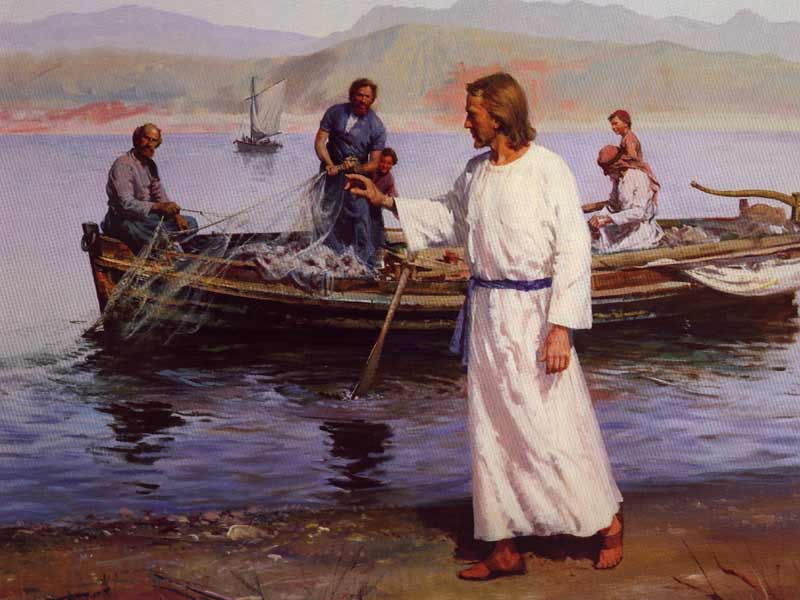
It seemed strange to me that Jesus would be walking along the shore, meet some fishermen at work in the water, invite them to follow Him and they would just drop everything and start literally walking with Jesus wherever He was going.
It would make more sense to me if the call to follow had happened after Jesus taught in the synagogue, after He had cast out the unclean spirit, after He had started healing everyone in town who needed it as they came to where He was. After…
It would just make more sense for it to happen the other way if the disciples were coming to Jesus and asking to be His disciples. That was the usual way of things.
The Gospel of Mark is like the ‘Cliff Notes’ of the gospels. It is a simple, dispassionate presentation of the facts. The other two synoptic (same view) gospels, Matthew and Luke, also include the calling of these first four disciples, Galillean fishermen, before Jesus started teaching and performing miracles of healing and demon exorcism.
But if we look at John the Apostle’s gospel, we’ll see the call and following were not quite the ‘out of the blue’ events they seem to be in the synoptic gospels.
In John’s gospel (the youngest of those four disciples) we find out that Andrew (Peter’s older brother) and John himself (younger brother of James) were disciples of John the Baptist. They were there for the thunderous voice of God shouting His acceptance and approval of Jesus as His Son. They were there for the hole being ripped in the sky and the bright, shining form of the Holy Spirit flashing down from heaven and settling over Jesus like a holy mantle.
John recorded that at some later day, as Jesus was walking by, apparently after the Wilderness Experience, John the Baptist pointed Him out by saying,
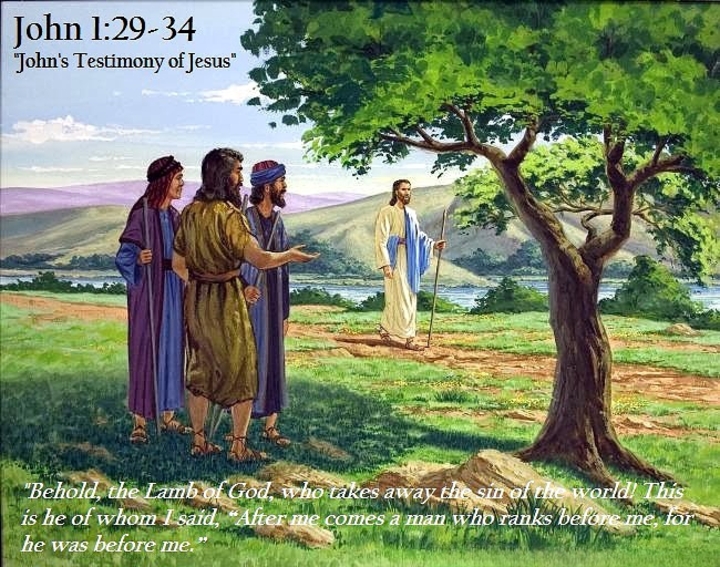
And two of his disciples, Andrew and John, started following behind Jesus. Jesus turned around and asked them, ‘What do you want?’ And they asked Him, ‘Where are you staying?’ Jesus replied, ‘Come and see.’ After spending the afternoon with Jesus, Andrew went and found his brother Simon and told Him, ‘We have found the Messiah!’
A. HOW DID THEY BECOME DISCIPLES?
In Jesus’ time, becoming the disciple of a rabbi was essentially secondary education. When a Jewish boy finished his basic education in the Law and the Prophets, they then had a final, oral exam to make sure they adequately understood the basics. Today this graduation is celebrated in the Bar Mitzvah.
There was also a secondary purpose. The country rabbis were always on the lookout for the exceptionally bright student who they would accept as disciples, therefore continuing their education one-on-one. The majority of the students would then be apprenticed in their family business. Think of it as college versus trade school.
There were also a very few exceptionally bright students who would be sent to Jerusalem to try and become a disciple of the prominent teachers there. In sports terms, think of the first group as being drafted by a farm team and the more elite group trying to walk on with a pro team. Paul the Apostle was one of that latter group. He came all the way from Tarsus and was accepted by Gamaliel as a disciple, one of the most prominent rabbis of that time.
So, disciples could be picked, or they could ask to be accepted. Most likely Andrew and John had gone to John the Baptist first in repentance and to be baptized, but then volunteered to stay on as disciples.

B. WHAT DID DISCIPLES DO?
The disciples exchanged service to the rabbi for being taught by him. We can see this with Jesus’ disciples in the gospels. Jesus had a public ministry and His disciples helped with various aspects of that, plus they got to listen to and watch Jesus as He taught and ministered. The disciples also took care of basic needs such as getting food and arranging a place to stay. In essence, anything that needed to be done for the master, the disciples did.

In exchange, the disciples received private instructions and could ask questions about anything they didn’t understand. One downside might be that since the disciples were with their rabbi almost 24/7, especially Jesus’ disciples, since He was an itinerant teacher (traveled from village to village), along with the teaching could come rebuke when they didn’t quite get it. But this also was accepted as part of the disciple relationship. And that’s what Christian discipleship is, a relationship with the Great Teacher, the Lord Jesus Christ.

VI. CONCLUSIONS and APPLICATION
A. Where is discipleship today?

1. There was no discipleship in my traditional denomination. I encountered discipling when I was in the Army and met a group called the Navigators. There I was discipled for the first time and spent 10 years with them, continuing after I left the Army. It was my hope to be able to bring discipleship back to my denomination. Unfortunately, my disabling injury interfered with that goal. However, in recent years I have begun to see discipleship becoming more and more a part of church life. It still isn’t the discipleship I learned in the Navs, but at least the traditional Protestant church is moving in the right direction. Baby steps!
2. Otherwise, I’ve only seen perverted cult examples of ‘discipleship’ in my lifetime. Here are some prominent examples:









B. How do you tell the difference?
It doesn’t take a lot of thought to see the similarities in Jesus and His disciples, and these cults.




So then, how do we tell who to follow, the process of discipleship is the same? The Bible calls these false leaders ‘anti-Christs,’ that is, false teachers and prophets that people turn to ‘instead’ of Christ. Jim Jones promoted himself as a prophet of God. David Koresh proclaimed himself the only true teacher from God. Reverend Sun Yung Moon stated he was the second coming of Jesus Christ.

C. What is the effect of false cults?
I’ve noticed several:
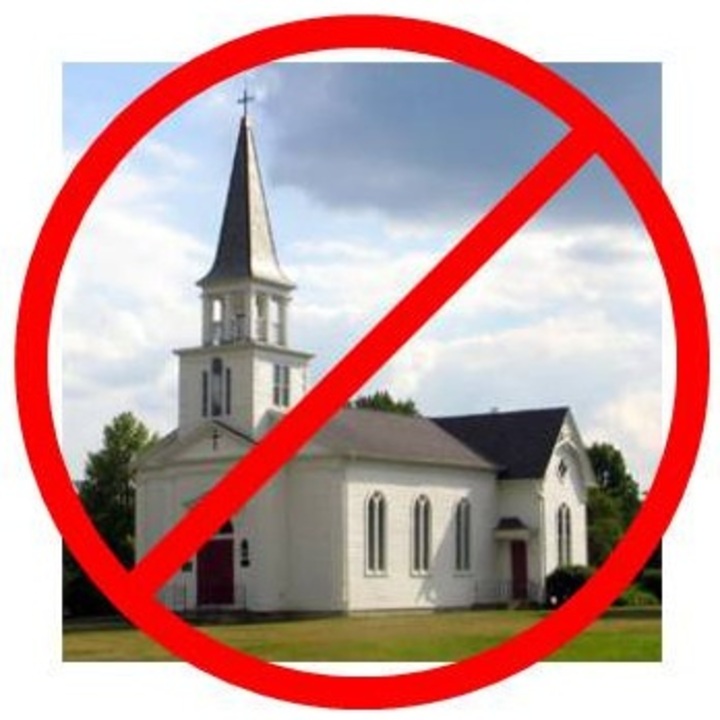




a. In a cultural group, there is room for diversity–freedom of expression and freedom of speech–you can ask questions, you can speak out, you can express differing opinions, and you can freely discuss differing ideas.

So, what is Jesus creating? Is it a cult or is it a new culture? Stay tuned to Mark and let’s see if we can answer that question.

 Bill's Bible Blog
Leave a comment