
Week 4 of the Gospel of Mark study showed some interesting changes in Jesus’ interactions and in His teachings. Here’s a summary.
I. Four Groups. We saw there were four distinct groups of people who interacted with Jesus and vice versa.
A. The Masses.
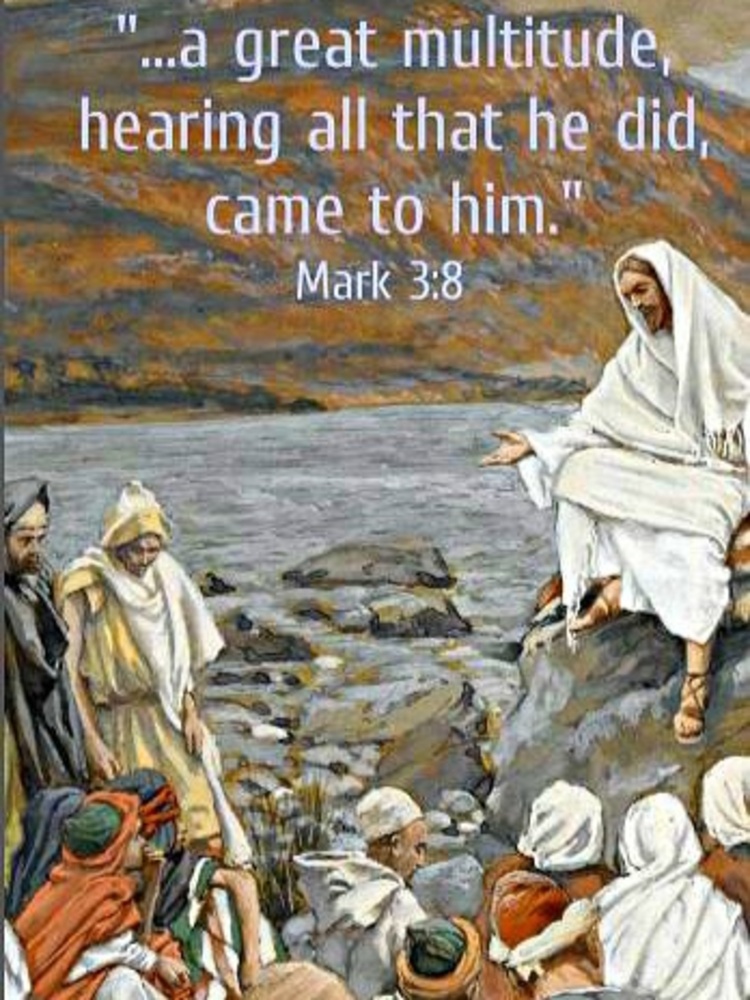
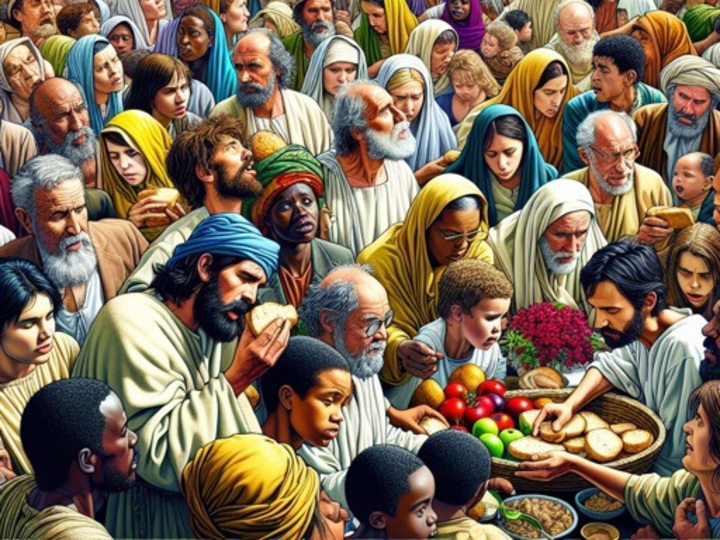
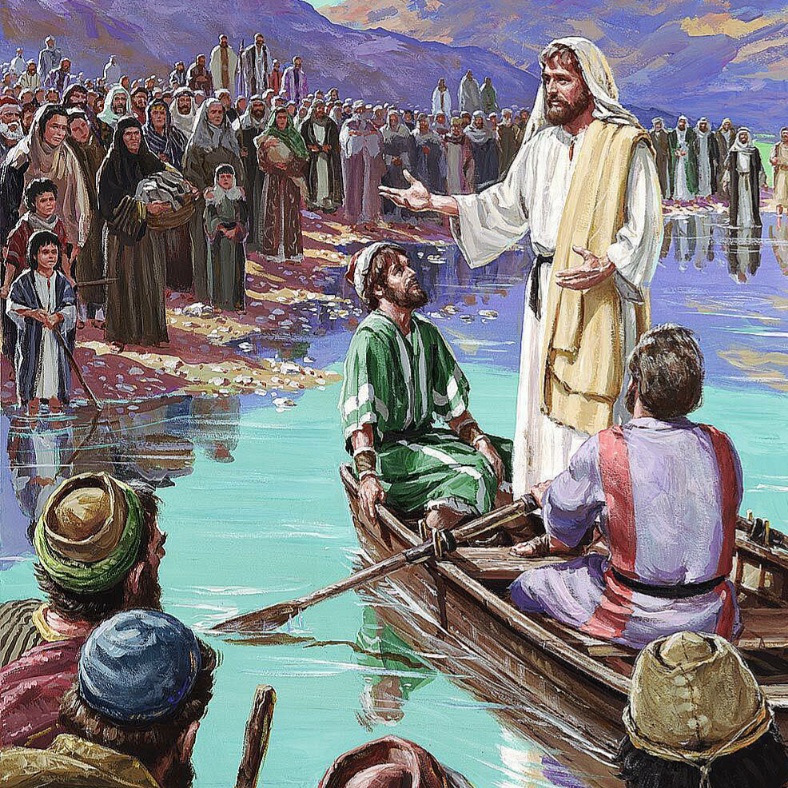
This is the change we saw in Jesus’ interactions with the masses–He had started out proclaiming the gospel and teaching from the Word. Now He is no longer speaking plainly to them, but teaching in parables.
————————–
B. His Disciples.
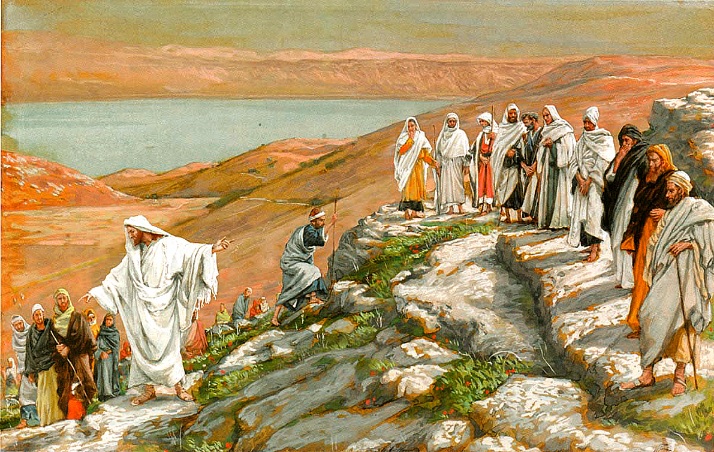
Up until now, we had seen Jesus surrounded by many disciples. Now He chooses a special group of twelve to always be with Him and that He can send out to multiply His work. At that point they will be called Apostles, “sent ones.”
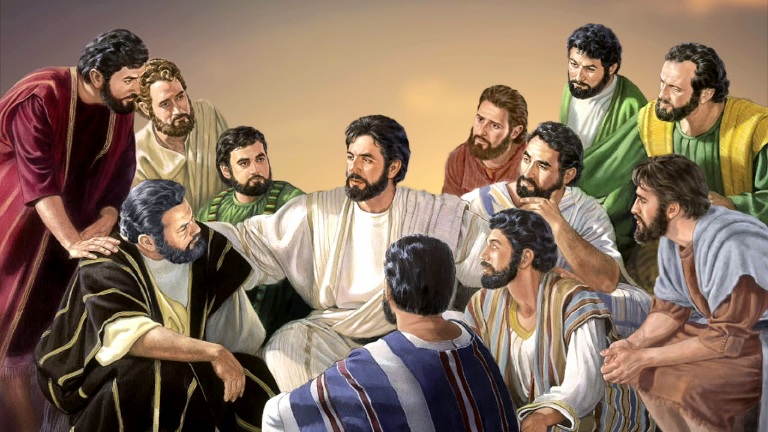

With the change to teaching the masses in parables, Jesus now begins teaching deeper truths about the Kingdom of God to the twelve and any other disciples who are with Him at the time.
C. His Opponents. The opponents of Jesus had been increasing in their opposition to His actions and His teachings. Identified variably as ‘teachers of the Law,’ ‘Scribes,’ (those who made the copies of what we call the Old Testament and who taught the people what it said), and Pharisees (a sect of Jewish lawyers who emphasized purity by avoiding any kind of impure person or thing.) They had began by questioning Jesus’ teachings and lack of conformity to current mores. Then they began criticizing Him. Now we see their opposition take a sinister turn.

23 So Jesus called them over to Him and began to speak to them in parables: “How can Satan drive out Satan? 24 If a kingdom is divided against itself, that kingdom cannot stand…”
3:28 Truly I tell you, people can be forgiven all their sins and every slander they utter, 29 but whoever blasphemes against the Holy Spirit will never be forgiven; they are guilty of an eternal sin.” 30 He said this because they were saying, “He has an impure spirit.”
—————-‐–‐
Whoa! Jesus was still willing to address their accusations, but it looks like His opponents had crossed a line as He now pronounced one of the most controversial things that He was recorded as saying, they were guilty of the “Unpardonable Sin.”
———————–
D. His Family: Mark has not made mention of Jesus’ family until now, but apparently word of what He was doing and saying had gotten back to them in Nazareth, so they came to see Him where He was teaching and ministering along the Sea of Galilee.

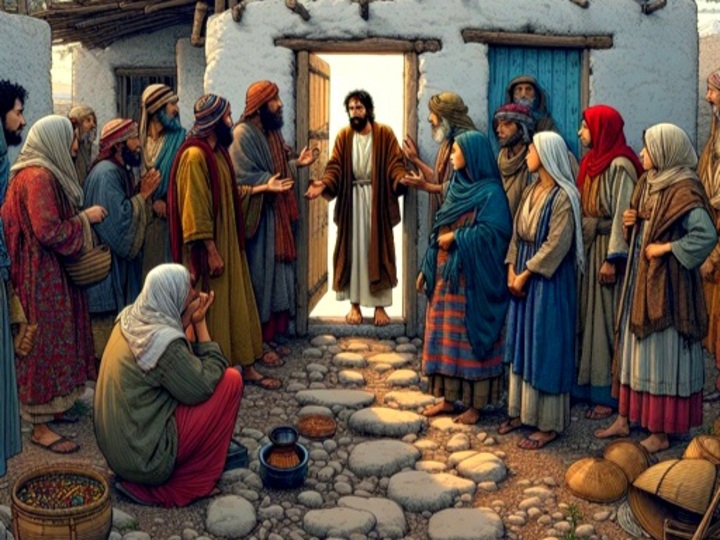

Wow! Doubly harsh! First His family rejects who He is, and then He rejects His family.
———————-
II. SUMMARY
So here are the transitions we see in this week’s section of Mark:
A. The masses–Jesus dissociates from the masses by teaching them using stories, leaving the hearers puzzled about what He is saying. It’s like He’s accomplished His first goal to attract those from the masses who want a deeper relationship with Him as disciples, and now He’s moving on.
B. His disciples. Apparently having accumulated a critical mass of followers, Jesus selects 12 for special teachings and assignment. He now focuses more of His teachings to private sessions with them and other, local disciples who aren’t following Him from place to place.
C. His opponents. The Jewish religious leadership increase their attacks on Jesus and Jesus accelerates right back at them. This is going to set up the final confrontation when they have Jesus arrested and crucified, actually what God has planned.
D. His family. Jesus makes a final break from His family and shows how He is ‘all in’ as far as His commitment to His disciples. By the way, this is the first time we see that there are woman disciples as well as men, even if all the chosen Twelve were men.
III. PARABLES
I’m just going to skip over the parables we looked at this week because what caught my attention was at the end of Jesus’ parable about the lamp and lampstand.
A. To set the scene:
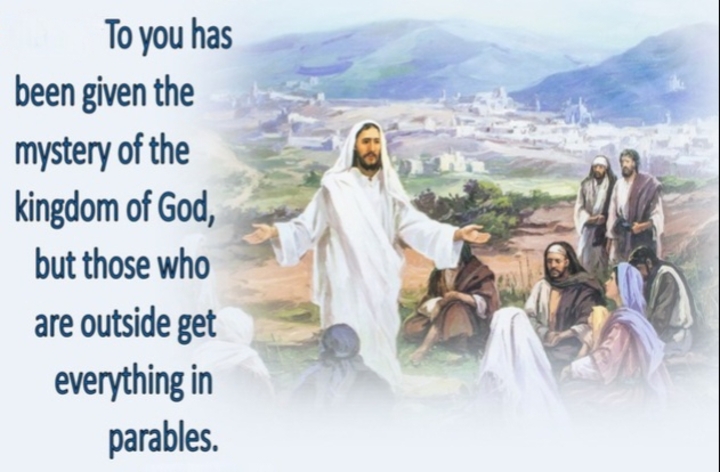
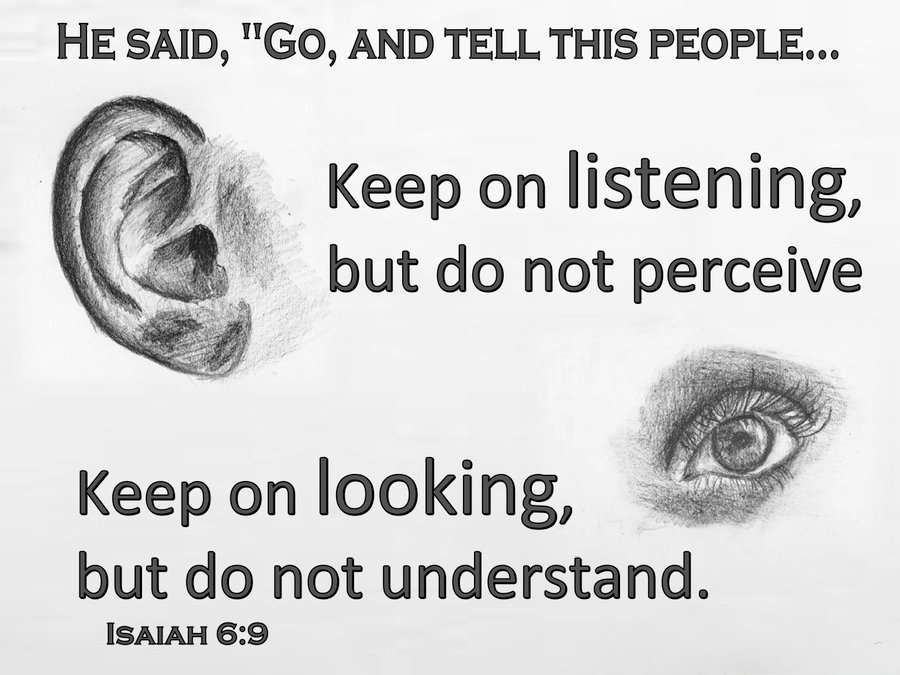
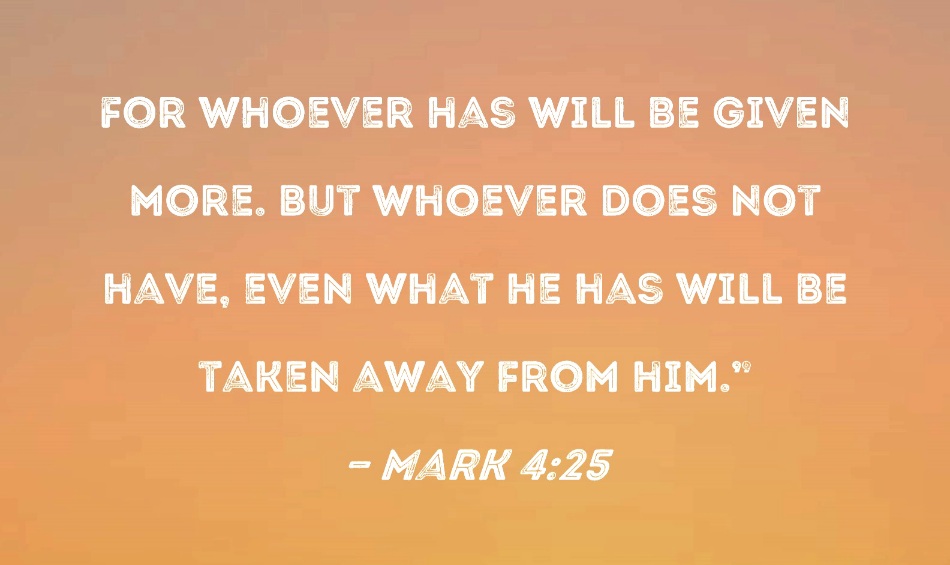
4:24 “Consider carefully what you hear,” he continued. “With the measure you use, it will be measured to you—and even more, 25 whoever has will be given more; whoever does not have, even what they have will be taken from them.”
—————————
B. This is the SECOND harsh pronouncement in our reading this week. For some reason I had not taken note of this statemrent at the end of the parable before. But, I WAS familiar with it at the end of another parable. (Images (c) Mark Young Bible Cartoons)
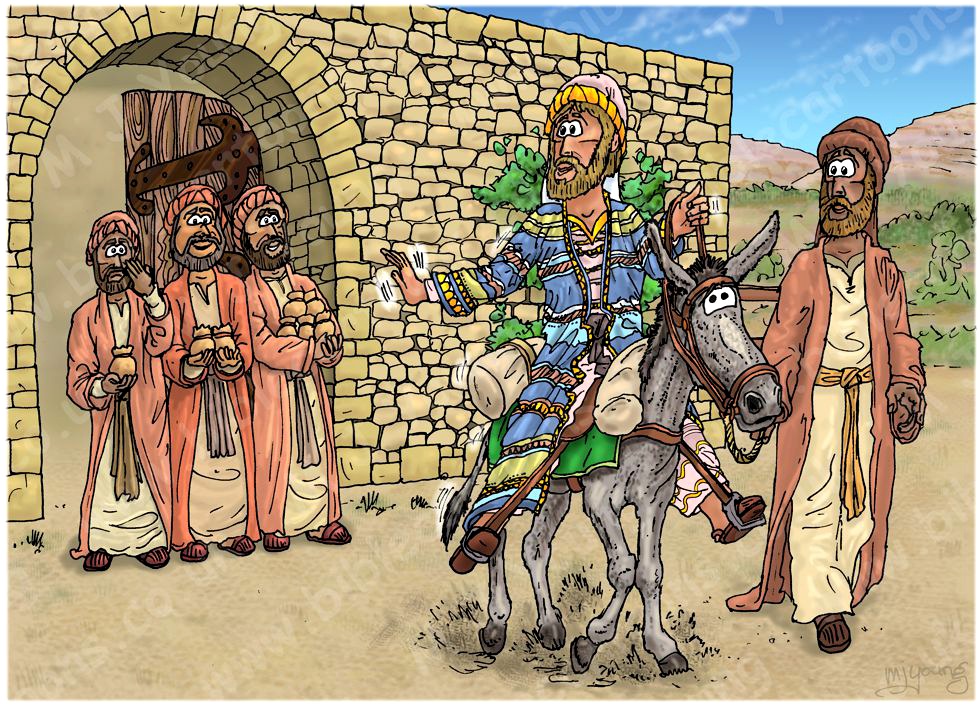
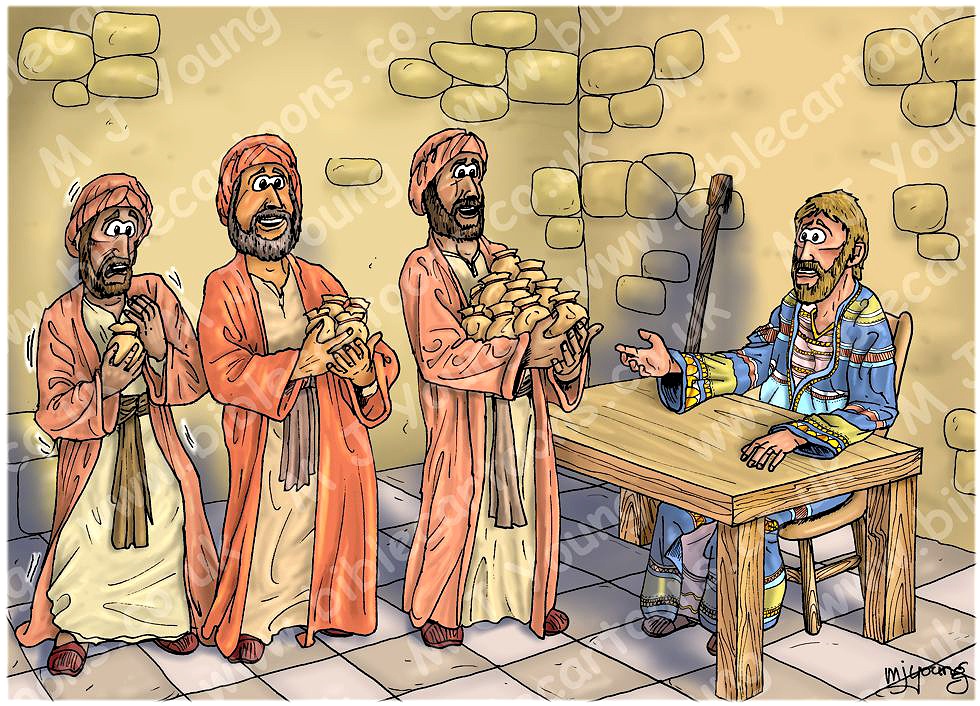
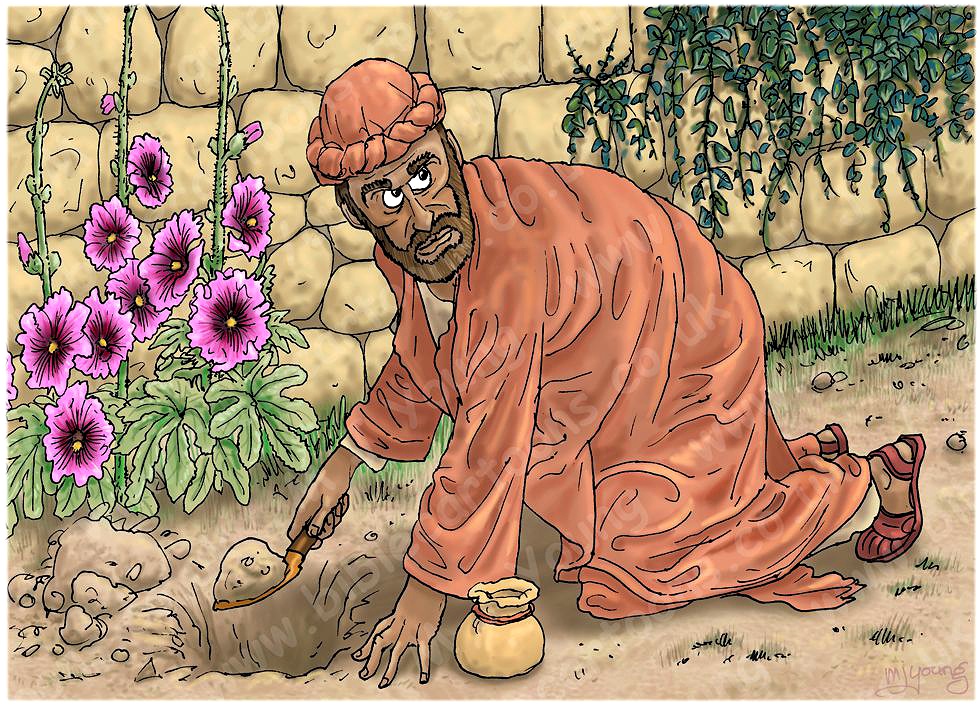
And then, as the moral of the Parable, we have that same statement by Jesus:
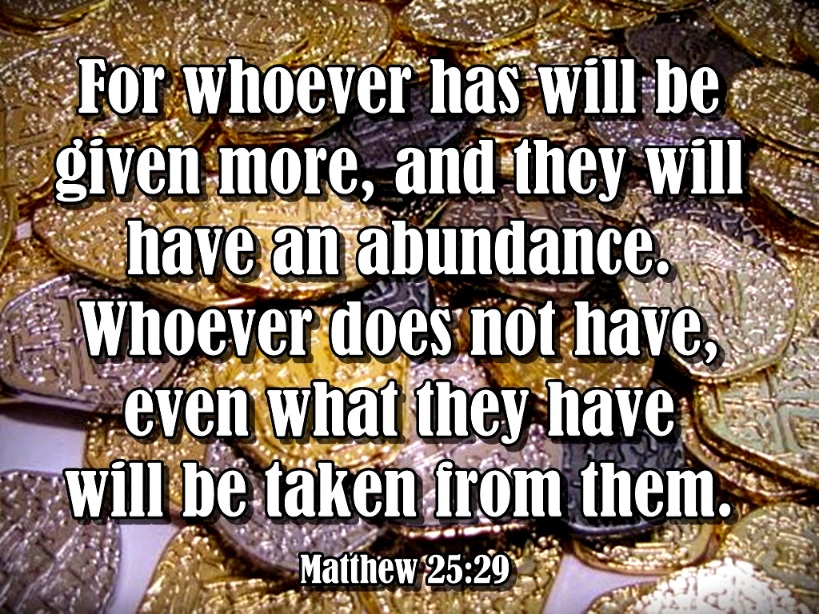
C. Now, it was never clear to me exactly what the ‘talents’ (KJV) were, translated by modern versions as gold in Matthew and and coins in Luke. The happenstance of the match with the modern English word, ‘talent,’ referring to natural gifts and abilities we are born with, had always led to the passage being taught as meaning we should use our natural gifts and abilities to serve God and to advance His Kingdom.

I think the repetition of this moral in Mark 4 makes the answer to the question clearer, though. The parable about handling money is definitely about accountability, and so too is Mark 4. However, now we see it is not about something of worldly value or natural ability, but rather of spiritual, eternal value–the gospel, which gives us eternal life when we believe, and God’s eternal Word, which is able to redeem our souls unto righteousness.
I believe Jesus is warning His hearers, and us down through history, that we have to be intentional in listening to what God is saying, we have to be intentional in thinking about what it means, and we have to respond in obedience to the message and truths that God reveals to us, AND that God is going to hold us accountable for how we use His spiritual treasure.
The first ‘coin’ is the gospel, and the next two parables are about planting the ‘seed’ of the gospel to establish and grow God’s Kingdom here on Earth. The method of ‘investing’ it is to proclaim it to those around us. The implication is, if we are successful in sharing the gospel, God will entrust more ‘treasures’ from His Word to us and we will have another opportunity to invest it in others by teaching and guiding them into obedience. But what if we don’t?

IV. APPLICATION
In the Law, there were blessings for following it and curses for not. We live in a different spiritual age, the Age of Grace, so there are increasing blessings for obedience, and removal of those blessings for not. No punishment, no curses, just loss of God’s hand of blessing in our lives. For example:

There are many, many more blessings that I think we as Christians take for granted until we lose them. I know, because I have.

I was a success at everything I did until I graduated from college and moved to the big city. One of my own transitions. I had spent the last 10 years involved with the Navigators as a part-time volunteer–first in the military, then in college. The Navigators are a para-church organization specializing in disciple-making.
During that 10 years, I had shared the gospel with many people, although no one ever made a decision for Christ. After completing their study curriculum, I began teaching their class on how to study the Bible, as I was very good at that. I met individually with many young men during those years, but I never made any disciples. What I now understand about those 10 years is God didn’t hold me accountable for my success, He held me accountable for my obedience.

After college, starting my career became my focus–teaching, coaching and continuing my education. Although I wanted to bring what I had learned about discipleship to the church, I had limited success and soon settled into a standard Sunday-morning-church kind of Christian.
Sharing the gospel was never a big part of my life, anyway. Without being a part of an organization that did those things, very slowly all of my newly learned Christian disciplines began to fall away. Then everything else I did began to fail. Small failures at first, but bigger and bigger failures until the career arc, and the life I had envisioned having, began to fall apart until it completely disappeared.

Now, I’m in another transition, the final one to the end of my life. I’m under treatment for several potentially terminal health conditions, any one of which could take me out at any time.

As I’m walking this final journey, two things have become prominent in my thinking. First is the verse, “The judgments of the Lord are just; they are always fair.” (Psalm 19:9b, Good News Translation) I’m willing to accept God’s judgments in removing the blessings of success and health, resulting in failure and sickness, as being justified because I have not been faithful with the treasures of the gospel and Biblical truths that God entrusted to me.
The other thing that has been filling my thoughts has been an almost overwhelming desire to leave a legacy for the Lord. Since i received my terminal diagnosis, I’d been praying for something I could do that would make a difference for God’s kingdom on Earth in the little time I have left, but my options were limited due to my disability and now being debilitated. Through a roundabout series of events, I came to write this blog. I hope that my thoughts, insights and experiences are helpful to you, my few subscribers, in your own walk with Jesus.

There is a possibility, though, that gives me hope for something better. In a recent sermon at Summit Church about Psalm 32 by Pastor Brian Loritts, he showed how David finally came to a place of repentance and confession to God after his sin with Bathsheba…and God forgave and restored him!

Another example he shared was Peter. Peter had denied he even knew Jesus while He was on trial…THREE TIMES! But Jesus forgave a repentant Peter and used him to deliver the Pentecost message where 3,000 responded in faith and were added to the church.

Pastor Loritts pointed out that God is in the restoration business. Jesus is a safe place to take our sins, failures and shortcomings to, because He loves us, He’ll accept us in our repentance, and forgive and restore us to right standing with Him–not condemn or punish us.
That is my hope and prayer before I leave this Earth; that as I lean into Jesus in my brokenness, He will restore His hand of blessing, and as David said in Psalm 51, which Pastor Loritts said was linked to Psalm 32:

and renew a steadfast spirit within me.
11 Do not cast me from your presence
or take your Holy Spirit from me.
12 Restore to me the joy of your salvation
and uphold me by Your generous Spirit
…
17 My sacrifice, O God, is a broken spirit;
a broken and contrite heart,
Such sacrifices I know you will not disdain.
I ask that you pray this for me as well.
Thank you,
Bill
 Bill's Bible Blog
Leave a comment