
Week 5 of our study covered 4 events in Jesus’ life and ministry where He demonstrated that He was Lord over something. Some of these things, like showing His authority over sickness and demons, Jesus had already demonstrated, but this week we see He takes even those to a new level.
4:35-42 Jesus is Lord over the storm.
5:1-20 Jesus is Lord over a Legion of demons.
5:24-35 Jesus is Lord over chronic illness.
5:23-24 and 35-43 Jesus is Lord over death.
We see that each of these encounters contain four elements that we can use to improve our own walk with Jesus:
Q1. How did they approach Jesus for help?
Q2. How did Jesus demonstrate His Lordship when He helped them?
Q3. How did Jesus stretch their faith in Him by how He responded?
Q4. How did they and/or those who witnessed what Jesus did, respond?
I. JESUS, LORD OVER THE STORM
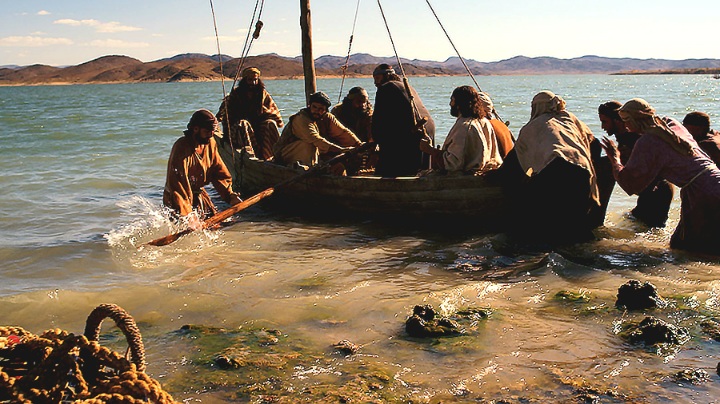
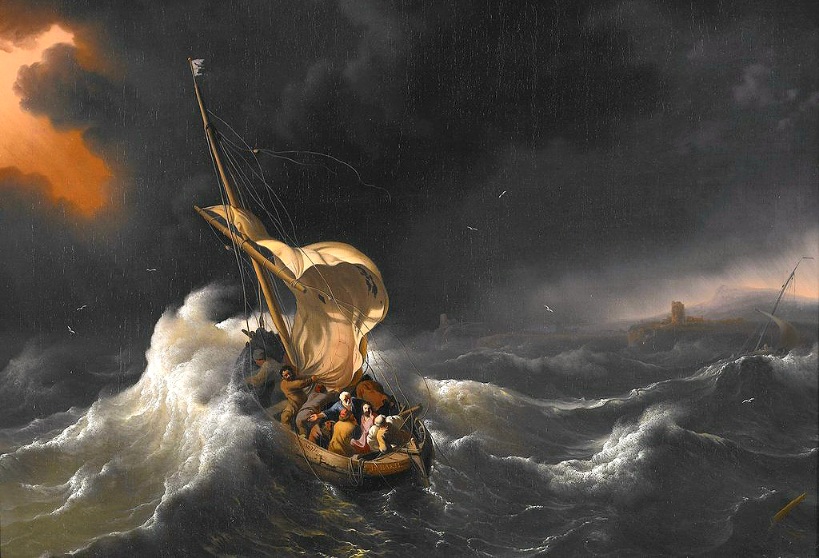
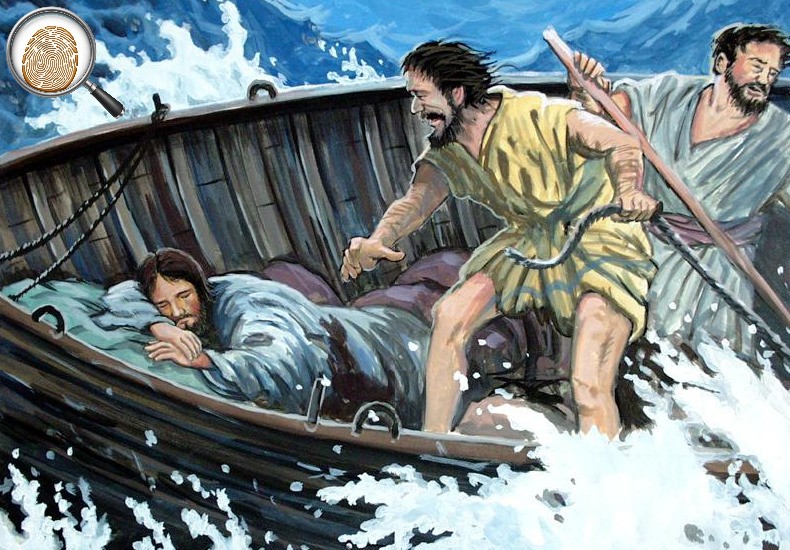
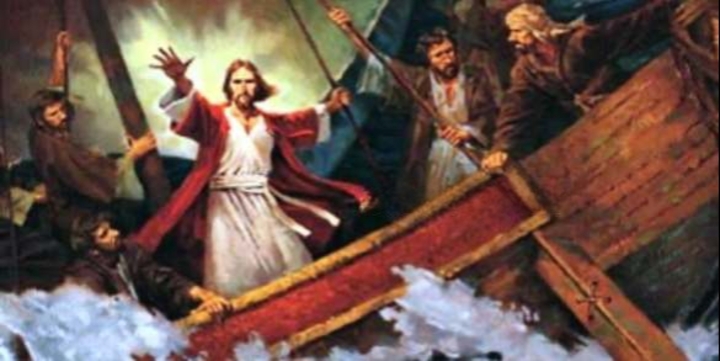
40 He said to his disciples, “Why are you so afraid? Do you still have no faith?”

(See note at the end for an explanation of the underlined text and fingerprint sticker in some of the images )
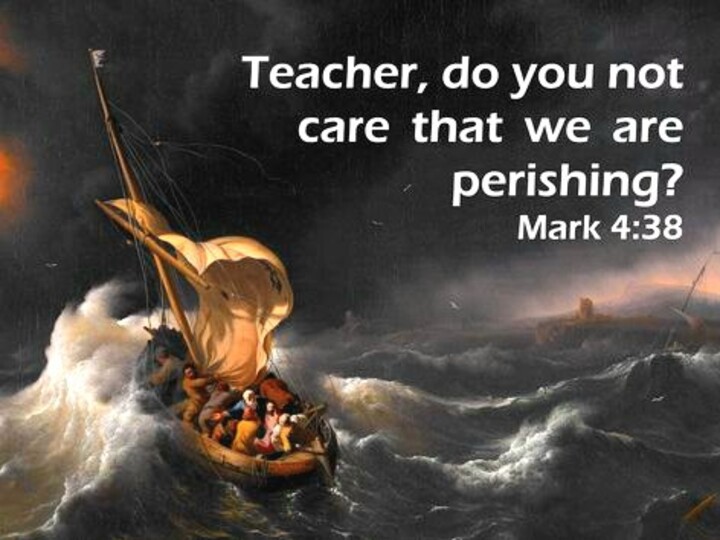
Q1. How did the disciples approach Jesus for help? The disciples came to Jesus for help in desperation. Maybe they waited until the boat started to be swamped, because four of them were fishermen and thought they could handle the storm, as they had handled so many before. Maybe they waited because they didn’t want to disturb Jesus, who was obviously deep in an exhausted sleep in the back of the boat. I can almost see them frequently glancing back at Him, expecting that the violent tossing by the storm would wake Him up and He would take charge. A key to their feelings at the time was how they started their question, “…don’t you care…?”

For whatever reason or however we ask, we can learn that Jesus will help us, even if we wait until we reach the end of our resources and come to Him in desperation as our final option. Our tendency is to become impatient when we don’t see God act on our behalf. Maybe He’s waiting for us to ask Him? We tend to become impatient, maybe even desperate, when God doesn’t work on our timetable and then we start to look around for other options. Faith is in the asking, but faith is also in the waiting.

If we will do these things in our needs, the rewards are a new understanding of who God is and what He can do…and a fall-to-your-knees awe that creates in you a deep worship of this God of the Universe who DOES care for us.

Q2. How did Jesus demonstrate His Lordship when He helped them? Jesus demonstrated a new ability to His disciples when He showed that He was Lord over the storm. They believed that Jesus was the Promised Messiah with a special anointing from Jehovah God, and they had left everything to follow Him and be His disciples based on that belief, but they did not yet understand the full extent of Jesus’ power.

From this we learn that God and Jesus have powers beyond whatever we might understand or expect. Rather than try to figure out if God can help us or not, we should realize we’ll never understand what He can do, but we should just approach Him in humility and believe that He is able to help us, that He is willing help us, but it will be in a way and time of His choosing.
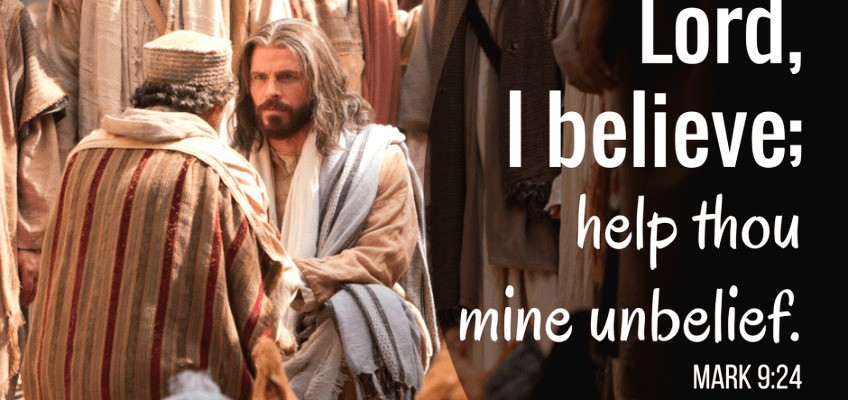
Q3. How did Jesus stretch their faith in Him by how He responded?
BEFORE: Jesus criticized the disciples for their lack of faith. There were lots of clues that they missed that should have led them to trust Him, no matter what was happening. First He had said they were going to the other side of the Sea. They needed to understand that what Jesus said they were to do, and that He would make sure it happened.

The second clue was that He was blissfully asleep, even during the height of the storm. However, they did not understand how much they should and could trust Jesus, even in the middle of the most desperate situation.
This is the first lesson we can learn from this. Just because He’s not calming the $#!+storm when we think He should, doesn’t mean He cannot. We just need to continue to trust in Him and keep doing what we’re supposed to be doing.

AFTER: When Jesus dealt with the storm by commanding it to calm down, this was a totally unexpected response from Him. The disciples knew they needed help, but apparently they did not know that Jesus could calm the storm, they just knew they needed help, and that Jesus had already exhibited supernatural powers. They found out that Jesus was able to do beyond what they could ask or even imagine!

That is another lesson for us. We have to trust God in how He chooses to respond. We cannot try to fit God’s capabilities into a tiny box defined by our past experience or limited imagination. God’s ways are as far beyond us as the objects in the night sky are from Earth. Ask Him, trust Him, and prepare to be amazed…and you’ll have your concept of God stretched.

Q4. How did the disciples respond to this awesome and unexpected display of Jesus’ power and authority? Jesus rebuked them for being cowardly before they woke Him, Strong’s G1169, deilos, overcome by dread and unable to act, always used in a negative sense. But after they saw the storm calmed and were ‘afraid,’ Strong’s G5399, phobeo, used not only for an overwhelming fear that stops you in your tracks, but also used in a positive sense of a healthy, reverential awe of God’s power and authority.

This is the appropriate response to God, a reverential awe that overwhelms us and elicits worship of the God who is so much greater than we are. That’s what happened to the disciples, and that’s what will happen to us when God answers our prayers in a totally unexpected way. But we won’t have this experience of God if we don’t ask Him, with what little faith we have, and then humbly wait for Him to act.
====================================There were so many wonderful lessons from our study of Mark this week. I don’t have time to write about them all this weekend. For example:

The woman who had been sick for 20 years who had faith that she would be healed if she could just sneak up behind Jesus and touch the edge of His robe, AND SHE WAS!
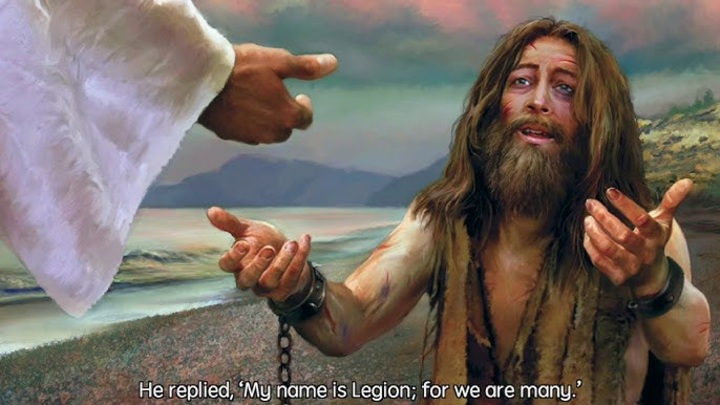
The Legion of demons which did not have any more power to resist the authority of Jesus than one demon did.
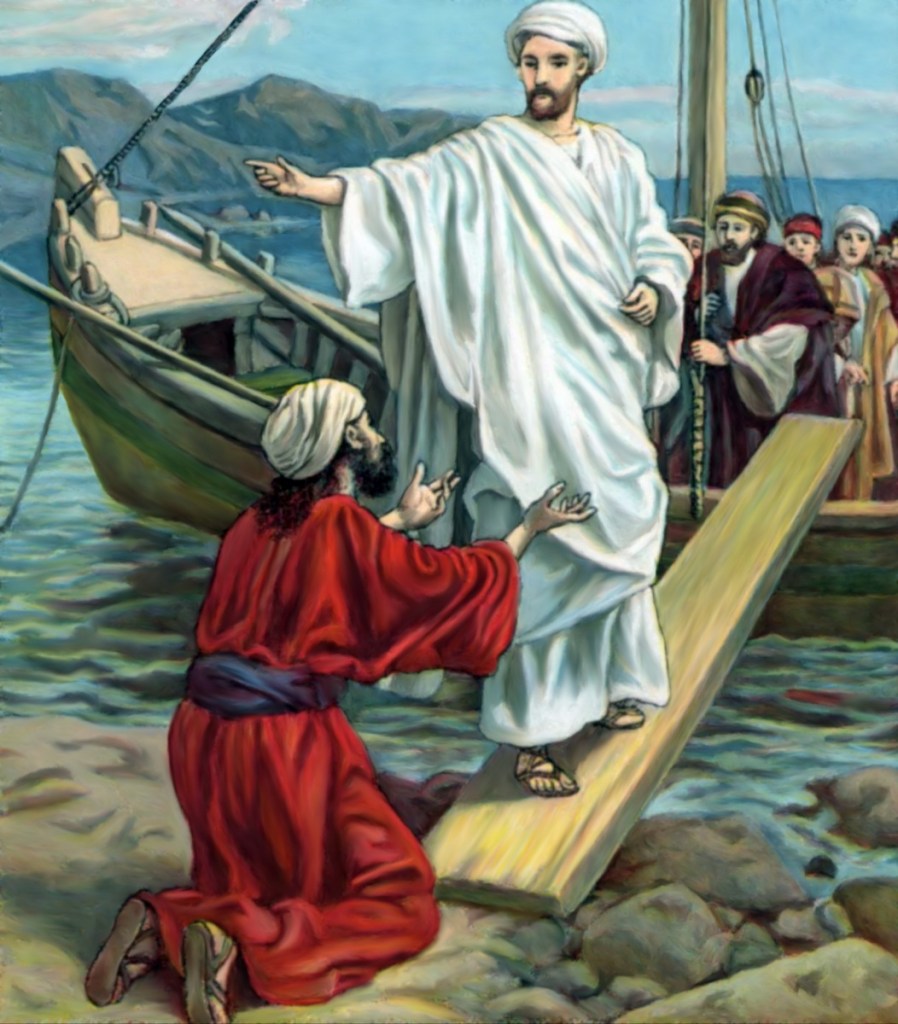
And the demon possessed man who was in his right mind and clothed properly again. He wanted SO badly to go back with Jesus across the Sea, but instead, he was sent back to his people as a witness for what Jesus had done for him.
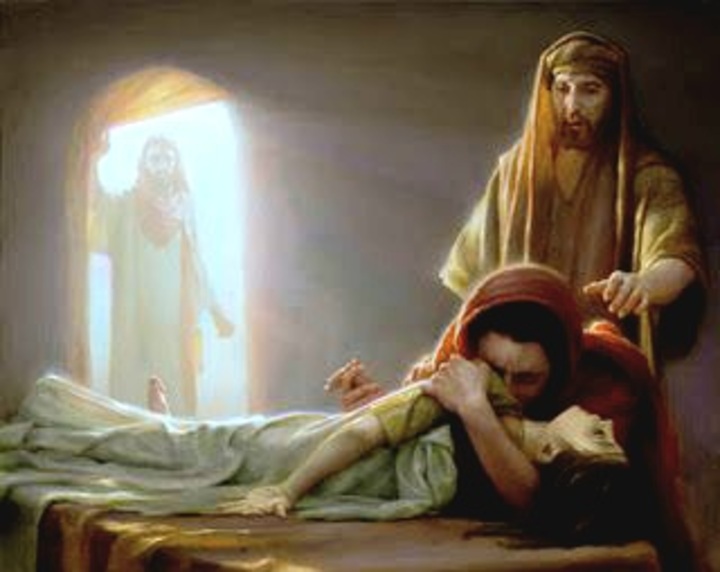
Then there was the synagogue ruler who tracked down and asked Jesus to come and heal his sick daughter, but before they could get back to his home, she died!
____________________________________________There are so so many wonderful stories and wonderful lessons in the gospels. I hope I whet your appetite for more to the point you will begin to study them for yourself.

After all, it’s not just general knowledge we seek to gain from Bible study. Through Bible study AND prayer, we can receive personal messages from God of affirmation, of guidance, of reassurance, and much, much more. Jesus and God wait for you in the pages of your Bible. Take the time to meet with Them there!
====================================

NOTES: The underlined parts of the narrative are unique content to Mark. I believe what modern scholarship says, that Mark is the third gospel in time, not the first, and it is based on a series of oral presentations by Peter to the magistrates in Rome who had been assigned to investigate the charges against Paul.
When Peter came to Rome to visit Paul, word got back to the magistrates and they wanted to hear about this ‘Jesus fellow’ from an eyewitness. Matthew was the only official gospel at that time, written as a collaborative effort by the Apostles just before they left Jerusalem due to the increased persecution against them.
During Paul’s three years of imprisonment in and near Jerusalem, Luke had personally investigated the stories of what Jesus had done and taught, using Matthew’s gospel as his source material, and then had written his own gospel. Paul asked Peter to legitimize Luke’s gospel, and Peter chose to do so by using both his copy of Matthew and Luke’s gospel as his source material for what appears to have been five presentations, based on internal structure. That is, each section is about 100 verses long and has a clear ending, followed by a clear beginning for the next session, with the verses between mostly starting with ‘And.’
You can often tell which of the two gospels Peter is using for each story, but there are omissions and additional, unique content. As an exercise, I’ve been comparing all three accounts to identify Peter’s additions. I call these ‘fingerprints of Peter,’ and view them as his personal contributions to the gospel narrative.
Peter’s omissions are interesting also. He seems to be portraying Jesus and the disciples in such a way that the Romans won’t see them as a threat. His careful portrayal of Jesus comes across as provincial and something easily dismissed as a ‘local matter among the heathens way down there on the fringes of Roman civilization.’
Peter also portrays the disciples as clueless provincials, certainly no threat to the Roman Empire either. I especially note that Peter omitted anything that would make himself appear as a threat, without minimizing his key role among the disciples, thus maintaining his position as a reliable eyewitness for the magistrates.
This is largely just an interesting exercise for me. But in whatever way Jesus and the disciples are portrayed, the Gospel of Mark still communicates the truth about what Jesus did and said, and we as Christians can still learn about who Jesus is and what He taught by reading and studying the Gospel of Mark. AMEN!
====================================
 Bill's Bible Blog
Leave a comment