Bill's Bible Blog


, , , ,

  • C5. Interlude – Immanuel, What’s in a Name?, part 1

    When I was in the seventh grade, we had a unit in social studies on the historical development and meaning of names. For our homework, we were supposed to ask our parents what our family name meant. Since my parents were divorced, I wasn’t able to ask my father and knew better than to ask my mother, so I just made something up.However, for some reason, this kindled in me an interest in understanding names.

    A year or so later in church, the pastor was talking about Jesus being born and mentioned that the name He was given was the same name as Joshua in the Old Testament in old Hebrew, meaning “God’s Salvation.”

    It became kind of a game over the years for me to match up other names in the New Testament with those in the Old Testament.

    Going back to what I learned about how people in the Old World got their names, I saw how Jesus was called by many names in the gospels.

    For example, when He was back home in Nazareth and the surrounding area of Galilee, He was called, “Jesus, Son of Joseph,” or in Aramaic Hebrew, “Bar-Joseph,” to distinguish Him from others in the area who had been named after the O.T. hero, Joshua.

    When Jesus took his ministry south to Judea and Jerusalem, He was called, “Jesus of Nazareth.” Once again, to clearly distinguish Him from other popular figures named ‘Jesus.’

    Jesus was also referred to by various titles. By those who were believers of His teachings, since He was a traveling teacher of the Bible, He was called, “Rabbi Jesus.”

    Those who had committed to following Him as disciples called Him ‘Master.’ One time Jesus asked them…

    “And they said, “Some say John the Baptist, others say Elijah, and others Jeremiah or one of the prophets.” Then Jesus asked them, but…

    Simon Peter answered…

    Simon, named after one of the original sons of Jacob, ‘Simeon,’ got a new name that day. Jesus said…

    There are a lot of things going on with names here!
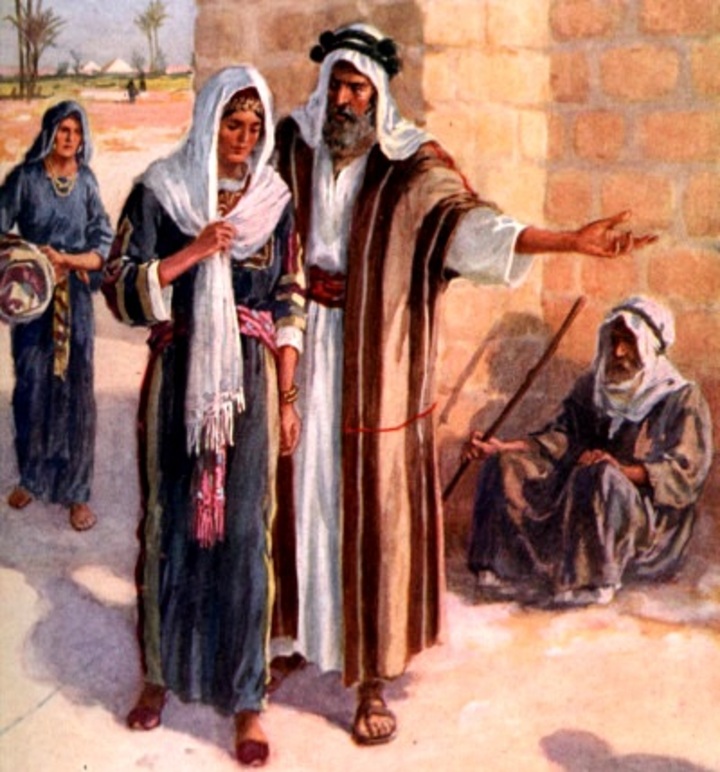
    First we see the title that Jesus most often called Himself, which in the Aramaic Hebrew of His time was probably, ‘Bar-Nash,’ a way of saying, ‘I’m just another guy,’ and emphasizing His humanity.

    However, it might also be a reference to Daniel’s vision in Chapter 7, “Bar-Enash,” which could just mean a human being, except Daniel goes on to describe this human figure receiving all dominion and power from God, associated with the Messiah, so this could also be a subtle way for Jesus to declare He is the Messiah.

    In whichever case, Peter’s declaration of faith names Jesus as both the promised Messiah and the actual Son of God. (More on that in a later blog.) AND Jesus affirms Peter’s declaration as being correct.

    The narrative is written from a time in the future, so it gives away that Simon afterward was also known by a second Greek name from the word for a rock, ‘petros.’ Since Jesus spoke and taught in Aramaic, it is thought that He actually used the same Aramaic word that the fortress at Petra was named with, but was later renamed ‘Petra’ by the Romans when they conquered it. So, Peter became known in history by the Greek form.

    Now that Jesus has been resurrected, ascended to heaven and given all “power and authority,” His full name with titles is, ‘The Lord Jesus Christ.’

    Among all of these names for Jesus, one is missing. Nowhere outside of the prophesy of Isaiah 7:14 do I see Him actually called ‘Emmanuel,’ This bothered me and I kept the question as to ‘why not?’ in the back burner of my mind for many decades.

    I finally found an answer that has satisfied me.


  • C4. The Promised Messiah and Son, part 2

    (A little Christmas in May.)

    The second prophecy of the Messiah as a son was made by Isaiah sometime between 735 – 734 B.C.

    This prophecy by Isaiah was used in Matthew’s gospel to refer to the birth of Jesus.

    “This all then took place so that what was spoken by the Lord through the prophet Isaiah would be fulfilled: 

    “‘Behold, the virgin will conceive and give birth to a Son…

    The virgin birth is one of the key beliefs for Christiandom. Believing the gospel’s claim that Jesus was born from a girl who had never had sexual relations, and thus was conceived in a miraculous way by God, means that:

    Jesus is Divine, having been begotten directly by God.

    The prophetic Scriptures are Divinely inspired.

    God has the power to work miracles outside the laws of nature.

    AND that Jesus was sinless, thus His sacrifice had the power to redeem us from sin.

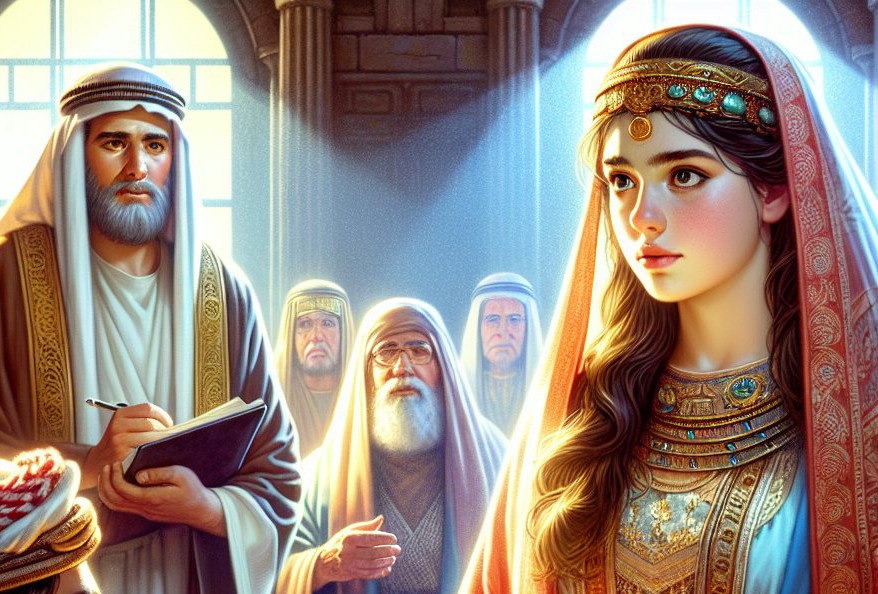
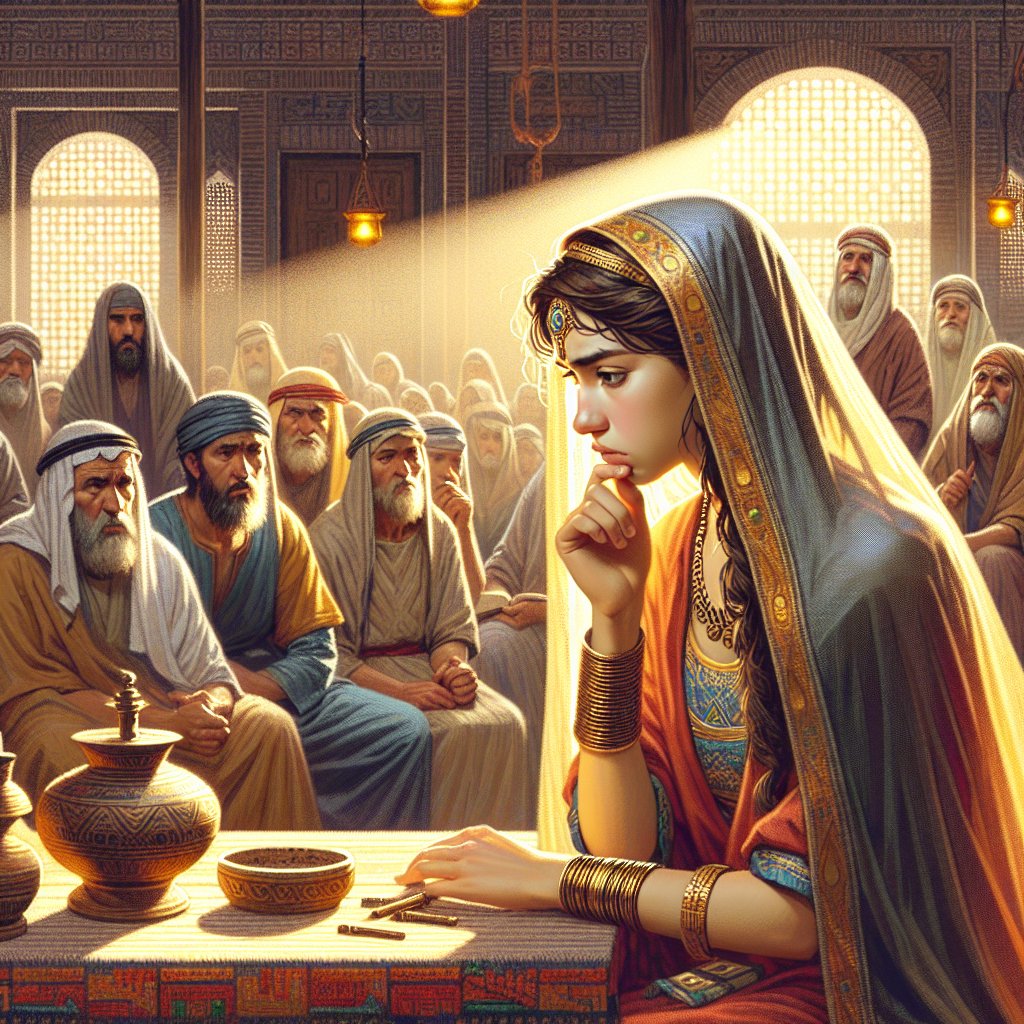
    Many critics of Christianity point to the Hebrew word translated ‘virgin” used in Isaiah 7:14, ‘almah,’ as really meaning just a ‘maiden,’ or any young woman such as these might be in the illustration depicting the five wise virgins from Jesus’ parable.

    Their criticism is there is no implication for the young woman being a virgin. To support this assertion, they look at unmarried young women in our society, many of whom are most definitely NOT virgins, and conclude, ‘What is unusual about a healthy young woman suddenly turning up pregnant?’

    Through the 50’s in the United States, girls and women dressed and acted demurely, and it was assumed, correctly so, that teenaged women from religious families WERE virgins at their weddings.

    Then came the sexual revolution of the 60’s when young people were encouraged to experiment with sex and this became less and less true in our society.

    The error in interpretation of this ancient word is assuming their culture was not significantly different than ours. That could not be further from the truth!
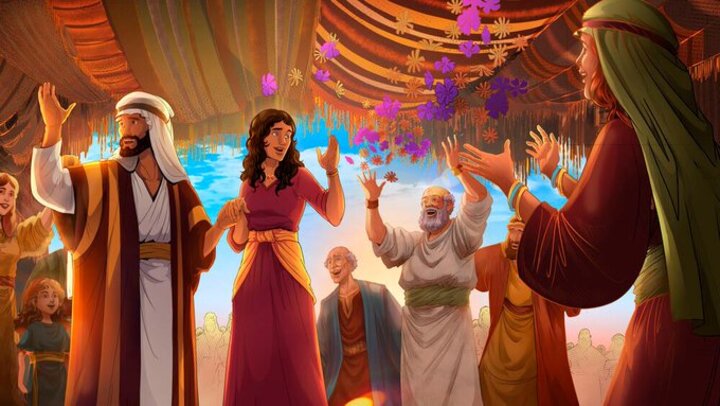
    The Middle Eastern culture during the 8th century B.C. when Isaiah lived, as well as before and still, very strictly protects their girls from premature sexual experiences. This was especially true of Israel which was a Theocratic society (ruled by God) where one of the covenantal 10 Comandments specifically forbade ANY kind of extramarital sex.

    “Almah’ is only used 5 times in the Old Testament. Another word is used for a virgin daughter everywhere else, with the difference that ‘almah’ implies a young woman who has matured to the point of being ready for marriage. Otherwise she would not be capable of bearing a child.

    If these points are not convincing enough, the Greek word used for ‘virgin’ in Matthew, ‘parthenos,’ means a virgin, and only a virgin, in the Greek language.

    We believe in the virgin birth and honor Mary above all other women for agreeing to become pregnant by the Holy Spirit, for enduring the censure of appearing to have cheated on her betrothed, for trusting God to work everything out for good, according to His plan and purpose, and for bearing the Savior of the world.


  • C3. The Promised Messiah, also a Son, part 1

    Throughout Old Testament prophecies are promises of God’s ‘Annointed One,’ the Messiah. He would be fully annointed with God’s Holy Spirit, would be a direct representative of God ruling over the world, and would, basically, correct everything that is wrong with the world. In only a few places is the Messiah also referred to as a ‘Son.’

    Psalm 2 (excerpts)
    The Reign of the Lord’s Anointed

    The kings of the earth set themselves,
        and the rulers take counsel together,
        against the Lord and against His Annointed…

    He who sits in the heavens laughs;
        the Lord holds them in derision.
    Then He will speak to them in his wrath,
        and terrify them in His fury…

    The Lord said to me, “You are my Son;
        today I have begotten You.

    Now therefore, O kings, be wise;
        be warned, O rulers of the earth.
    Serve the Lord with fear,
        and rejoice with trembling.
    Do homage to the Son, lest he be angry
        and you perish along the way,
        for his wrath will soon be kindled.

    This Psalm was written in 1044 BC and God’s Annointed is here first identified as also being God’s Begotten Son. Parts of this Psalm are quoted and applied to Jesus in the New Testament writings. For example, in this prayer recorded in Acts 4:24-28:

    “For truly in this city there were gathered together against your holy servant Jesus, whom You anointed, both Herod and Pontius Pilate, along with the Gentiles and the peoples of Israel, to do whatever Your hand and Your plan had predestined to take place.”

    “Christ Carrying the Cross” painting by Hieronymus Bosch, circa 1515-1516, featuring faces from different ethnic groups of his time representing the nations raging at Jesus during His crucifixion.

    Essentially these early Christians are saying this prophecy was fulfilled about 1,075 years later in Jesus as God’s Annointed One (the Christ).

    A NOTE ABOUT INTERPRETING PROPHECY

    Our head pastor @jdgreear.com, points out that prophecies often have an immediate application, as well as a future application. The nonbelieving Jews do not accept the Christian interpretation of Psalm 2. They say the ‘annointed’ referenced in it is King David and that God calls him a ‘son’ as a term of endearment. This would be the immediate application.

    One of the things Jesus taught His disciples was how their Scriptures (our Old Testament) prophesied about Him. We see many of those examples recorded in the gospels, but we also see many more referenced in later writings, such as another one in from Psalm 2 in Acts 13. These are the future applications to Jesus Christ.

    Those Jews who DO see Psalm 2 as a Messianic prophecy focus on His establishment as the ruler of the world. We as Christians believe this is still a future event to come at Jesus’ second coming and at the end of the age as recorded in Revelation 21, when creation is made new and God’s Holy City comes down from heaven to earth with God/Jesus ruling the world.

    Amen, Lord Jesus, come quickly.


  • C2. Isaac the Son promised by God

    Genesis chapter 15. After this, the word of the Lord came to Abram in a vision:“Do not be afraid, Abram. I am your shield, your very great reward.” 

    But Abram said, “Sovereign Lord, what can you give me since I remain childless and the one who will inherit my estate is Eliezer of Damascus?”  And Abram said, “You have given me no children; so a servant in my household will be my heir.”

    Then the word of the Lord came to him again: “This man will not be your heir, but a son who is your own flesh and blood will be your heir.”  He took him outside and said, “Look up at the sky and count the stars—if indeed you can count them.” Then he said to him, “So shall your offspring be.”

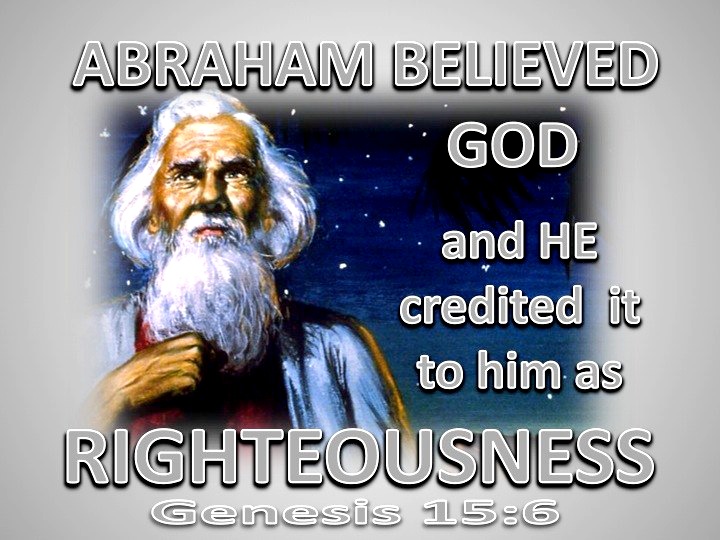
    Then Abram believed in the Lord and He reckoned it to him as righteousness.

    Genesis chapter 17. When Abram was ninety-nine years old, the Lord appeared to him and said, “I am God Almighty; walk before me faithfully and be blameless. Then I will make my covenant between me and you and will greatly increase your numbers.”

    Abram fell facedown in worship, and God said to him, “As for me, this is my covenant with you: You will be the father of many nations. No longer will you be called Abram (High Father), but your name will now be Abraham (Father of a Multitude), for I have made you a father of many nations.

     “I will make you very fruitful; I will make nations of you, and kings will come from you. I will establish my covenant as an everlasting covenant between me and you and your descendants after you for the generations to come, to be your God and the God of your descendents after you.”

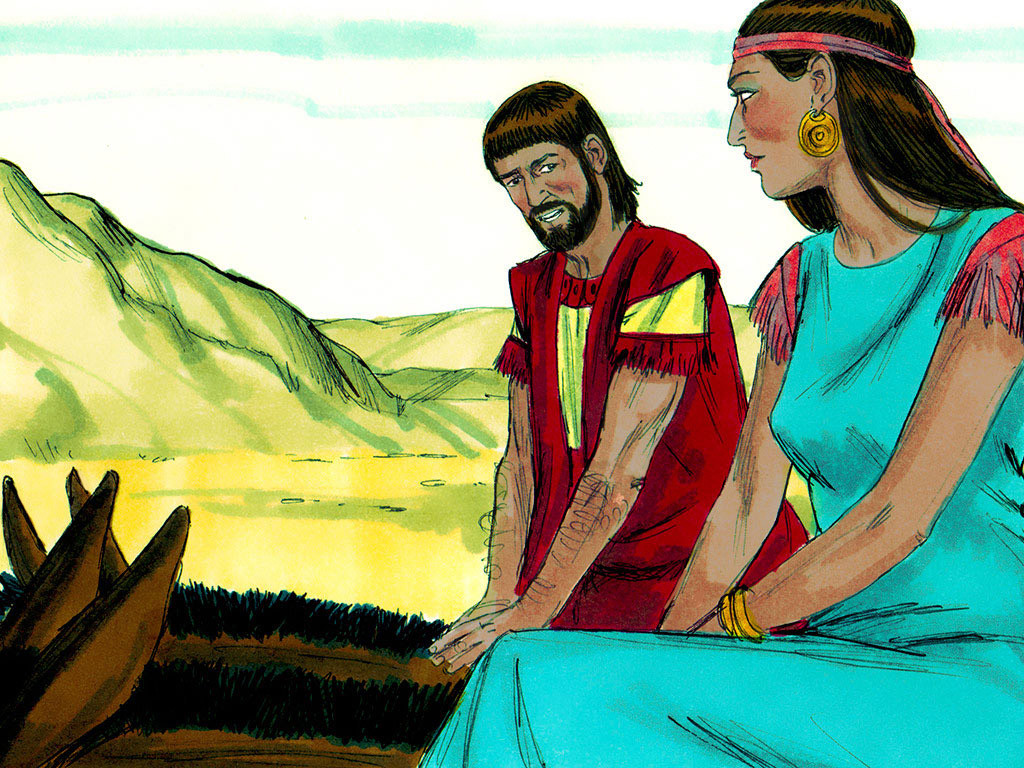
    God also said to Abraham, “As for Sarai, your wife, you are no longer to call her Sarai (Barren One), her name will be Sarah (Princess). I will bless her and will surely give you a son by her. I will bless her so that she will be the mother of nations; kings of peoples will come from her.”

    Abraham laughed and said to himself, “Will a son be born to a man a hundred years old? Will Sarah bear a child at the age of ninety?” Then God said, “Yes, your wife Sarah will bear you a son, and you will call him Isaac (Laughter). I will establish my covenant with him as an everlasting covenant for his descendants after him.” 

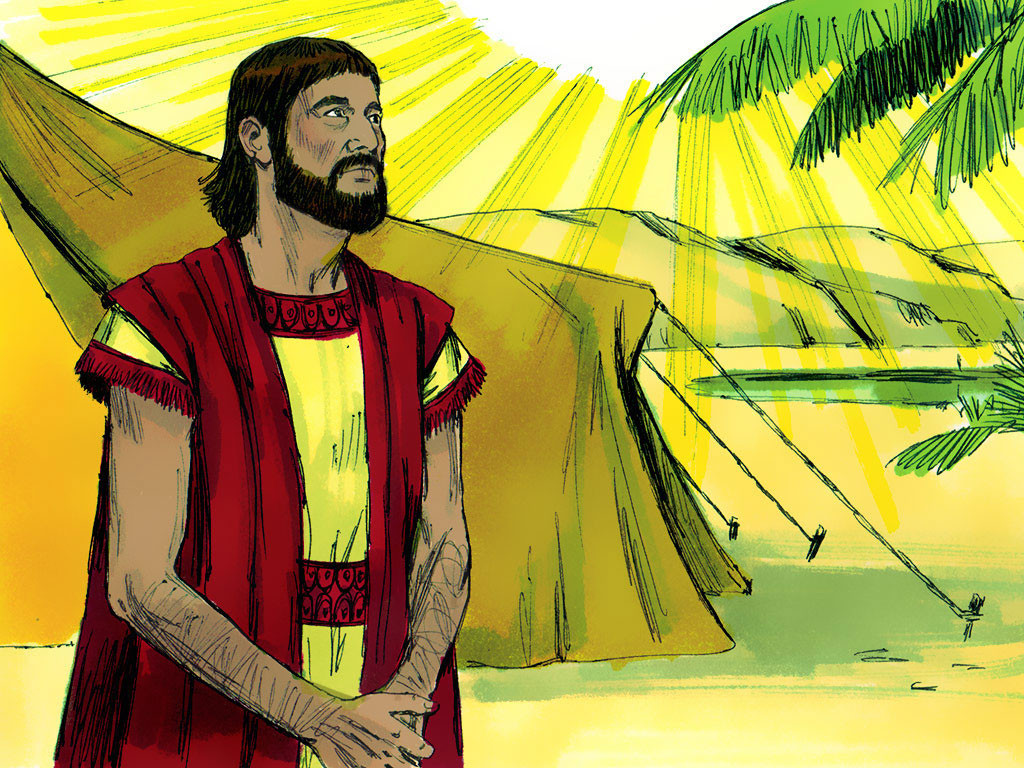
    Genesis chapter 18. Now the Lord appeared to Abraham by the oaks of Mamre, while he was sitting at the tent door in the heat of the day. And when he looked up, he saw three men standing there, and when he saw them, he bowed low to the ground in worship…

    After a meal, they asked him  “Where is your wife, Sarah?” 

    “There, in the tent,” Abraham said.

    Then one of the men said, “I will surely return to you about this time next year, and Sarah your wife will have a son.”

    Now Sarah was listening at the entrance to the tent, which was behind him. Abraham and Sarah were already very old, and Sarah was past the age of childbearing. So Sarah laughed to herself as she thought, “After I am worn out and my lord is old, will I now have this pleasure?” Then the Lord said to Abraham, “Why did Sarah laugh and say, ‘Will I really have a child, now that I am old?’ Is anything too hard for the Lord? I will return to you at the appointed time next year, and Sarah will have a son.”

    Genesis chapter 21. Now the Lord was gracious to Sarah, as he had said, and the Lord did for Sarah what he had promised. Sarah became pregnant and bore a son to Abraham in his old age, at the very time God had promised him. Sarah said, “God has brought me laughter, and everyone who hears about this will laugh with me.” And she added, “Who would have said to Abraham that Sarah would nurse children? Yet I have borne him a son in his old age.”


  • C1. Isaac – a Foretaste of Jesus Christ, introduction

    Biblical scholars throughout church history have written about how many of the prominent figures and events in the Old Testament ‘prefigure’ Jesus Christ. That is, there are similarities in certain things they did or happened to them. This is technically called ‘typology.’

    We are going through the book of Exodus @SummitChurch.com and this weekend one of our teaching pastors, @BryanLorrits.com, spoke about this concept and compared the idea to when his mother baked a cake when he was growing up. (One of his nods to Mothers Day.)

    Pastor Bryan said his mom loved to bake cakes. When little Bryan in another part of the house realized she was baking one, he would make his way to the kitchen. After she had finished mixing the ingredients, filled the cake pans and put them into the oven, all he had to do was be hanging around the kitchen. He didn’t have to ask her, not even silently beg with his brown, puppy dog eyes, she would just hand over the mixing spoon and let him lick the little bit of batter still clinging to it.

    As he explained, part of the same goodness that was in the cake was on the spoon, but only enough for one person to partake of it. When the whole cake was finished, the whole family could partake of it and enjoy its goodness.

    So, the similarities in O.T. figures and events to Jesus is like the taste that was enjoyed in a small way and in a limited scope, but Jesus is like the cake, the whole thing that can be enjoyed by all humankind.

    In addition to Moses mentioned by Pastor Lorrits, and Isaac in my story, some of the other Old Testament people who foreshadowed the work and person of Jesus Christ (the Messiah) were Noah and the flood, Joseph saving his family from famine, David the King, Solomon his son of peace, and the prophets such as Jonah in the belly of a whale, Daniel in exile, and basically all of the other major prophets.

    In this next series, I’m going to look at ways Isaac was like Jesus Christ. Those ways will be, but are not limited to:

    1. They were both sons promised by God.

    2. God ordered that they be sacrificed.

    3. They carried the instruments of their sacrifice on their backs.

    4. A substitute lamb (young sheep) was provided.

    5. Both fathers received their sons back to them.


  • B5. origin stories- THE SACRIFICE epilogue

    Crunch, crunch, crunch, crunch…

    Two pairs of sandals walked on the gravelly path that led down the mountain.

    Crunch, crunch, crunch, crunch…

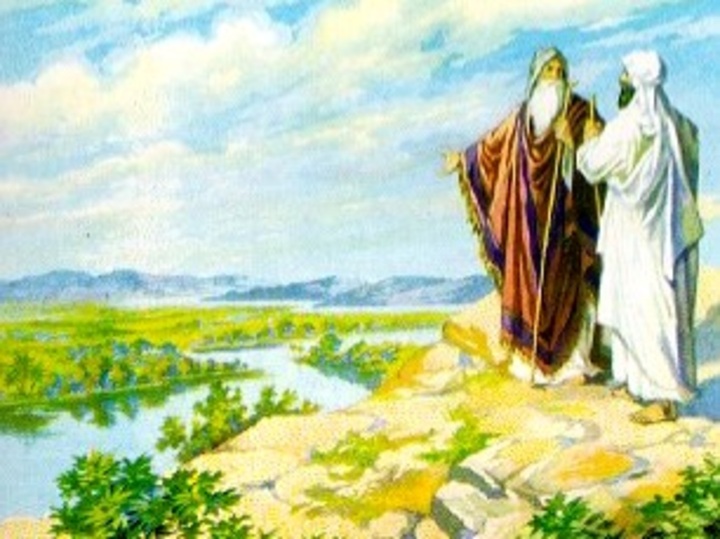
    Shepherds by their dress, one was an old man with a bushy white beard, leaning on a staff as he walked.

    Crunch, crunch, crunch, crunch…

    The other was a young man, tall and confident in his walk, carrying a haunch of roast mutton to share with the servants waiting below.

    Crunch, crunch, crunch, crunch…

    That morning, a man of God and his son had walked up the path to the peak above.

    Crunch, crunch, crunch, crunch…

    While there, they had an encounter with their God and learned a new aspect of His nature, that He is the God Who Provides.

    Crunch, crunch, crunch, crunch…

    Now, two men of God walked back down the path in the end.

    Crunch, crunch, crunch, crunch…


  • B4. origin stories – THE SACRIFICE, part 4

    Rustle, rustle…

    Abraham’s head jerked up at the unexpected sound. Isaac leaned back at the sudden movement, rubbing the tears from his eyes and started to ask a question “What…?” Abraham’s hand snapped up in the command for silence as he continued to scan the landscape for potential dangers.

    Rustle, rustle…

    Both men’s heads turned to look down the mountainside where the sound had come from. A rustle in the bushes could just be a mountain goat foraging for tasty new growth, or it could be a mountain lion looking to feast on a tasty goat. Bears also denned in caves in the mountains.

    Rustle, rustle, rustle…

    This time the men saw the branches of one of the bushes move in time to the sound. Abraham reached down and picked up his discarded knife without taking his eyes from the suspect bush. He motioned Isaac to go to the left while he began his stalk to the right. Isaac absently removed the loop of the strap still snugged around his wrist and tucked it into his sash in unconscious imitation of his father. He then picked up a fist-sized rock which he could throw with such force and accuracy to discourage many beasts.

    Rustle, rustle, rustle, rustle…

    The motion had become more violent as they approached the sides of the shaking bush, their hearts thumping just as hard, but what they saw was totally unexpected.

    Baaa…, the sheep sounded as he saw them, clearly asking for help from them. Abraham nervously scanned the landscape to see if there was a response to the sound, but seeing nothing, he sheathed his knife and stared at the scene before him. What he saw was not unusual–a young ram not yet used to their newly grown horns, foraging for tender shoots in a bush, as they were used to doing, but then their new horns catching on the limbs as they backed out.

    It was also not unusual to see a young ram apart from a flock. Sometimes when the young rams began to feel the first strength of their adulthood and acted too aggressively toward the other rams, and would not submit to the lead ram, they would often be driven away from the flock. The situation was not unusual to the shepherds, but the location was. Sheep were creatures of the plains and meadows. It was not natural that a lone ram would be this far up a mountain.

    Suddenly, Abraham straightened and his eyes grew wide. Isaac saw the sudden motion and, after a moment’s thought, his eyes grew wide too, remembering his father’s words on the path up, “The Lord will provide the young sheep for the sacrifice.”

    Abraham shook his head to clear the thought and returned to the practical. He motioned Isaac to the rear of the sheep and the young shepherd knew what was needed. He took the strap from his sash, looked down to check the slip knot and suddenly was reminded that just a few minutes ago, it had bound his own hands as a sacrifice. He bound the sheep’s hind legs and then held the animal still while his father bound the front legs. Then Isaac lifted him while Abraham untangled the horns from the limbs. Feeling itself free, the ram tried to get to his feet and run away, but only fell to its side.

    Abraham left the foolish sheep to kick and buck until it gave up while he studied the size of the ram and the steepness of the slope–it would take both of them to carry the ram up. As the ram finally lay still, breathing heavily from its exertions, Abraham motioned his son beside him and with a practiced motion they lifted the heavy ram over their heads and settled it on their shoulders, Abraham taking the heavier head end. Putting their arms around each other for stability and holding the ram’s bound feet with their other, arm in arm and step by step, the two men carried the sacrificial sheep up the steep slope to the altar waiting above.


  • B3. Origin stories – THE SACRIFICE, part 3

    The old man raised his knife high and prepared to thrust it through his struggling son’s chest…

    “ABRAHAM, ABRAHAM!”

    The voice of God blasted across the mountain top like a windstorm, kicking up sand and debris, and staggering Abraham back from the altar. His hand dropped to his side and the knife fell from his nerveless fingers. Then it was like his joints failed him as he dropped to his knees and then prostrate on his face before his God. He was barely able to choke out a reply past the lump in his throat, “I am here.”

    Then God continued, “DO NOT LAY A HAND ON THE BOY AND DO NOTHING TO HARM HIM; FOR NOW I KNOW THAT YOU REVERE GOD, SINCE YOU HAVE NOT WITHHELD YOUR SON, YOUR ONLY SON, FROM ME.”

    Abraham lay there a moment longer after sensing the Presence had departed, then he shakily rose to his hands and knees and looked up at Isaac on the altar. The boy was staring up in the direction the voice of God had come from with a look of wonder. He had heard God too!

    Getting to his feet, Abraham stumbled over to his son and undid the strap around his feet that he had just tied there, absently tucking it into his sash. Isaac swung around to sit and lifted his bound hands to his father. Abraham still couldn’t meet his son’s eyes as he undid the strap a little, then stepped back to allow Isaac to remove the strap the rest of the way on his own.

    Isaac stepped up to his father, reached down and took his hands. Abraham slowly looked up, hoping to see understanding and forgiveness in his son’s eyes. When their eyes met, he saw that, and more.

    What Abraham saw was something he had seen many times in the eyes of youth when they were allowed to accompany the flocks for the first time on their summer trek around the great valley and into the mountain meadows. He had seen this look in the eyes of the young shepherds after they had been attacked by a predator going after a tasty sheep and fought it off, or when they climbed down into a ravine to recover a fallen sheep and slipped with only the rope tied under their arms preventing their own plunge to the bottom, or when one jumped into a swollen mountain stream to recover a sheep that had fallen in and then almost drowned themselves, the look they all had afterward when they had faced their own mortality and realized they had dealt with it. What Abraham saw was a man looking back at him from his son’s eyes.

    It wasn’t clear who moved first, but the two men met in a fierce embrace. They had almost lost each other! The beloved son, the beloved father… Only the shaking of their shoulders betraying their silent sobs, not even the emotion of the moment causing them to break the discipline of silence when alone out in the wilderness.

    Rustle, rustle…