John introduced a new Greek name into the Biblical lexicon in chapter 14 of his gospel, finalized about 95 A.D., ‘Paraclete.’ The word has been translated many ways in different English versions of the Bible. Since “Paracletos’ is translated so many ways, let me set the scene in the upper room where John writes it (or its Aramaic equivalent) was used by Jesus to maybe help us understand what it meant in context.
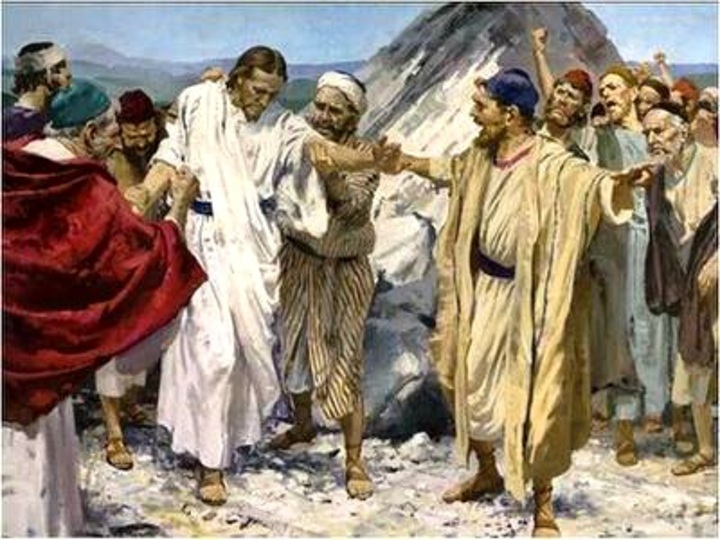
The tension began at the Festival in Jerusalem the previous winter. John 10:24. (‘The Jews” is John’s shorthand for the Jewish leaders.)
Jesus answered them…
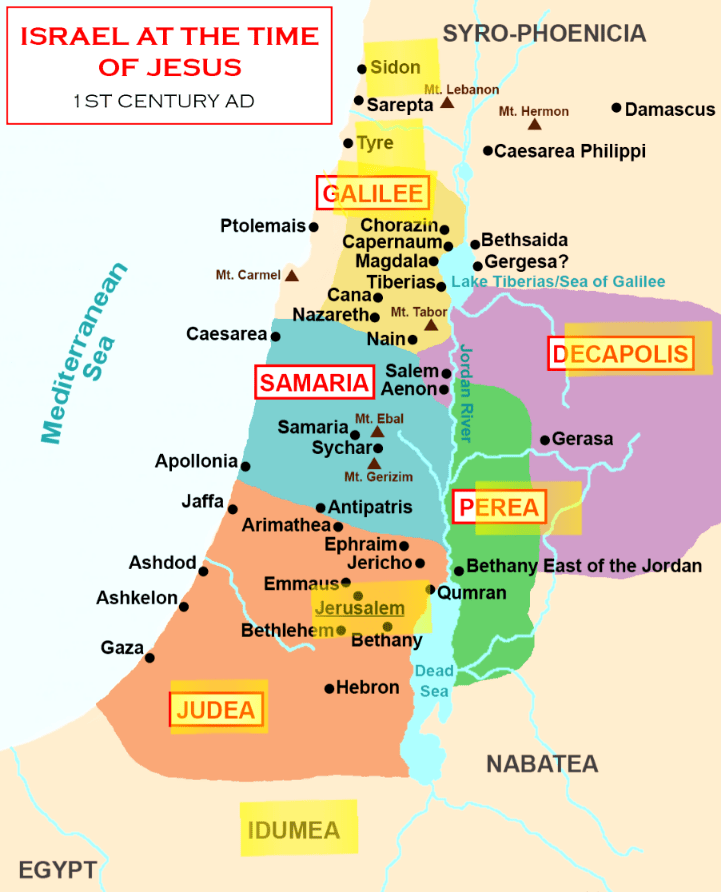
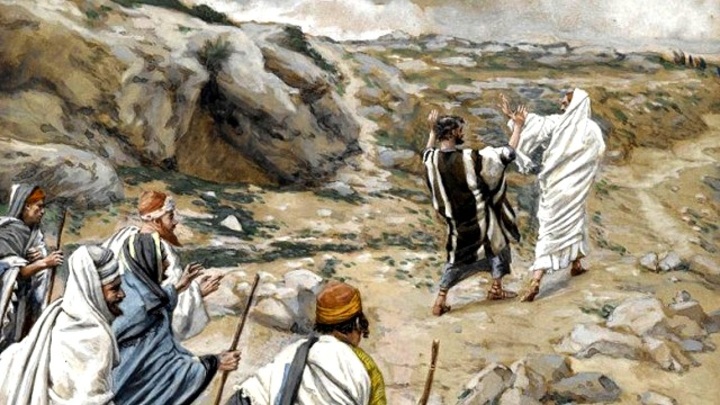
But Jesus eluded their grasp and crossed over the Jordan River and was staying there. John 10:39-40
After a couple of days, Jesus went to Bethany, over the objections of His disciples. “Rabbi, don’t you remember when we were just there that the Jews were trying to stone you?”
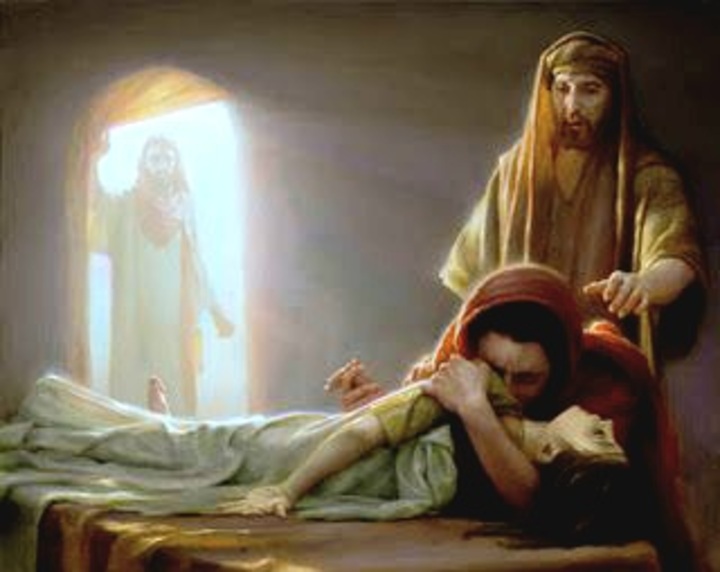
When they got to Bethany, Jesus raised Lazarus from the dead.
John 11:45-53 Many of the Jews believed in Jesus because of this miracle, but some went back to Jerusalem and reported it to the Pharisees. The Jewish rulers were very, very worried that so many of the Jews would believe in Jesus, they would cause a riotous situation where the Romans would take over the government and the nation. Their leader’s suggestion was…
John 11:7-8 After a couple of days, Jesus announced they were going to Judea again. It was time for the Spring Passover Feast and Jesus said, as recorded in the other gospels, He “earnestly wanted to eat this Passover dinner with them.”
His disciples were alarmed and reminded Him, “Rabbi, the Jews were trying to stone you when we were just there, and You want to go there again?”
John 11:16 When it was clear Jesus was going to go back across the Jordan, Thomas said to his fellow disciples…
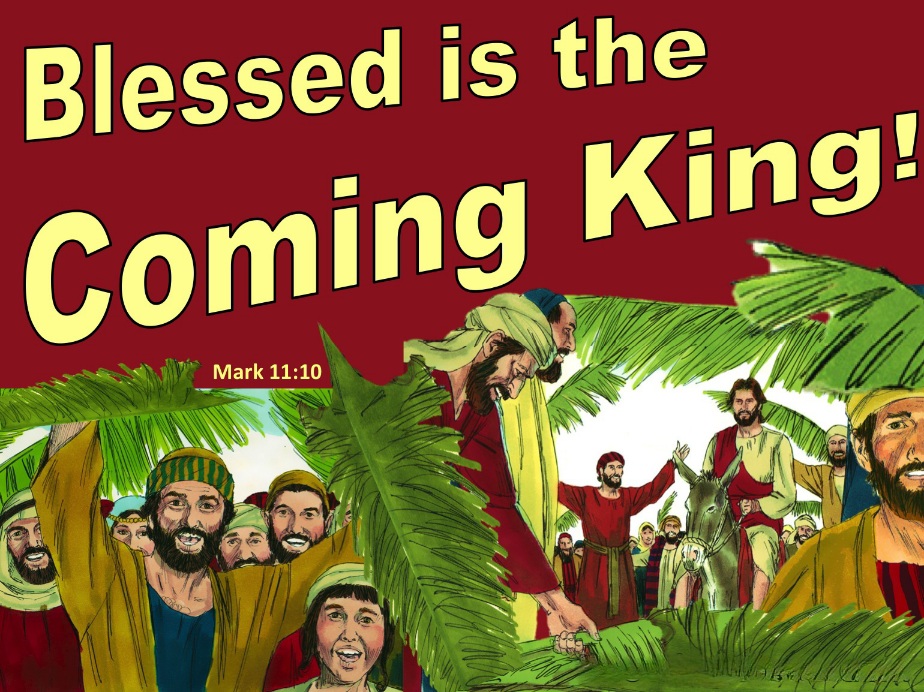
Then Jesus, despite the trepidations of His disciples, made a flashy entrance to Jerusalem to adoring crowds who had heard about the resurrection of Lazarus from those who had been there. John 12:13
The Jewish leaders realized they couldn’t arrest Jesus in public without causing the very riot they were seeking to avoid, so they were trying to find a time and place where they could catch Jesus in private.
John 12:27 Now Jesus’ thoughts turn toward what’s going to happen to Him soon…
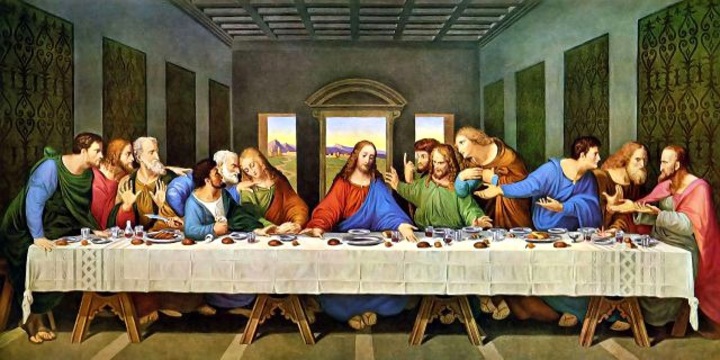
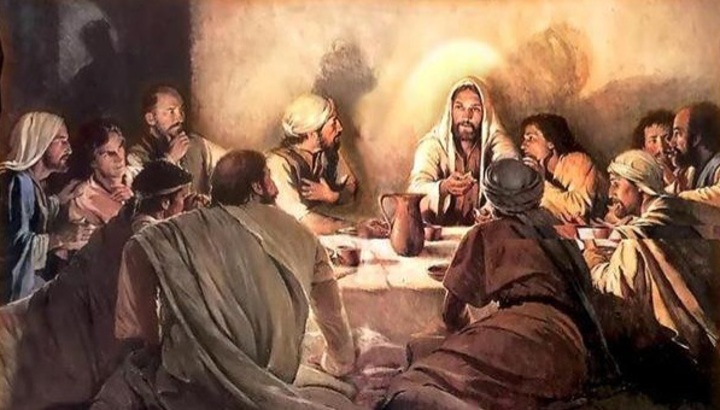
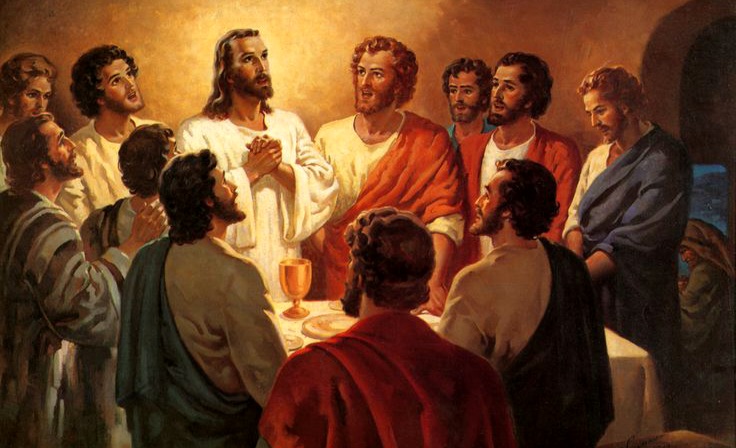
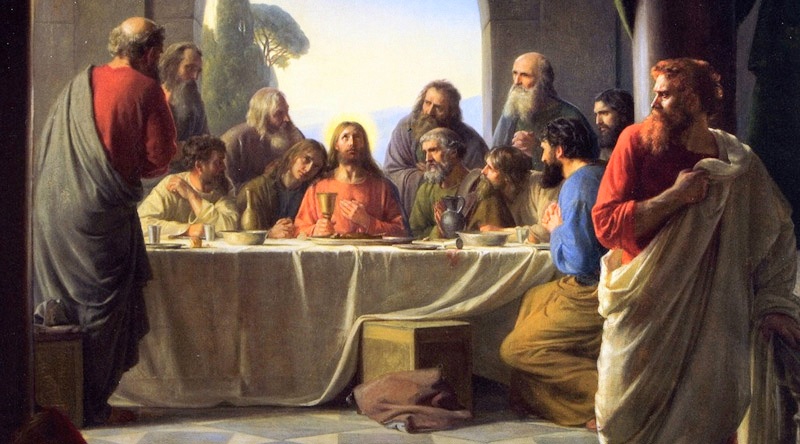
Arrangements are made for the Passover supper in a rented upper room, but even there, at what should be a time of celebrating God’s deliverance of the nation of Israel from slavery to the Egyptians, there is tension.
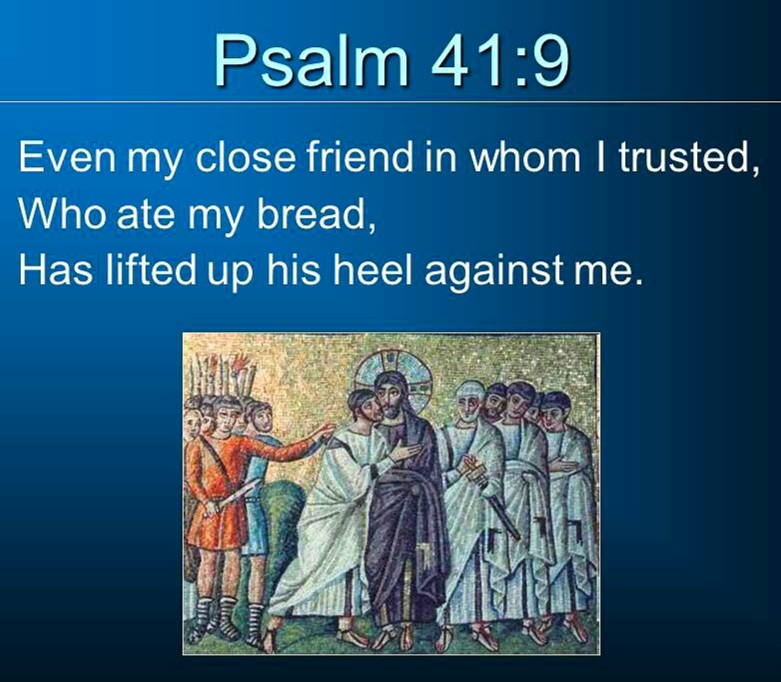
John 13:21 Jesus said, “My soul is deeply troubled, one of you will betray Me!”
The disciples were at a loss as to which one of them He was speaking about. “Is it I? Is it I, Lord,” They were all asking.
Do you get the picture of what is going on this eve before the arrest, trials and crucifixion of Jesus? There is a lot of tension here: Jesus is struggling with His upcoming suffering and crucifixion, and even if His disciples don’t understand why He’s so troubled, they’re like children who become upset when their parents are upset, so they’re troubled too.
The disciples are also stressing about what the Jewish leaders are plotting and afraid they will be caught up in it. They could always leave Jesus, their Master these past 3 1/3 years, but to their credit, they were determined to be with Him to the end. It is in the middle of these tensions that Jesus introduces the Paraclete to them.
When I was in the seventh grade, we had a unit in social studies on the historical development and meaning of names. For our homework, we were supposed to ask our parents what our family name meant. Since my parents were divorced, I wasn’t able to ask my father and knew better than to ask my mother, so I just made something up.However, for some reason, this kindled in me an interest in understanding names.
A year or so later in church, the pastor was talking about Jesus being born and mentioned that the name He was given was the same name as Joshua in the Old Testament in old Hebrew, meaning “God’s Salvation.”
It became kind of a game over the years for me to match up other names in the New Testament with those in the Old Testament.
Going back to what I learned about how people in the Old World got their names, I saw how Jesus was called by many names in the gospels.
For example, when He was back home in Nazareth and the surrounding area of Galilee, He was called, “Jesus, Son of Joseph,” or in Aramaic Hebrew, “Bar-Joseph,” to distinguish Him from others in the area who had been named after the O.T. hero, Joshua.
When Jesus took his ministry south to Judea and Jerusalem, He was called, “Jesus of Nazareth.” Once again, to clearly distinguish Him from other popular figures named ‘Jesus.’
Jesus was also referred to by various titles. By those who were believers of His teachings, since He was a traveling teacher of the Bible, He was called, “Rabbi Jesus.”
Those who had committed to following Him as disciples called Him ‘Master.’ One time Jesus asked them…
“And they said, “Some say John the Baptist, others say Elijah, and others Jeremiah or one of the prophets.” Then Jesus asked them, but…
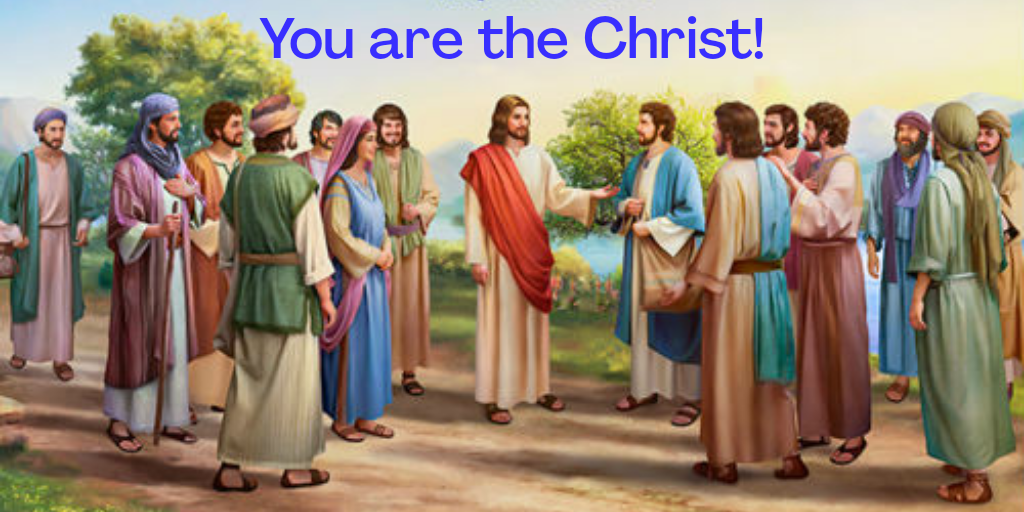
Simon Peter answered…
Simon, named after one of the original sons of Jacob, ‘Simeon,’ got a new name that day. Jesus said…
There are a lot of things going on with names here!
First we see the title that Jesus most often called Himself, which in the Aramaic Hebrew of His time was probably, ‘Bar-Nash,’ a way of saying, ‘I’m just another guy,’ and emphasizing His humanity.
However, it might also be a reference to Daniel’s vision in Chapter 7, “Bar-Enash,” which could just mean a human being, except Daniel goes on to describe this human figure receiving all dominion and power from God, associated with the Messiah, so this could also be a subtle way for Jesus to declare He is the Messiah.
In whichever case, Peter’s declaration of faith names Jesus as both the promised Messiah and the actual Son of God. (More on that in a later blog.) AND Jesus affirms Peter’s declaration as being correct.
The narrative is written from a time in the future, so it gives away that Simon afterward was also known by a second Greek name from the word for a rock, ‘petros.’ Since Jesus spoke and taught in Aramaic, it is thought that He actually used the same Aramaic word that the fortress at Petra was named with, but was later renamed ‘Petra’ by the Romans when they conquered it. So, Peter became known in history by the Greek form.
Now that Jesus has been resurrected, ascended to heaven and given all “power and authority,” His full name with titles is, ‘The Lord Jesus Christ.’
Among all of these names for Jesus, one is missing. Nowhere outside of the prophesy of Isaiah 7:14 do I see Him actually called ‘Emmanuel,’ This bothered me and I kept the question as to ‘why not?’ in the back burner of my mind for many decades.
The second prophecy of the Messiah as a son was made by Isaiah sometime between 735 – 734 B.C.
This prophecy by Isaiah was used in Matthew’s gospel to refer to the birth of Jesus.
“This all then took place so that what was spoken by the Lord through the prophet Isaiah would be fulfilled:
“‘Behold, the virgin will conceive and give birth to a Son…
The virgin birth is one of the key beliefs for Christiandom. Believing the gospel’s claim that Jesus was born from a girl who had never had sexual relations, and thus was conceived in a miraculous way by God, means that:
Jesus is Divine, having been begotten directly by God.
The prophetic Scriptures are Divinely inspired.
God has the power to work miracles outside the laws of nature.
AND that Jesus was sinless, thus His sacrifice had the power to redeem us from sin.
Many critics of Christianity point to the Hebrew word translated ‘virgin” used in Isaiah 7:14, ‘almah,’ as really meaning just a ‘maiden,’ or any young woman such as these might be in the illustration depicting the five wise virgins from Jesus’ parable.
Their criticism is there is no implication for the young woman being a virgin. To support this assertion, they look at unmarried young women in our society, many of whom are most definitely NOT virgins, and conclude, ‘What is unusual about a healthy young woman suddenly turning up pregnant?’
Through the 50’s in the United States, girls and women dressed and acted demurely, and it was assumed, correctly so, that teenaged women from religious families WERE virgins at their weddings.
Then came the sexual revolution of the 60’s when young people were encouraged to experiment with sex and this became less and less true in our society.
The error in interpretation of this ancient word is assuming their culture was not significantly different than ours. That could not be further from the truth!
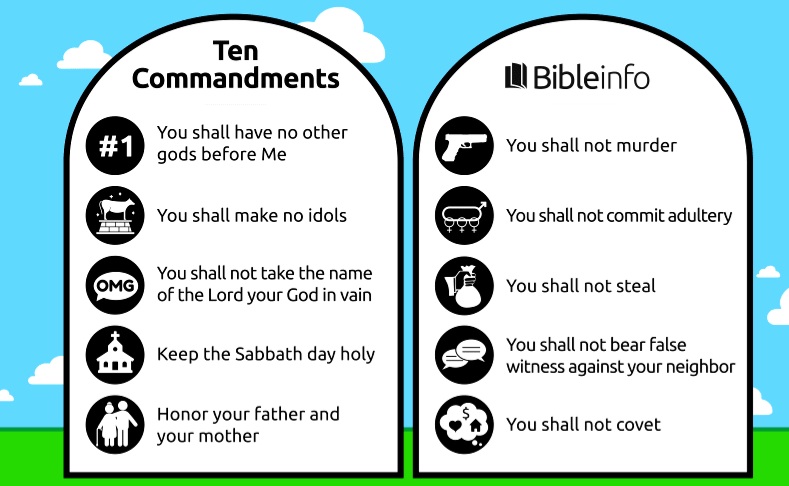
The Middle Eastern culture during the 8th century B.C. when Isaiah lived, as well as before and still, very strictly protects their girls from premature sexual experiences. This was especially true of Israel which was a Theocratic society (ruled by God) where one of the covenantal 10 Comandments specifically forbade ANY kind of extramarital sex.
“Almah’ is only used 5 times in the Old Testament. Another word is used for a virgin daughter everywhere else, with the difference that ‘almah’ implies a young woman who has matured to the point of being ready for marriage. Otherwise she would not be capable of bearing a child.
If these points are not convincing enough, the Greek word used for ‘virgin’ in Matthew, ‘parthenos,’ means a virgin, and only a virgin, in the Greek language.
We believe in the virgin birth and honor Mary above all other women for agreeing to become pregnant by the Holy Spirit, for enduring the censure of appearing to have cheated on her betrothed, for trusting God to work everything out for good, according to His plan and purpose, and for bearing the Savior of the world.
Throughout Old Testament prophecies are promises of God’s ‘Annointed One,’ the Messiah. He would be fully annointed with God’s Holy Spirit, would be a direct representative of God ruling over the world, and would, basically, correct everything that is wrong with the world. In only a few places is the Messiah also referred to as a ‘Son.’
Psalm 2 (excerpts) The Reign of the Lord’s Anointed
The kings of the earth set themselves, and the rulers take counsel together, against the Lord and against His Annointed…
He who sits in the heavens laughs; the Lord holds them in derision. Then He will speak to them in his wrath, and terrify them in His fury…
The Lord said to me, “You are my Son; today I have begotten You.
Now therefore, O kings, be wise; be warned, O rulers of the earth. Serve the Lord with fear, and rejoice with trembling. Do homage to the Son, lest he be angry and you perish along the way, for his wrath will soon be kindled.
This Psalm was written in 1044 BC and God’s Annointed is here first identified as also being God’s Begotten Son. Parts of this Psalm are quoted and applied to Jesus in the New Testament writings. For example, in this prayer recorded in Acts 4:24-28:
“For truly in this city there were gathered together against your holy servant Jesus, whom You anointed, both Herod and Pontius Pilate, along with the Gentiles and the peoples of Israel, to do whatever Your hand and Your plan had predestined to take place.”
“Christ Carrying the Cross” painting by Hieronymus Bosch, circa 1515-1516, featuring faces from different ethnic groups of his time representing the nations raging at Jesus during His crucifixion.
Essentially these early Christians are saying this prophecy was fulfilled about 1,075 years later in Jesus as God’s Annointed One (the Christ).
A NOTE ABOUT INTERPRETING PROPHECY
Our head pastor @jdgreear.com, points out that prophecies often have an immediate application, as well as a future application. The nonbelieving Jews do not accept the Christian interpretation of Psalm 2. They say the ‘annointed’ referenced in it is King David and that God calls him a ‘son’ as a term of endearment. This would be the immediate application.
One of the things Jesus taught His disciples was how their Scriptures (our Old Testament) prophesied about Him. We see many of those examples recorded in the gospels, but we also see many more referenced in later writings, such as another one in from Psalm 2 in Acts 13. These are the future applications to Jesus Christ.
Those Jews who DO see Psalm 2 as a Messianic prophecy focus on His establishment as the ruler of the world. We as Christians believe this is still a future event to come at Jesus’ second coming and at the end of the age as recorded in Revelation 21, when creation is made new and God’s Holy City comes down from heaven to earth with God/Jesus ruling the world.
Biblical scholars throughout church history have written about how many of the prominent figures and events in the Old Testament ‘prefigure’ Jesus Christ. That is, there are similarities in certain things they did or happened to them. This is technically called ‘typology.’
We are going through the book of Exodus @SummitChurch.com and this weekend one of our teaching pastors, @BryanLorrits.com, spoke about this concept and compared the idea to when his mother baked a cake when he was growing up. (One of his nods to Mothers Day.)
Pastor Bryan said his mom loved to bake cakes. When little Bryan in another part of the house realized she was baking one, he would make his way to the kitchen. After she had finished mixing the ingredients, filled the cake pans and put them into the oven, all he had to do was be hanging around the kitchen. He didn’t have to ask her, not even silently beg with his brown, puppy dog eyes, she would just hand over the mixing spoon and let him lick the little bit of batter still clinging to it.
As he explained, part of the same goodness that was in the cake was on the spoon, but only enough for one person to partake of it. When the whole cake was finished, the whole family could partake of it and enjoy its goodness.
So, the similarities in O.T. figures and events to Jesus is like the taste that was enjoyed in a small way and in a limited scope, but Jesus is like the cake, the whole thing that can be enjoyed by all humankind.
In addition to Moses mentioned by Pastor Lorrits, and Isaac in my story, some of the other Old Testament people who foreshadowed the work and person of Jesus Christ (the Messiah) were Noah and the flood, Joseph saving his family from famine, David the King, Solomon his son of peace, and the prophets such as Jonah in the belly of a whale, Daniel in exile, and basically all of the other major prophets.
In this next series, I’m going to look at ways Isaac was like Jesus Christ. Those ways will be, but are not limited to:
1. They were both sons promised by God.
2. God ordered that they be sacrificed.
3. They carried the instruments of their sacrifice on their backs.
Practicing in most things means working to improve one’s skill, but the activity rarely has any ‘real world’ impact. ‘Practicing’ the G.C. is more like when a lawyer or doctor sets up a ‘practice,’ they are practically applying what they have learned in school and internship now in the real world.
Using football as a metaphor for the G.C, there are two main ways that players and teams improve–by practice and playing games. If a player–such as a quarterback–wants to try and go to the next level, they often put in extra individual time reviewing game films of their upcoming opponent. So, to summarize, individual skills and knowledge start with individual practice. Then team practice moves more toward developing teamwork skills. The goal is playing time in the game. That is where the excitement is, where the challenges are that makes you dig for your best, or shows you where you’re lacking.
‘Practicing’ the G.C. also occurs on three levels. First is the individual level where we develop our personal relationship with God through our personal devotional, prayer and Bible study time. If we really want to be in the big Game, we need to lean in on these personal activities.
After I left the Army, I was playing for a recreational soccer league. We were guaranteed a certain minimal amount of playing time, and that is all I got because my skills were just average. I preferred to play forward and I noticed that we didn’t have a natural left-footed player. My dad and I are slightly ambidextrous, so I determined to see if I could elevate my left-footed skills.
Every day after work, I took my soccer ball to a nearby school with a blank brick wall and a flat area in front of it, and practiced kicking the ball with my left foot and catching it too. After about 3-4 weeks of this, coach began noticing my improved skills when I made some good stops and crosses to the striker, one of which he was able to head in for a goal. I got that increase in playing time I wanted.
Our personal devotion and prayer time with God, ‘practicing His presence,’ is when we develop our closeness to and sensitivity to Him. Our personal Bible study and Scripture memory is when we are equipped with God’s Word.
‘Team practice’ in the G.C. would be any time we are with other Christians, such as at a church service, home group, a Bible study, or serving together. In those situations, we should be trying to put into practice the ‘one another’ commands of the New Testament and developing our ‘team skills’ of fellowship–sharing testimonies about what God is doing in your life, answers to prayer, and meaningful messages from God’s Word.
The real ‘game’ of the G.C. then is when you are out in the world. If you have developed your personal relationship with God and developed your team skills with other Christians, then you should be ready to put the Great Commission into practice.
I hope this series on the Great Commission has caused you to think more deeply about this central facet of the Christian life, and that it has motivated you to do whatever you need to do to ‘get in the game.’
It’s always the small pieces that make the big picture. Don’t underestimate the little things in life! 🧩 Source Unknown
When I decided to start vegetable gardening, I looked for a book that would have all the information I needed. I did have some success following that book, but I realized there was much more I needed to know.
I’ve spent the years since reading every article on gardening I came across, watched every program on TV and talked to every gardener I met. Each time I learned at least one new thing I could add to the bigger picture I was forming of successful vegetable gardening.
Understanding the G.C. is a little like that. A record of Jesus giving the G.C. is contained at the end of each gospel and the beginning of Acts, but there are many more references to it in the Bible. Each of the 5 records are different from each other, but all have connections with the others, as well as unique elements. Here is my attempt at assembling these elements into a bigger, coherent picture.
The SENDING. The first word of the G.C. in Matthew is GO! We see in John how this is a bigger part of God’s plan when Jesus says, “As the Father has sent Me, so I send you.” And the scope of the sending is “all the nations,” “the world,” and more specifically we see in Luke/Acts they are to start in Jerusalem, then Judea and Samaria, and then to the remotest parts of the Earth.
Tha SPEAKING. As the disciples spread throughout the world at Jesus’ command (and not just them, but their disciples and so on to each generation until our day and beyond), there were specific messages they were to proclaim which we can summarize under the word the ‘gospel’. Elements of the gospel include “Proclaim repentance for forgiveness of sins. ” Jesus specified that any sins they declared as forgiven would be forgiven. Jesus also said they were to be His witnesses, testifying to the life, death and resurrection of Jesus as the Messiah (the Christ.)
The RESPONDING. It was expected that of those who heard the gospel message, some would believe and some would not. Those who believed were to be baptized as a sign of repentance and forgiveness of sins. Then they were to be taught to obey the commands of Jesus, as the disciples were taught by Jesus, and thus become disciples themselves, culminating in them obeying the final command–the Great Commission.
The EMPOWERING. Although this element tends to appear at the end of the G.C., it actually had to happen first. In Matthew, Jesus is recorded as saying, “I will be with you always.” In John chapters 14 to 16, we see this Prescence be in the form of the indwelling Spirit of God. We slao see this pouring out of God’s Spirit was prophesied by Joel as “the promise of the Father.” The disciples were to wait in Jerusalem for it to happen as it did 10 days later on the 50th day after the Passover, Pentecost. One other element of the G.C. was that miraculous signs would accompany those fulfilling the G.C., as we see they did in the book of Acts.
This initial outpouring of God’s Spirit on Christ’s disciples was a big, flashy, attention-getting event, as befit an inauguration. Something similar happened only a couple of other times to show that God’s promise of salvation was intended to go beyond the Jews. We who have believed also receive the indwelling Spirit, but it tends to grow within us as we grow in our faith and practice of discieship.
So, where are you in the Great Commission? Still working on the believing stage or are you learning and growing as a disciple? Are you maybe about ready to GO! No matter where we are in the Christian continuum, we are the product of and participating in the Great Commission.
from song by Pepper Choplin, copyright 2005, Shawnee Classics.
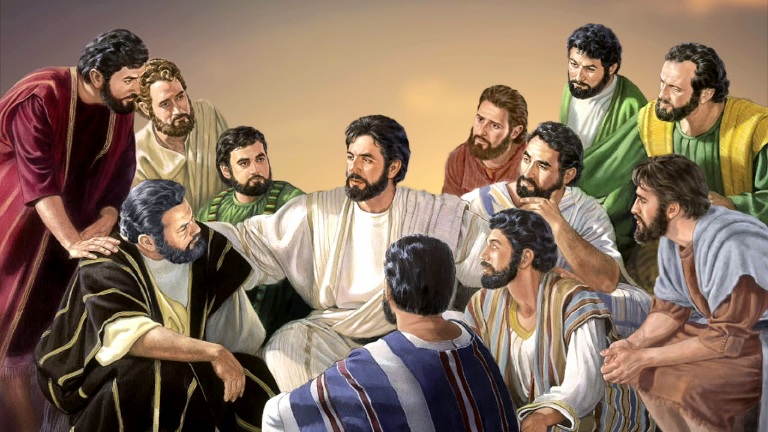
In Jesus’ last teaching session with His disciples before His arrest, He told them. “I will not leave you alone as orphans…”
Woven throughout His final teachings, as recorded in John chapters 14, 15 and 16, is a coming person called in Greek a ‘paraclete.’ Only John uses this nominative form of a more common Greek word translated several different ways. For example as comfort/consolation = 36 times, hence translated as Comforter. As exhort/exhortation = 28 times, hence called the Exhorter. As beseech/entreat/pray = 29 times, hence as Advocate or Intercessor. Other translations use Helper, Teacher, Encourager and more.
At its most basic, Paraclete means one who “comes alongside.” As I began considering these meanings, the picture of a coach came to mind, so let me paint some word picture from my first coached experience playing little league baseball to illustrate these meanings.
The first thing I remember the coach doing was gathering us around him and teaching us the rules of baseball, what each position did and how we had to learn to play together as a team. He was being a Teacher.
I remember when I was having such a hard time learning to hit the ball and he came up beside me, put his hand on my shoulder gently and said, ‘You can do this. I have confidence in you.’ He was being an Encourager.
I also remember times when I wasn’t doing a very good job in my fielding and the coach came up to me, put his hand on my shoulder firmly, looked me in the face and told me I needed to do better. ‘We need you to be attentive out here. The rest of the team is depending on you to field the balls hit your way. We need you to do your best.’ He was being an Exhorter.
I also remember losing our first hard-fought game and I was even crying. The coach came up beside me, put his arm around my shoulders and said, ‘I know you did your best. It will be alright. I’m proud of you.’ He was being a Comforter.
And then there was the time when I slid into home plate and the umpire called me ‘Out.’ The coach came out of the dugout like he’d been shot out, stood beside me and argued with the ump that he was wrong, that I had beat the tag and so I was safe. Coach was being an Advocate on my behalf.
This Person John labels as the Paraclete is God’s Holy Spirit and He does all these things and more for us.
You see, even though the Holy Spirit doesn’t come upon us in the spectacular way He did for the disciples at Pentecost and a couple of times afterward, He comes to dwell within us at that moment we choose to believe in Jesus Christ as the Savior, repent of our sins, publicly profess Jesus as our Lord and are baptized.
The problem is the Spirit is gentle in His actions and hard to perceive to us who are so much more in touch with the physical world than the spiritual one. We need the help of Christians older in the faith and more sensitive to the Spirit who can guide us as we grow to that point ourselves.
THIS is what makes all the difference for us changing from a sinner, living in the kingdom of darkness at conversion, to being a mature disciple, living in God’s Kingdom and ready to carry out the Great Commission.
So, how can we lean into our relationship with God’s Holy Spirit within us, and thus maximize our spiritual growth?
Previously we looked at how much time the disciples spent with Jesus and what kinds of things they did as disciples. Simplifying a little bit to keep the math simple, we can say they spent about 100 hours a week with Him.
Let’s look at how much time per week we spend as disciples. Most of us go to an hour and a half church service where we worship, we are taught, we even fellowship a little with others.
If you have multiple service, like my church @summitchurch.com, they ask us to also serve at another service, that’s another 1 1/2 hours.
Then we have home group or small group, whatever your church calls it, for another 1 1/2 hours where we fellowship, talk about what we learned from the sermon and pray for each other.
If you’re a dedicated disciple or otherwise have the time, you’re also attending a men’s or women’s Bible study or discipleship group for a deeper time of study and discussion for another 1 1/2 hours per week.
And then you’re spending daily time in personal devotion, Bible study and prayer. Maybe you can spend more time than this, but I’m going to call it 30 minutes per day with maybe a day missed for a total of 3 hours per week.
Then there is a special ‘Serve Saturday’ every month for about 4 hours, which we’ll amortize to 1 hour per week and what do we get? About 10 hours per week being a disciple of Jesus Christ.
Do the math, 100 vs. 10 hours per week, times 3 1/2 years, and we’re talking about 35 years of discipleship before we’re ready to take on the Great Commission.
BUT wait, there’s something wrong with this picture. The @navigators.org regularly grows disciples from conversion to Commission in a third of that time. So does our church via @summitrduinstitute.com. In science, if a model doesn’t explain the facts, then the model is at fault.
In a recent sermon, our pastor @jdgreear.com told a story of how an engineer in the 30’s looked at how a bumblebee can fly. Based on the fixed-winged aerodynamics known at that time, he concluded that a bumblebee could NOT fly because the lift capable of being generated by its wing size would not be enough to lift its body weight. Yet, they can fly, even if in their own bumbling way.
Aerodynamics has advanced enough since then they can now explain how a bumblebee flies. So, what is the missing element from my model that explains why it takes only a third as long long as we might think before a Christian is ready to fulfill the Great Commission?