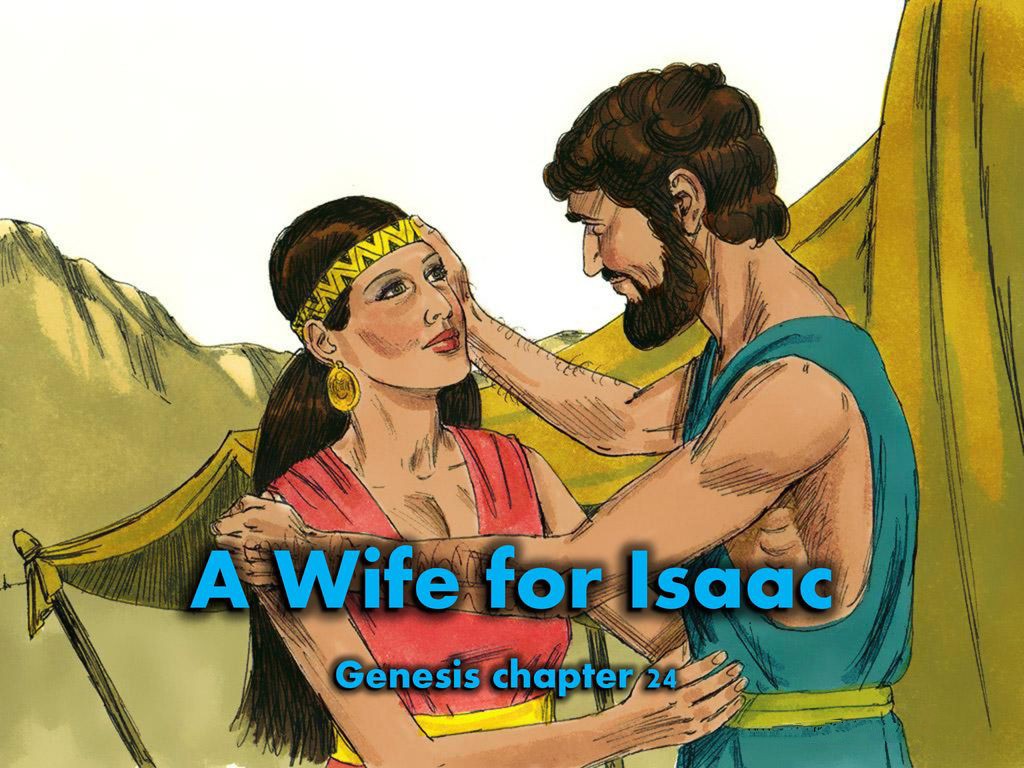
There is a lot going on in Chapter 24 with a lot of people. We see Abraham, the concerned father, making sure an appropriate, believing wife is found for his son, Isaac. We see Isaac in action for the first time since Abraham tried to sacrifice him. We see Abraham’s Chief Steward assigned the task of traveling back to Abraham’s kinsmen to find that wife. We see the young kinswoman Rebekah and her father Laban as they negotiate the marriage arrangements. And at the end we see Isaac and Rebekah meet and marry. A happy ending for the chapter.
1. Notes on Biblical interpretation:
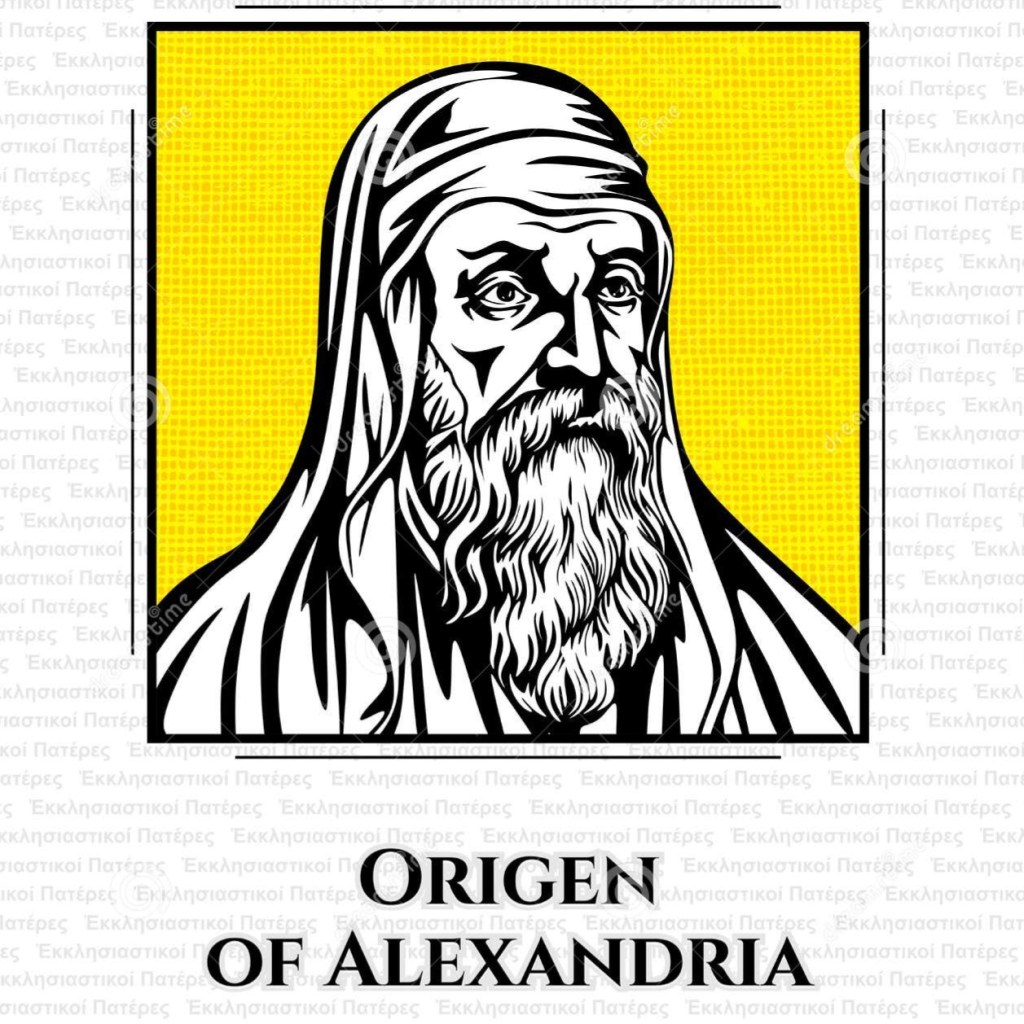
In the 3rd century, Church theologian Origen formulated the principle of the three senses of Scripture (literal, moral, and spiritual) based on the Jewish method of interpreting their Scriptures (our Old Testament) taught in a Jewish school of thought in Alexandria, Egypt.
Origen based his ideas for interpretation on Paul’s approach to interpreting the Old Testament in Galatians 4:21 to 31 in which Paul compares Abraham’s son Isaac as representing Christians.
The three methods of Biblical interpretation are defined as:
• Literal (Grammatical-Historical): This approach focuses on the plain, straightforward meaning of the text, considers the original language, the historical context, and intended audience. It seeks to understand what the text literally says and meant in its original setting.
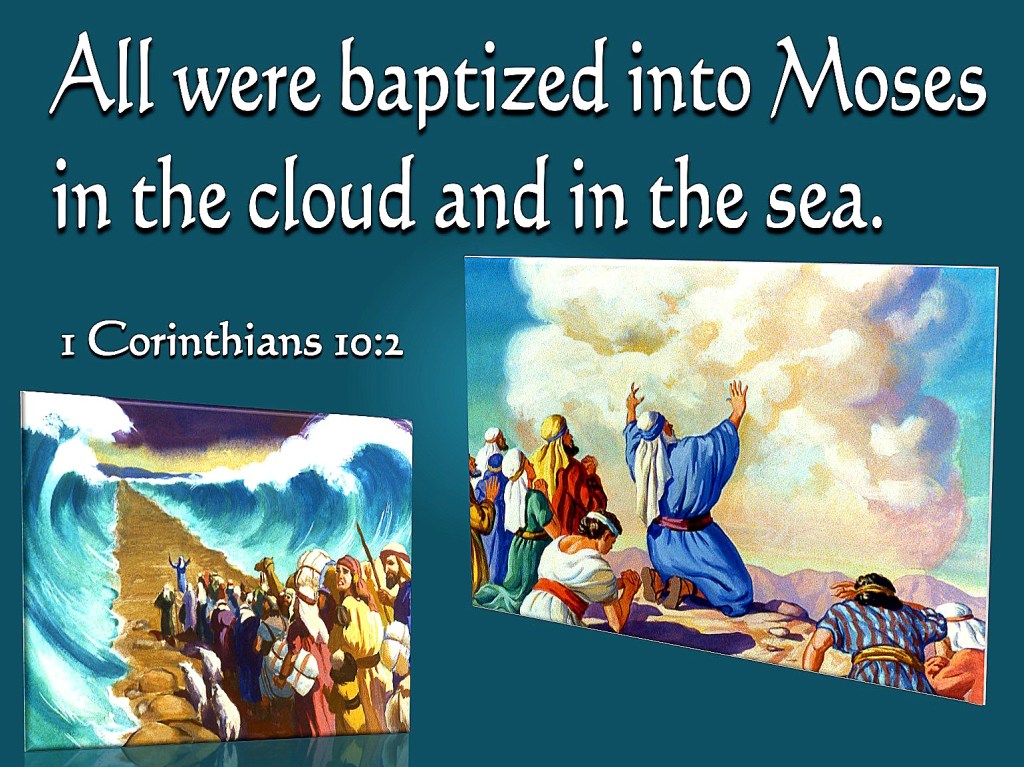
• Allegorical: This method interprets the text as having a deeper, symbolic meaning beyond the literal. It often sees people, places, and events in the Old Testament as foreshadowing or representing spiritual truths in the New Testament. For example, in 1 Corinthians 10:2, the crossing of the Red Sea is seen by Paul as a symbol of Christian baptism.
• Moral Principles: This approach focuses on the ethical principles that can be derived from the text. It seeks to understand how the text can inform and guide our godly behavior and choices as Christians.
(Note that later Christian theologians added a fourth and then a fifth way to view and interpret the Bible. I find those approaches so ethereal and esoteric that my concrete-thinking brain has problems following them. That is why I just stick to the original three.)
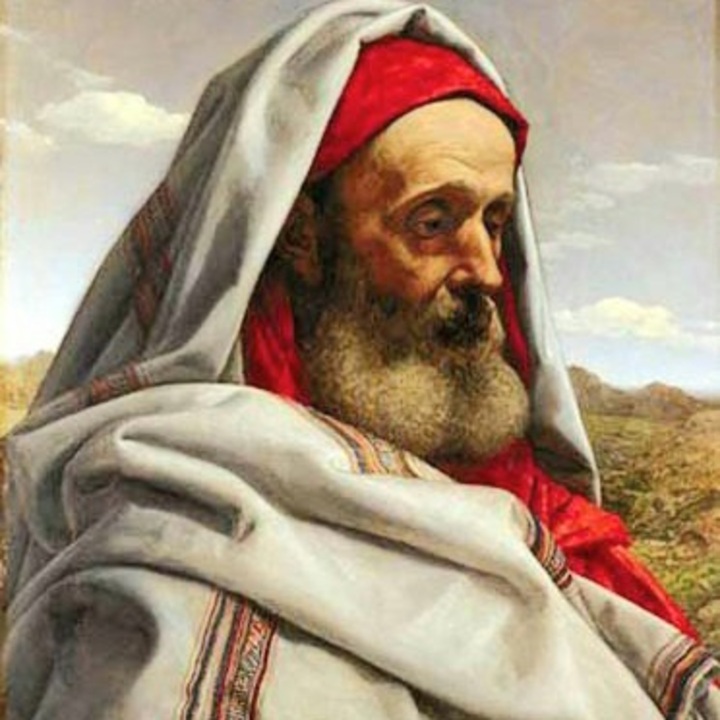
Eliezer of Damascus, Abraham’s chief steward and presumptive heir before Isaac was born, is the key figure in Genesis 24, so I’m going to focus on His words and actions and in the Application section pull out some principles we can follow as stewards of the grace of God and the gospel of Jesus Christ.
A. The charge:
Scripture: Now Abraham was old, well advanced in years. And the Lord had blessed Abraham in all things.
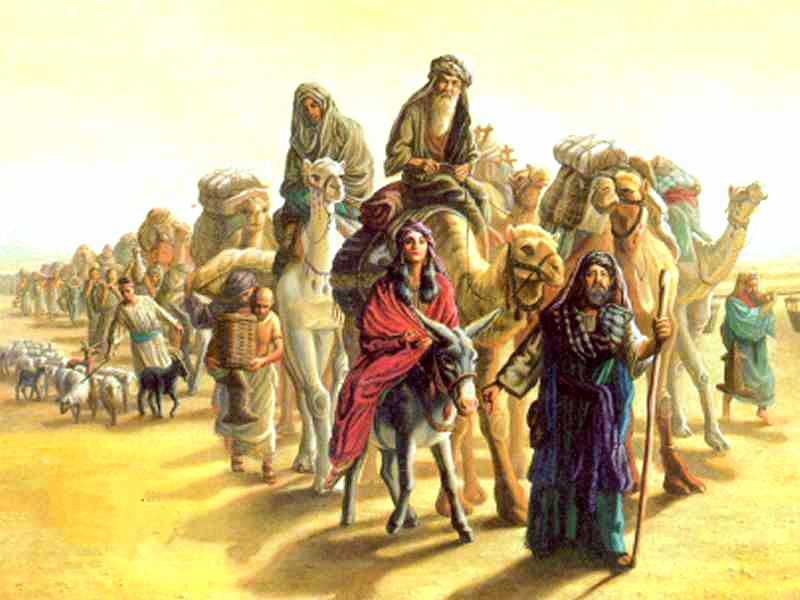
Commentary: Abraham wasn’t sure how much longer he would live and he wanted to ensure the succession of his household and belongings to his son and heir, Isaac. Earlier in Genesis, Abraham is described as being rich in livestock, after all, he was a herdsman/shepherd, as well as rich in gold and silver. An extra-Biblical source states that Abraham owned 14,000 sheep, 6,000 camels, 1,000 yoke of oxen, and 1,000 female donkeys, plus an unspecified number of goats, and male and female servants.
Scripture: One day Abraham called his chief steward, the servant who had been with him the longest, and said “Swear by the Lord, the God of heaven and earth, that you will NOT take a wife for my son from the daughters of the Canaanites, among whom I dwell, but will go instead to my country and to my kindred, and take a wife for my son Isaac.
Commentary: Abraham wanted a wife for his son who would share the same godly values that he had grown up with back home, and who shared faith in the same God, as well as one suited to rule the women’s side of the extensive household well.Scripture: The servant said to Abraham, “What if the woman is not willing to follow me back to this land? Should I then take your son back to the land from which you came?” Commentary: Eliezer is addressing a realistic concern and asking Abraham for additional guidance in case it happens.
Scripture: Abraham said to him, “DO NOT take my son back there. The Lord, the God of heaven, who took me from my father’s house and from the land of my kindred, and who spoke to me and swore to me, “To your descendents I will give this land,” HE will send His angel before you, and you shall take a wife for my son from there. But if by chance the woman is not willing to follow you back here, then you will be freed from this oath. Only you MUST NOT take my son back there.
Commentary: Note how Abraham falls back on two things to guide his response to his servant’s concern:
1) First, what God had done on the past in taking Abraham from his ancestral home and leading him to this far country.
2) Second, God’s promise to him to give all the land where he now lived to his descendents.
3) Abraham concluded that what God had done with him was meant to continue down through his descendents, meaning, Isaac was supposed to get married, have more descendents, and continue living in the Promised Land.
Also, Abraham had previous experience with God sending angels to carry out His will. It might seem presumptive for him to speak on God’s behalf, but I think it was more of a case of a man of faith in God, and experience with God, knowing how he could trust God to act in carrying out His promises.
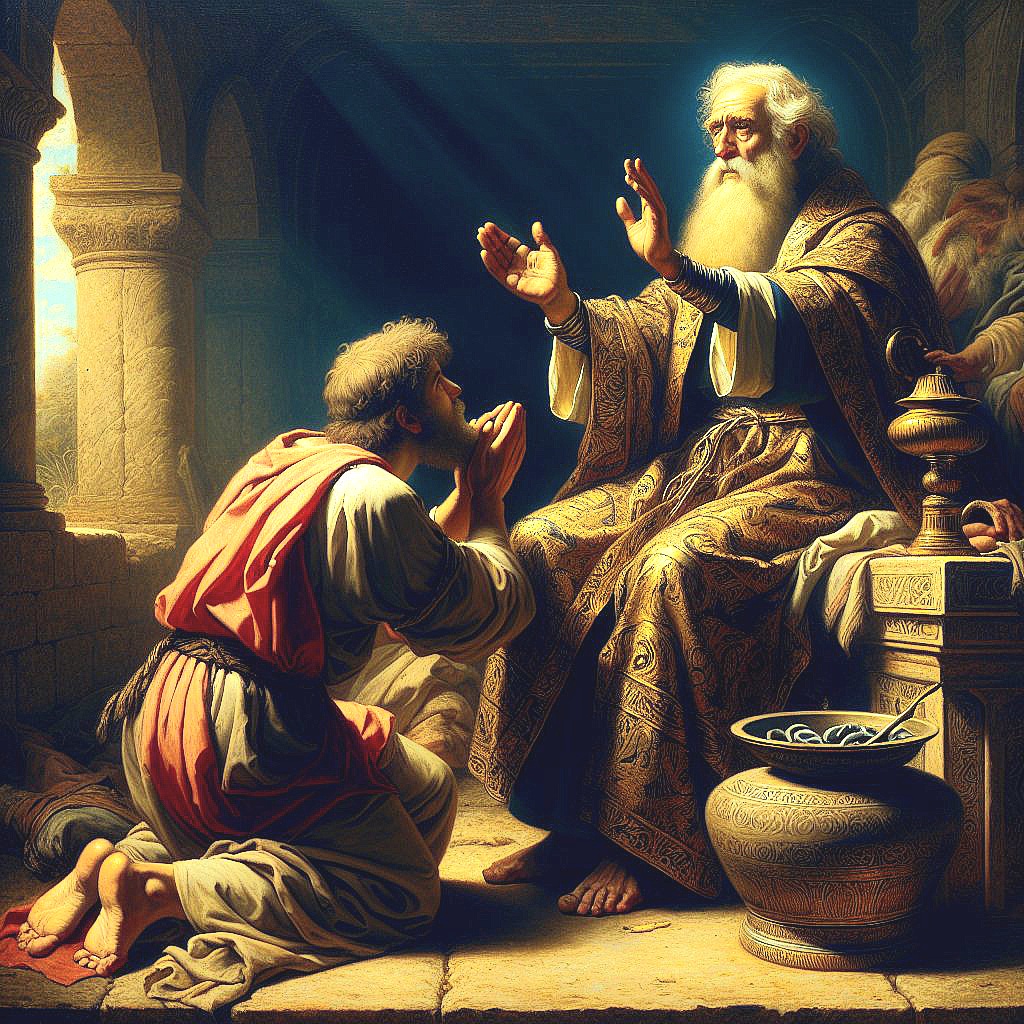
Scripture: So the servant swore to his master, Abraham, to take on this commission. Then the servant took ten of his master’s camels and departed, taking all sorts of choice gifts from his master; and he departed and traveled to the city of Nahor in Mesopotamia.
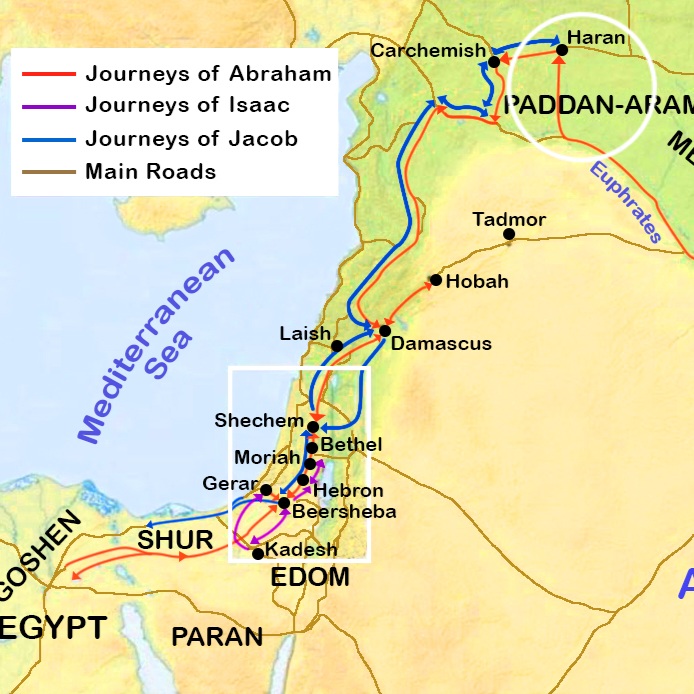
B. There is a lot glossed over in this last statement. Nahor, where Abraham’s kinsmen lived, was at the top of the arc around the Fertile Crescent (area in green on the map), which would have been a journey of about 550 miles, following the trade routes traveled by caravans. The Fertile Crescent was an area where there was enough rainfall for plants to grow, and therefore to support farming, orchards and grazing. There would be both forage and water for the animals along the way, as well as towns and cities where supplies could be bought.
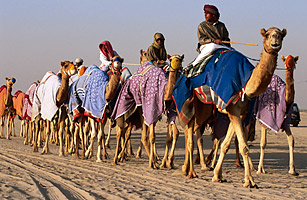
A modern camel train in the Middle East.
A camel caravan travels between 20 and 25 miles per day. For the distance to Nahor, it would have taken between 22 and 27 days, assuming no extended stops for rest and resupply. So we can say almost a month as an approximate figure for the trip, then the time there negotiating the bride price, and then another month back.
Remember, there was no way to communicate across distance in those days. The reason Abraham chose his most trusted lieutenant to represent him, gave detailed instructions, but kept it simple, was that he was empowering Eliezer to represent him in this very delicate negotiation and trusted his judgment to act as he would have. Essentially, Abraham would be obligated to accept whoever Eliezer brought back with him for his son’s wife.
As we’ll see in the second half of Chapter 24, Abraham chose his representative well.

Camel caravan crossing the Arabian Desert.
C. So, what might have been the composition of the 10-camel caravan led by Eliezer? The chief steward himself would have served as the caravan master and ride one camel. He already had the experience of traveling south from Damascus with Abraham and things in those days didn’t change so much that his experience on the trail would have been out of date.
Just a note about the terrain they traveled over in their journey. The photos I pulled of modern camel caravans in the Middle East all show desert scenes. The trade route used in the Fertile Crescent most assuredly was NOT desert. So, why the camels?
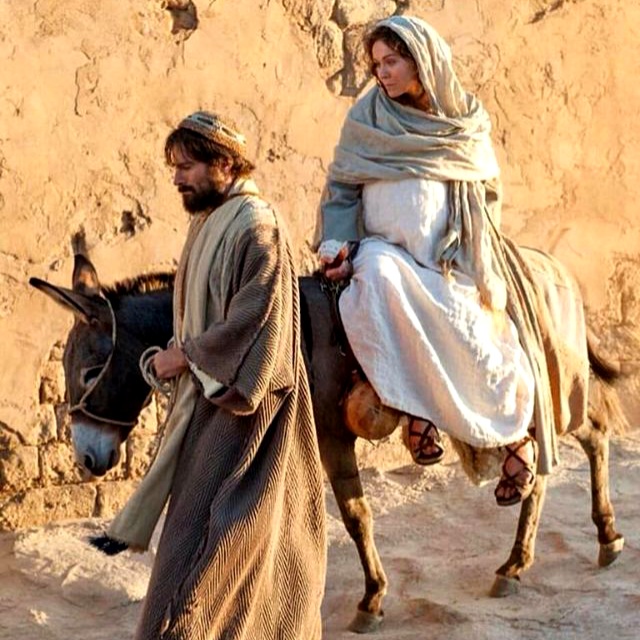
The only other beast of burden available in those days were donkeys. They were more often used to carry smaller loads of supplies and goods, rather than being ridden, except for short trips, although women and children could ride them, such as a pregnant Mary riding one from Nazareth to Bethlehem, or an injured person could be placed on one, as in the Parable of the Good Samaritan.
A riding camel can typically carry 200 to 300 pounds, so that means the men could ride during the journey and not be worn out from walking. Also each man could carry some water and supplies on their camel, at least enough for the day. The rest of the weight was accounted for by the saddle and woolen saddle blankets.
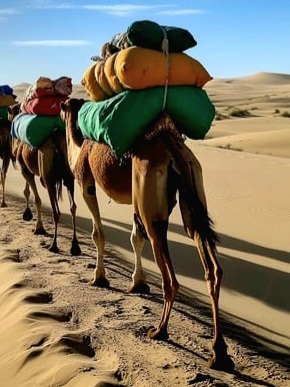
South end of a northbound baggage camel.
They would have needed at least two baggage camels to carry the provisions and extra water, the gold and silver gifts, and possibly a tent for bad weather and for the women to sleep in on the way back. Baggage camels tended to be bigger than riding camels with corresponding larger carrying capacity around 300 to 400 pounds.
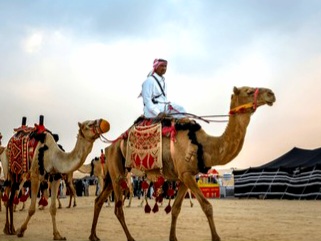
Cameleer leading a camel at a desert safari camel ride festival.
There would have been at least two camel handlers, or ‘cameleers,’ who would have ridden a camel and led a cargo camel each, along with a spare riding camel for the young woman and her maid to ride back on. Their luggage would fit into the area vacated by the gifts given to her family for the bride price.
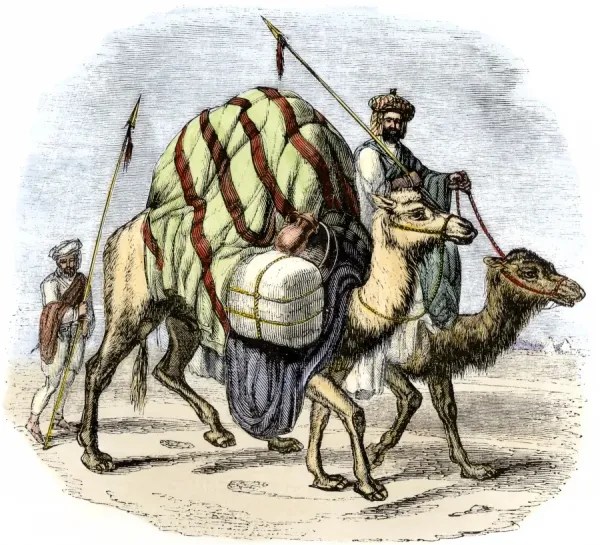
There would have been at least two guards against bandits, although all of the men in the caravan would have been able to fight. The most common weapon for fighting from camelback was a long stabbing spear.
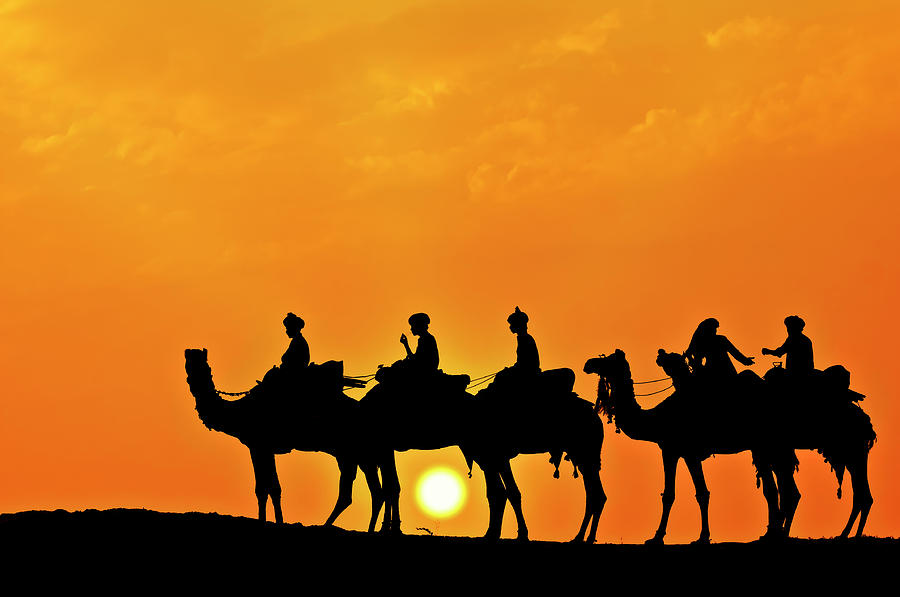
End of the trail for today.
And there were probably a couple of servants who would set up camp each night, prepare the meal, and then break camp in the morning. Division of labor would have the camel handlers seeing to the animals, and the guards patrolling the perimeter of the camp, alert for danger, all under the watchful eyes of the caravan master.
In short, the 10-camel caravan was not so small that it would have been considered easy pickings, having 7 men, with 2 of them dedicated guards, nor would it have been so large that it was difficult to manage on a long journey, or appear threatening to a town or city along the way. It was selected perfectly to meet the needs of the journey as would be expected from an experienced chief steward of that time.
D. APPLICATION:
So, what did we learn about Eliezer? We learned he was from Damascus and was probably hired by Abraham as he passed through on his way from Nahor to the land God was leading him to. He was probably hired as a promising young steward to help Abraham manage his embarrassing increases in livestock and the employees needed to tend them. Here are some of the qualities we can see or infer:

1. Eliezer probably worked hard, as well as smart, to distinguish himself enough to be promoted eventually to chief steward, and he had qualities that resulted in longevity as he is described as Abraham’s oldest servant.
2. Eliezer also demonstrated exceptional loyalty. In the text, he refers to Abraham and his belongings as ‘his master’ or “his master’s’ several times.
3. By being chosen to handle this important task, we see that Abraham trusted his judgment.
4. And we can infer from the efficiency of the 10-camel train for a month’s travel that Eliezer was very competent and efficient, and probably had leadership qualities in order to lead this caravan.

E. These are all qualities we need in order to be faithful stewards of the grace and gospel that God has entrusted to us as Christians. Try doing this self assessment on these qualities.
1.a. Do I work not just hard, but smart, in order to improve my utility as God’s servant?
1.b. Am I committed to serving God for the ‘long haul’ and have I organized my life to facilitate that?
2. Am I implicitly loyal to God and Jesus as my Lord, acknowledging Him as my Master, and realizing everything I have belongs to Him?
3. Have I filled my life and mind with God’s Word so that I exhibit sound, godly judgment in all my decisions?
4.a. Am I constantly improving my skills so that I can be more effective and efficient in my service to God and to Jesus Christ?
4.b. Do I step out and lead in obedience when I am assigned to or put in charge of a task?
Quite an intimidating list, huh? And there is even more in the second half of Chapter 24.
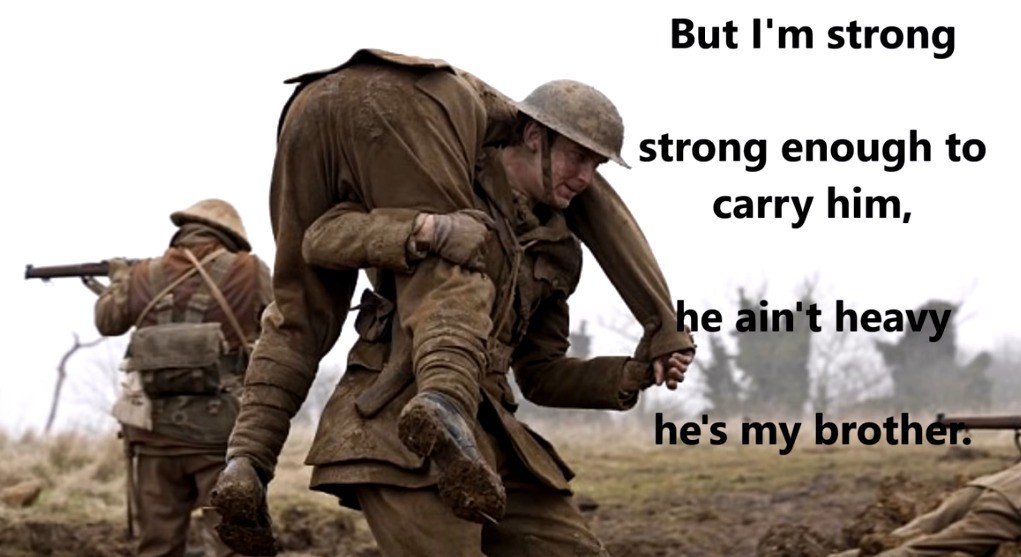
This week I want to leave you with a secular song that I think of whenever I think of a long journey. As a young Christian in the 60’s, there weren’t any contemporary Christian songs yet, so I was drawn to contemporary secular songs that contained references to God or expressed Christian values.
He Ain’t Heavy, He’s my Brother by the Hollies was one of my favorites. I hope that you will enjoy the worshipful sound and message of commitment to helping our brothers along the way as much as I do.
 Bill's Bible Blog