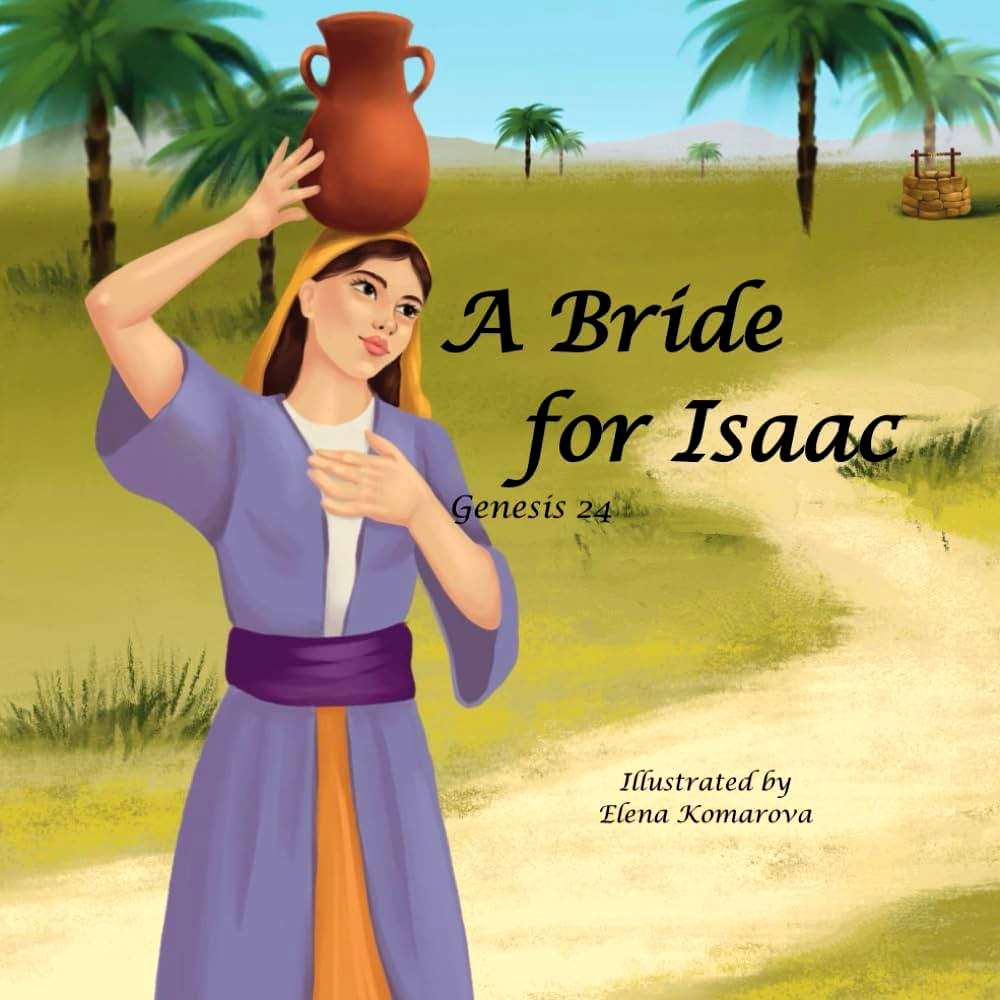
Instead of continuing the character study of Eliezer begun in the previous blog, I’d like to focus more on Rebekah for the second half of Genesis chapter 24. After all, she is one of the Matriarchs of the Jewish nation and revered as such.
The culture she grew up in is very foreign to us today. The account lends itself well to story telling mode, so I’m going to present it that way, rather than strictly by the Scriptural account. Be attentive to what we see about her character and we’ll summarize my observations for our Application section at the end.
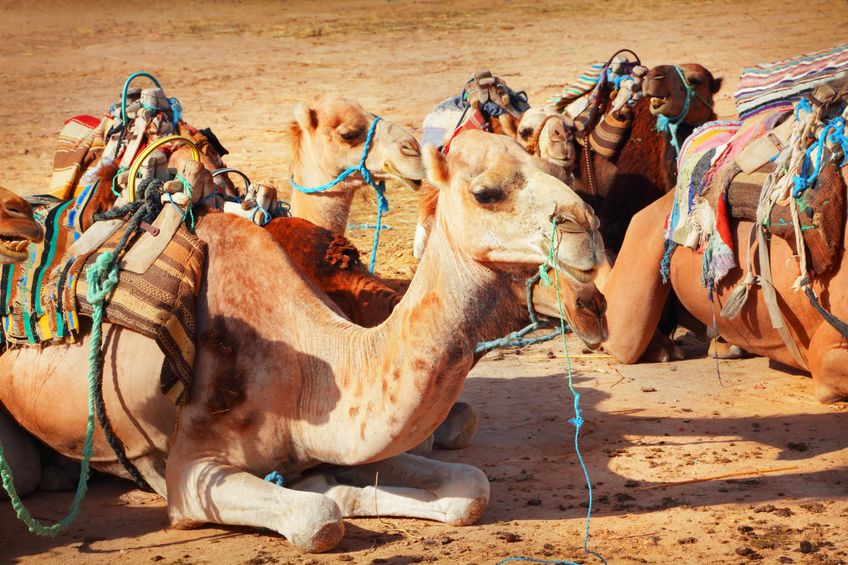
1) Rebekah at the Well: Eliezer arrived at the city of Nahor in the evening, the time when women go out to draw water, and made the camels kneel down outside the city by the well.
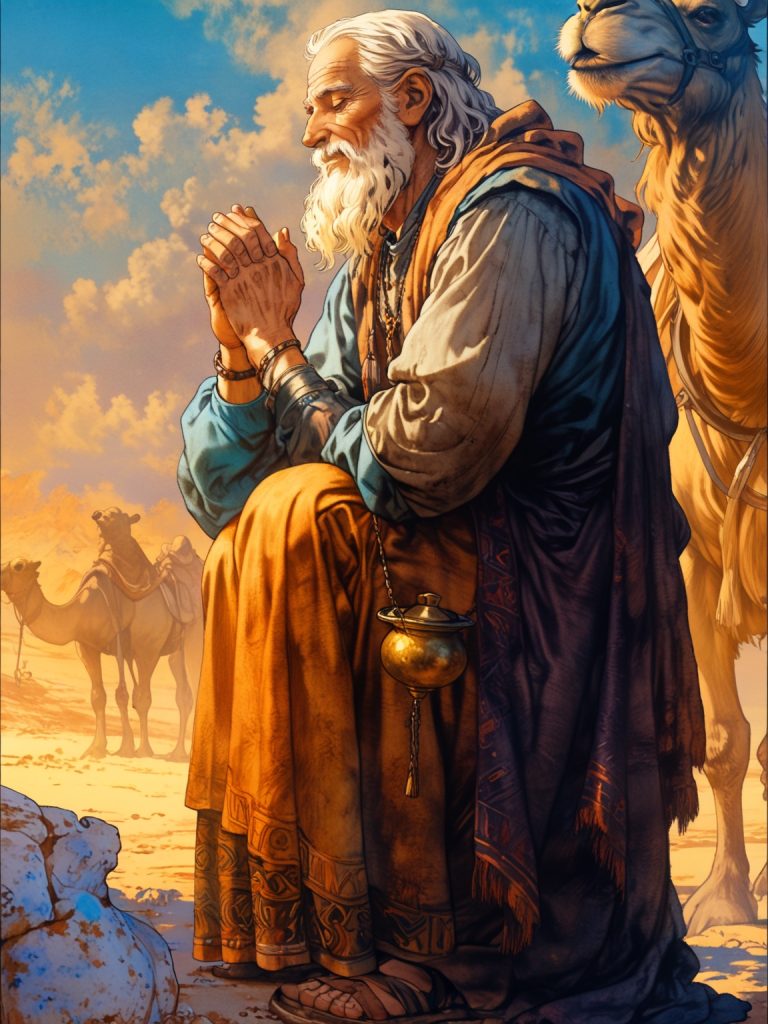
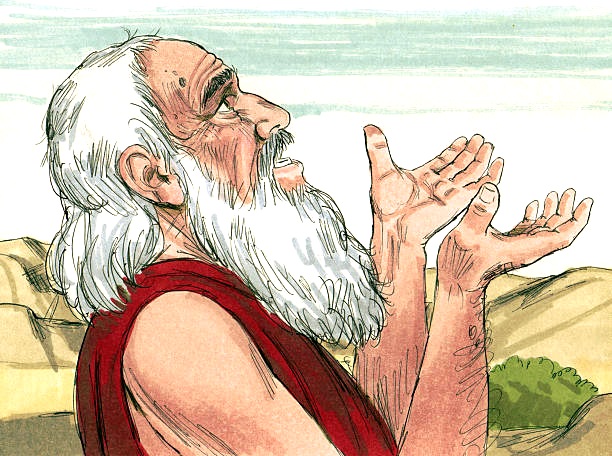
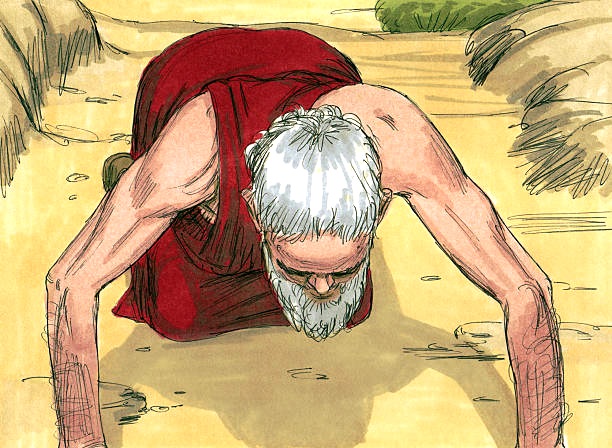
Eliezer himself also knelt and prayed, “Lord, God of my master Abraham, please grant me success today, and show kindness to my master Abraham. So look, I am by the spring, and the daughters of the city are coming out to draw water. Now, may it be that the young woman to whom I say, ‘Please let down your jar so that I may drink,’ and who answers, ‘Drink, and I will water your camels also’—may she be the one who You have appointed for Your servant Isaac; and by this I will know that You have shown kindness to my master.”
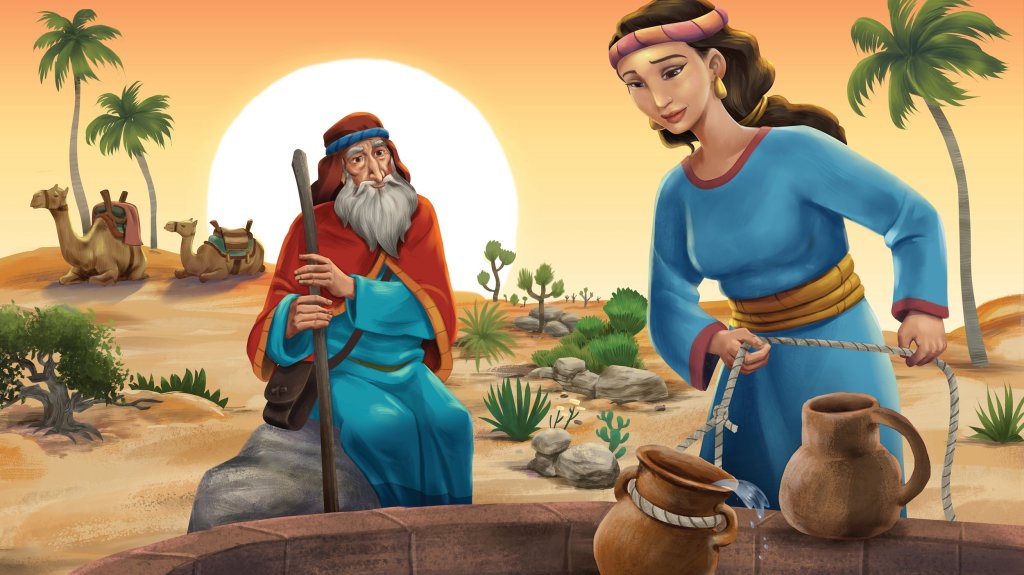
And it came about, before he had finished praying, that a beautiful young woman, an unmarried virgin, came out with her jars on her shoulder. She went down to the spring, filled her jars, and came back up.

Then Eliezer hurried over to meet her, and asked, “Please let me drink a little water from your jar.” And she said, “Drink, my lord”; then she quickly lowered her jar to her hand, and gave him a drink.

Now when she had finished giving him a drink, she said, “I will also draw water for your camels until they have finished drinking.” So she quickly emptied her jar into the trough, and ran back to the well to draw more, and she drew enough for all 10 of his camels.
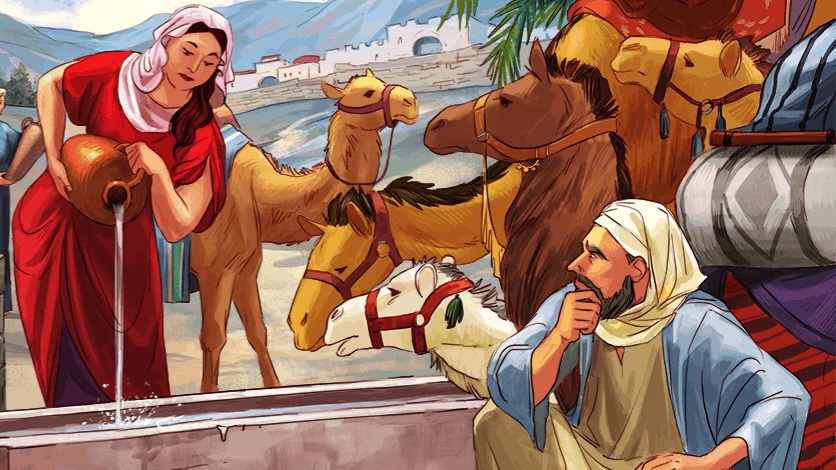
Meanwhile, Eliezer was closely watching her to determine whether the Lord had made his journey successful or not.
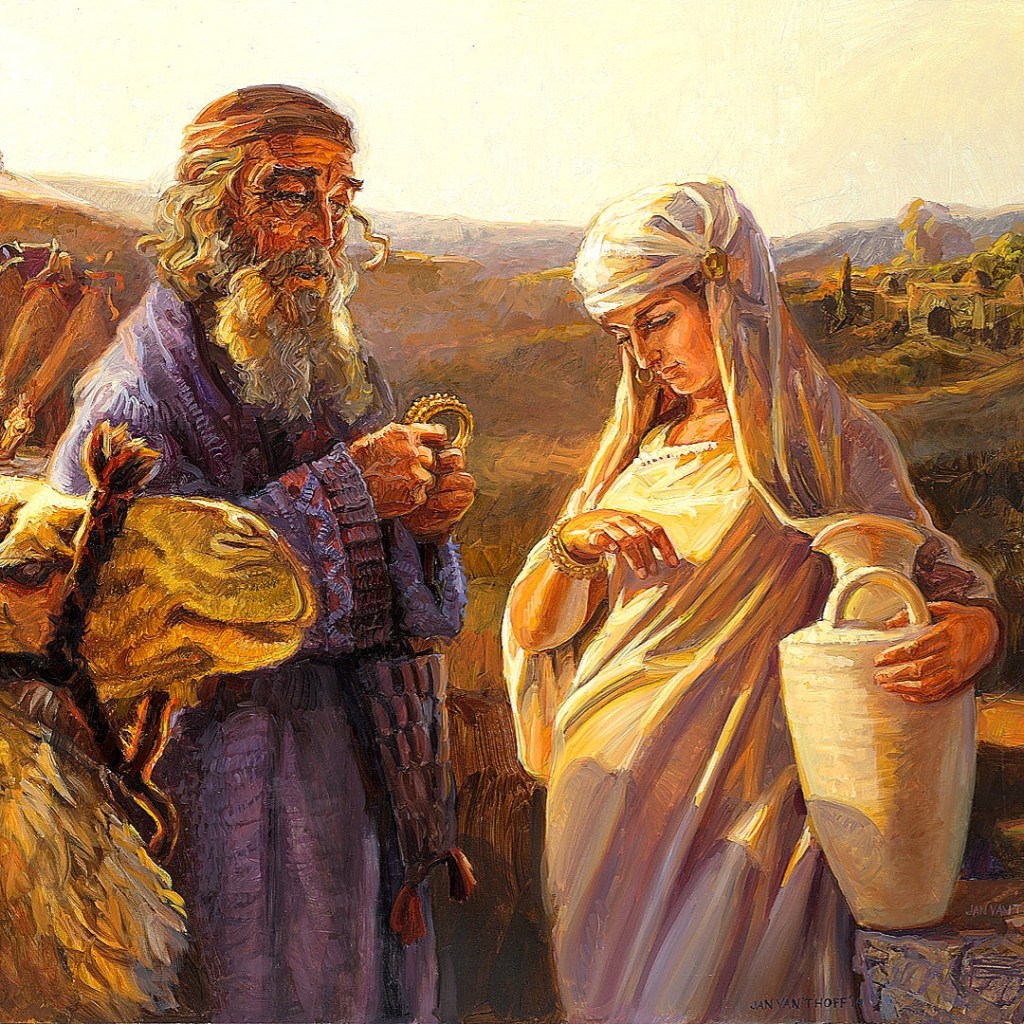
When the camels had finished drinking, Eliezer took a gold ring and put it in her nose, and two bracelets and placed them on her arms. He then asked, “Please, tell me, whose daughter are you? Is there room in your father’s house for us to spend the night?” Rebekah answered, “I am the daughter of Bethuel, the son of Milcah, whom she bore to Nahor.” She added, “We have plenty of both straw and fodder for your camels, and room for you and your men to spend the night.” Then Rebekah ran back to town to tell her mother’s household about these things.
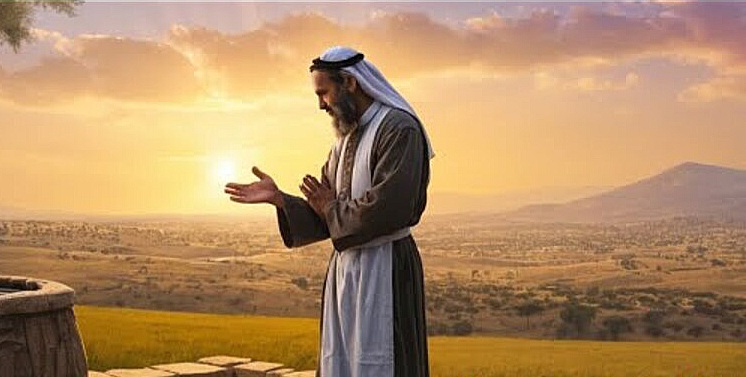
Eliezer bowed his head and worshiped the Lord saying, “Blessed be the Lord, the God of my master Abraham, who has not forsaken his steadfast love and his faithfulness toward my master. As for me, the Lord has led me to the house of my master’s kinsmen.”
2) At Rebekah’s Home
Now Rebekah had a brother whose name was Laban. When Laban saw the ring in her nose and the bracelets on her wrists, and when he heard his sister Rebekah, say “This is what the man said to me,” he went to the spring and found the man standing there by his camels. And Laban said to him, “Come to my house, blessed of the Lord! Why do you stand outside, since I have prepared a place for you in the house, and also a place for your camels?”
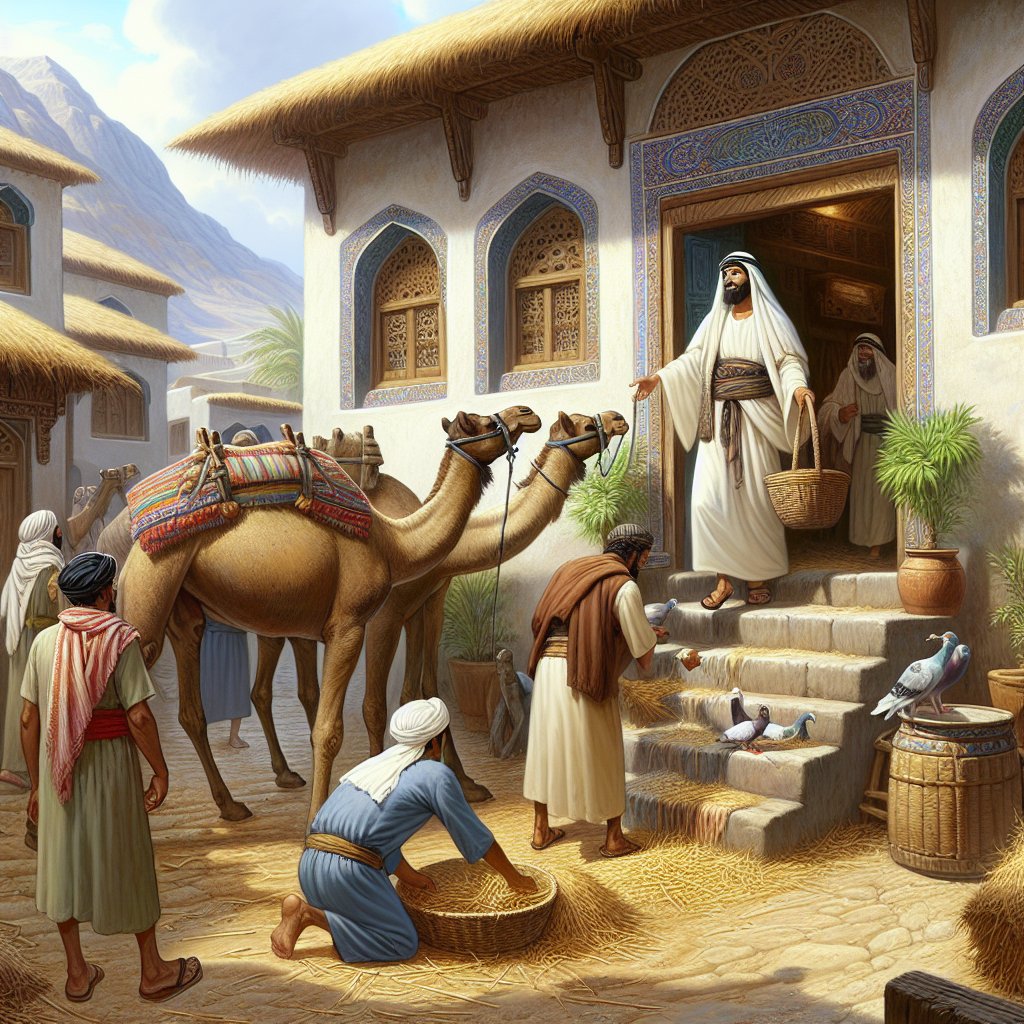
So Eliezer entered their home. Then Laban unloaded the camels, and he gave straw and feed to the camels, and water to wash Eliezer’s feet and the feet of the men who were with him.

But when food was set before him to eat, Eliezer said, “I will not eat until I have stated my business.” And Laban said, “Speak on.” So Eliezer said, “I am Abraham’s servant. The Lord has greatly blessed my master, so that he has become rich…”
“…and I bowed and blessed the Lord, the God of my master Abraham, who had guided me in the right way to take the daughter of my master’s brother for his son.”
“So now, if you are going to deal kindly and truthfully with my master, tell me; and if not, tell me now, so that I may turn to the right or the left.”
Then Laban and Bethuel replied, “The matter has come from the Lord; so we cannot speak to you bad or good. Here is Rebekah before you, take her and go, and let her be the wife of your master’s son, as the Lord has spoken.”
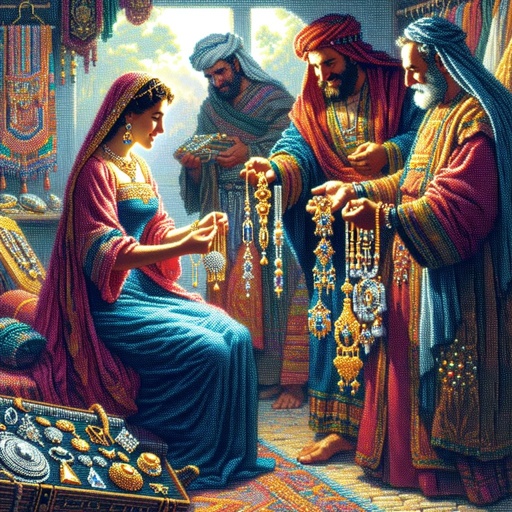
When Abraham’s servant heard their words, he bowed himself to the ground before the Lord. And then Eliezer brought out articles of silver and articles of gold, and fine garments, and gave them to Rebekah. He also gave precious things to her brother and to her mother. Then he and the men who were with him ate and drank supper, and spent the night.
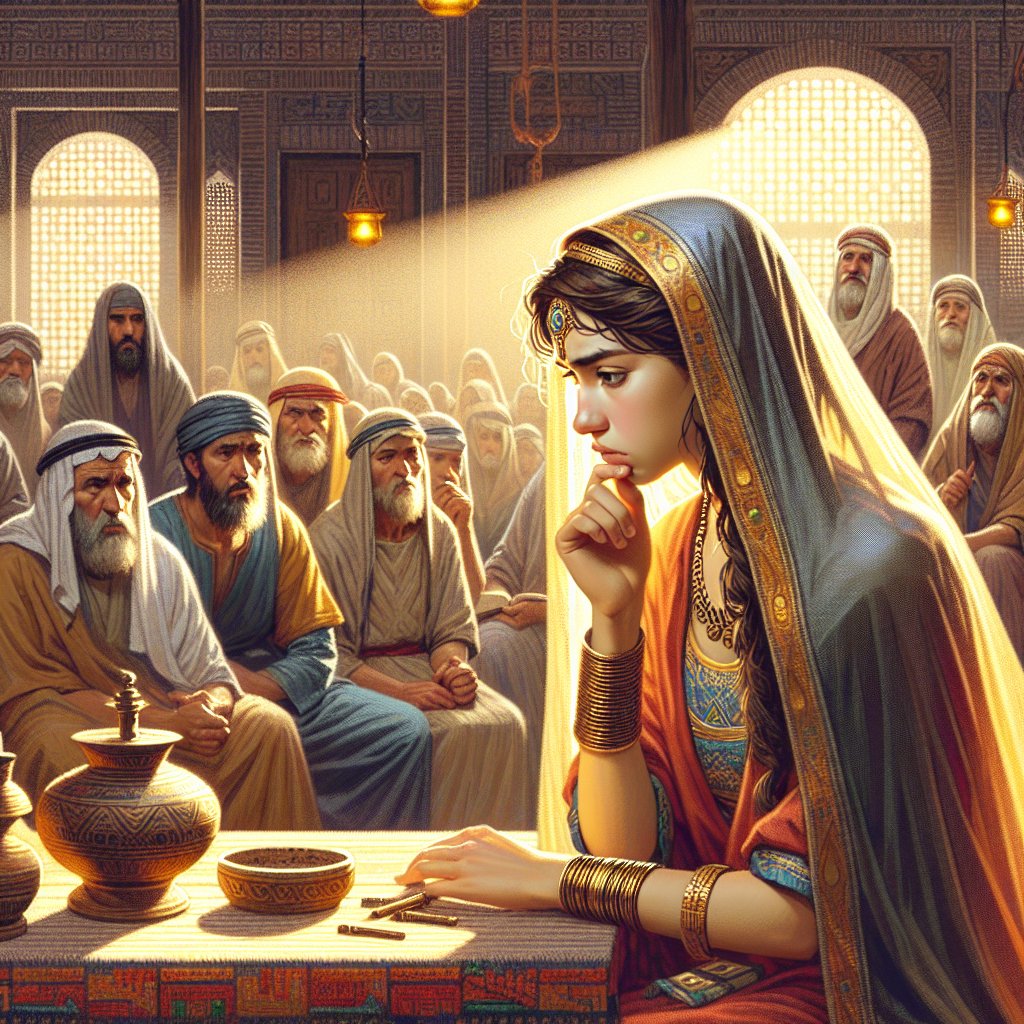
When they got up in the morning, Eliezer said, “Send me away to my master.” But Rebekah’s brother and her mother said, “Let the young woman stay with us for a few days, say ten; afterward she may go.” However, Eliezer said to them, “Do not delay me, since the Lord has prospered my way. Send me away so that I may go to my master.” And they said, “We will call the young woman and ask her.” Then they called Rebekah and asked her, “Will you go with this man?” And she said, “I will go.” So they sent their sister Rebekah and her nurse, with Abraham’s servant and his men.
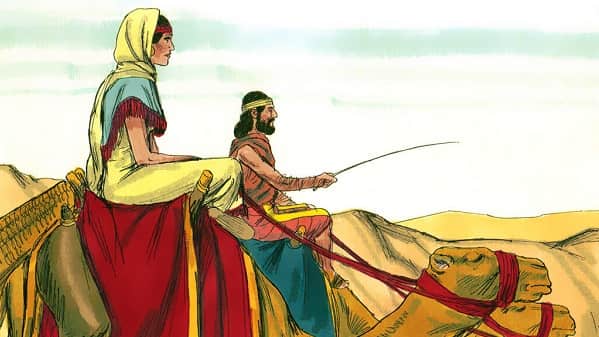
Then Rebekah and her female attendants mounted the camels, so Abraham’s servant took Rebekah and departed.
3) A Wedding!
Now Isaac had just returned with his flocks to his home base in the Negev after a journey to Beer-lahai-roi, the well where Hagar had been rescued by God after Abraham and Sarah exiled her with her son Ishmael. After supper, Isaac went out to walk in the fields and think. It was toward evening when he raised his eyes and saw a caravan of camels approaching.
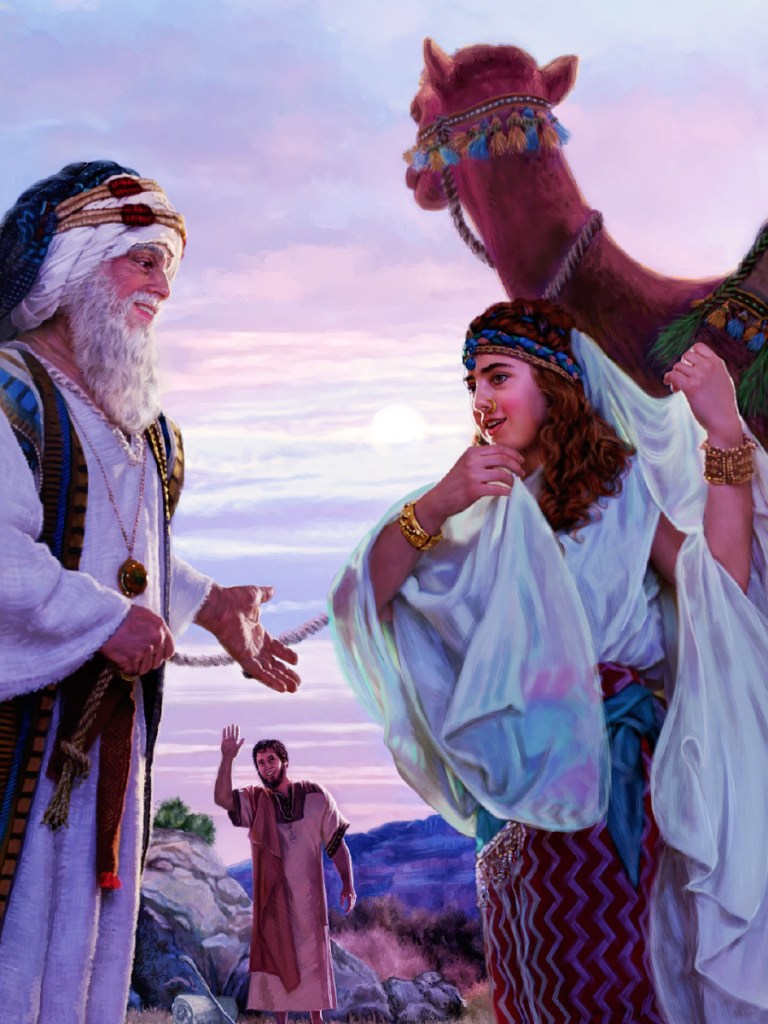
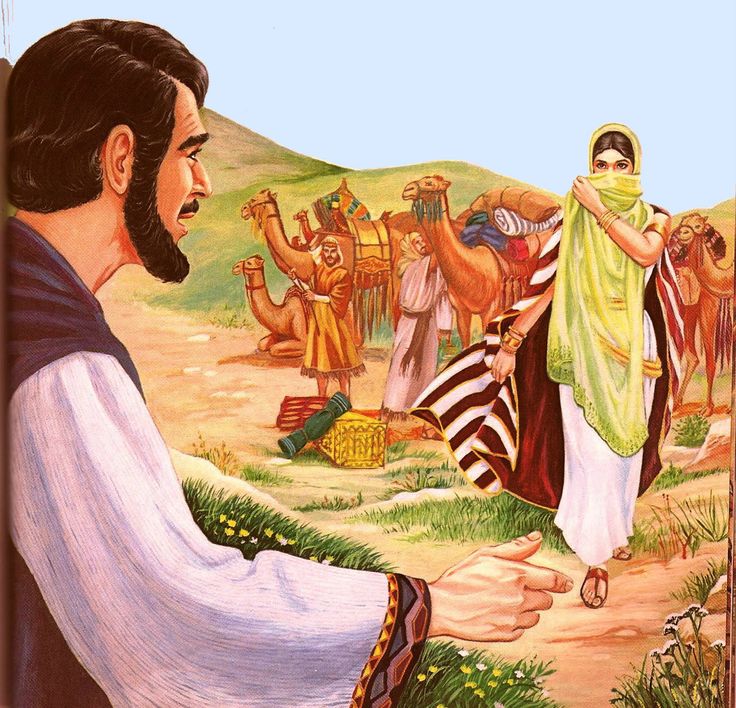
Rebekah looked up and saw Isaac walking toward them. She stopped her camel and dismounted. Eliezer turned back and dismounted beside her. She asked the servant, “Who is that man walking in the field to meet us?” And Eliezer said, “He is my master.” Then she took her veil and covered herself.
Eliezer walked over to meet Isaac and reported everything that he had done on his mission. Then Isaac brought Rebekah into his mother Sarah’s tent, where the female servants stayed.
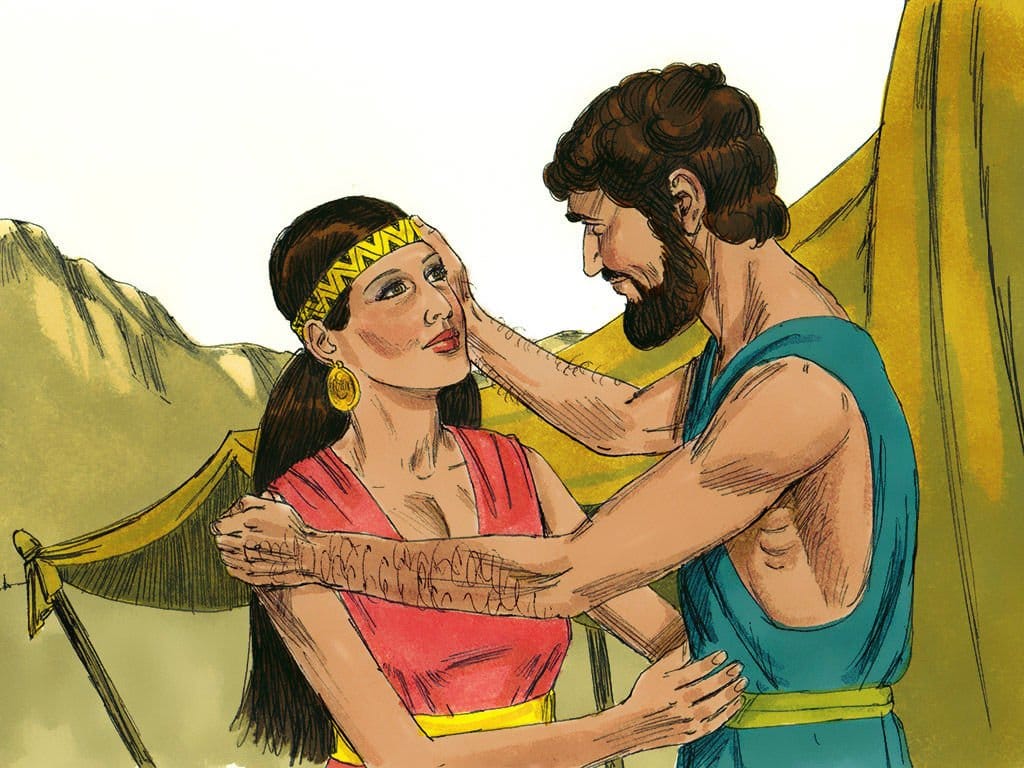
In due time, Isaac took Rebekah as his wife and Isaac came to love her very much. So he was finally comforted after his mother’s death.

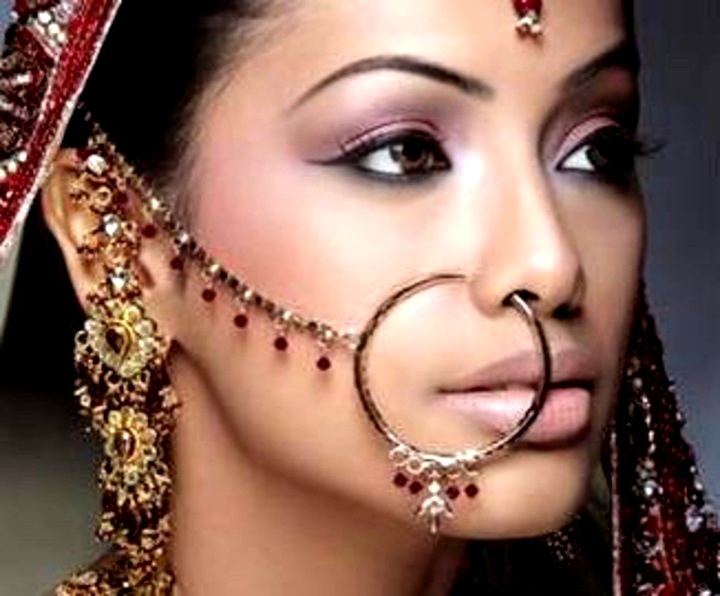
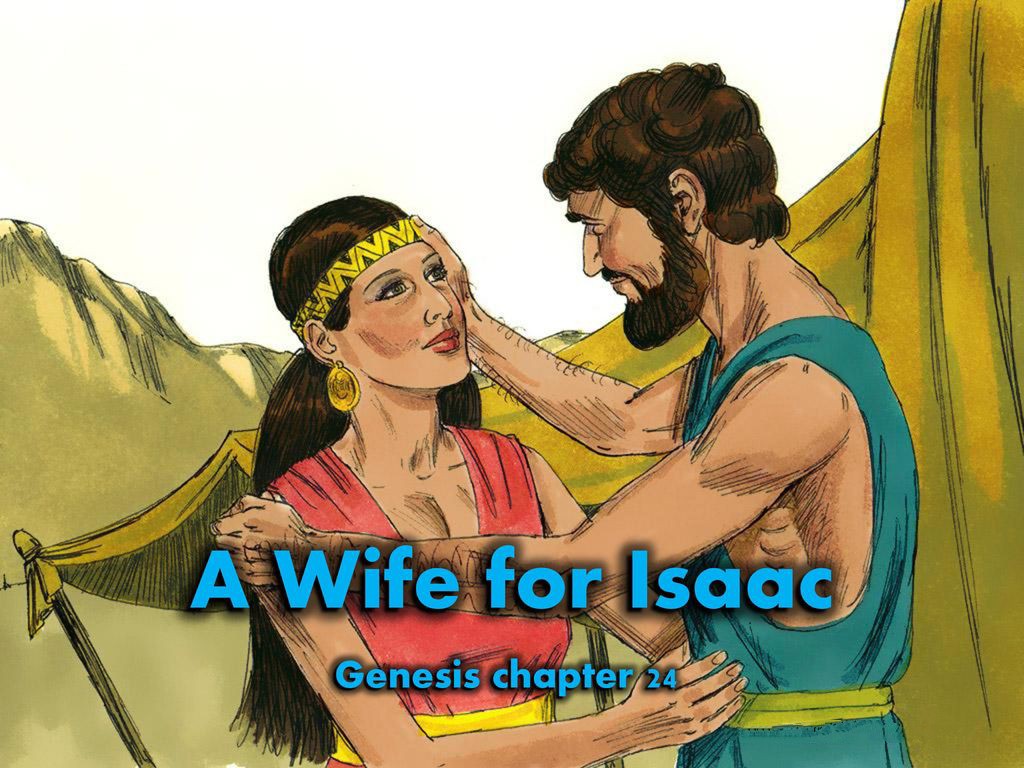
NOTE about women ‘veiling’ in Biblical times. There are two problems with the depictions of Rebekah in the available pictures. First is that all Middle Eastern women wore a shawl to cover their hair. In addition, young, unmarried women pulled one end across the lower half of their face while they were in public. That is how Eliezer could tell the difference between the married women and unmarried ones while they were filling their water jugs at the well–the married ones had their faces showing, the unmarried ones had only their eyes showing. Even at home while their family entertained guests, the unmarried daughters would ‘veil’ their faces.
The second misrepresentation is that Rebekah’s ‘veil’ was a gauzy, translucent fabric such as is used now for veils. That type of fabric was not available in the Middle East at that time.
If you look at pictures of ‘veiled’ women such as the one I inserted above, you can see how beautiful a young woman can appear with just her eyes showing. The husband never saw any more of his prospective wife than her eyes until their wedding night. Understanding this custom also sheds some light on the comment later about Leah having ‘weak eyes.’
We’ll look at some of the character qualities we can see about Rebecca in my next blog.
One of my favorite Christian wedding songs is by Noel Paul Stookey of Peter, Paul and Mary, The Wedding Song (There is Love) (c) 1971.
No matter how long you’ve been married, listen to the message and worshipful tone of this song, remember the feeling you had when you were first married, and maybe understand a little more about how God feels about marriage. After all, He invented it!























 Bill's Bible Blog