1. Longer Lifespans
To understand what’s happening in Genesis Part 2 a little better, it’s helpful to look at some of the things from the first half. Just prior in Genesis 23 was the death of Sarah–she was 127 years old, Abraham was 137 years old at the time and Isaac was 37 years old.
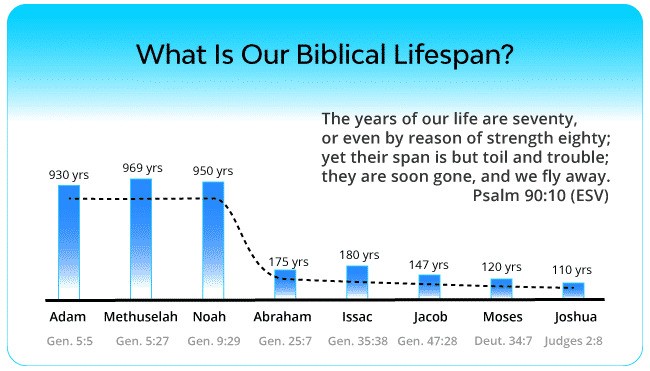
The average life expectancy in the United States is abput 86.5 years–84 years for men and 87 years for women. The ages in Genesis seem astounding to us, but follow a pattern of people living longer early in Genesis, then living shorter lives as time went on.

In the genealogies in Genesis 5 to 11, pre-Flood, we see long lifespans of:
Adam = 930 years,
Seth = 912 years (third son of Adam),
Jared = 962 years (Father of Enoch),
Methuselah = 969 years (son of Enoch and grandfather of Noah) and
Noah = 950 years.
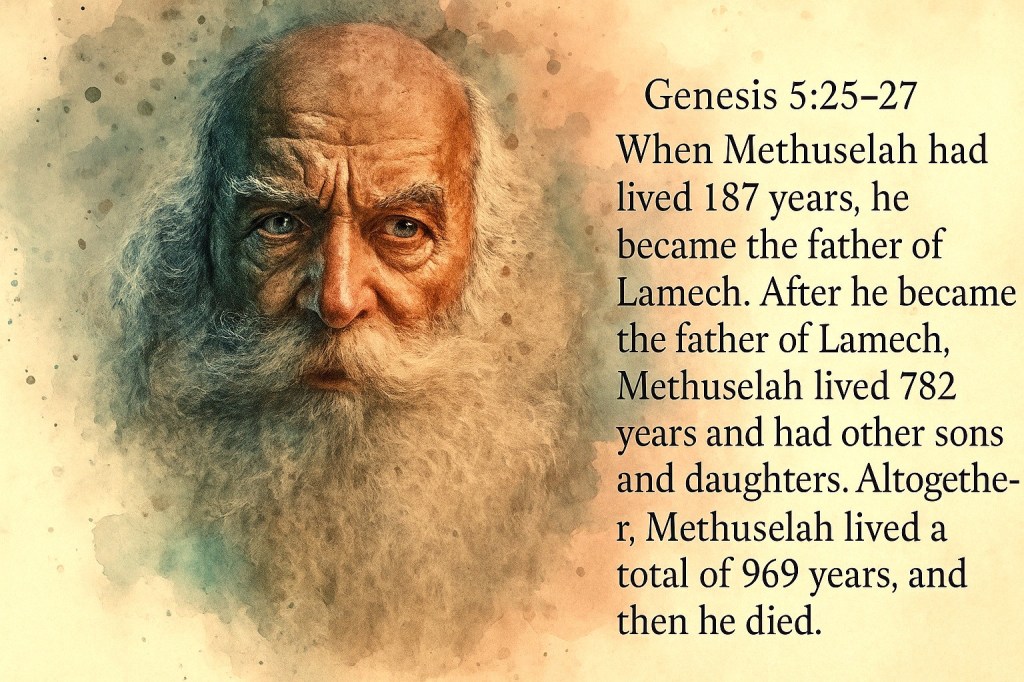
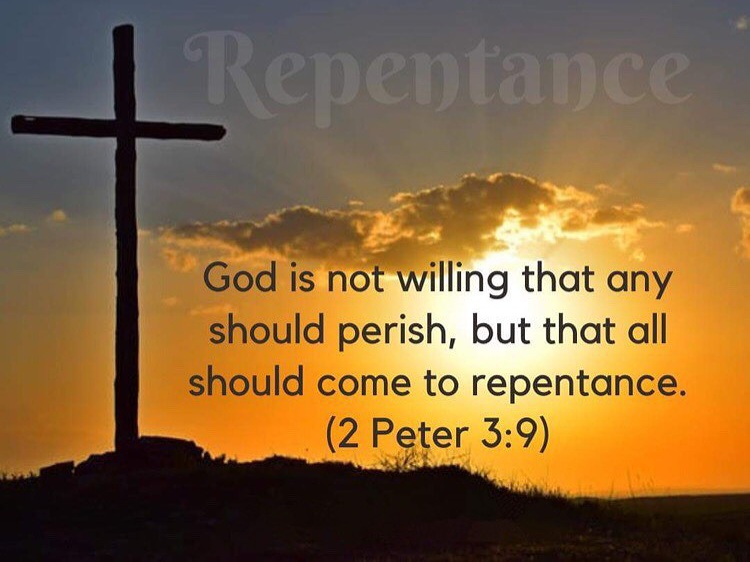
A special note about the man who lived the longest: God said that He was not going to destroy the world as long as Methuselah was alive. His name actually means “His death shall bring.” God supernaturally extended his life because He was giving the people as much time as possible to repent. This is a reflection of God’s nature as summarized by Peter:
After the flood only Shem, Noah’s son, lived more than 200 years at 600 years but he was born pre-Flood.

The Institute for Creation Research, who approaches the information in Genesis as being true and accurate, posits that something about the Flood changed the world resulting in the shortened lifespan. The Genesis account seems to indicate there was some sort of protective cloud layer around the Earth that filtered out more harmful cosmic and ultraviolet rays than the current atmosphere. Shortened lifespans, beyond poor nutrition, disease and natural disasters, are caused by the accumulation of genetic defects. One of the biggest cause of genetic mutations is ionizing radiation.
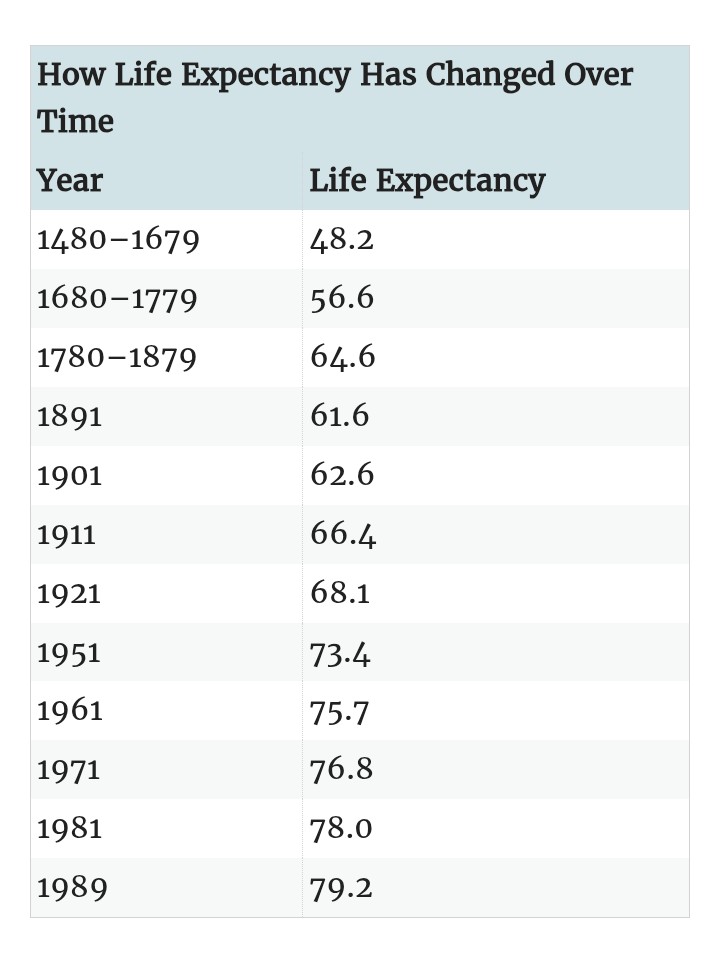
The world’s perspective today has been that advances in science have led to longer lifespans for humankind. That is true when looking back at the historical records available, but doesn’t account for the Biblical record.
2. Later Puberty and Marriage

Genesis 24 begins 3 years later with Abraham now 140 and Isaac 40 years old. Abraham decides Isaac is ready for a wife.

It was the custom at that time, and still is in much of the Middle East and India, that parents arrange the marriage of their children. Modern customs in those areas usually don’t force the young couple to marry, but they can provide their input and approval for the match.
Once again, it is inconceivable that someone wouldn’t get married until 40 years old. In Jesus’ times, young men and women married as soon as they had completed puberty and achieved sexual maturity, about 14 to 15 for young women and about 19 to 20 for young men. That’s not significantly different than now when puberty for girls typically ends around ages 15 to 17, while for boys, it generally concludes around ages 16 to 18, on average. We have earlier onset of puberty today due to improved health and nutrition, and it lasts longer, producing larger men and women.
My conclusion from the general data about puberty and sexual maturity is that it is partially a function of total genetic lifespan. The longer lived the people, the later the completion of puberty. Running the numbers, that’s 21% through a man’s life today, on average, when he reaches sexual maturity. For Isaac, 40 would have been 22% of his lifespan before he died at 180. So, it is not inconceivable he had recently completed puberty and was just then fully mature.
3. God Promises Long Life
Some people think the ages in Genesis are in error due to misunderstanding of ancient numbering systems. Maybe so, but one thing for sure, living a long life is one of the blessings of walking with God.
Here are some examples of promises of long life from the Bible:
The 10 Commandments:
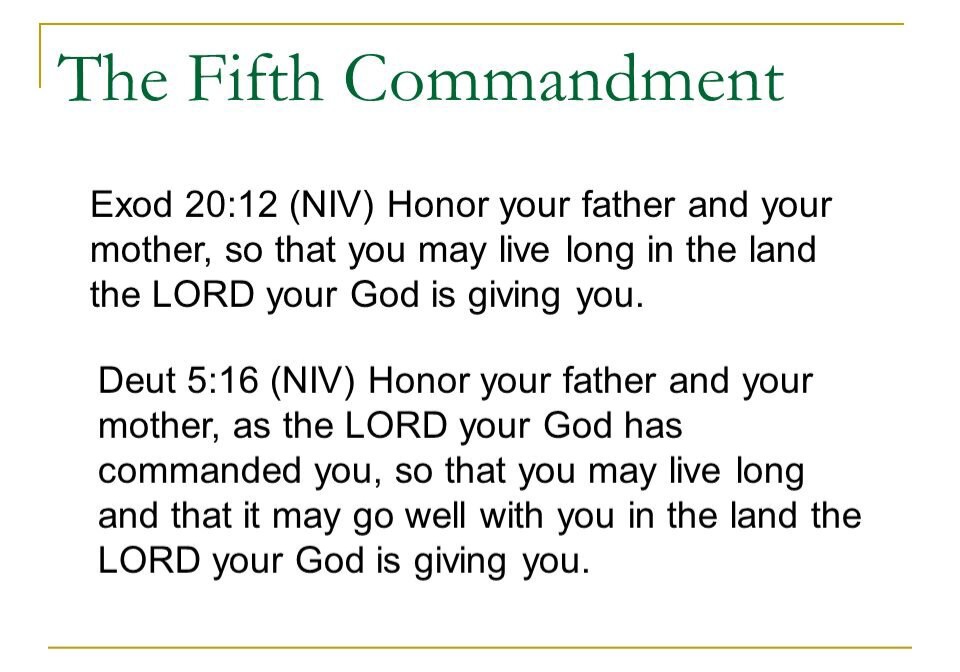
Paul notes that this is the first of the 10 Commandments with a promise attached.

Obedience to all of the Commandments of Moses came with a promise of long life from God.

In Proverbs it is considered the highest wisdom to obey God’s commands, with these same promises of long life and other blessings promised:

While these verses suggest a connection between a godly life, longevity and prosperity, especially for the Jews under the Law of Moses, they are not absolute guarantees of a specific lifespan.
4. What contributes to longer lives today?
Modern science has determined there are certain physical, social and psychological practices that lead to a longer than normal life. There are the expected healthy physical habits of eating right, exercising regularly and getting plenty of sleep–and avoiding the unhealthy physical habits such as drinking alcohol and smoking and avoiding risky behavior. Also be sure to have regular health checkups and screenings. Most of the common killers of age–cancers and heart disease–can be avoided or caught early enough to be treated effectively.
It is also interesting that aging studies have shown the importance of having some belief that gives you a feeling your life has meaning, to have something that gives you a purpose, and having a community of friends with whom you regularly interact, are also characteristics shared by those who live longer than normal lives. These lifestyle characteristics were first discovered when it was found people with a deep, abiding religious faith tended to live longer. No surprise to me, because my faith in God gives my life meaning, helping to fulfill the Great Commission of Jesus Christ gives my life purpose, and I have a circle of Christian brothers and sisters with whom I regularly interact in a meaningful way. God has given us everything we need psycho-socially to want to keep living for as long as we can in Himself and in His Church, but I also believe there is a supernatural blessing from God that will extend our lives to their maximum.
5. Application–Eternal Life
When it comes down to it, we’re going to live forever. Maybe not in this life and on this world, but we have eternal life in Christ Jesus, our Lord.

In the Old Testament, we see that a long life was a blessing from God given to His faithful Chosen People. In the New Testament, we have the promise of eternal life given to those who believe in Jesus.
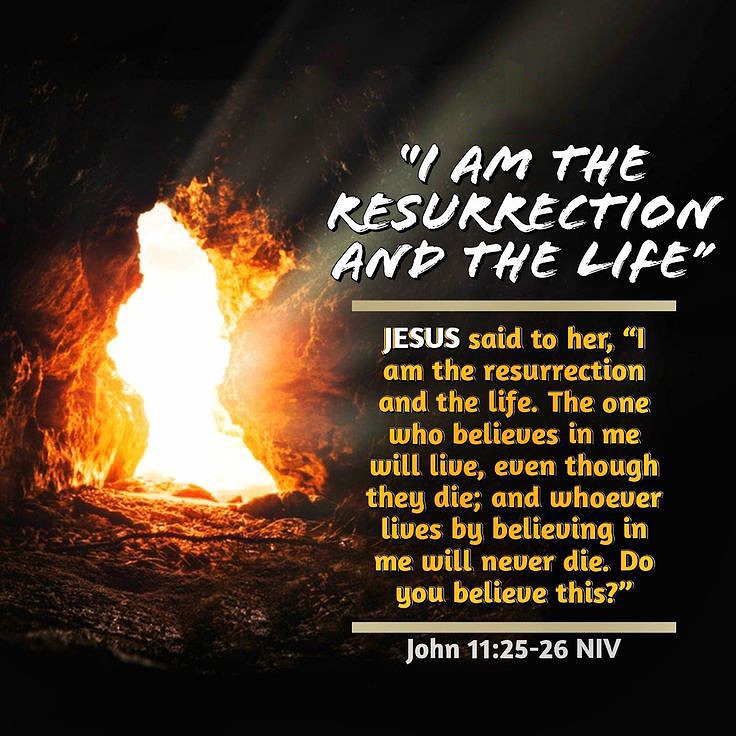
This actually creates a different situation for us as Christians. Rather than be concerned about how LONG we will live, God wants us to focus on HOW we live the rest of our lives on this world.
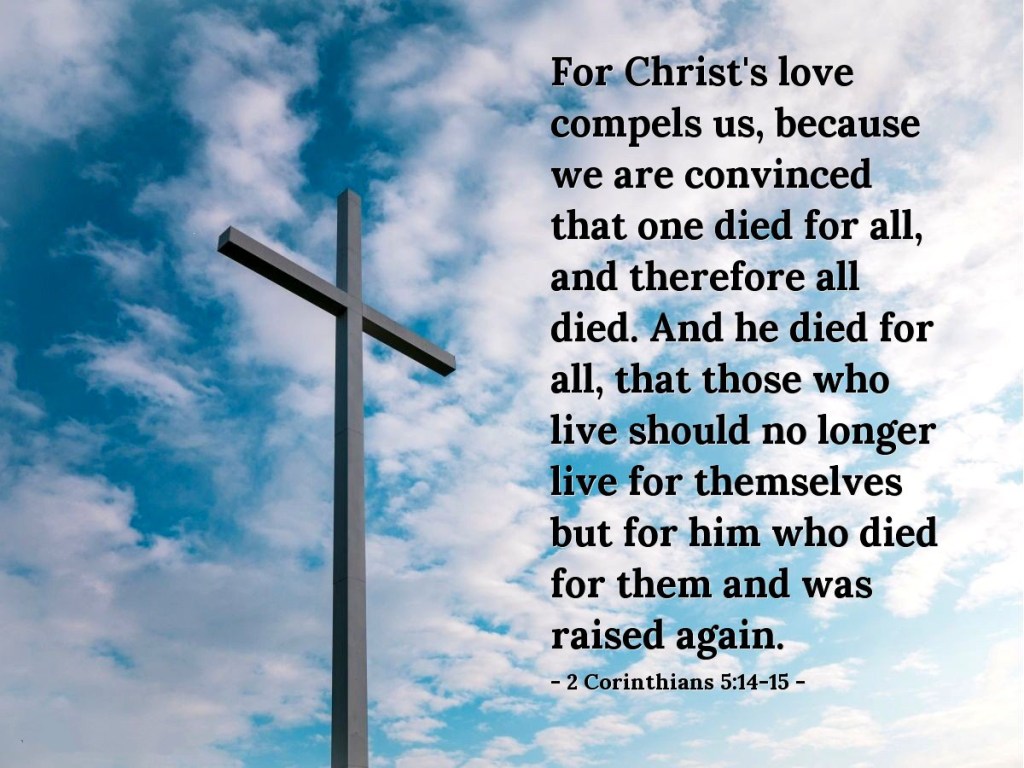
Instead of living our lives for ourselves for as long as we can, God wants us to spend our lives in service to Him, the Gospel and the Great Commission–to invest our lives in bringing others to Christ and guiding their growth to maturity as Christians. This, in essence, is spiritual reproduction. Where are you in that process? If you need to refocus your attention on our eternal God, try this worship song.

Chris Tomlin, Holy Forever
 Bill's Bible Blog