May theme = Focus on the Good#1d.Philippians 4:8d – Think about Whatever is Pure
4. Whatever is Pure = the Greek adjective h’agnos. Literally meaning a- , without, and –hagos, something awful, gross or nasty.
H’agnos is a form of the more familiar Greek adjective h’agios, which is most often translated as ‘holy’.
I find it very interesting that there is not a positive word for purity and holiness, but they use the negation of a negative word, the old “two negatives make a positive” rule. The implication is “not pure” is the common state and I guess we can more easily recognize when something is an exception to the ordinary?
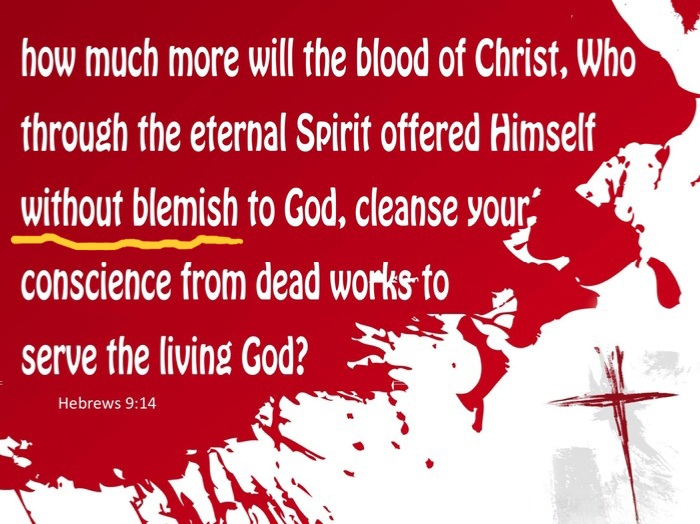
In the Old Testament, the same principle is expressed in the translation “unblemished” (Hebrew: tamim) refering to sacrificial animals and priests needing to be physically perfect, “without defect, spot, or blemish.” This requirement symbolized holiness and purity, in other words, God demands our best.
This requirement prefigured the righteous perfection of Jesus Christ as the ultimate sacrifice for the sins of humankind. Some related verses:
Exodus 12:5 – The Passover Lamb must be “without blemish,” as should any animal offered for an atoning sacrifice.Leviticus 21:17-23 Priests must be withoutdefect to serve in the tabernacle (or later the temple).And the same language is used in Hebrews to describe Jesus. In Hebrews 9:14, Jesus is described as an ‘unblemished‘ sacrifice.
Getting back to the New Testament and Philippians… Whereas h’agios (holy) is used 235 times in the Greek New Testament, h’agnos (pure) joins the first two adjectives used by Paul in Philippians 4:8 as being rarely used, in this case, only 8 times. Let’s look at some of those verses and see what food for thought they provide about purity.
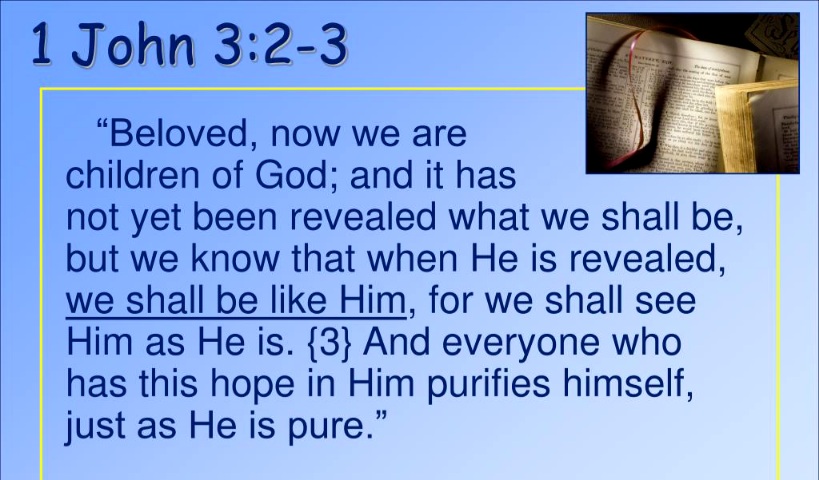
James portrays heavenly wisdom as “first of all pure,” declaring purity as the source from which all the other virtues flow.In Titus 2:5, Paul encourages young women to be “pure” so that the word of God will not be “dishonored,” highlighting the importance of personal integrity in being a witness to the gospel–that is, our purity is a testimony to God’s holiness.Peter recommends “pure… demeanor” for believing wives, showing that a testimony of purity carries persuasive power, even toward an unbelieving spouse.In 2 Corinthians 11:2, Paul pictures the Corinthian church as “a pure virgin presented to Christ.” Using bridal imagery from Jewish betrothal customs, he emphasizes the exclusiveness of the covenant relationship with God.John links purity to our future hope. Our focus on the second coming of Jesus Christ should motivate us to live a life of unparalleled purity.
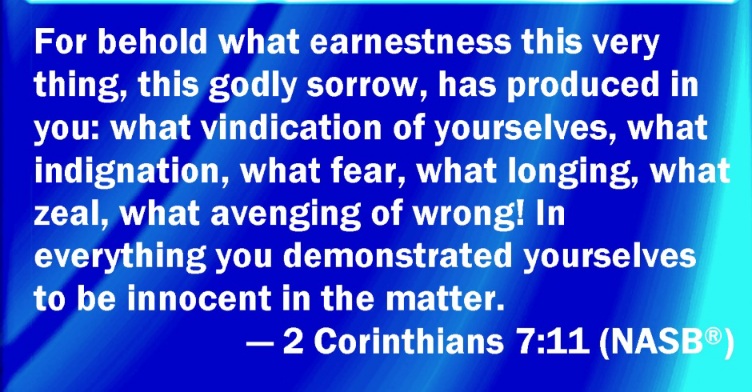
In 2 Corinthians 7:11, Paul describes the Corinthian church as having proved itself “innocent” (pure) after Paul had called them to account for public sin in his first letter.
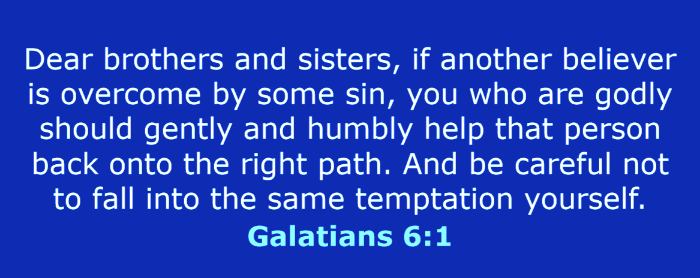
The Corinthian church’s response to this revealed sin was a deep godly sorrow that Paul greatly commended. Following is a closer look at the 7 qualities Paul associated with their repentance to the point of bring able to regain their purity as a church.1. Diligence. First, they moved quickly to deal with the sinful situation after receiving Paul’s letter.2. Pleas (apologia). Then there was much discussion and argument about it with all involved.3. Indignation. A single-use noun from a more common Greek word. The uniqueness of this word emphasizes the church’s response was not a generalized anger, but a focused, moral outrage.4. Fear. Although it doesn’t specify fear of God, the implication is there. Their fear might well have been that God’s grace, mercy and blessing would be taken away from the church. If you don’t think Jesus does that, read the letters to the 7 churches at the beginning of the Revelation of John.5. Earnest desire. An intense yearning that is more than simple emotion, but leads to fulfilling action. In the New Testament, it appears only in 2 Corinthians. Once they realized the sin needed to be dealt with, they knew they had to go beyond their feelings and take decisive, God-honoring action.6. Zeal. Greek = a ‘burning’ emotion; often translated ‘fervor.’ When the church had decided to deal with the sin, they “had their ire up,” to use another expression, and charged ahead in thorough, dedicated and complete implementation.7. Punishment of wrong. Greek ek-dikésis: A combination of ek- = out of and -dikeo = justice, one of the Philippians 4:8 qualities, it is used to refer to what comes out of the execution of justice. Here it means an appropriate punishment was applied to the sinner–not to condemn or totally expel, but rather appropriate for the wrong that was done that will also give the sinner a chance to repent and return to full fellowship with God and with the Church.
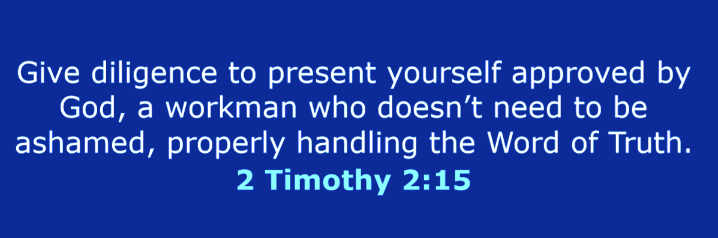
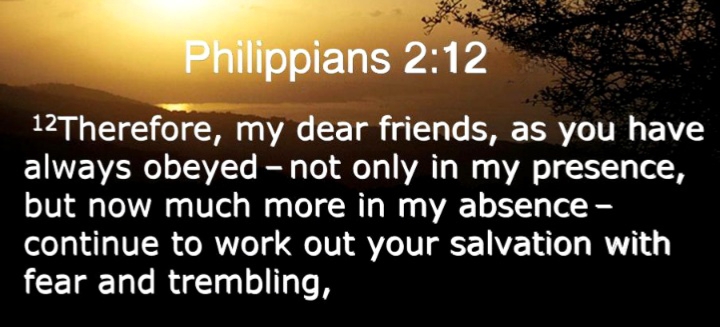
As you can see, there is a lot to the Biblical concept of purity. That is probably why Paul urges us…














Leave a Reply