May: Focus on the Good
#4. Job 8:7 – God will bless you.

The friends’ responses reflect the different conventional viewpoints about who God is and how He rewards and punishes people for doing right or doing wrong. The friends operate on the assumption that all suffering is a direct punishment for sin and therefore, Job must be guilty of some secret sin. Because the friends constantly mix partial truths with flawed conclusions, it is sometimes difficult to separate accurate theology from incorrect accusations.
Here are some excerpts from the context and my annotations that might help to understand Job 8:7 better.

2 “How long will you say such things,
And the words of your mouth be like a storm wind?” (Criticism of Job’ complaining)
3 “Does God subvert judgment?
Or does the Almighty pervert justice?”
(Accurate theology, He does not.)
…
5 If you would earnestly seek God
And make your supplication to the Almighty,
6 If you were pure and upright,
Surely He would rouse Himself for you,
and justly restore your household?
(Incorrect assumption of Job’s guilt.)

Yet your latter end would increase abundantly.(Accurate theology.)
Even though the friends’ accusations of Job’s sin was off track, their theology was accurate and that is exactly what happened to Job! After learning a little more humility before God…
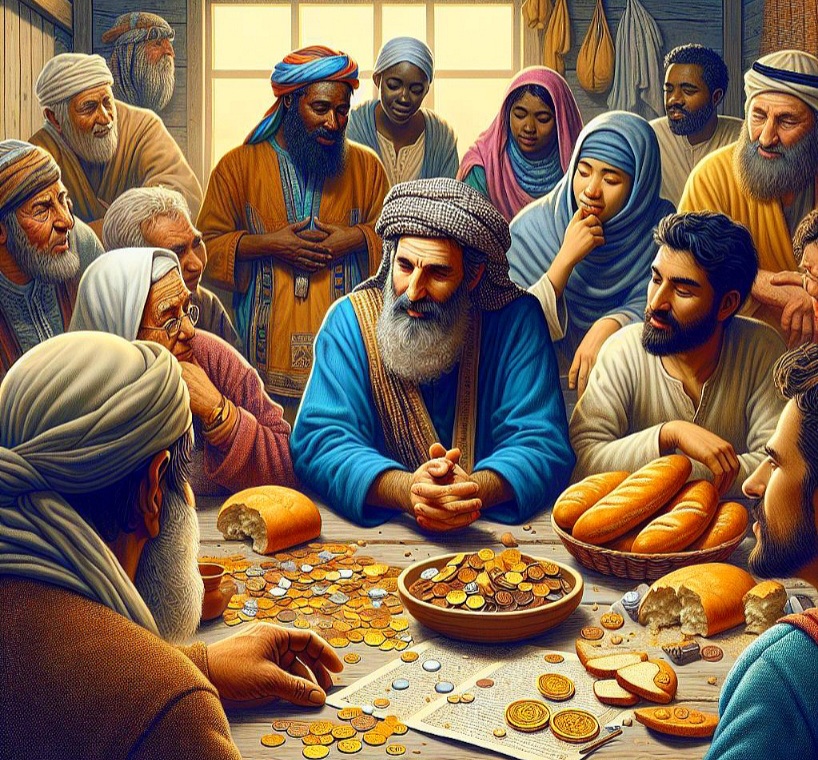
13 “So the LORD blessed Job in the second half of his life even more than in the beginning.” (NLT)
This verse written in ancient Hebrew is sometimes translated differently. The Hebrew Interlinear translates it by the word as:
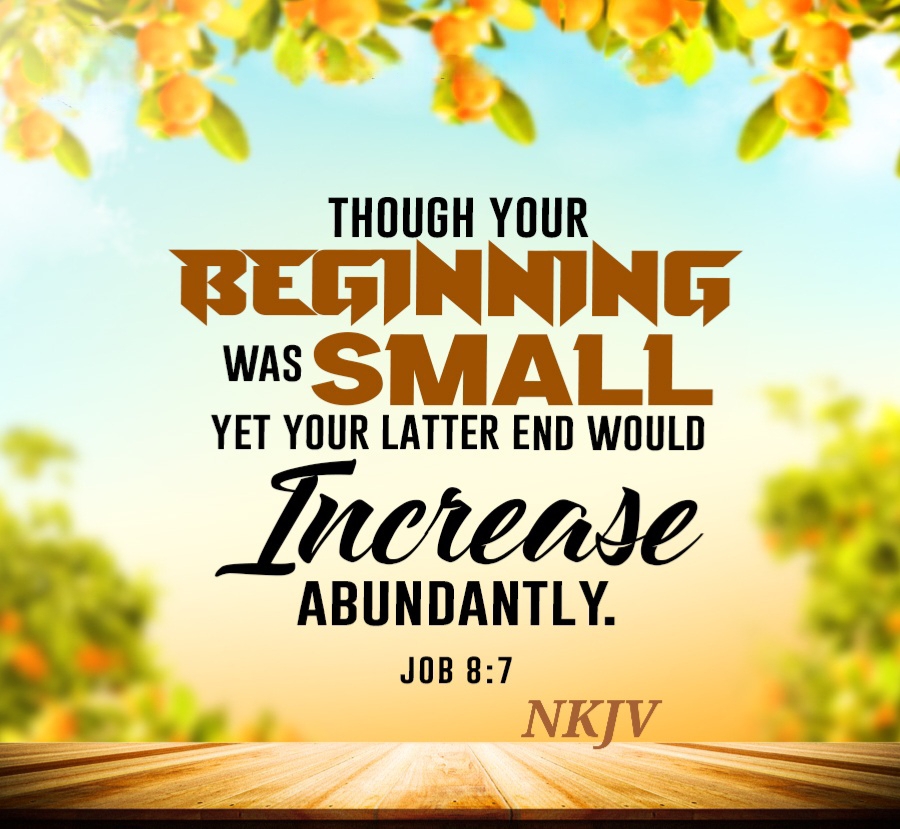
“Though your beginning was small,
And yet your latter end would increase abundantly.”
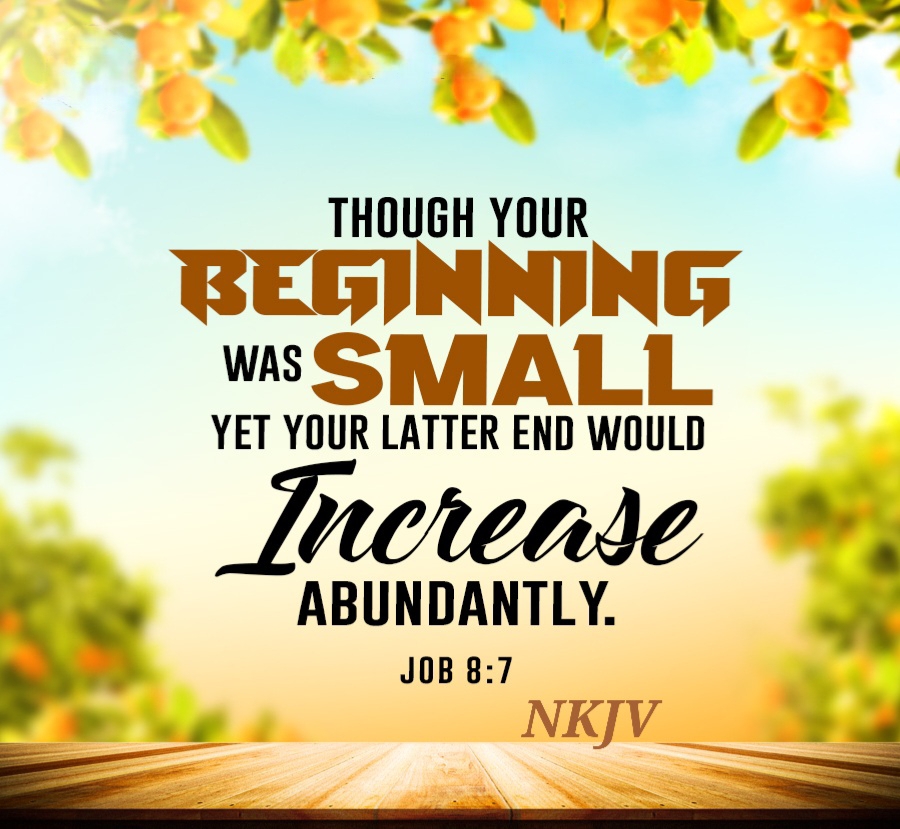
The NKJV translation used in the picture at the beginning is very close to the word-for-word translation. Some other versions:
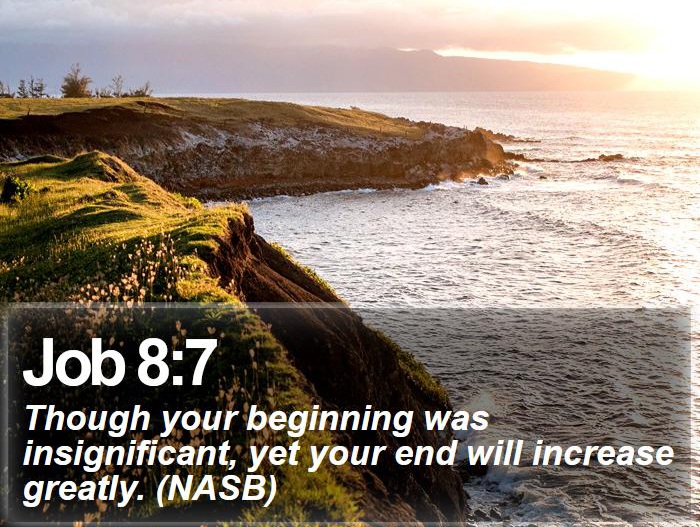
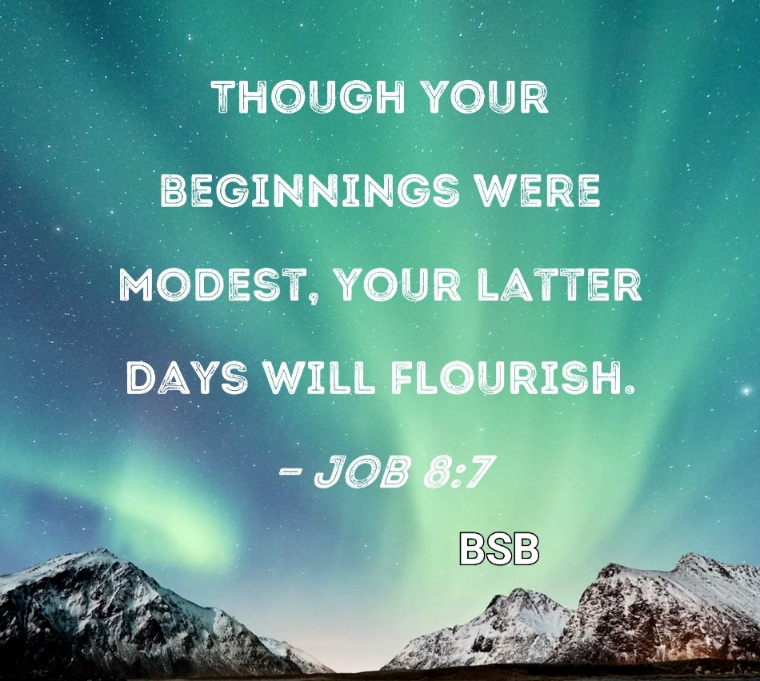
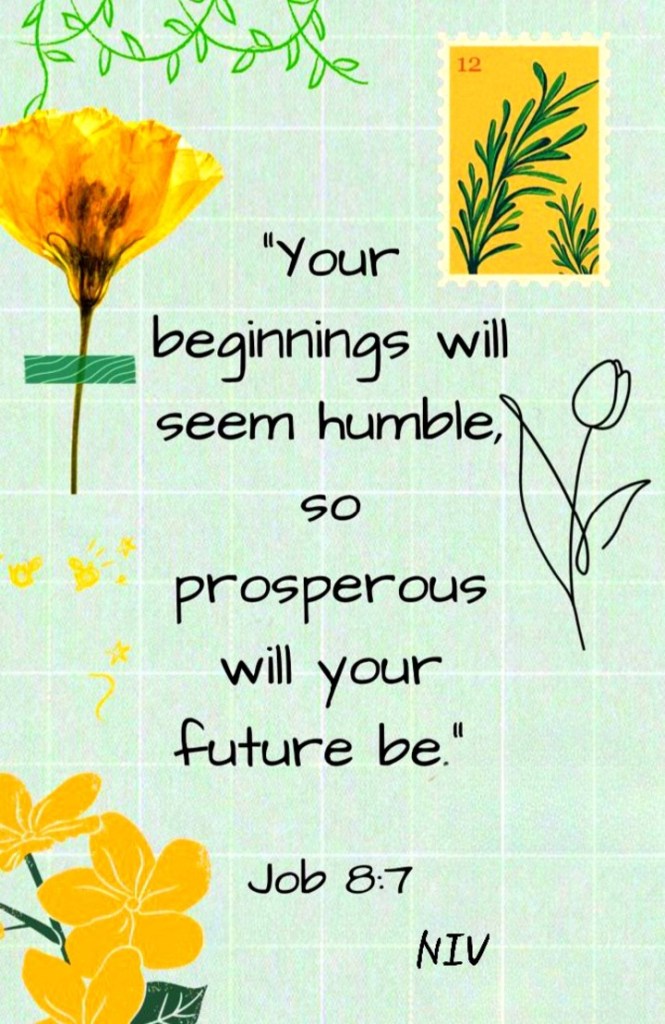
The NIV, on the other hand, along with some other translations, go a different direction with their interpretation–translating the comparison as words of comfort.
This interpretation reminds me of the “gap” or “gain” perspectives mentioned in a recent sermon by Pastor J.D. Greear. It is from “The Gap and the Gain,” a book by Dan Sullivan and Benjamin Hardy, “A guide for high achievers that teaches a mindset shift from focusing on the ‘Gap’ (the distance between your current self and an ideal) to focusing on the ‘Gain’ (the progress made from your past self) in order to increase happiness, confidence, and motivation.”
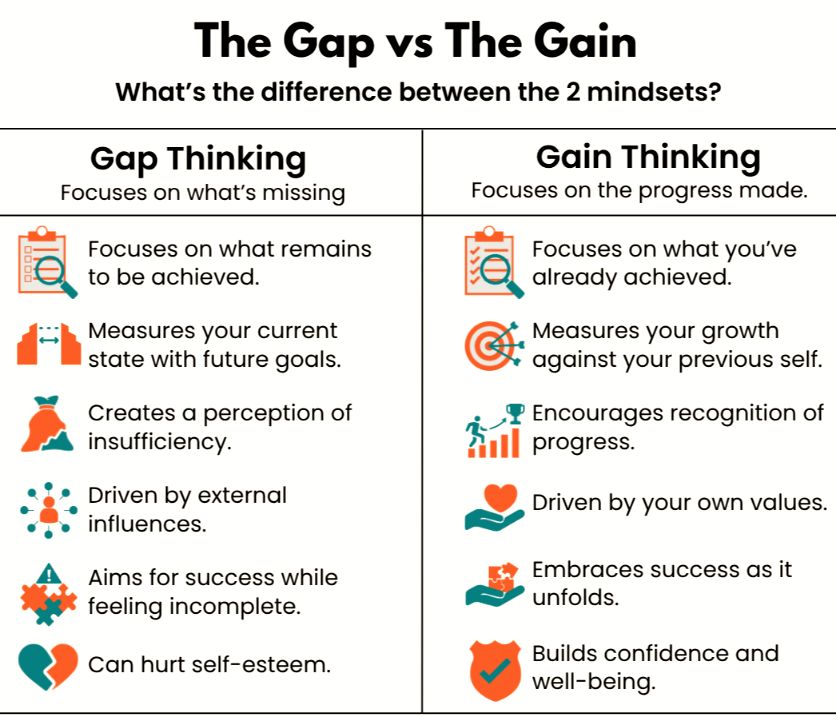
They argue that constantly measuring oneself against an unattainable ideal leads to dissatisfaction, while celebrating past progress leads to a sense of accomplishment and fuels future success.
This interpretation of Job 8:7 where looking back after being blessed and seeing how much you’ve prospered sounds very much the same.

However, here in the midst of the suffering, it seems like this idea is reversed. Instead of focusing on the ‘gap’ of everything Job has lost in the recent past, the verse suggests focusing on the ‘gain’ he could expect from God’s blessings in the future.
That idea is very much a part of our Christian teachings. Paul said in Romans 8:18,

A lot of critics of Christianity say this is just “pie in the sky, by and by.”


The “pie in the sky” part comes from Jesus’ promise to His disciples, (Matthew and Mark 10:29-30)

What it comes down to is faith. Do we believe Jesus’ claims to be sent from God according to the prophecies about the Messiah? Do we believe His promises for the future when He’ll return and establish the Kingdom of God on Earth? If we believe, then we have to respond in faith and do as He commands. So, it all boils down to believing and then obeying. That is why the writer of Hebrews says,

“For He (God) who promised is faithful.” That is, in essence, the foundation of our Christian faith, and part of that faith is God has said that He WILL bless us. That is a good reason this week to focus on Job 8:7 and remember, God will bless us!


Leave a Reply