Remember God’s Faithfulness:
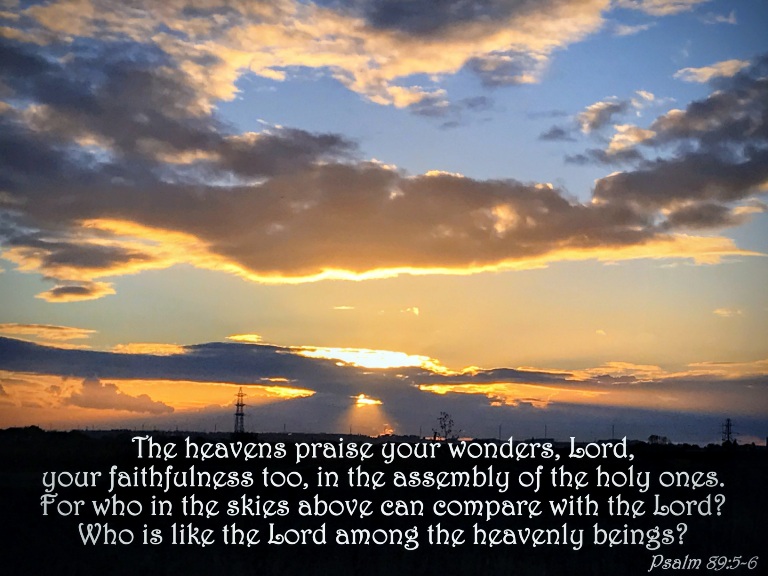
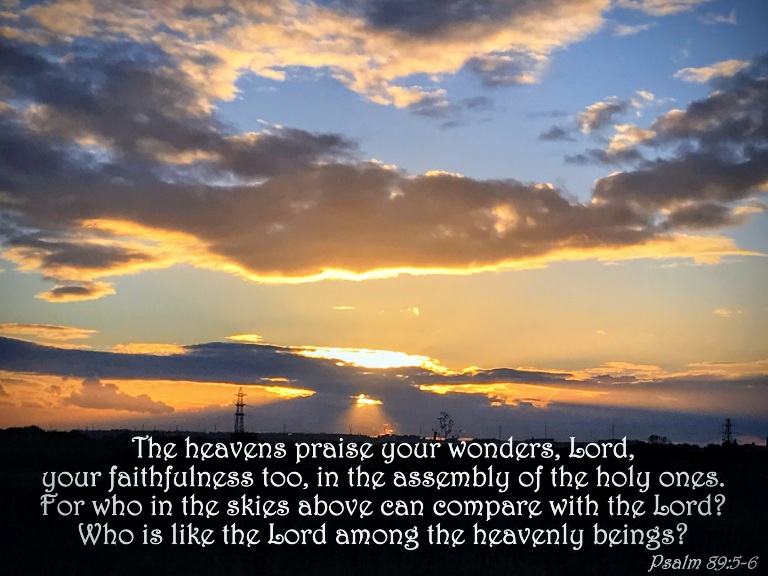
#2. Psalm 89:5,6 – God’s faithfulness is like no other’s.
” I will sing of the mercies of the Lord forever: with my mouth will I make known Thy faithfulness to all generations.” Psalm 89:1

So begins the first verse of Psalm 89, also a familiar worship song, introducing two of the most important qualities of God in His relationship with Israel–His mercy and His faithfullness.
Treatment of these two qualities continue into the second, less familiar, verse, and a third theme is introduced–the heavens:
2 “For I have said,
mercy shall be built up forever:
Thy faithfulness shall Thou establish
in the very heavens.“
Psalm 89 is the last psalm in Book III, beginning with Psalm 73. Most of the Psalms in Book III were written by Asaph, the head worship leader from King David through his grandson King Rehoboam’s reign. One is by David himself, and a few are by other worship leaders, as is Psalm 89.
Psalm 89 ends the set, many of which are dark, reflecting the decline of the kingdom from it’s most glorious point. This last psalm in the book starts off with a change of focus from troubles on Earth, to God in Heaven. It’s final verse is an appropriate short benediction to end Book III.

Here are our theme verses in direct word-for-word translation from the Interlinear. Note the Hebrew parallelism in both verses = stating the same thing in two slightly different ways.
5 And the heavens will praise Your wonders, O Yahweh.
Even Your faithfulness in the assembly of the holy ones.
6 For who in the heavens can be compared to Yahweh?
Who can be likened to Yahweh among the sons of might?

I. GOD’S MANIFOLD CHARACTER–Pick Two
If you were to pick what you think are the two most important aspects of God, which two would you choose?

At the beginning, the psalmist choses God’s mercy and faithfulness. By the time he gets to verses 8-9, our theme verses for the week, he has segued to faithfullness and His miraculous wonders.
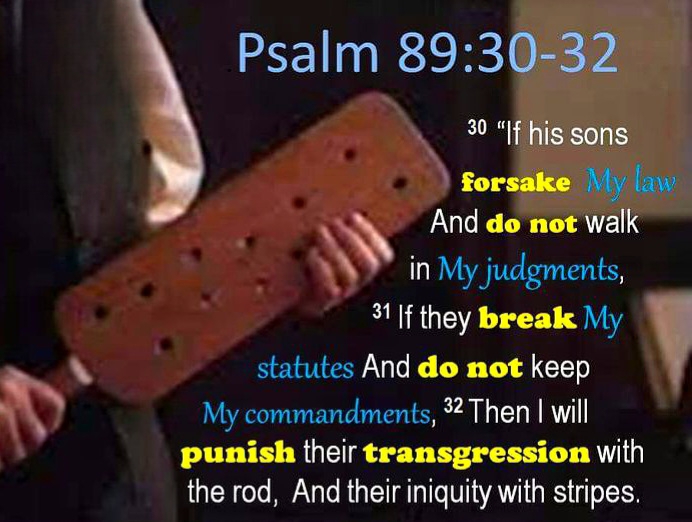
Next, the psalmist talks about God’s might. Then he turns dark and discusses how the might of God, shown in redeeming Israel and establishing the throne of David, has been turned against Israel in their disobedience. What I see as key in this lengthy psalm is this section from verses 30 to 34:
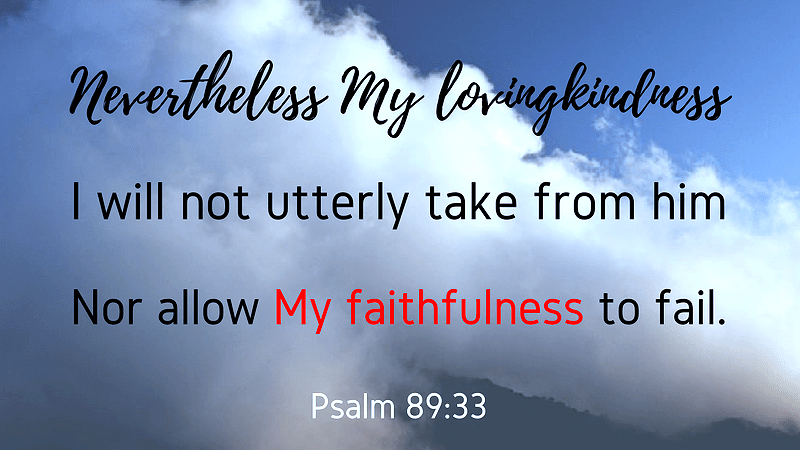
What an awesome picture of God’s faithfulness! This understanding of God’s faithfulness led Paul to exclaim:

The last part of this statement was never clear to me before, but after a recent message from Pastor J.D. Greear about God’s unilateral covenant with Abraham, how it was sworn by God alone, therefore could never be broken by the unfaithfulness of Abraham’s descendents, and then seeing the same idea in Psalm 89, I realize it means, since God swore by Himself, His faithfulness doesn’t depend on our performance, but entirely on who He is.
I heard a snippet of a song today by Matthew West that contains some of the same idea,
“He doesn’t love me because I’m worthy,
He loves me because He’s good.”
Wow! What an awesome statement about God and His love! If you’d like to listen to it, I looked it up on YouTube.
The number one quality of God that I choose is His unfailing love. But no matter which two qualities one chooses from the many-faceted character of God, one of the most important will always be His faithfulness.
II. THE INCOMPARABLE GOD
Psalm 73 begins Book III with this awesome statement by Asaph:
…and the theme of God in heaven in Psalm 89 ends Book III by pointing out there is no one among the heavenly beings or beings of supernatural power who is like the Supreme One, Yahweh, the God of Israel.
Have you ever thought about the question, “What does God want?“
There are a lot of answers given by different people and different religions. Some common ones from an online search are:
• God wants to be worshipped.
• God wants us to obey Him and do right.
• God wants us to know Him.
• God wants us to honor Him by doing good to others.
There are many more ideas as to what God might want, but notice how quickly the answers change from being focused on God to being focused on us.

We as Christians believe God has revealed Himself to Israel (Old Testament) and through Jesus Christ (New Testament), and that much of these revelations are documented in the Bible. So, shouldn’t the Bible contain some insight into what God wants? It does!
We looked a little bit at God’s revelation of His character from Exodus 34 in the last blog and I mentioned it is one of the most quoted verses in the Old Testament.
However, there is another revelation that God repeats many, many times that reveals what He wants most of all.
A. The first time is when Moses is speaking to the new generation of Israelite adults and reviewing the Law and the Covenant before they leave the wilderness to start their conquest of Cana.
Yahweh’s wondrous acts on behalf of Israel were intended to convince the Israelites, and the peoples around them, starting with the Egyptians, that He, and He alone was the supreme being we call “God”.
B. To keep this important point at the front of Israel’s awareness for each generation, it was part of a song that God taught Moses to teach the Israelites to remind them who God is, what He did for the nation, and what He expects from them in His covenant with them.
C. In Book 2 of Isaiah, (Chapters 40–55), written during the Babylonian exile, specifically in Chapters 40–48, God offers comfort and the promise of release from exile through revelations about the sovereignty of God–especially verses about Yahweh, the Incomparable God.
In the first chapter of the set, God starts the topic by asking this question:
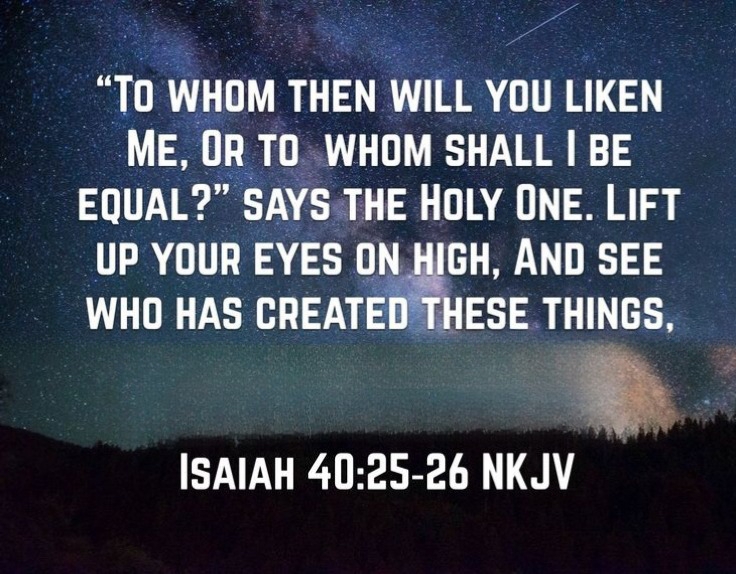
God’s first point is, He was the One who created the Universe. In additional revelations through Isaiah 46, God shows how there is no one like Him a total of eight different times, ending with this assertion:

Therefore, we see that what God wants is for everyone to know that He, Yahweh, and He alone is God, the Supreme Being, and that there is no other god besides Him.
CONCLUSION:
Our God is incomparable, and so is His faithfulness. He alone is God, yet He reaches out to us and offers us salvation from the sins that disgust Him, and that cause us to be separated from Him. Spend some time this week considering Psalm 89:5-6 and worshipping God for who He is, and for what He has done in His faithfulness toward us.
NOTE: For the complete set of eight ‘Incomparable God’ passages in Isaiah, see the next blog, G24b.


Leave a Reply