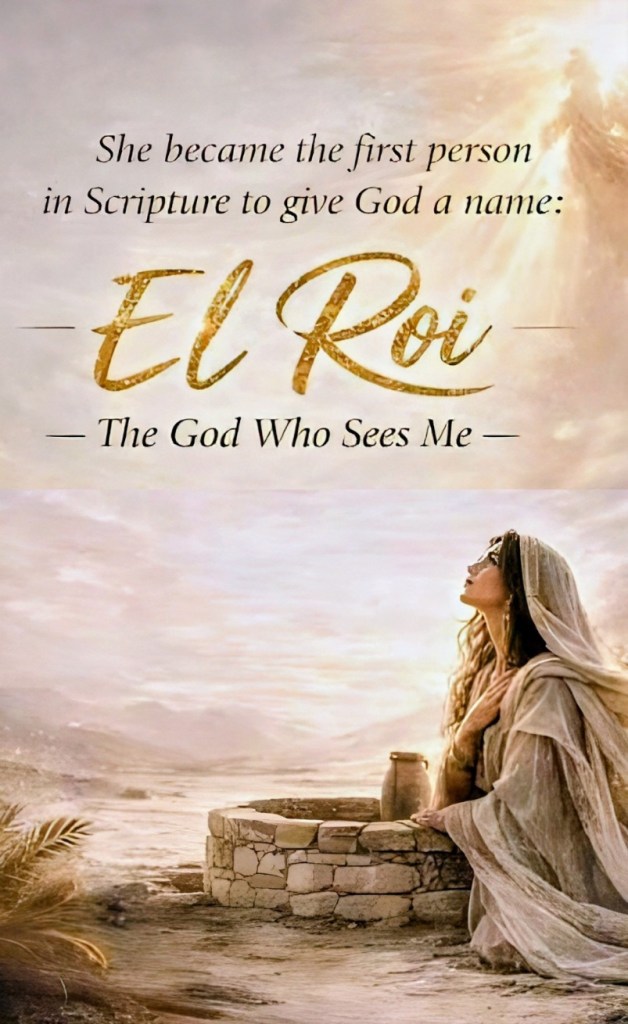
I skipped over one name for God because it is almost singular in use. However, it also has two distinctions–it was the first name for God recorded in Scripture as being given by a person, and it is the only name for God given by a woman in Scripture. Let’s see how that came about.
I. HISTORICAL: Read Genesis 16.
________________
¹The name Hagar is from a Hebrew root word meaning to wander, forsake, or run away, reflecting her later actions where she flees into the wilderness.
_________________
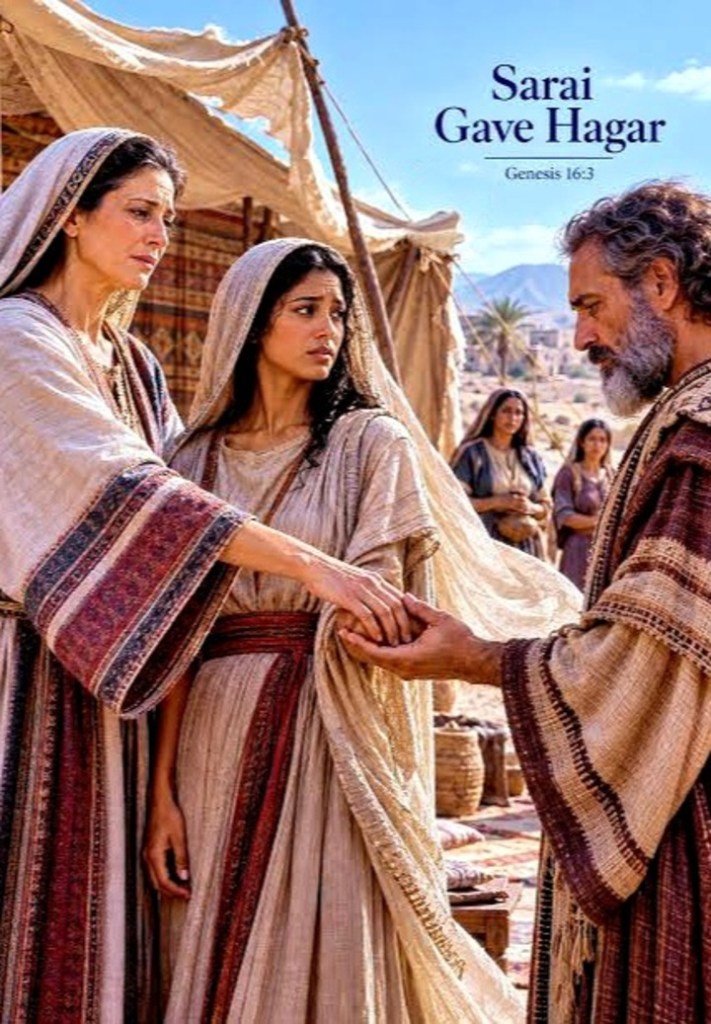
Abram agreed with his wife’s suggestion, so Sarai took Hagar the Egyptian, her maid, and gave her to her husband Abram as a wife. Abram then took Hagar to bed and she conceived.
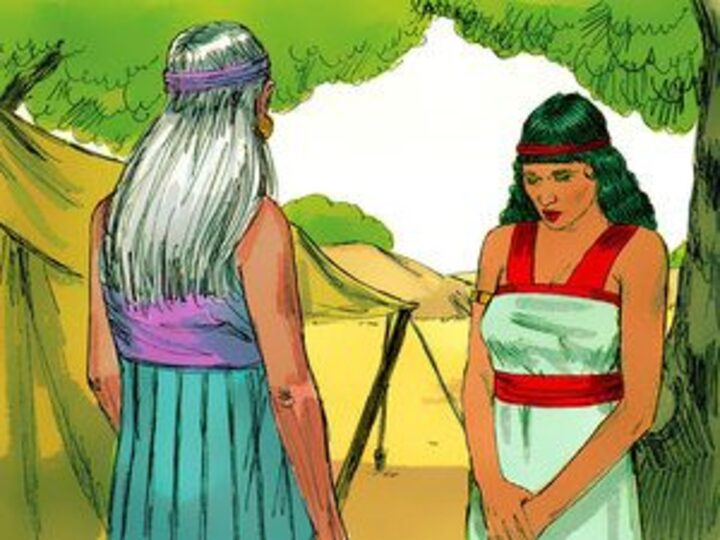
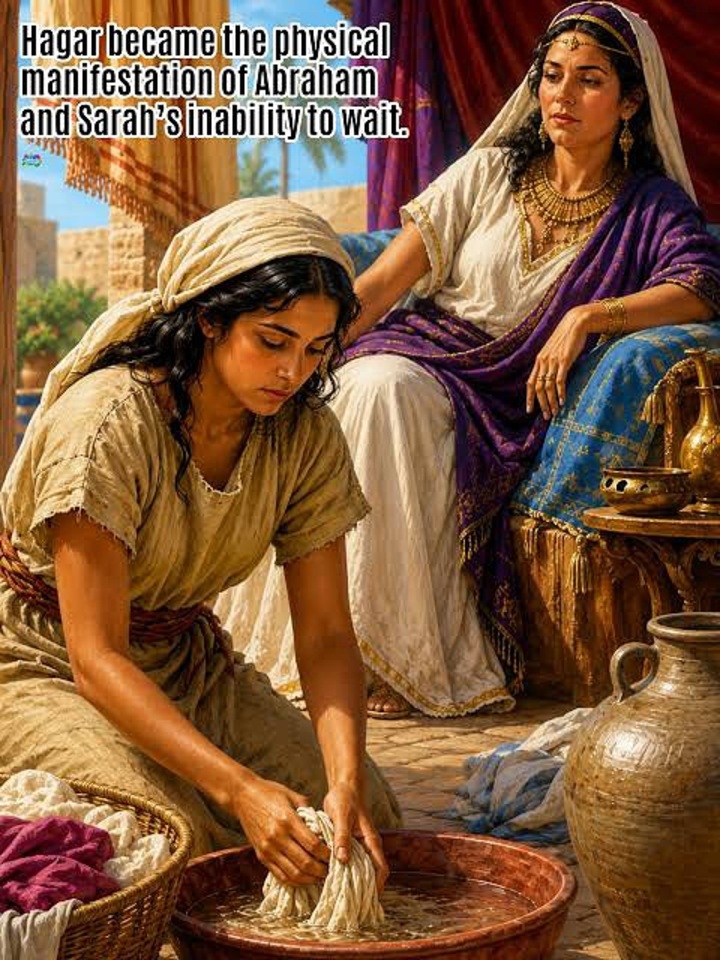
But Abram said to his wife, Sarai, “Look here, your maid is still under your authority; do to her whatever you want to.” So Sarai treated Hagar harshly.
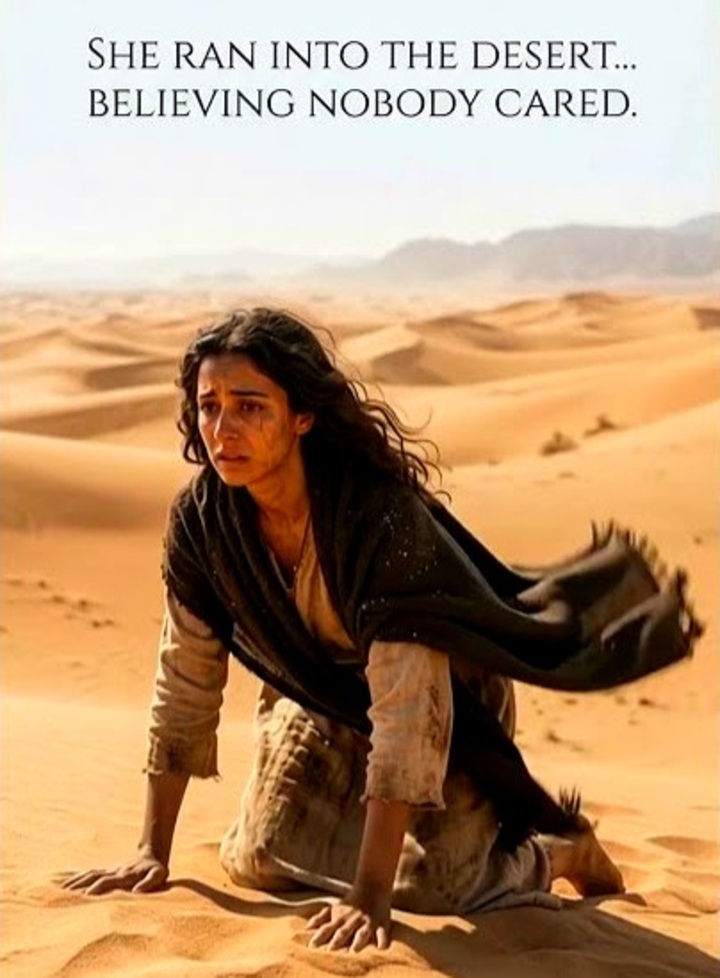
One day, Hagar had enough and she ran away from Sarai, taking the road through the wilderness that went to Shur, the closest city.
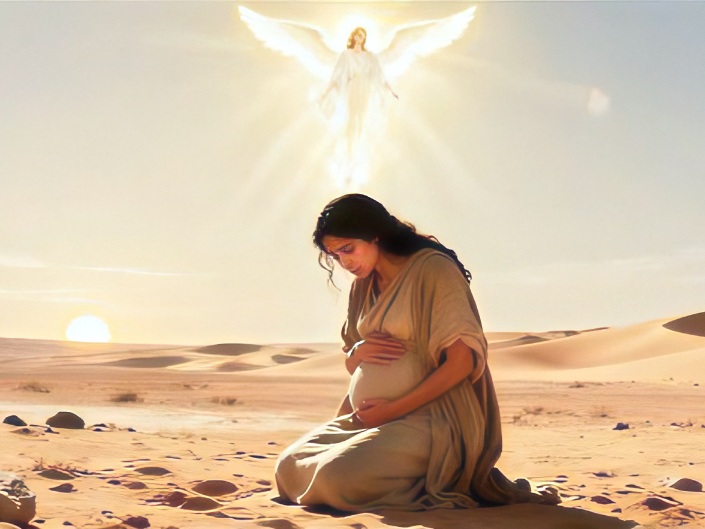

Then the angel of the LORD instructed her, “Return to your mistress, and submit yourself to her authority.”
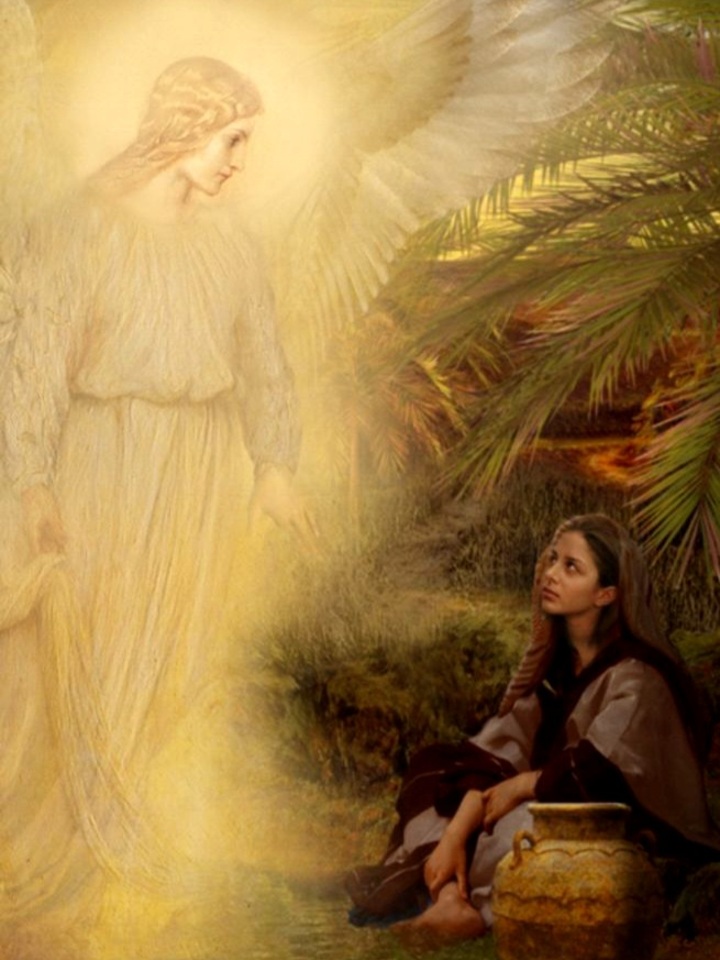
Furthermore, the angel of the LORD prophesied to Hagar:
“I will greatly multiply your descendants so that they will be too many to count.”
“Behold, you are with child,
And you will bear a son;
And you shall call his name I’shma-el,
Because the Lord has heard² your affliction.”

His hand will be against everyone,
And everyone’s hand will be against him;
And he will live to the east of all his brothers.”
Then the angel of the LORD left Hagar.
_____________
² Meaning of the name Ishmael given by God, a daily reminder to Hagar of this ‘God moment.’
_____________
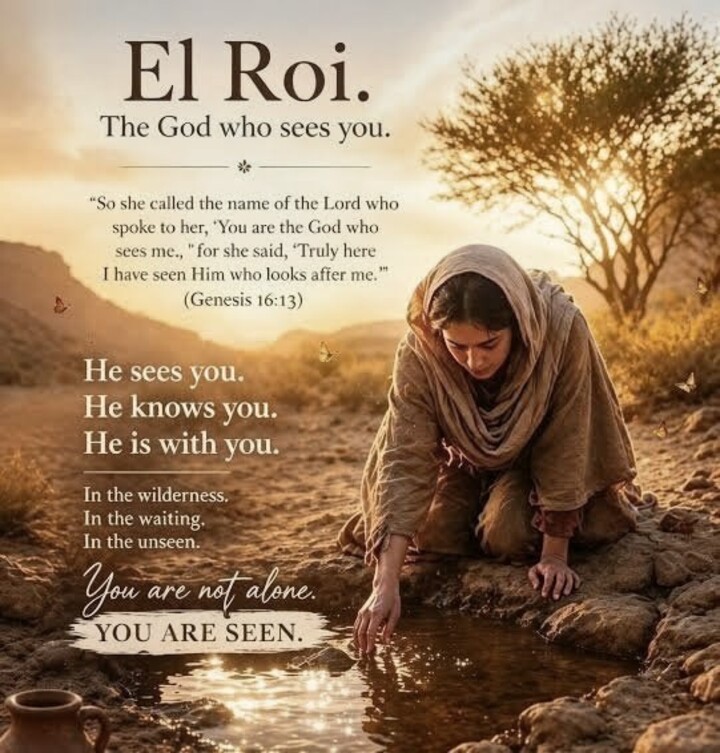
Therefore the well was called Beer-la’hai-Rō’i; ³ and you can find it to this day between Kadesh and Bered.
________________
³Rō’i is used 3 times, plus the past perfect form of the root word, ‘to see.’
________________
==============

Word Origin: from H7200, ra’ah, to see.
________________
🤓 COMMENTARY: Hagar is considered a heroine by many Christian women–she was a slave, she was sex trafficked, she was abused and she felt she had no choice but to run away from what had become an intolerable situation–but God took notice of her and her situation.
On the positive side, she was the first woman God appeared to since Eve, even if it was through the intermediary of His angel. In her rapture and relief about meeting with God and surviving, she gave Him the name El Ro’i, the God Who Sees (me, the pronoun is implied), or Who Takes Notice (of me.)
But as I learned from my study of Genesis at church a couple of years ago, Genesis is really “HIS”-story–God is the major player in it, as well as in the entire Bible.
Some of the questions I had from this story about Hagar were:
1. Why did God choose to appear to Hagar?
2. What was Hagar to God that He would comfort her and provide guidance to her?
3. Why would God establish a great future for her son-to-be-born, even going so far as to name him?
Hagar was forced to get involved with God’s plan that an heir to His promise would be born to Abram. Maybe he and Sarai believed at first, but time passed and…no child.
The situation as I see it: Sarai was in the wrong to suggest Hagar as a surrogate wife and mother, Abram was wrong to go along with her suggestion, Sarai was wrong a second time to be abusive toward Hagar after she became pregnant and Abram was in the wrong to go along with it. I see this chosen couple being in the wrong time and time again, BUT there is no mention of condemnation from God!
And didn’t THAT leave me wondering when I read other similar situations later in Genesis that we looked at during our study of Genesis, part 2.
There is something very important going on with God’s attitude towards this couple that carried down through the generations of their descendents. We can’t really know what God is thinking or feeling unless He tells us, but the key verse that I came up with as an explanation is Genesis 15:6–

There is something similar mentioned for us as Christians. The writer of Hebrews said something very interesting in the faith “Hall of Fame.”
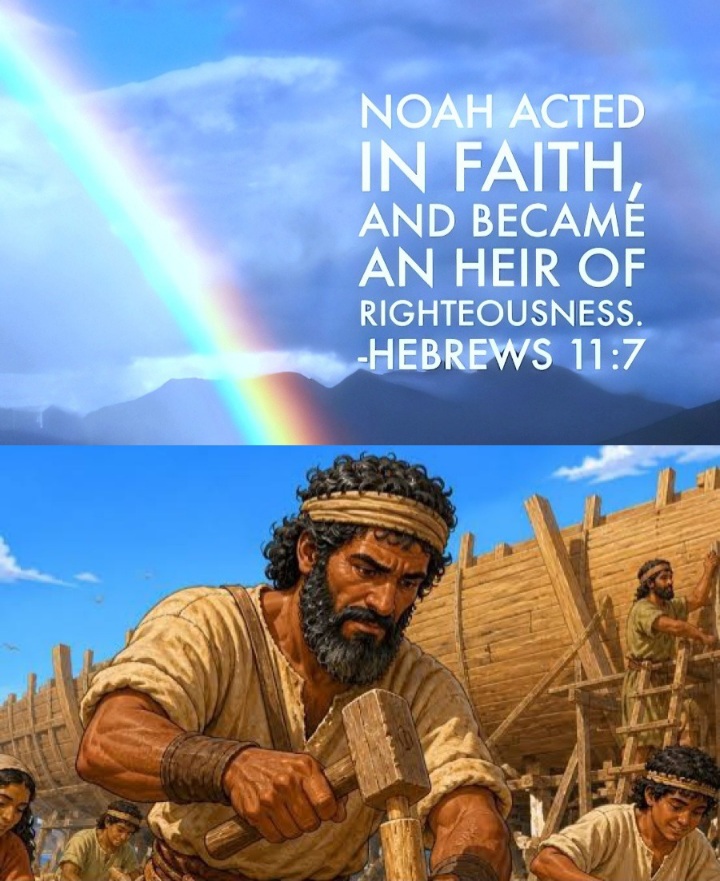
This statement about inheriting righteousness based on faith follows Hebrews 11:6 emphasizing that acceptance by and a relationship with God is based on faith in Him.

Furthermore, Paul says in Galatians 3:16 and 29–


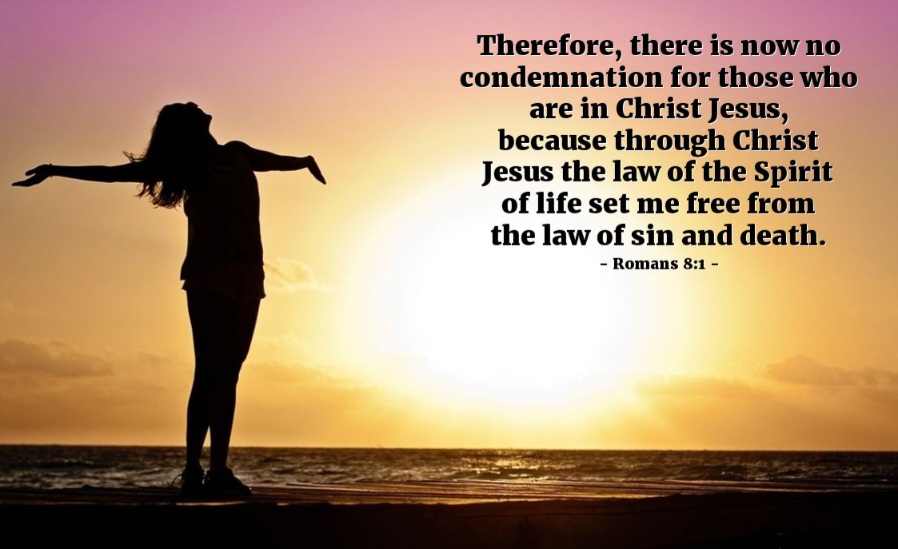
In fact, God’s instructions to Hagar to return to, what for her was an intolerable situation, was so that she could be in ‘the blessing zone.’ God had promised to bless Abraham, and that included everything and everyone under his authority and THAT is how Hagar was privileged to receive a direct, personal visit from God via His angel, at least in my opinion.
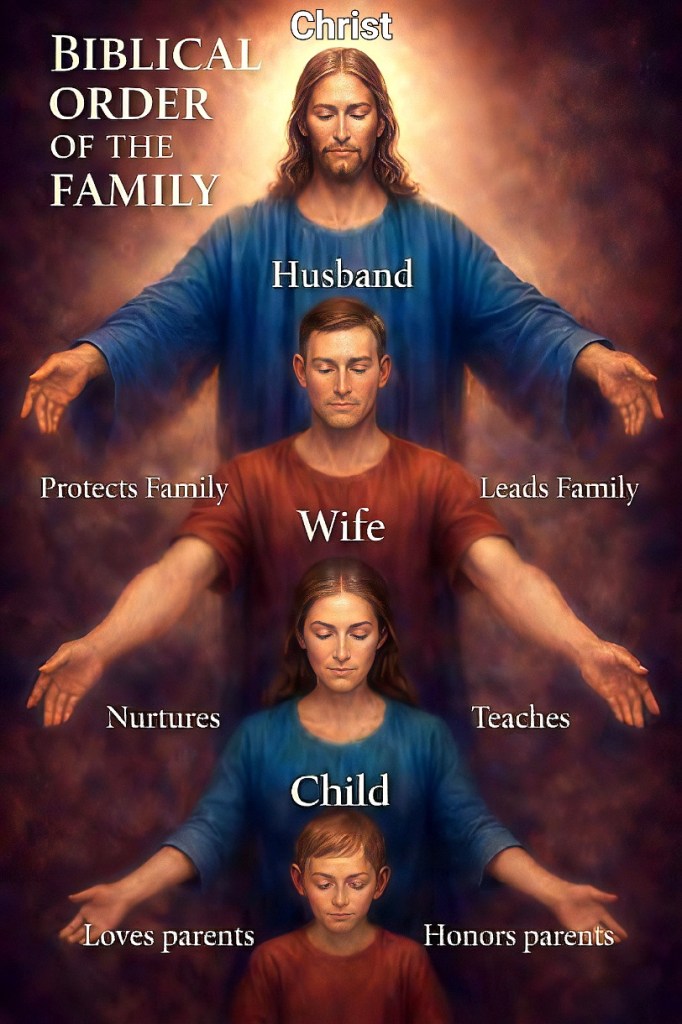
We don’t always live by the same concept of authority in our families that the Bible teaches, but God hasn’t changed how He sees things, and how and why He acts. Our best course of action is to study the Bible and do our best to live according to it’s guidelines. GOD will take care of the rest.
AMEN!
=============
👀 COMING NEXT:
There are four additional occurrences of ro’i in the Old Testament that show different usages of the Hebrew word. However, the concept of the All-Seeing God is common in both the Old and New Testaments. To further explore the implications of El Ro’i, I’ll look at the following key verses and passages in the next four blogs.



Hebrews 4:13

I hope you will join me in this journey to learn more about El Ro’i, our ‘All-Seeing God.’


Leave a Reply