Our theme for February is Remember God’s Blessings.
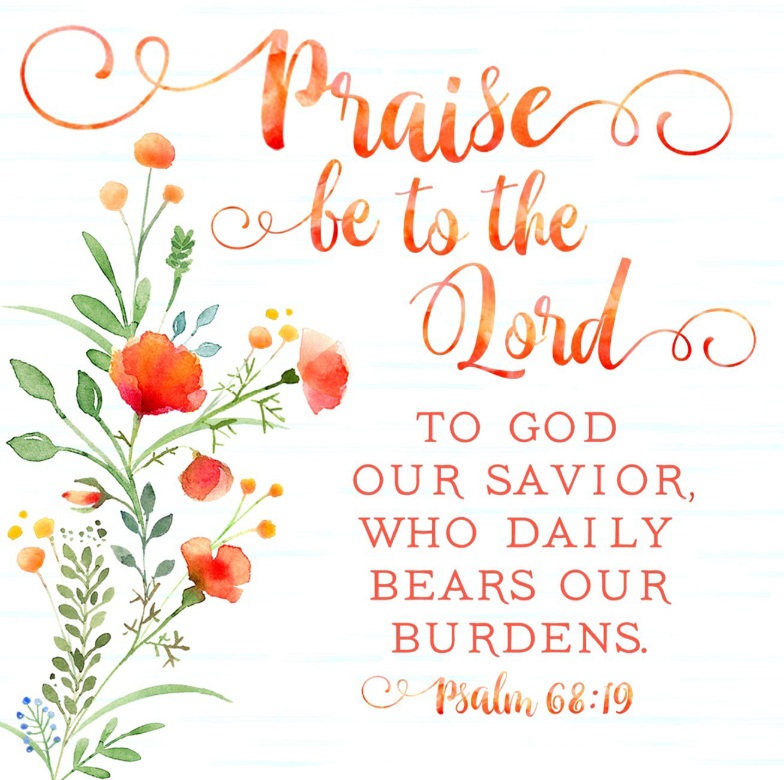
For week 3, the verse is Psalm 68:19 – Remember how He has borne our burdens!
It seems there are a couple of elements to this verse that we can do a deeper dive on.
I. “God our Savior.” This is a verse in the Old Testament. As a New Testament believer, I’ve always thought of my Savior as Jesus Christ. He’s the One who came from God, to suffer and die to pay the penalty for my sins so that I will be saved from the Judgment and eternal condemnation. So, what did the Jews think when they said, “God our Savior“?
“Stand firm and you will see the salvation of the LORD!” (Exodus 14:13).
Salvation in the Pentateuch:
In Exodus, God’s salvation of the Israelites from Egypt, especially the parting of the Red Sea, forms the foundation of the Jewish faith.
Later books of the Old Testament frequently reflect on that event so that Israel’s later generations remember God’s salvation of their ancestors as the foundation of their national identity. (See Pastor J.D. Greear’s series on Exodus.)
Salvation in the Historical Books:
During the conquest and settlement of Canaan, salvation was experienced repeatedly through God-raised deliverers. Joshua’s victories, the judges’ rescues, and the military triumphs under Saul and David, all portray God’s salvation as tangible victory over enemies.
Salvation in the Wisdom Literature:
In Psalms, salvation moves from the battlefield to the prayer closet. Personal problems replace national problems, but the action remains unchanged: crying out to the living God for salvation in the middle of sickness, slander, or sin.
Salvation in the Prophets:
The Prophets broaden the concept of God’s salvation. Isaiah links salvation with the revealing of God’s righteousness at some future time.
Isaiah’s Servant Songs climax in the proclamation that God’s salvation will reach “to the ends of the earth”. Jeremiah and Ezekiel speak of future salvation following God’s judgment.
Habakkuk shows that even when circumstances worsened for Israel, the covenantal relationship between God and His chosen people guarantees ultimate salvation by God their Savior.
Messianic Foreshadowing:
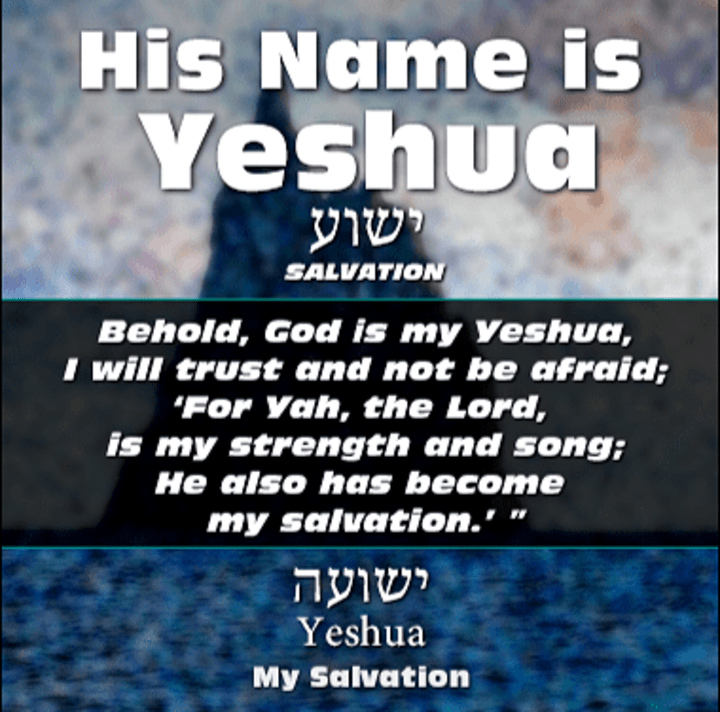
Because the name “Jesus,” or “Yeshua” in Hebrew, is from this same word for salvation, it becomes a connection from the Old Testament’s promised Messiah to the New Testament’s revealed Christ.
We see another connection between the two Testaments when Isaiah’s declaration that, “God is mysalvation”, is echoed in Simeon’s declaration recorded in Luke. When he sees the infant Jesus, he declares, “My eyes have seen Yoursalvation.” So, the concept of ‘God our Savior,‘ and “Jesus Christ,our Savior,” are closely related in the Old and New Testaments of the Bible.
II. The second concept in our verse for the week I thought might be worth a closer look is the concept of “daily,” or literally in Hebrew, “day by day,” also translated ‘day after day.’ We would just say, ‘every day.‘ Let’s look at some of the things in Psalms about our relating with God and He with us on a daily basis.
What we need to do:
DAILY WORSHIP GOD – Psalm 145:2DAILY PRAY TO GOD – Psalm 88:9DAILY OBEY GOD – Psalm 61:8
What can we expect from God?
DAILY REVELATION OF GOD – Psalm 19:1-2DAILY RENEWAL FROM GOD – Psalm 90:14
And from our verse this week…
DAILY HELP FROM GOD – Psalm 68:19
So, let’s take time this week to remember how God has helped bear your burdens.
POSTLOGUE:
There is a beautiful song from Godspell in the 70’s that we used to sing in contemporary worship services. It also summarizes how we as disciples should relate to Jesus “Day by Day.”
Lyrics Day by day, Day by day, Oh, Dear Lord Three things I pray; To see Thee more clearly, Love Thee more dearly, Follow Thee more nearly, Day by day, Day by day…
2. Psalm 34:17-18 – How He has answered your prayers:
There are many ways we can better understand and apply Scriptures. Here are some of those ways using this week’s verses.
I. Original Language. Sometimes we can understand a verse of Scripture better if we look at the original text. Translators add small words, sometimes, to help the English flow better. The added words in the following direct translations from the Interlinear Bible are in parentheses. Compare these minimalistic interpretations to how your favorite translation states these verses in Psalm 34:
CRY OUT! YAHWEH hears (and) delivers out of trouble. YAHWEH (is) near to broken-heartededness, and saves (a/the) contrite spirit.
II. Amplified. In contrast to the minimalist approach from direct translations, we can go the other direction and look at all of the different ways a particular word in the original lamguage is translated into English. Many of the Hebrew words are translated into more than one English word within the same translation, usually based on context, and dometimes translated as different English words between different translations of the Bible.
Every word in any language has an original, literal meaning (denotation), then a broader figurative meaning according to usage (connotation). Following are the expanded meaning and translation of key words from our verses:
A. Call with a loud voice. Literally ‘shriek.’ Figuratively appeal to, call together, cry out, gather together, shout, summon.
B. He will deliver. Literally to ‘snatch away’ or ‘pluck from.’ (Same as ‘rapture’!) Figuratively to defend, escape, preserve, recover, rescue, save, take from.
C. Out of all troubles. Literally a ‘tight spot.’ Figuratively = adversity, affliction, anguish, distress, tribulation.
D. God is near–in place (literal), kindred or time (figurative). • Place–near at hand, a neighbor, next to, standing by. • Kindred–close kin, kinsman redeemer, next of kin. • Time–about to, ready, shortly, soon.
E. Broken. Literatly means to ‘burst into pieces’, also translated to break down, break off, break up, destroyed, shattered, smashed, or a modern simile–torn up into itty, bitty pieces. Used figuratively for when you feel that way mentally, emotionally, and/or physically. In other words, it is used to mean a complete and total breakdown.
F. Heart. Literally the center of anything i.e. ‘the core’. Used figuratively for the feelings, the will and even the intellect. In other words, our inner person.
G. Saves. Literally to be open, wide or free. –by implication (noun) to be safe, preserved, victorious. –causatively (verb) to deliver, free, help, rescue.
H. Contrite. Literally ‘crushed to powder,’ or completely destroyed. Figuratively means “feeling and showing sorrow and remorse for improper or objectionable behavior, actions, etc.” (Websters) Biblically that would be for a sin, transgression, trespass, etc.
I. Spirit. Literally moving air like breath or wind. Figuratively the spirit–personal as well as God’s. That is, something we cannot see, but gives or shows life (breath), or shows God is acting (see John 3 for Jesus comparing the movement of God’s Spirit to the wind).
III. Paraphrasing. Sometimes it’s helpful when trying to get a mental grasp of what a verse means to cycle through all of the alternate translations of each key word, and find what makes the most sense to you, and then state the verse in your own words.
The first English paraphrase I saw was The Living Bible in the 70’s. It made what the Bible was saying much clearer than the King James version I had grown up with. A more recently popular paraphrase has been The Message. Here is verse 18 as those authors paraphrased it:
Try paraphrasing the verses to reflect your own feelings and understanding.
IV. Personalization. Another way to make a verse part of your life is to personalize it. Here is an examples from this week’s verses that’s been personalized. Use your preferred translation and write your own personal version of Psalm 34:17,18:
When I cried out in my distress to God in prayer, He heard and rescued me. When my heart was breaking and I poured my pain out to God in prayer, He felt so close to me.God freed my heart from pain when I had been crushed by life and I took it to Him in prayer.
V. Conclusion. Whichever way helps you to get a better grasp on a Bible verse, use it to remind yourself how this verse tells us God answers our prayers!
In part 1, we looked at situations where things were impossible for people to do or believe, but not impossible for God. In part 2, I’m going back through the same chapters in Mark where the answer was not “Yes.”
1. Peter rebukes Jesus, Jesus rebukes him right back – Mark 8:32-33
When you think your spiritual leader is going astray, you quietly take Him to the side and tell Him so, right?
Jesus said, “NO! You are not setting your mind on God’s interests, but on those of people!”
Sometimes when we don’t ‘get it,’ it doesn’t mean they’re wrong. Be humble instead and ask for an explanation.
2. Boy Possessed by an Unclean Spirit – Mark 9:14-29
A father brings his demon-possessed son to some disciples of Jesus to be delivered and they think, “We got this!” After all, they’ve been casting out demons for a long time now, right? But…no.
Later, after Jesus casts out the demon, He clues you in. “This kind of demon cannot be cast out without much fasting and prayer.”
Moral of the story: Don’t think just because you know some things and have done some things that you know everything and can do anything. It’s always a good idea to check with God first.
3. Who is the Greatest? – Mark 9:33-37
You’re one of the chosen Twelve out of hundreds of disciples who believed in and followed Jesus, the Messiah, so you’ll be one of the Great Ones too when Jesus establishes His Kingdom, right?
Jesus says, “NO! Whoever receives a child in My name is receiving Me, and not only receiving Me, but God who sent Me.”
Wait, what? Is Jesus saying a child is greater than one of the Twelve? Seems like just another one of those topsy-turvy things in Christendom like:
“If you want to keep your life, you have to lose it.”
“He who would be greatest among you must become the servant of all.”
Jesus had to die and be buried in the earth before He could ascend to God’s throne in heaven.
We have to give up everything in this world in order to receive everything God has for us in heaven.
Doesn’t make sense, does it?
You see some guy you don’t even know, and DEFINITELY not one of your group, casting out demons in Jesus’ name, and you try to make him stop, and then you tattle to Jesus. That’s what you should do with impostors, right?
Jesus says, “NO! Whoever is not against us is FOR us.”
Quite the opposite of what radicals today say, “If you’re not for us, you’re against us!”
Jesus is inclusive. Radicals are exclusive. That’s how you tell them apart.
5. Divorce – Mark 10:2-14
The Teachers of the Law say it is allowed for a man to divorce his wife, so it’s okay, right?
Jesus says, “NO! Moses wrote that Law because you’re a hard-hearted people. In the beginning, God ‘made them male and female.’ ‘For this reason a man will leave his father and mother, and be joined to his wife, and the two will become one body.’ So they are no longer two, but one.”
6. It is hard for the wealthy to enter the Kingdom of God – Mark 10:23-37
Rich people have been greatly blessed by God, right? That should mean they’re on the fast track to make it into the Kingdom of God.
Jesus says, “NO! It is easier to thread a camel through the eye of a needle than for a rich man to be saved”
“So,” the disciples ask, “how can anyone be saved?Jesus replied,
That’s the whole point, isn’t it? If we could have saved ourselves, Jesus would not have had to come and die for our sins.
7. The Request of James and John – Mark 10:35-40
You want something really big, really bad and you build up your courage to ask Jesus in private…
…and He says, “NO! To sit at my right or left is not for Me to grant. Those places belong to those for whom they have been prepared.”
What we want is not always part of God’s plan. Leave room for God’s ‘No,’ and be willing to accept it.
8. Christian Leadership – Mark 10:42-45
You can’t wait until you’re in charge so you can tell everyone what to do…
…but Jesus says, “Not so! Whoever wants to become great among you must be your servant…”
9. Blind Bartimaeus – Mark 10:46-52
This blind beggar sitting behind the crowd as Jesus and His disciples pass by keeps yelling for Jesus louder and louder. “Shut him up!” everyone says…
…but Jesus says, “NO! Bring him to Me.” And the blind man received back his sight.
Sometimes it pays to be the squeaky wheel, even in God’s Kingdom.
APPLICATION – Prayer
So, when will God say “yes” in answer to our request and when will He say “no”? There are several guidelines in the Bible that can help us figure that out.
1. If we ask for something that is within the range of what God wants to do for us or give us, then the answer will be “yes.”
2. So, how do we tell what requests fall within “God’s will”? The best way is to become familiar with what God has promised, because in Jesus Christ…
Note that God has a personal motive for answering our prayers, that He would be glorified through us. God’s number one goal is that people know He exists, and that there are rewards for coming to Him. God wants to reveal those things through us to those around us by answering our prayers and then us letting people know.
Then God’s number two goal kicks in, saving as many people as possible through faith in Jesus Christ, but they’ve got to have this faith first…
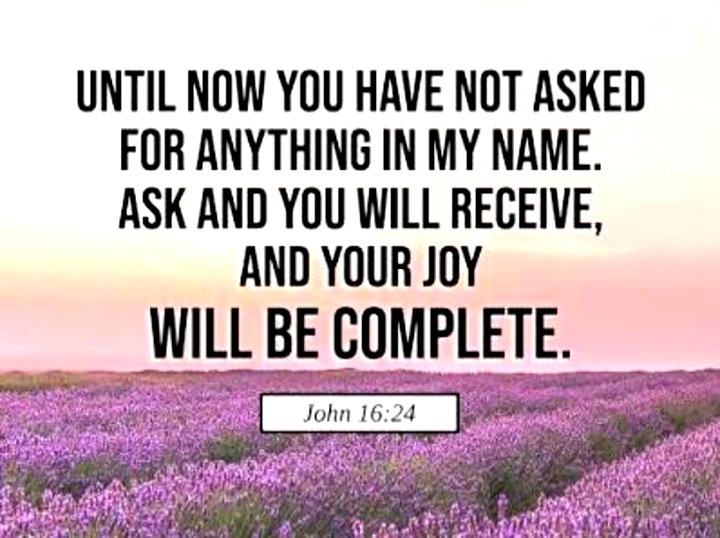
3. To claim this promise, we must pray in Christ’s name. Jesus said:
It has been explained to me that asking God for something in Jesus’ means asking for the same thing that Jesus would ask.
So, it’s not just ‘WWJD’ That is, What Would Jesus Do? It’s also ‘WWJA,’ What Would Jesus Ask?
Once again there is a purpose to God answering our prayers in Jesus’ name, that we would be filled with joy. And let me testify how great it is when I pray for something and God comes through!
As for God’s plan of salvation for the world? There is nothing more attractive to needy, hurting people than someone who has their own needs, but is filled with joy because God is answering their prayers about them!
4. And when it comes right down to it, we have to ask! That is the idea of our pastor’s recent book on prayer, ‘Just Ask.’
The Joy of Confident, Bold, Patient, Relentless, Shameless, Dependent, Grateful, Powerful, Expectant Prayer
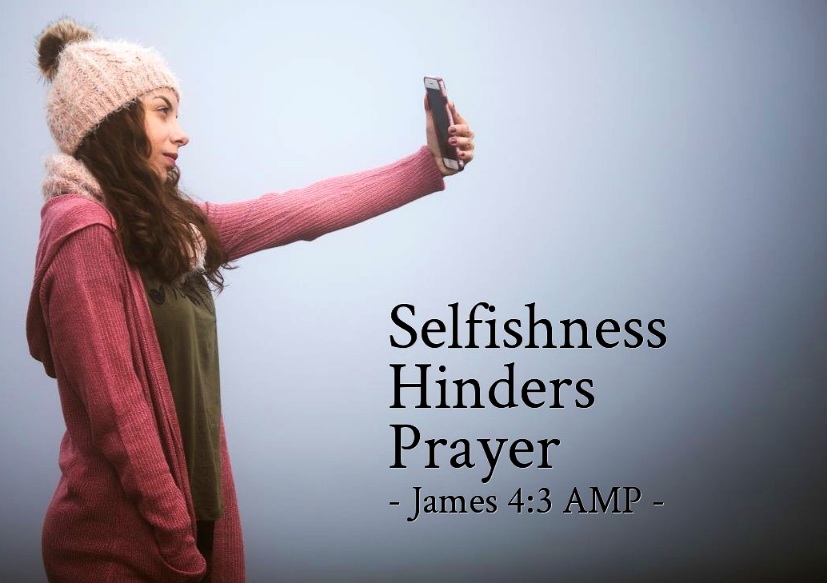
James said the same thing in his letter,
James also explains why we sometimes get a ‘No’ from God:
The opposite of asking ‘in Jesus’ Name,’ is asking ‘just for ourselves.’ Trying to get something for yourself out of your ministry to others for God will destroy your ministry. So too…
CONCLUSION
So, what will God’s answer to your prayers be, “Yes” or “No”? Whichever one it is, you can be sure of one thing, there will be waiting involved.
When we ask God for something, He’s not like a ‘genie in a bottle’ that has to give us what we ask for, when we ask for it, and how we ask for it. We need to remember that this is the LORD GOD we’re talking about. He is sovereign, which means He’s in charge of everything. He will choose the best way to answer your prayers, when to answer them, and how to answer them.
Also remember that God wants everyone to know it was Him. He often chooses unusual ways of answering and waits until the last moment. One reason for the waiting is for us to display our faith and trust in Him.
So, ask, believe, wait patiently and glorify God when He comes through. He does, He will, and I can testify to that too, AMEN!













































 Bill's Bible Blog