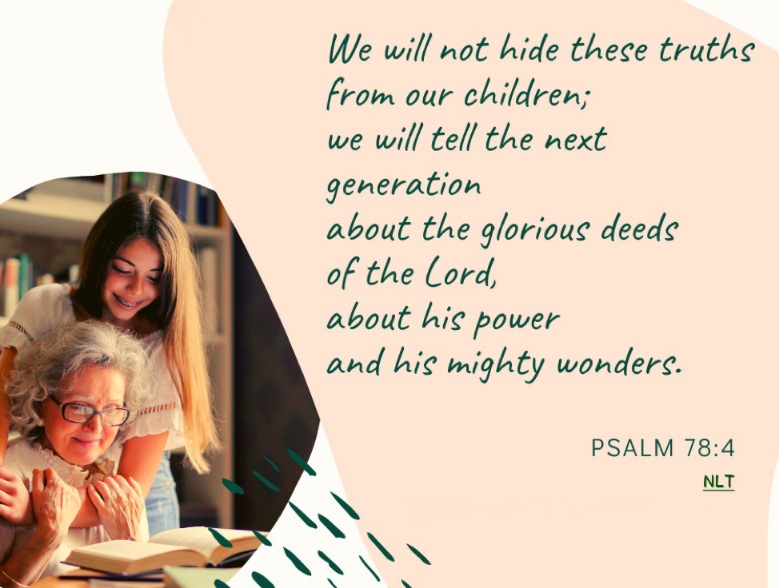
The aspects of God that Asaph, the choir director of King David’s time, refers to are the same qualities we have seen in our previous three April verses about God:
1. God’s glorious/praiseworthy deeds = te’hillah = asong of praise.
2. God’s power/might = ezuz = strength; from azaz; forcibleness.
3. God’s wonders/wonderful works = nif-l’ot = miracles. From verb to be wonderful, to be extraordinary, to be marvelous.
The new element in this Psalm is the importance of passing on the stories of God’s demonstrations of His glorious deeds, power and miracles to the next generation.
This ‘passing on’ was actually commanded by God. It was essential for Israel to keep their memories of what God had done for them fresh in order to maintain their identity as the chosen ones of God. Every parent was expected to be a historian of God’s grace to their family. The clearest statement of this mandate is found in Moses’ retelling of the Law in Deuteronomy, chapter 11:
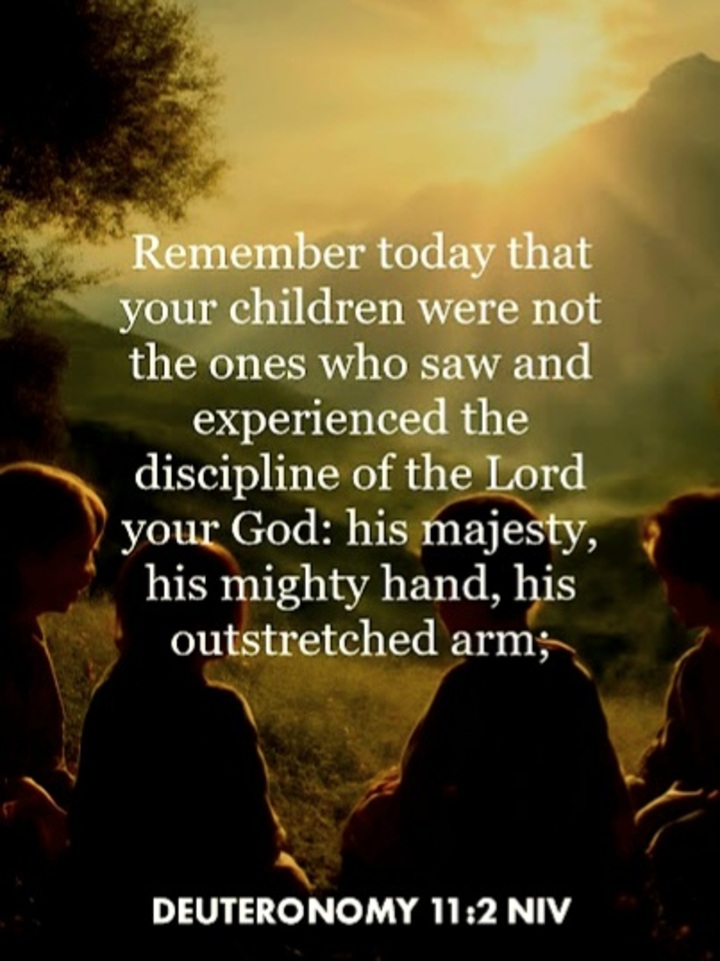
5 It was not your children who saw what He did for you in the wilderness until yeou arrived at this place… 7 But it was with your own eyes that you saw all these great things the Lord has done.
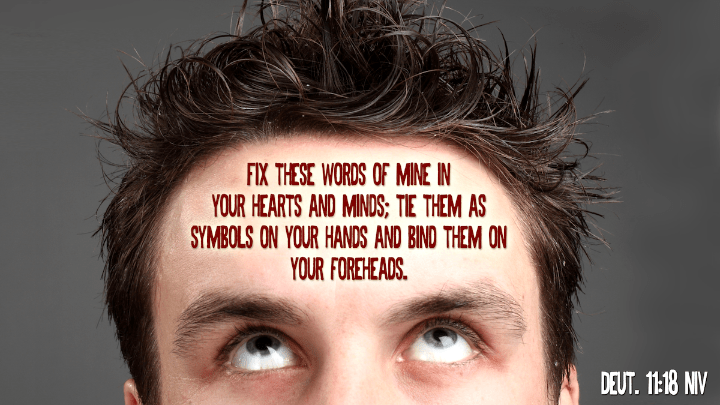
Or, put into more modern language:
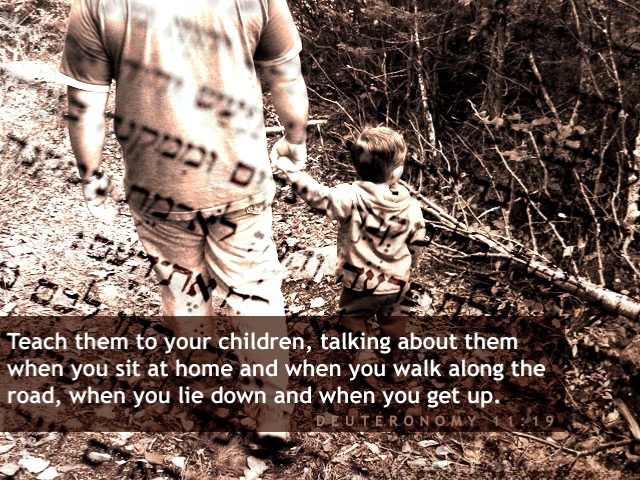
20 Write them on the doorframes of your houses and on your gates, so that your days, and the days of your children, may be many in the land the Lord swore to give your ancestors.
This mandate to the Jews to teach their children about God is echoed in our Great Commission to make disciples, that is, spiritual children, and teach them about Jesus Christ.
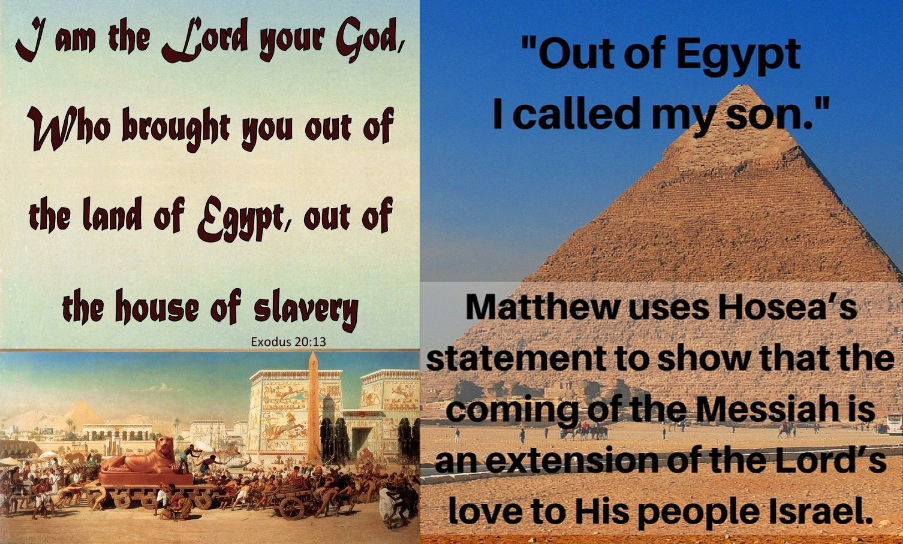
There are two great acts of redemption by God recorded in our Bible: First is God redeeming the children of Israel from slavery in Egypt and leading them to a land of their own that He promised, a land “flowing with milk and honey.”
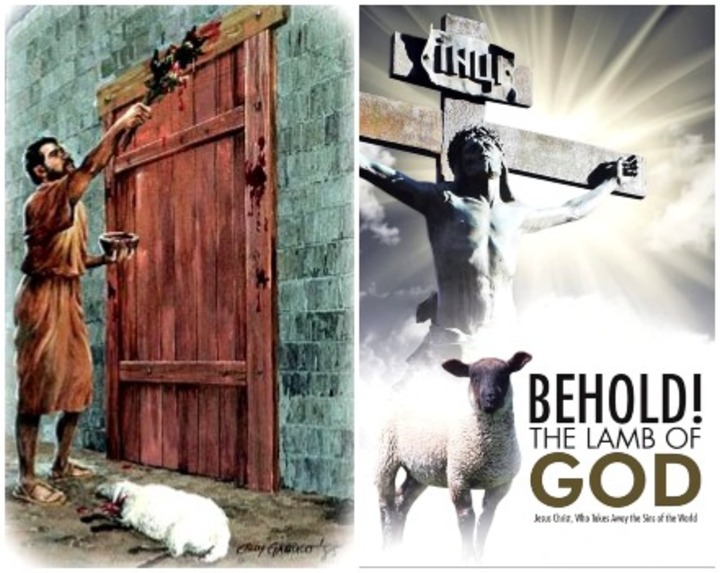
The second is God’s provision of redemption for all humankind through the sacrifice of His Only Begotten Son on a cross, and through Him our journey in this life will end in a promised eternal life with God. These statements are the essence the Old Covenant and the New Covenant.
An interesting thing about the relationship between the two is the Old prefigures the New. It’s the same God who performed both great acts of redemption; as a result, it shouldn’t seem strange that there are parallels between both great events. For example:
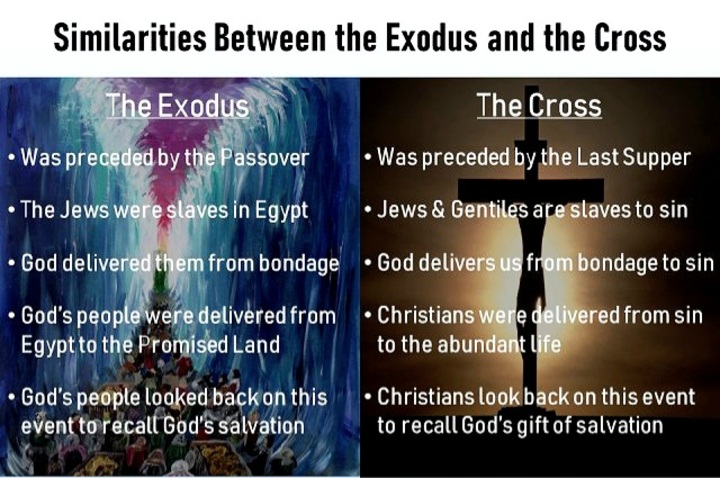
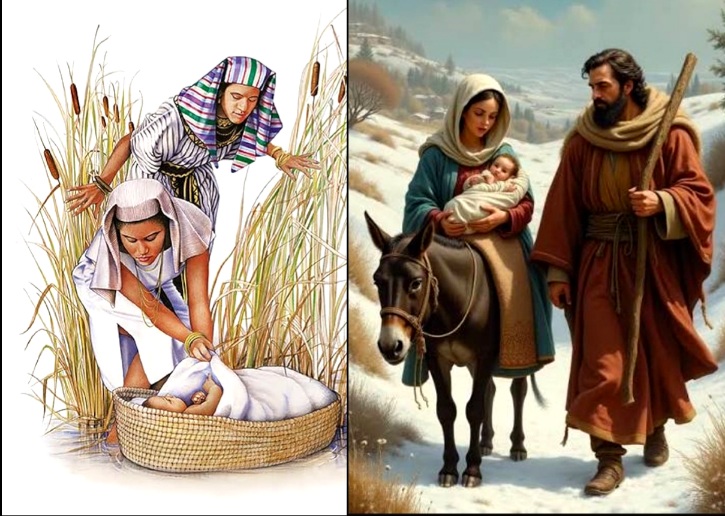
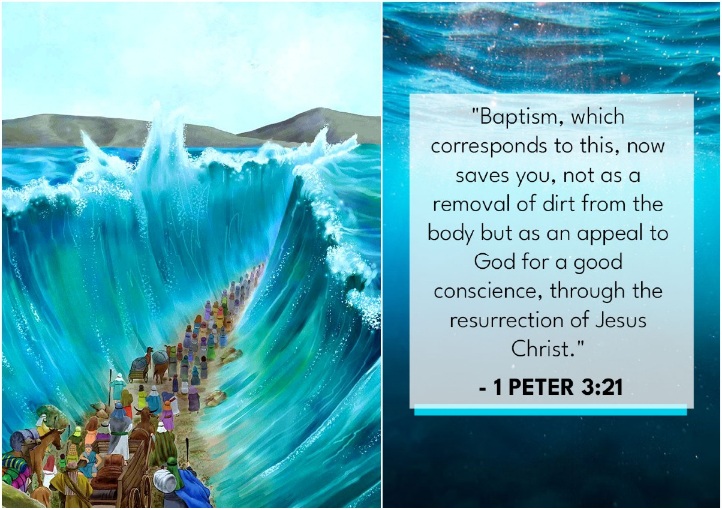
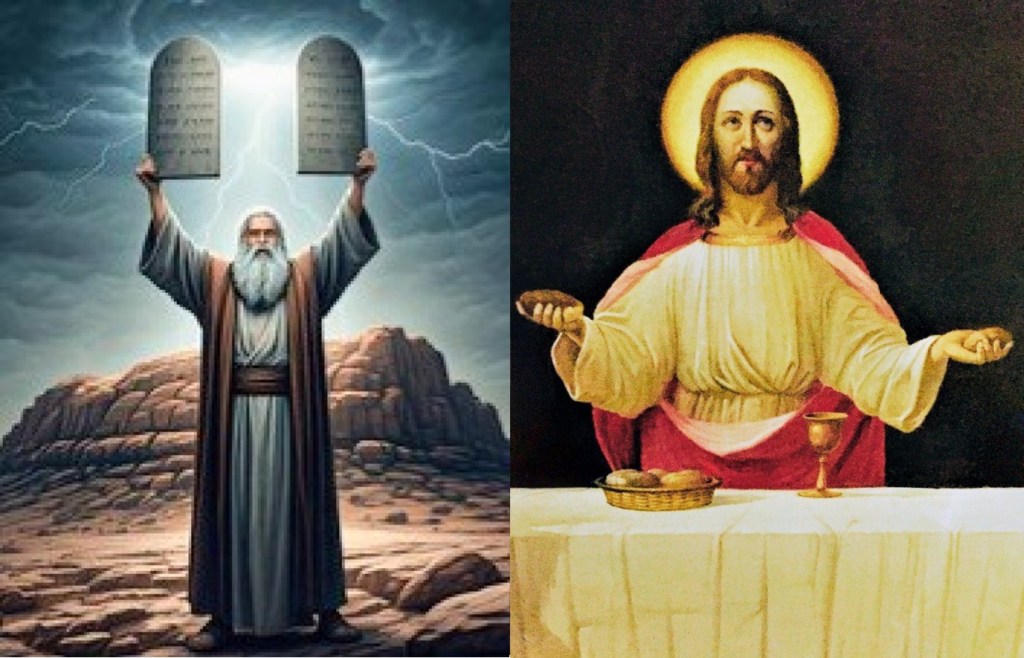
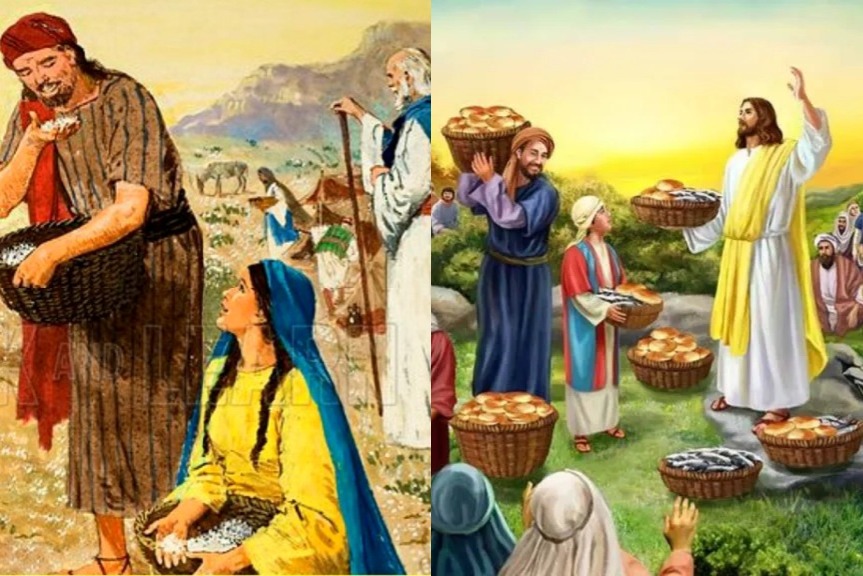
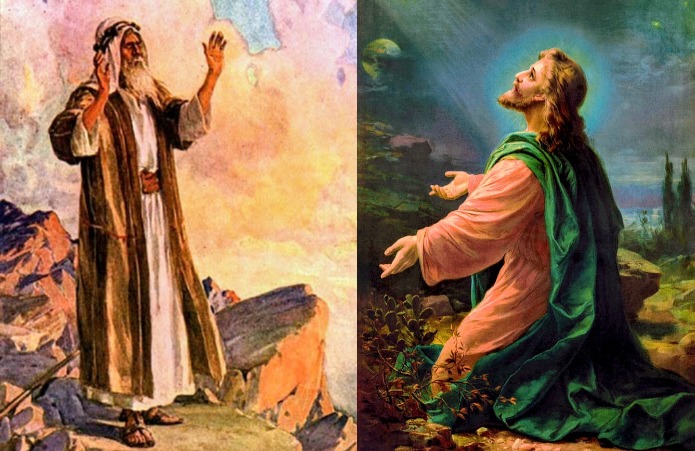
The Exodus narrative serves as a prophetic shadow of Jesus the Messiah, with Jesus acting as a “new Moses” who delivers humanity from spiritual slavery rather than from physical bondage. Other parallels between the Exodus of Israel and Jesus Christ are:
So, this Psalm is also an important reminder for us. We should be telling others of the great miracles God did through Jesus Christ as signs that He was really from God, and maybe even telling about some miraculous answers to prayers for ourselves? And not just to the children of our body, but to our spiritual children, as well.
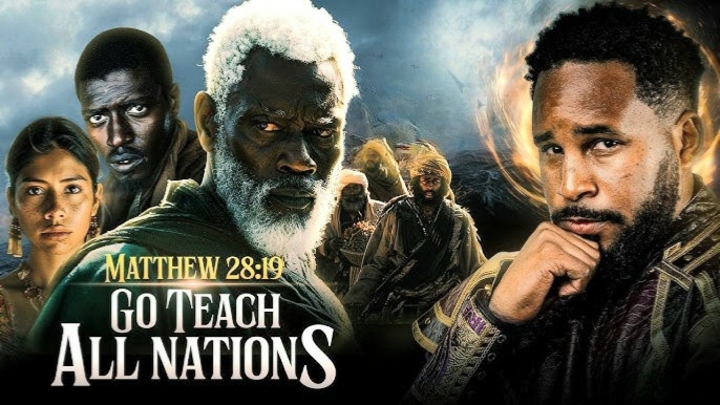
That is part of the Great Commission, to witness to the Gospel of Jesus Christ, which includes His miracles, and then to teach those who believe in Him–those who are our children of the Spirit.
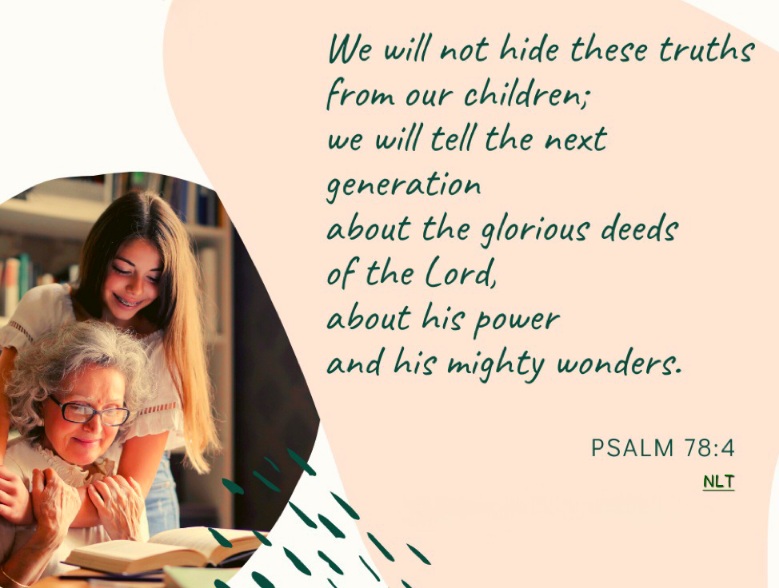
So, both for your family and for the family of God, Remember…
 Bill's Bible Blog