
Paul has a list of 8 positive qualities that we as Christians should fill our thoughts with. I’m going to split them up into daily devotions.
I apologize in advance for the more academic tone of this blog. The concept of truth is at the ‘deep end of the pool,’ and when I take a deep dive in that end, I start to use my big words because they best communicate my understanding. I’ve tried to add the definition wherever I did that to help you understand what I’m trying to say. I hope it works!

Philosophers have been speculating throughout history: if you strip away the physical trappings of the Universe, what would be left? What is the ultimate truth? What is ultimate reality? The Bible provides an answer for those questions.
This Greek word for ‘truth‘ is used 26 times in the New Testament–to describe a person, a statement, a grace, or even food and drink. A-lethe is used to draw a sharp line between what merely seems to be and what genuinely is.

That dividing line between ultimate truth and ‘not truth’ is defined by God. Biblical truth is reality as seen by God. Anything else is just obfuscation, that is, ephemeral physical or psychological states that obscure the truth, making it more difficult to perceive and understand.

As Christians, we have the responsibility to proclaim God’s truth to every one we can, as often as we can. God’s Truth has a power beyond our own to liberate people from what really enslaves them–sin and the the enemy’s Kingdom of Darkness.
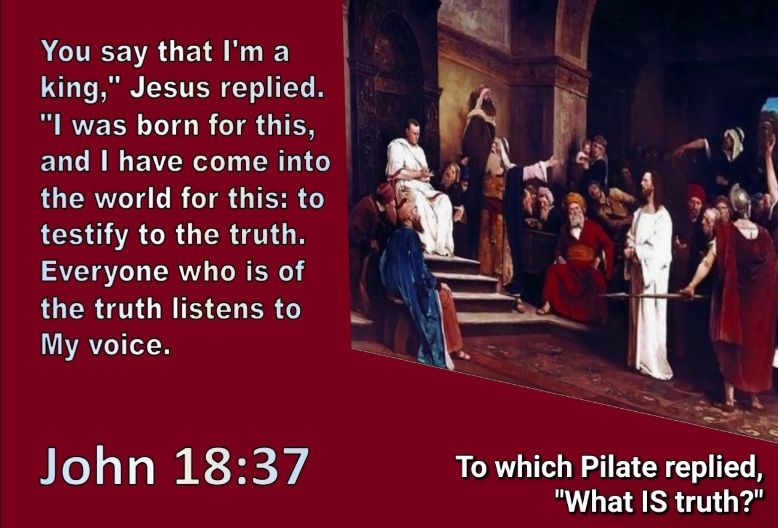
Ten of the 26 uses of this Greek adjective for truth in the New Testament are related to Jesus, with most of them used by John, culminating in Jesus’ great revelation of Himself:
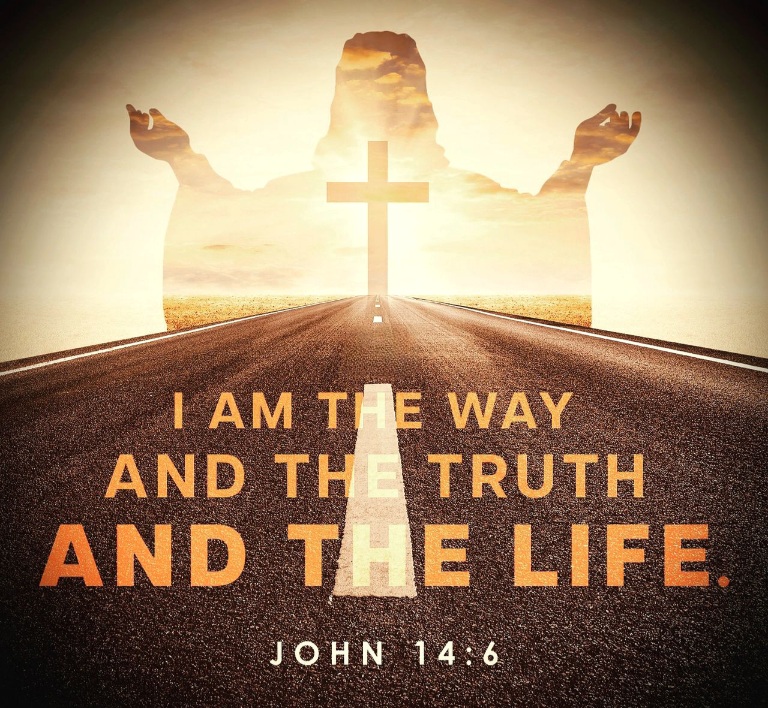
Not that Jesus knows the truth, but that He IS the Truth. To know God’s truth as revealed through Jesus Christ is not like using the Bible as a textbook for study. Instead, it is reading it as a diary or letters from God in order to develop a personal relationship with Him. Once you come to know Him, THEN you will know the Truth.

This Greek word for truth is also used to describe witness testimonies and the witnesses themselves when it comes to testifying about Jesus and the gospel. That would be us! The more truth you know and the better you understand it, the better witness to gospel truth you can be.
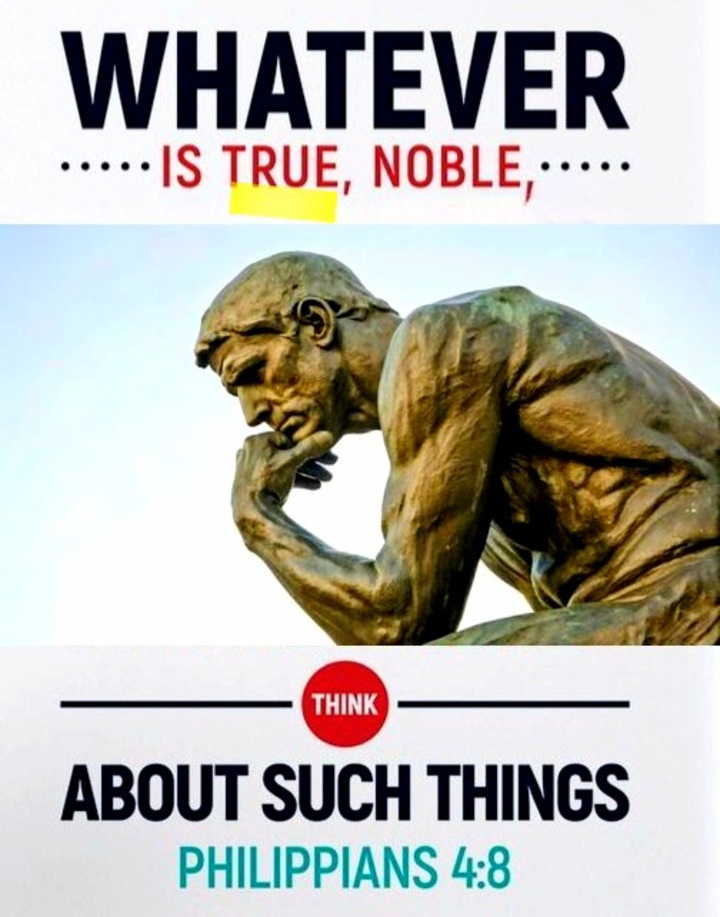
In Philippians 4:8, Paul has placed God’s truth as the preeminent quality in his list of morally suitable subjects for Christian thought and meditation.
In Christian discipleship, Philippians 4:8 makes God’s truth not only a discipline of the mind, which we should use to shape our speech and daily decision-making, but it should also be used as a yardstick by which we evaluate our media consumption.
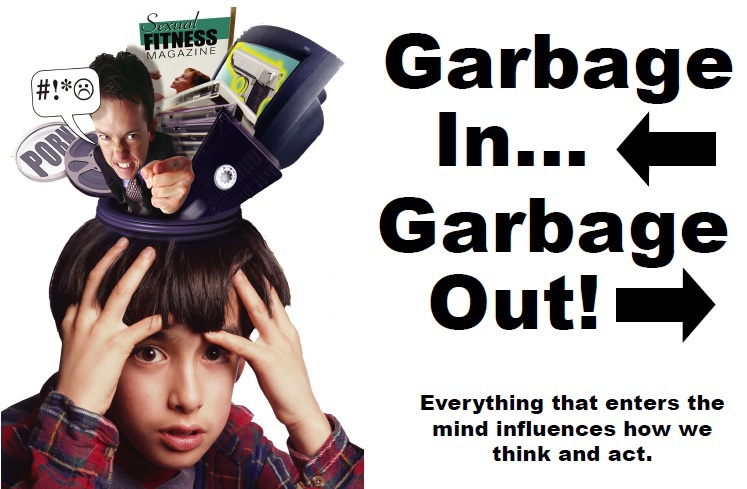
“Garbage in, garbage out,” is an old computer mantra that describes poor computing results by a machine. But it can also be used to describe poor decision-making by our built-in computer–our brain.
Let’s make sure we are filling our minds with the good things we need to make godly decisions, starting with–
🍎 APPLICATION: Have you been thinking about truth like Paul commands us to do? If so, what did you learn about it from this blog? Pick one of the following questions from the content of the blog that matches what you’ve been thinking about and use it to stimulate your thinking further.
1. How would you define ultimate truth?
2. How can you use God’s Word to separate truth from fiction, fantasy or wishful thinking? (Hebrews 4:12)
3. How can you use God’s Truth to liberate people from ignorance, falsehood and willful sin? (John 8:32)
4. What should we do in order to seek God’s truth in a situation? (John 18:37)
5. What can you do to get to know Jesus better so that you can understand God’s Truth better? (John 14:6)
6. What can you do to be a better witness to others about God’s Truth? (1 John 2:20)
7. Has God identified any areas of your life where you are stuffing your mind with garbage instead of God’s Truth?
8. What is one thing you can change in your routine so you can spend more time obeying Paul’s command, “Whatever is true…think on it.”
 Bill's Bible Blog