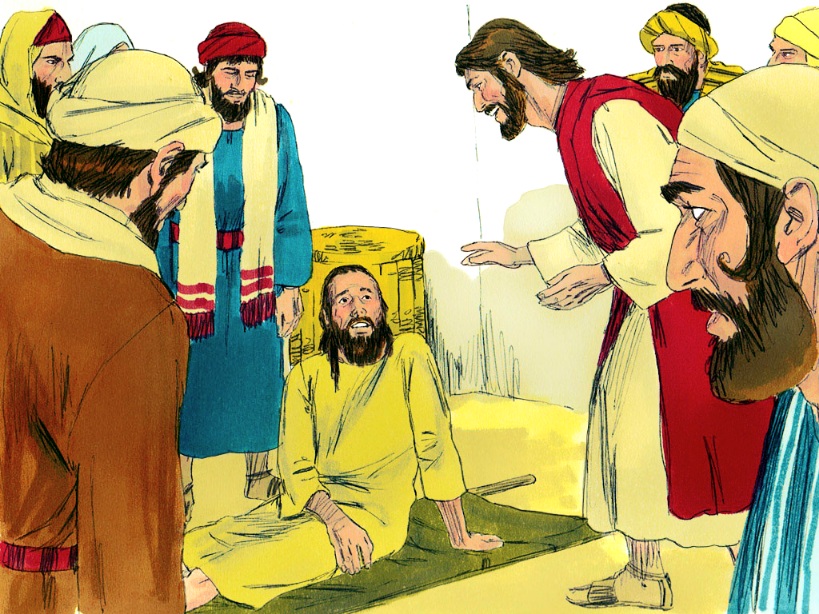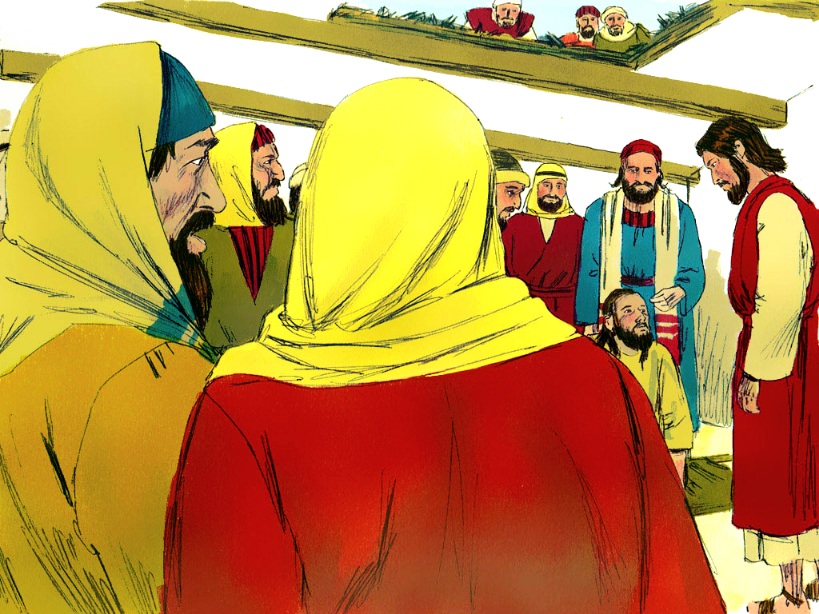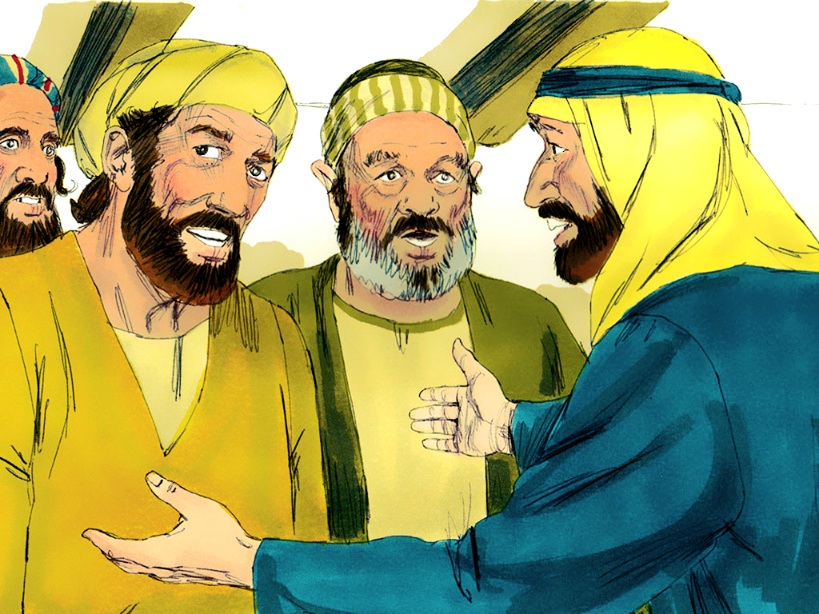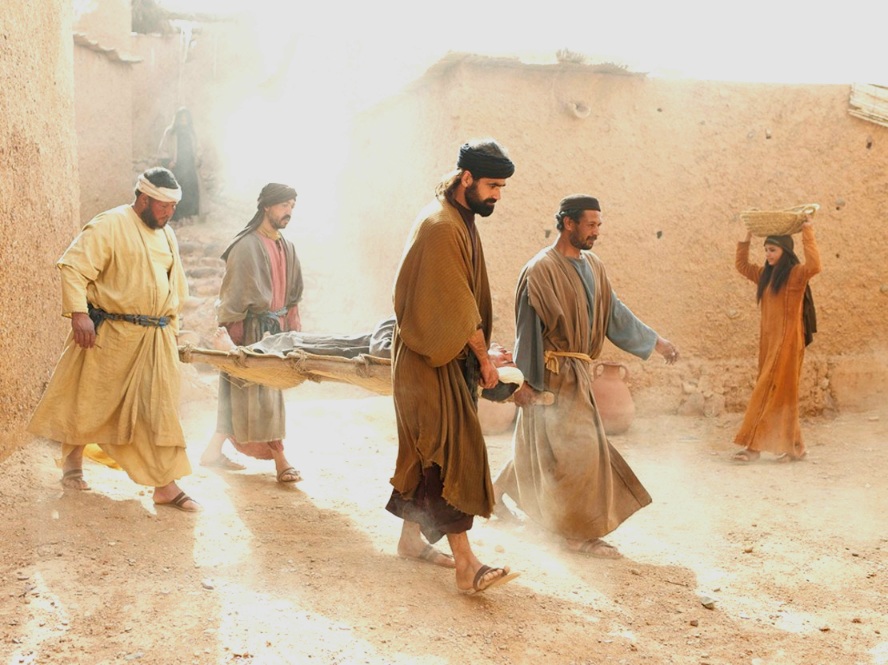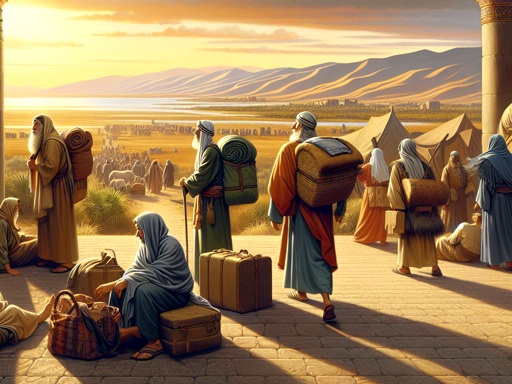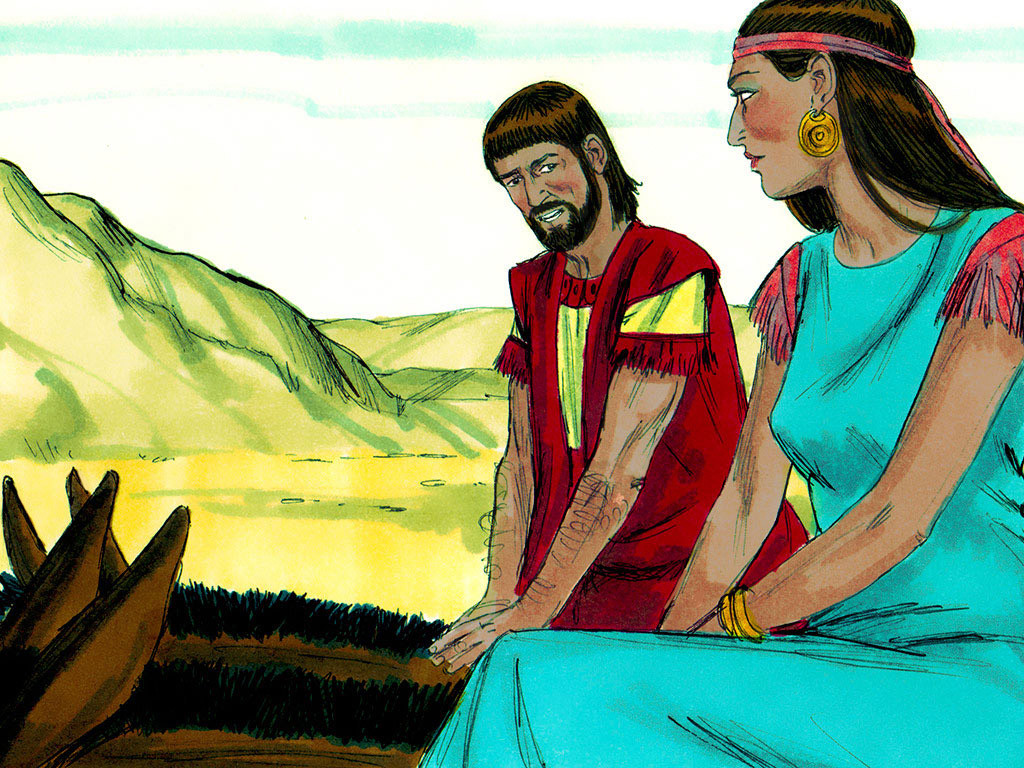
Hello subscribers! If you’ve been wondering why I haven’t posted a new blog recently, there’s a story behind that..
I’d been working on Genesis chapter 26, the third installment in the topic of Generational Sin, when I made the MOST AMAZING DISCOVERY! As I followed up on that discovery and continued to work through my planned study, I just kept writing and writing for over a week and a half. When I finally had said everything I wanted to say about the topic, I realized I had waaaay too much for one blog. However, I realized that the extra material outside of Genesis 26 would make a perfect concluding fourth blog of the miniseries.
As I was trying to figure out how to disentangle the two parts, our Fall Men’s Bible studies started up. I considered and prayed about which topic to sign up for and felt drawn to the one on the Gospel of Mark. We began last week and I found out why God had led me to that one.
To understand the reason, I refer back to my first blog in the D series. I had heard a comment from Matt Slick on Christian radio that he finds it works best if he approaches study of the Bible with a devotional attitude rather than a scholarly attitude.
I was immediately convicted by God as my approach to studying the Bible has been predominantly scholastic. Since that moment of conviction, I’ve been praying and staying alert for God’s answer about how I can grow as a worshipper when it comes to approaching His Word, the Holy Bible. It turns out this Bible study on the Gospel of Mark, using study and video materials by Francis Chan, is God’s answer for that need in my life that He Himself had shown me.
Pastor Francis Chan, founder and former teaching pastor of Cornerstone Community Church in Simi Valley, California, and founder and former Chancellor of Eternity Bible College.
At the end of a trailer showing him at key places in Israel where Jesus had visited, which also serves as an introduction to the study, Pastor Chan prayed this: “These are Holy, Holy, Holy places. It is sad if you have lost the fascination of God emptying Himself and taking the form of a man. God, I pray as we trace together and journey through the life of your Son (in Mark), that we treat it as sacred, as holy, holy, holy, like no other Name on the earth. Change our hearts, God. Help us to see that everything else is so ridiculous compared to this one great truth of you becoming man, dying on a cross for all of our sins; rising from the dead. God, teach us how to marvel again. Teach us to be fascinated with the Good News of Jesus Christ.”
I was touched deeply by this prayer and knew that this was what I was looking for, that this is what I needed as the next step of growth in my life as a Christian, as a disciple of Jesus Christ. I emailed the pastor in charge and my former small group leader, who is also in the study, and wrote: PLEASE pray this for me!!! So, I decided to put off finishing the D series so that I can focus my Bible study time on Mark, because I now realize I need to do more than understand what the Bible says. I need to feel what it means deep down in my heart.
Feelings don’t come easy for me. I was diagnosed with ADHD in school and that puts me on the autism spectrum. We on the spectrum, even though high functioning as I am, have great difficulty with emotions and social interaction.
So, please be patient with me as I try to open up my feelings to the significance of what we are studying each week. It may be a little raw, I may be off base, I may even be crude, but I’m going to share what I put in my journaling in the following blogs this semester. Please pray for me to grow in the areas of feelings, devotion and worship. I’ll be glad to pray for you too if you’ll leave your request in a Comment.
A word of encouragement would also be welcome as I walk this journey. Think of me like a child first learning to walk. I’ve always seen parents and grandparents be super encouraging and supportive of their children taking their first steps. That positiveness, I’m sure, is what keeps the kids trying when they fail and fall the first few times.
I’m going to fall. I’m going to fail, but with the support and encouragement of my brothers and sisters in the faith, and A LOT of help from Daddy God, I am confident I will be able to do what God has shown me that I need to do.
This blog is dedicated to my dear Christian brother Marcus, who has finally found his “Sarah,” and her name means “Blessedly Beautiful.” On their journey together with God, may they find joy, even in difficulties; may they always support each other, even when not exactly in the right; and may they give each other the courage to follow where God leads them, especially when the way seems frightening. Amen.
Genesis chapter 20 – The Story
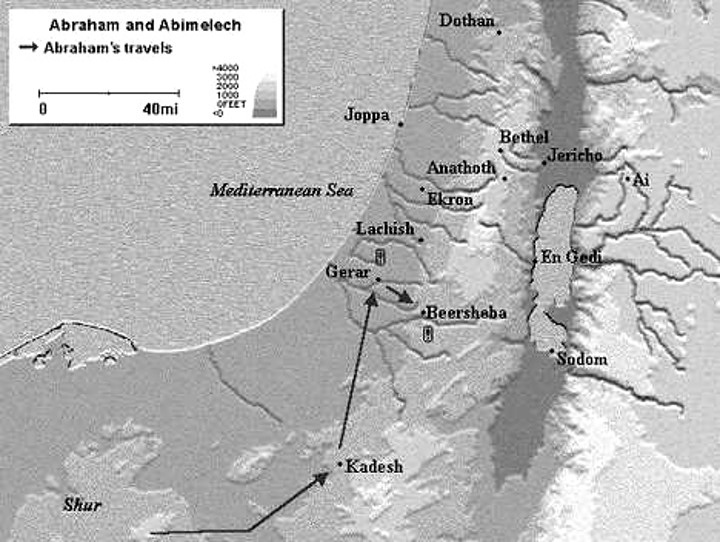
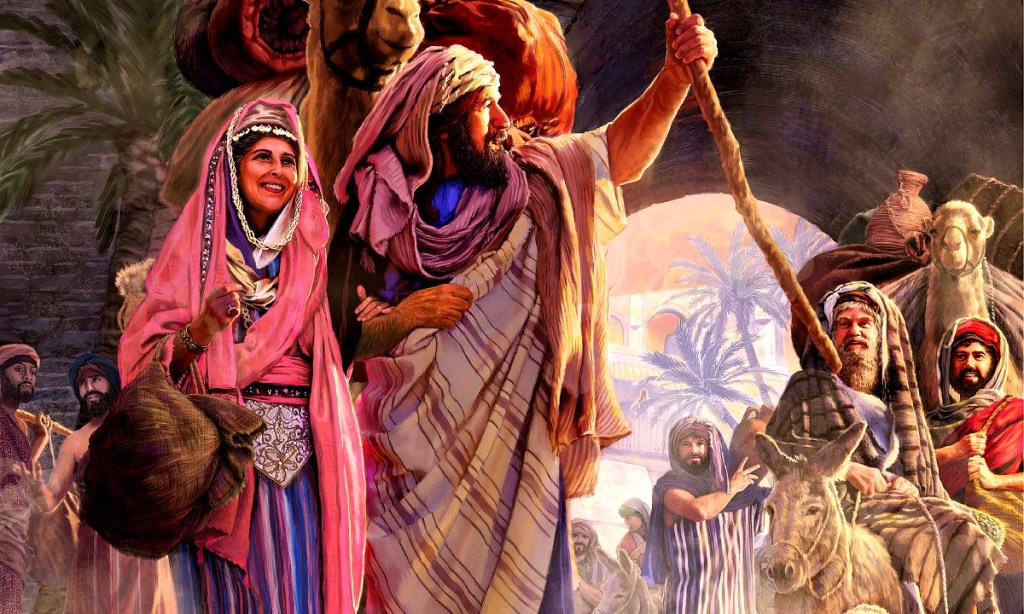
After witnessing the destruction of Sodom and Gomorrah, Abraham journeyed toward the fertile territory of the Negeb and lived between Kadesh and Shur. One day he decided to visit the city state of Gerar, ruled by King Abimelech, taking his wife, Sarah, with him.
When they entered the city, Abraham said of Sarah his wife, “She is my sister.” When Abimelech, king of Gerar, heard about this new beautiful woman in his city, he sent some soldiers and took Sarah for his own harem.
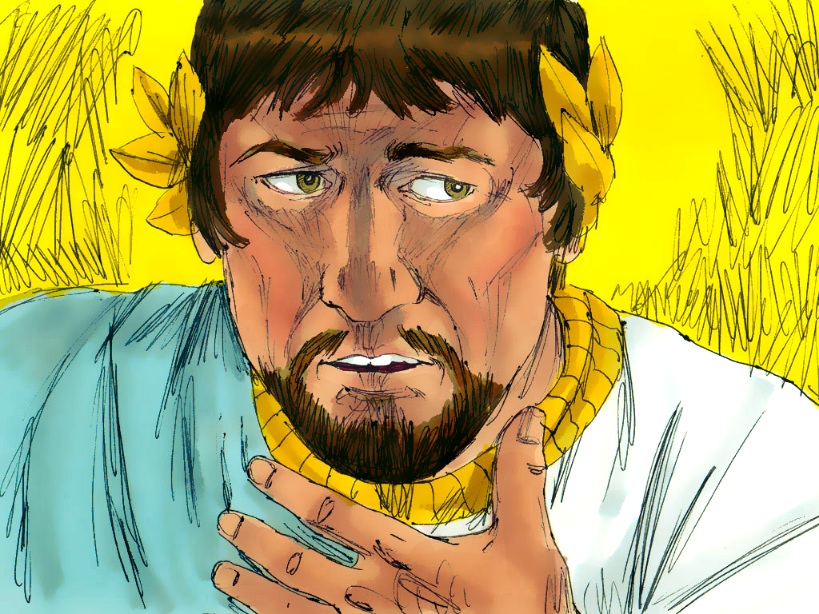
But God came to Abimelech in a dream by night and said to him, “Behold, you are as good as dead because of the woman who you have taken as one of your wives, because she is another man’s wife.”
Now Abimelech had not yet gone near her, so he said, “Lord, will you kill a righteous person? Did he himself not say to me, ‘She is my sister’? And did she herself not say, ‘He is my brother.’ In the integrity of my heart and the innocence of my hands I have done this.”
Then God answered him in the dream, “Yes, I know that you have done this in the integrity of your heart, and it was I who kept you from sinning against Me. Therefore, I did not let you touch her.
Now then, return the man’s wife to him, for he is a prophet, so that he will pray for you, and you shall live. But if you do not return her, know that you shall surely die, you and all who are yours, even to your kingdom.”
So Abimelech rose early in the morning and called all his people and his manservants together, and told them all these things. And the men were very much afraid.
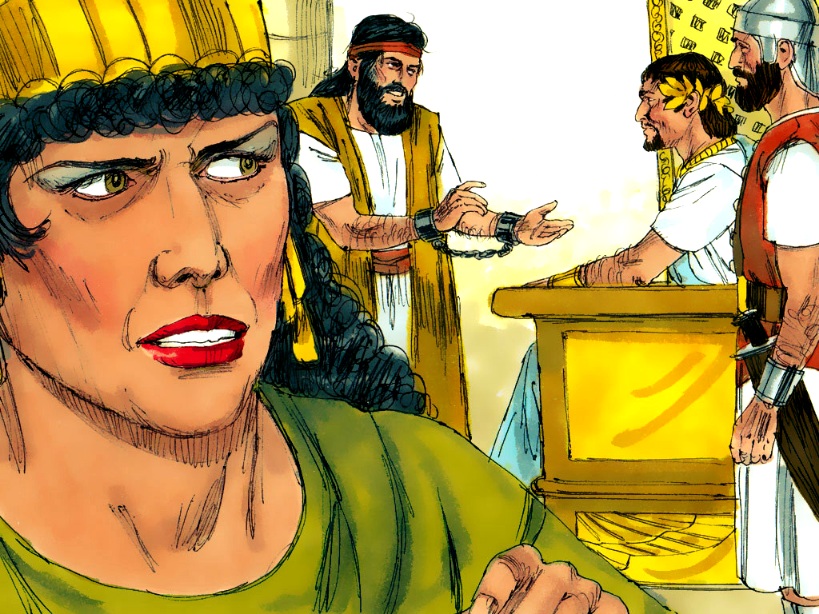
Then Abimelech called Abraham to join them and said to him, “What have you done to us? And how have I sinned against you, that you have brought on me and my kingdom such a great curse? You have done things to me that should not to be done to another man.” And further, Abimelech said to Abraham, “What did you see in us that caused you to do this thing?”
Abraham said, “I did it because I thought, ‘There is no fear of God at all in this place, and they will kill me because of my beautiful wife.’ Besides, she is indeed my sister, the daughter of my father, though not the daughter of my mother, and she became my wife.
And when God caused me to wander from my father’s house, I said to her, ‘This is the favor you must do for me: at every place to which we come, say of me, “He is my brother.”’”
Then Abimelech took sheep and oxen, and male and female servants to tend them, and gave them to Abraham as recompense, and returned Sarah his wife to him. And Abimelech said, “Behold, my entire land is before you; live in it wherever you please.” (Just not here.)
To Sarah he said, “See this? I have given you and your brother a thousand pieces of silver. It is a sign of your innocence in the eyes of all who are with you, and a sign before everyone here that you are vindicated.”
Then Abraham prayed to God, and God healed Abimelech, and also healed his wives and servants so that they bore children again. For the Lord had closed all the wombs of the women in the household of Abimelech, because he had taken Sarah, Abraham’s wife, to be his own.
SUMMARY:
As mentioned in the last blog, Abraham and Sarah (renamed since Genesis chapter 12) faced 10 tests of their faith in God. This chapter details test number 8 – The abduction of Sarah by a Philistine king named Abimelech. (From Inspired Scripture, (open source) see more at inspiredscripture.com)
Although Abraham’s faith had grown, he failed this test. Even worse, this was a repeat of his prior failure when Pharaoh Senusret III abducted Sarah. Abraham showed that he had not learned from his prior mistake. (Sometimes it takes more than once to get it for all of us, right?)
In my introduction to this Genesis series, I mentioned that I had noticed a few things in our Bible study. Let’s look at those general observations as they apply to Genesis chapter 20.
1. We shouldn’t be surprised that sinful people act sinfully. Abraham and Sarah were not any kind of special sanctified saints who lived completely holy and blameless lives. They were sinners, like the rest of us, that God had chosen as the Patriarch and Matriarch of His promised nation that would eventually produce His Annointed One, who would bring God’s blessing to all the nations.So, why did Abraham decide to go to the big city? Was he tired of sitting around and watching his sheep, goats, donkeys, camels and cattle eat grass? Was he tired of settling the squabbles between his servants who were tired of sitting around watching Abraham’s sheep, goats donkeys, camels, etc…?
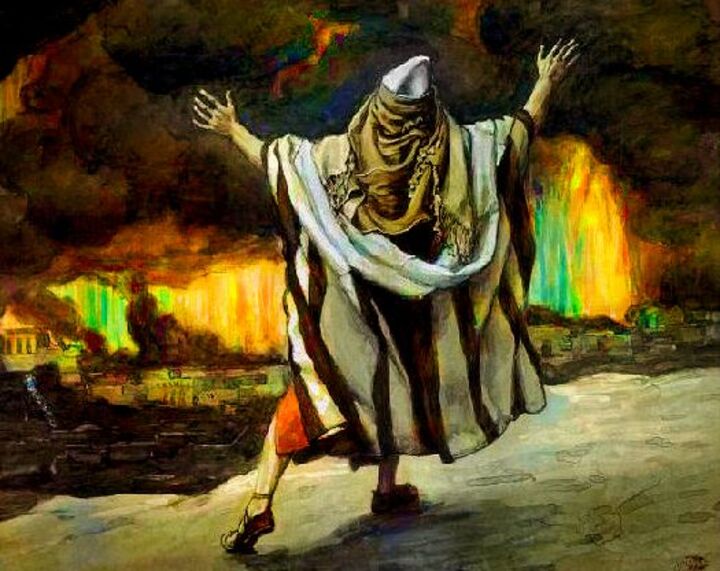
Abraham sees Sodom in flames by French painter Tissot, circa 1896–1902.
Also, Abraham had just been through a very stressful and traumatic event trying to save the city where his nephew Lot lived from God’s judgment and destruction, but instead, having to settle for just saving Lot’s family. Maybe Abraham needed something to replace the horror in his mind of watching God rain down destruction on the two sinful cities. I suspect this was a side of God, the judgmental and vengeful side, that Abraham had not seen in action before.
Maybe the memory of the trip to Pharaoh’s city–the hustle and bustle, the excitement of new sights, sounds and smells, the myriad riches, the unexpected wonders around the next corner–had stayed with Abraham and he craved some of that excitement amid the boredom of life out on the sameness of the open plains? If so, there was some serious selective memory going on!
For whatever reason, like his prior trip to Egypt that was unsanctioned by God, Abraham made an unsanctioned trip to the nearby city in southern Canaan, Gerar, capital of the local king. In both places, the theft of wives was common. In both places, Abraham had Sarah lie to protect himself. Abraham had apparently failed to learn his lesson in Egypt. Are we any different?
2. The second thing I realized is, Genesis isn’t just about the characters, it is really ‘His-story.’ The real story in Genesis is about God shepherding those He chose from one generation to the next as He furthered His plan for salvation of the world along. Therefore to really understand what is going on, look for when God ‘shows up.’
The first thing that stuck out to me in Genesis chapters 12 and 20 was how and when God acted. Here in Chapter 20, I kept wondering, where was God? For example:
A. Abraham decided to take Sarah and go to what he knew was a “godless city’ where his life would be in danger because of his beautiful wife, and she would be in danger of abduction. No excuse of a famine this time. GOD DID/SAID NOTHING.
B. Abraham and Sarah lied about their relationship when they reached the city. GOD DID/SAID NOTHING.
C. The king took Sarah from Abraham to be his own wife. GOD DID/SAID NOTHING.
God (finally) showed up im the night in a dream to the king. I’m sure it gets your attention when God speaks to you in a dream, but when God leads off with, “YOU ARE A DEAD MAN!”, it really gets your attention. So, let’s look at the dialogue between God and the king again.
GOD: Behold, you are a dead man because of the woman whom you have taken, for she is the man’s wife.KING: (Now Abimelech had not yet gone near her, so he replied ) “Lord, will you kill an innocent person? Did the man not himself say to me, ‘She is my sister’? And did she not herself say, ‘He is my brother.’ In the integrity of my heart and the innocence of my hands I have done this.GOD: Yes, I know that you have done this in the integrity of your heart, and it was I who kept you from sinning against Me; therefore I did not let you touch her. Now then, restore the man’s wife to him, for he is a prophet, so that he will pray for you, and you shall live. But if you do not return her, know that you shall surely die, you and all who are yours.POSTSCRIPT: After the king returned Sarah, his wife, to Abraham, then Abraham prayed to God, and God healed Abimelech, and also healed his wives and female servants so that they bore children again. For the Lord had closed all the wombs of the house of Abimelech because of Sarah, Abraham’s wife.WOW! Are you as blown away by the things God said and did as I am? When the king took Sarah to be his latest wife, it didn’t look like God was doing anything about it, but we now can see God did two things behind the scenes:First, God supernaturally restrained the king from becoming intimate with Sarah.Second, God also supernaturally prevented the King’s wives and female servants from conceiving any more children.
First let me say that the punishment very well fit the crime. God’s sense of justice is appropriate, maybe even a little ironic. The king had grabbed up another beautiful woman for his pleasure, but also for the purpose of having quality children. You can get a hint as to how important having children was to them at that time in history by their reaction to their women losing the ability to conceive. So, first, the king was prevented by God from having that pleasure. King 0, God 1.
Next, God prevented every woman there from being able to conceive. King 0, God 2.
So, not only was the King’s immediate purpose thwarted, but his long-term purpose was thwarted, and because everyone under his authority was included in the judgment, he was penalized maybe a thousand times. Moral of the story? You you don’t mess with those who God has chosen for Himself, because then, you’ll find out you’re messing with God, and He wins, every time. King -1,000, God wins!
It is also suggestive here that the events stretched over a longer period than the brief narrative seems to indicate if they had realized that none of the women were conceiving, then after Abraham prayed for their healing, that the women had begun conceiving again.
But the whole thing about supernaturally restraining the king from intimate relations with Sarah says a lot more than that.
In our modern ‘enlightened’ society, people say that premarital and even extramarital sexual relationships don’t matter–they’re okay, they don’t mean a thing. However, it is very clear that the sanctity of Sarah’s womb was important to God.
‘Why was it important to Him that Sarah not have sexual relations with anyone but her husband,’ you might ask? I think partly because that is the way God made things to be between a man and a woman who join in ‘holy matrimony.’ Not only does God sanctify the couple as man and wife, but everything unique to a marriage; i.e., having sexual relations and producing children, becomes holy to Him too.
But I think there was also the element that God had chosen the couple for His Divine purpose. That apparently meant protecting them not only from dangers outside of them, but it also meant protecting them from the dangers of their own sinful self within them!
3. My third takeaway from Genesis last Spring was that we should not spend a lot of time condemning the characters if God doesn’t condemn them. Note in the exchange between God and Abimelich that God never mentions a word of condemnation for Abraham or Sarah. In fact, God actually honored Abraham by calling him His prophet and then by placing the means of healing God’s curse in his hands. I’m sure this elevated Abraham very highly in the King’s estimation.
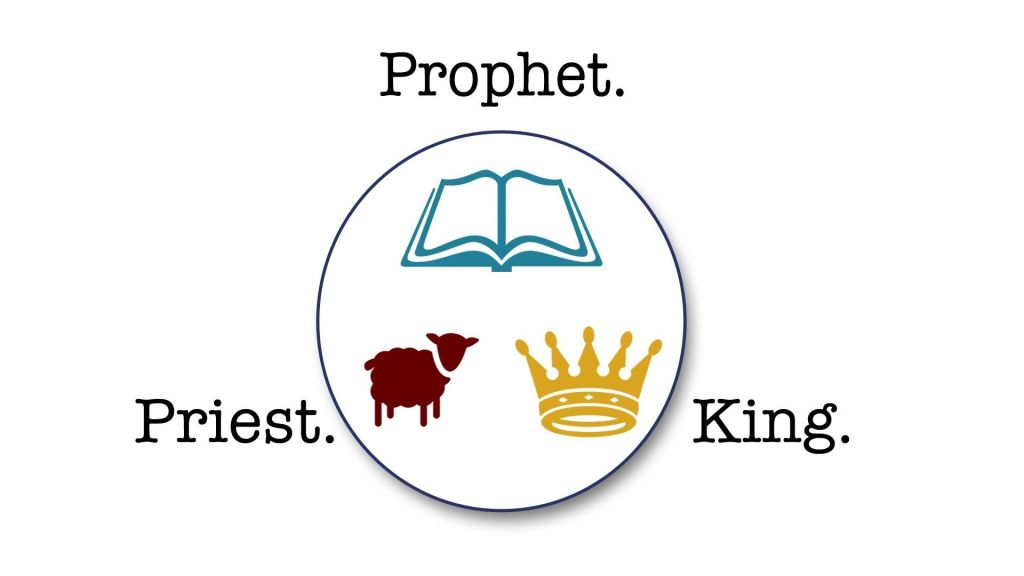
We learn in the Bible that the three highest positions in a God-centered society–equal, but very different in their functions–are Prophet, Priest and King. By naming Abraham as a prophet, God elevated him to be equal to the king in God’s eyes, and in the eyes of those who revere and honor God, which it seems Abimelech did more than Abraham had thought.
It’s also interesting that there is no record of Abraham having done anything exactly like this before. We saw Abraham negotiate with God’s angel to save Sodom and Gomorrah from punishment, for his nephew Lot’s sake. (Although that didn’t turn out well.) That conversation between Abraham and the angel was not dissimilar from the pushback the king showed when God was speaking to him in that dream.
But for that same God to say that Abraham, once he got his wife back, could pray for the king and his household to be delivered from the curse and then for it to happen! Well, I suspect that not only the king was impressed.
So, it seems interesting that God used the situation that was caused by Abraham’s sin to show him a new supernatural ability that came with God’s calling. I guess it’s really true that God does not waste our suffering. As a result, at the end of Genesis 20, we also get a glimpse of something other than ‘sinners being sinful’–we saw a man whose voice God would listen to. We saw a man of compassion who prayed for the needs and hurts of others. At the end of Genesis 20, we got a glimpse of what a godly man should look like.
The question still remains, though, why no condemnation for Abraham and Sarah? From my previous blog, the answer was that God had chosen them for His plan. There are some implications for that choosing explained by Paul in Romans 8:30 (New Living Translation):
“And having chosen them, He called them to come to Him. And having called them, He gave them right standing with Himself. And having given them right standing, He gave them His glory.”
Paul is saying this about us as Christians, but I think we can see the same things here in God’s relationship with Abraham and Sarah:
First, God chose Abraham and Sarah, and then He called them to leave Haran and go to an unrevealed land.
Second, Abraham believed the promise of God and God counted it as righteousness. Even these two times that Abraham and Sarah were deceitful, there was no condemnation from God, because He had awarded them right-standing with Him.
And third, God gave Abraham part of His glory when He allowed him to pray for the healing of Abimelich and the cursed women, and then did heal them after Abraham prayed for them.
APPLICATION:
So, who are you going to follow in your life? Are you going to live life based on your fears? Are you going to live a life of lies and deceit? Are you going to live for personal gain, no matter what the cost to others? Or are you going to follow Jesus?
If you follow the call of God in Jesus Christ, you have to deny your fears, you have to give up lies and deceit, you have to give up seeking to benefit yourself. You have to follow Jesus willingly, joyfully, obediently and selflessly. Not an easy thing to do, one might say impossible, but all things are possible with God. And the greatest thing is, even when you fail, THERE IS NO CONDEMNATION FROM GOD!
Instead there is forgiveness, there is a chance to learn and grow, there is still a chance to be used by God in His plan. Can you think of anything more awesome than that to give your life to?
THIS WEEK’S SONG:
Godliness for us is defined as ‘Christlikeness.’ Jesus calls us to follow Him, to become like Him. Just like Abraham was called by God and followed that call to Canaan, so too must we follow wherever Jesus leads us.
Here is a simple song of dedication to do just that from my favorite worship song writer. Listen to his message in an attitude of commitment to following our Lord and Savior, Jesus Christ.
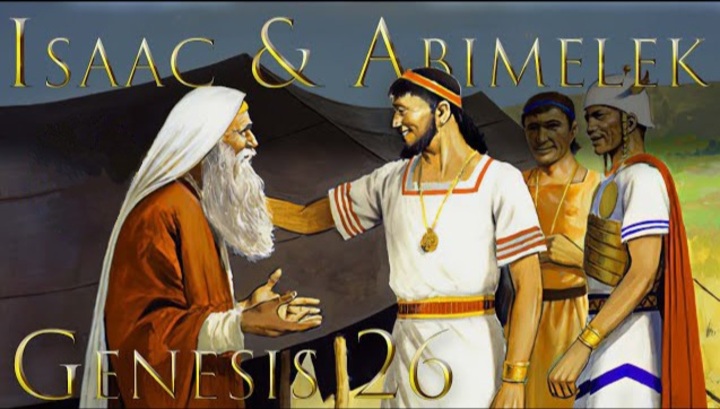
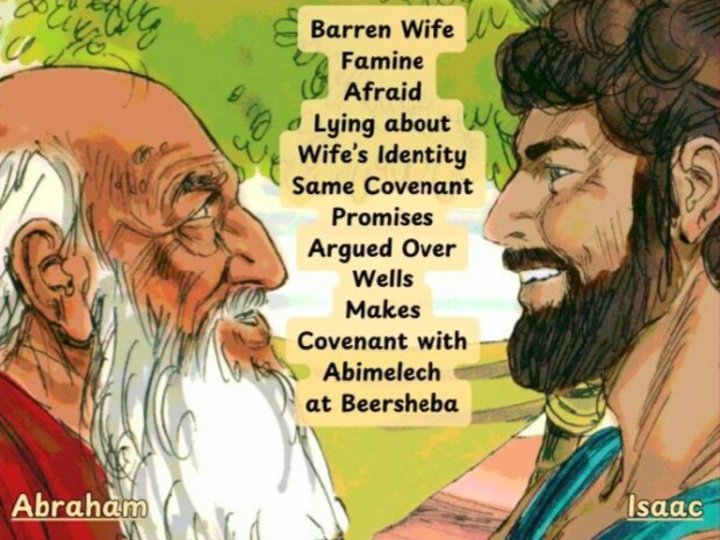
When we studied Genesis chapter 26 last Spring, we focused on the similarity between a failed ploy Isaac used to protect himself from the Canaanite King, Abimelich, and a similar ploy his father, Abraham, used to protect himself from the Pharaoh of Egypt and also from King Abimelich; that is, trying to protect their lives by concealing their marriages and saying their wives were their sisters.
So, why did Isaac emulate this ploy of his father, which in fact failed TWICE? Isaac wasn’t even born yet when Abraham did those things. Maybe the stories were passed among the servants and that is what gave Isaac the idea. If so, shouldn’t the failure have also been told as part of the story? That should have given Isaac pause before repeating the failed strategy.
(c) Free Bible Images, used by permission.
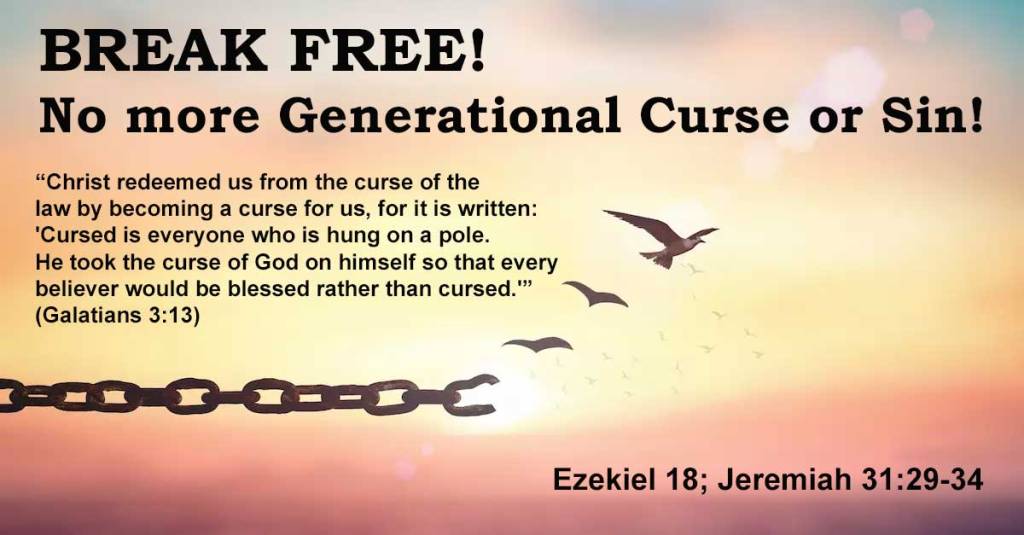
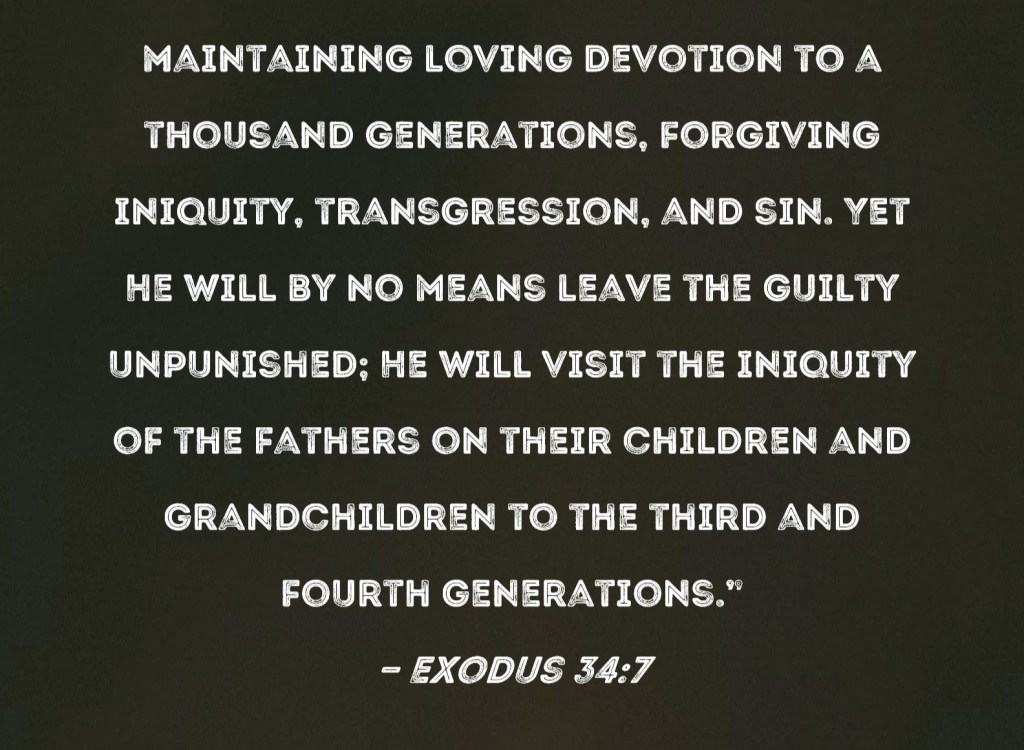
What we talked about in our study was a concept called ‘Generational Sin.’ That is, somehow children tend to repeat the sins of their parents. Why is that? Is it a case of “Children learn what they live?” There are also similar concepts called Generational Curses and Generational Trauma. The differences as I understand them are:
1. Generational sins are the repetition of sinful actions by the adult children that they observed their parents doing while growing up. That might be a simple case of modeling and emulation without realizing there may be other options for behavior. People who are caught in generationally repetitive sins can only be delivered by Jesus Christ.
2. Generational curses are similar to the above except it takes into account the curse of original sin, as well as the consequences of individual sin. We as cursed, sinful creatures just keep repeating the same sins generation after generation, and experiencing the same negative consequences of those sins, those are the ‘curses.’ People who are caught in the curse of Adam’s sin as it has mutated through the generations and in different family lines can also only be delivered by Jesus Christ.
3. While doing my research on the concept of Generational Sins last Spring, I ran across a slightly different concept called ‘Generational Trauma.’ The first two concepts were developed by Christian theologians trying to understand and explain Exodus 34:7.
Generational Trauma, on the other hand, is a concept developed by psychologists to explain how trauma to one generation, necessitating extremes of behavior in order to cope, are then passed on to the next generation, even if social or personal circumstances have changed and the extreme behavior is no longer necessary.
Before we delve deeper into these concepts, though, I’ll spend the next three blogs telling those three stories in Genesis and see where that takes us.
THE STORY: Genesis 12
I. God Calls Abram
(c) Free Bible Images, used by permission.
Now the Lord said to Abram, “Leave your country and your kinfolk and your father’s house, and go to the land that I will show you. And I will make of you a great nation, and I will bless you and make your name great, so that you will be a blessing. I will bless those who bless you, and he who dishonors you, I will curse, and in you all the families of the earth shall be blessed.”
So Abram left, as the Lord had told him, and Lot, Abram’s nephew, also went with him. Abram was seventy-five years old when he departed from Haran.
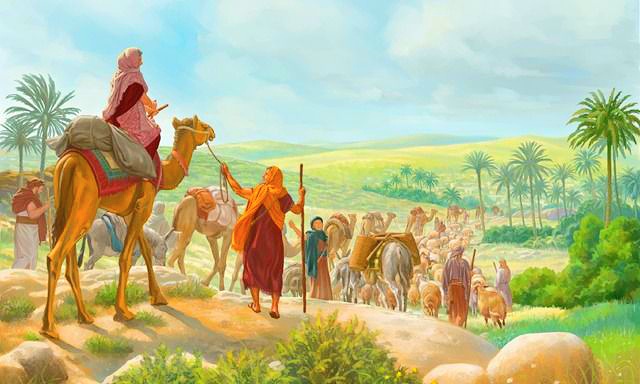
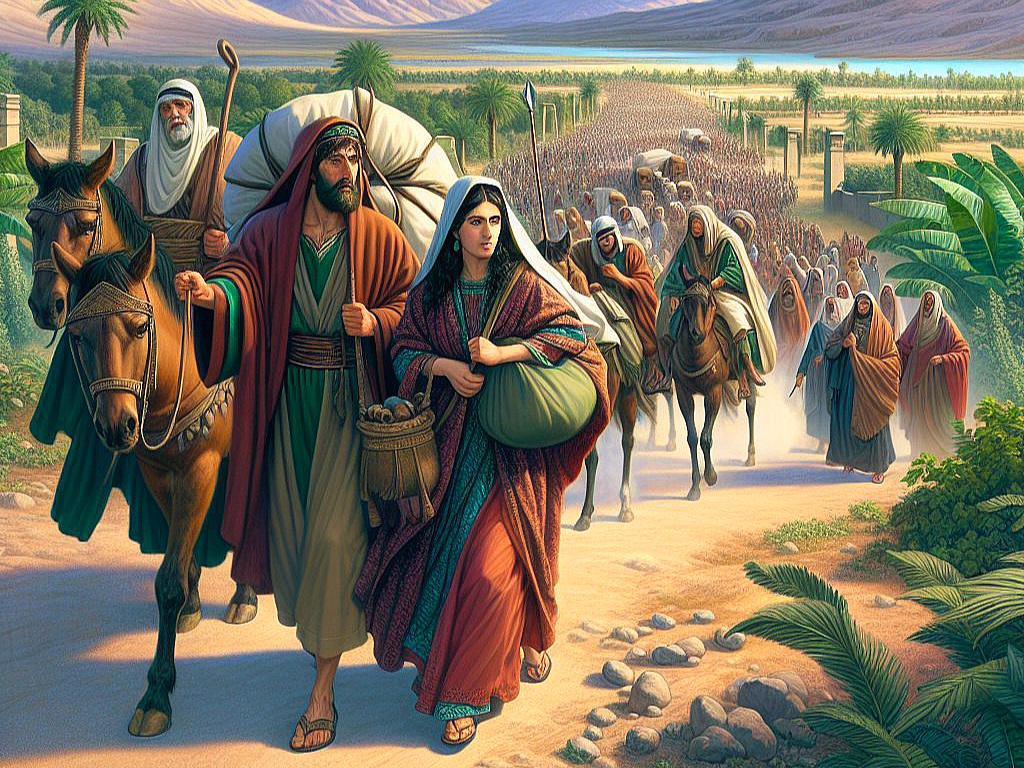
And Abram took Sarai, his wife, and Lot his brother’s son, and all their possessions that they had gathered, and the servants that they had acquired in Haran, and they traveled to the land of Canaan.
(c) Free Bible Images, used by permission.
When they came to the land, Abram passed through to Shechem, to the oak of Moreh. At that time the Canaanites inhabited the land.
(c) Free Bible Images, used by permission.
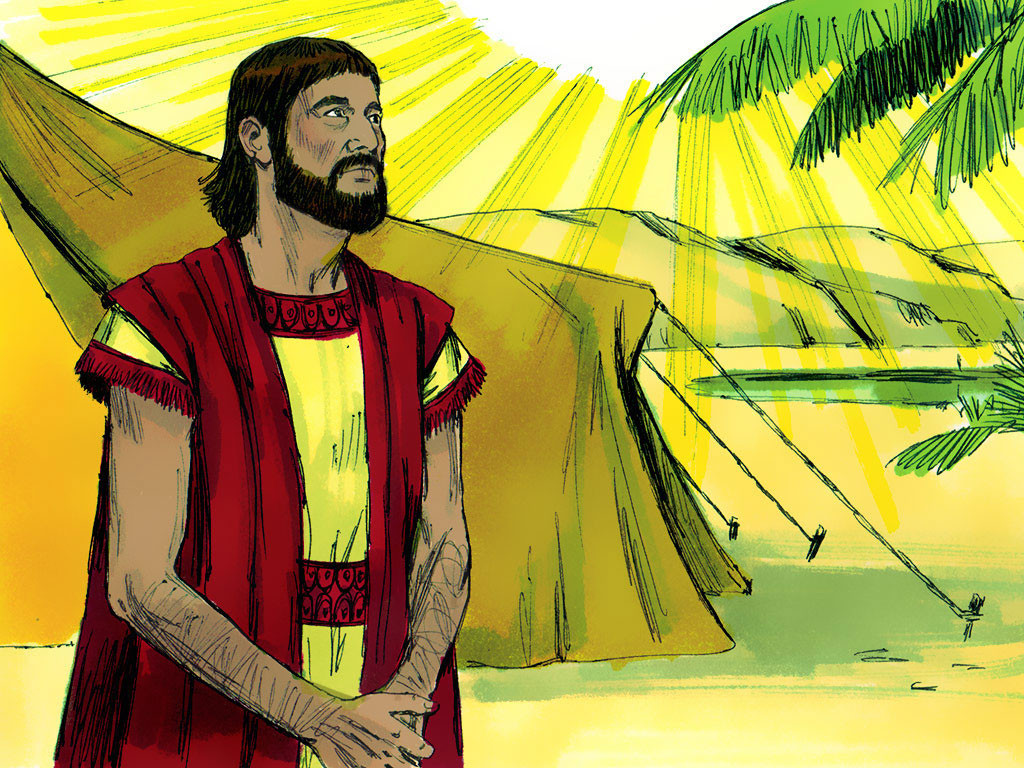
Then the Lord appeared to Abram again and said, “I will give this land to your offspring.” So Abram built an altar there to the Lord who had appeared to him and called that place ‘Bethel,’ meaning the House of God. From there Abram moved his flocks and herds to the hill country to the east of Bethel, where there was better grazing, and pitched his tents there, with Bethel on the west and the nation of Ai on the east.
There Abram built an altar to the Lord and called upon the name of the Lord in daily worship and sacrifices. Eventually, Abram moved everyone on, still going southward toward the fertile valley of the Negeb.
II. Abram and Sarai in Egypt
Now there was a famine in the land of Canaan, but not in Egypt. Because of the seasonal flooding of the Nile, Egypt was rarely affected by famines. So Abram and Sarai and all who were theirs, went down to Egypt to live there for a while, because the famine had become very severe in Canaan.
When Abram and Sarai went down to Pharaoh’s city, Abram pulled Sarai aside and said to his wife, “I know that you are a very beautiful woman, and when the Egyptians see you, they will say, ‘Who is this beautiful woman, is this his wife?’ If I say ‘yes,’ then they will kill me and they will take you by force, for that is how they do things in the godless nations. If we say you are my ‘sister,’ then it may go well with me because of you, and then my life may be spared for your sake.”
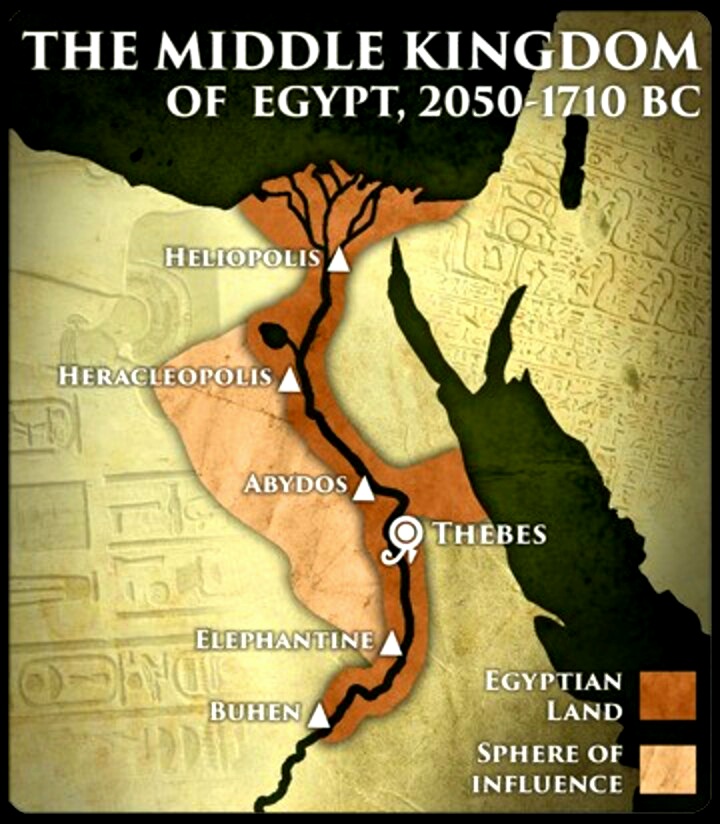
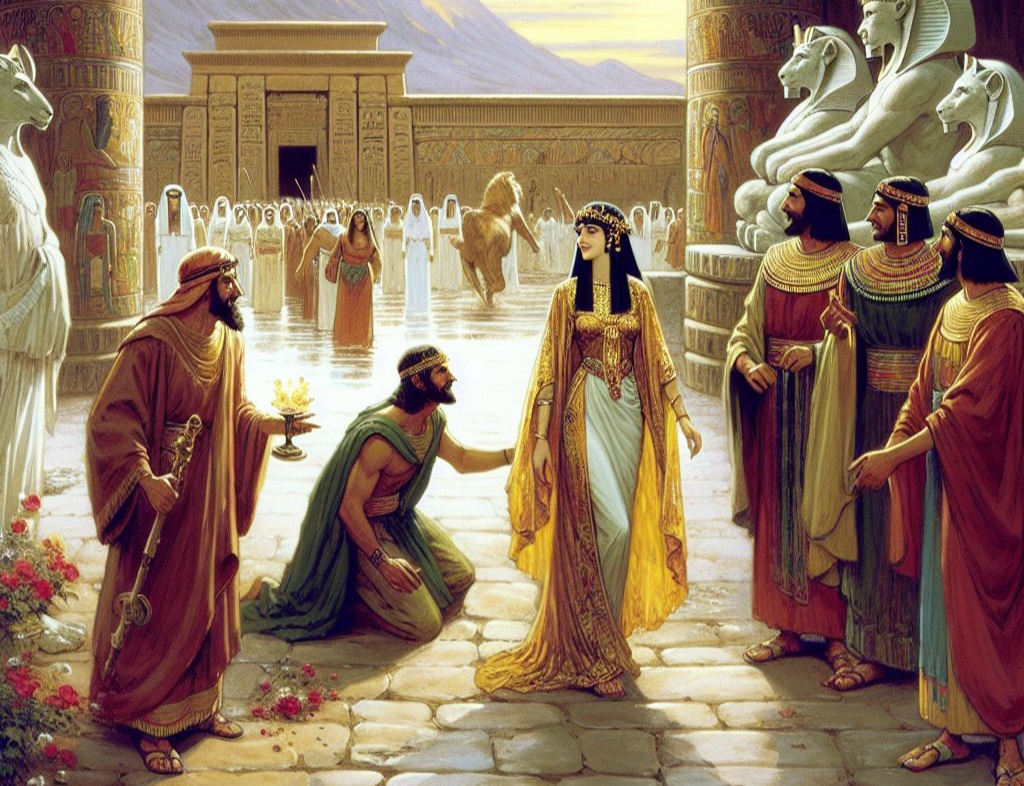
When Abram entered the city, the Egyptians indeed saw that Sarai was very beautiful, and the princes of Pharaoh went and praised her to Pharaoh Senusret III.* Then Pharoah Senusert sent for the couple and Sarai was taken into the Pharaoh’s harem. For her sake, Pharoah Senusret dealt well with Abram; giving him sheep, oxen, donkeys, servants, and camels as a bride price.
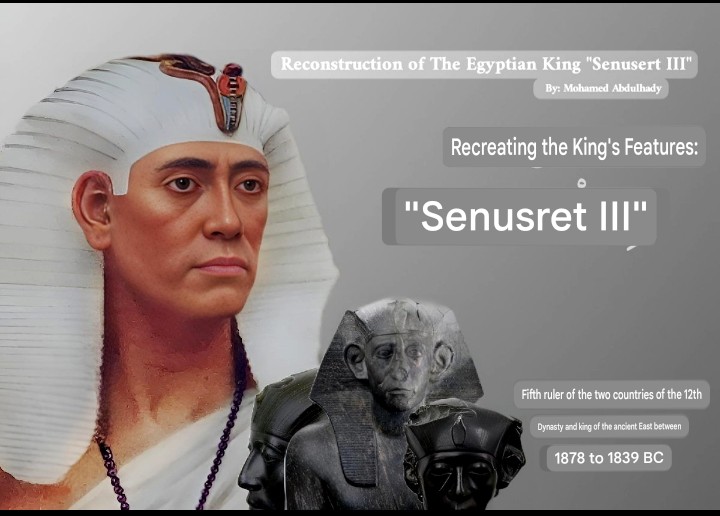
* Historical research identifies Khakaure Senusret III (also written as Senwosret III or the Greek form, Sesostris III) as the Pharaoh of Egypt at the time of Abram and Sarai’s sojourn there in 1876 BC. He ruled from 1878 BC to 1839 BC during a time of great power and prosperity in Egypt. He would have been ruling for only about two years at the time of Genesis 12, so he would probably have been a young and vigorous man as witnessed by his military victories in extending Egypt’s southern border. (Source, Wikipedia)
Captions translated to English by Google
Senusret III was famous for his realistic portraiture, compared to the idealized portraits of Pharaohs before him. His busts and statues are so realistic that you can see signs of his aging on those made later in his reign. Enough of these survive to this day that a realistic reconstruction is possible.
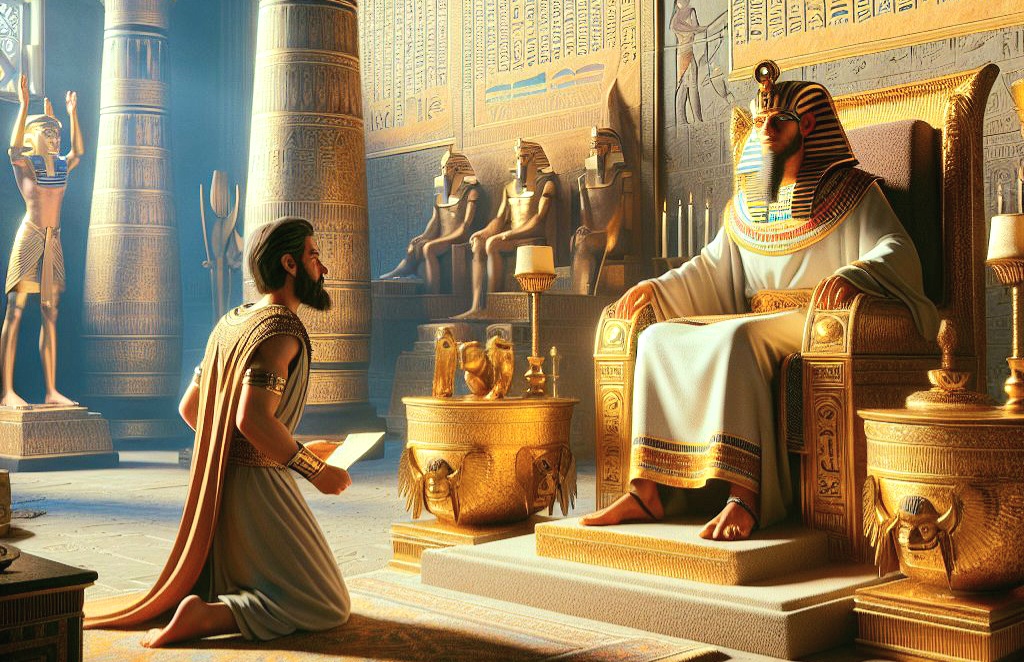
But the Lord afflicted the Pharaoh and his household with great plagues because of Sarai, Abram’s wife. When divination revealed the cause of the plagues as his newest wife, the wife and not the sister of the man, Pharaoh Senusret sent for Abram and said to him, “What is this you have done to me? Why did you not tell me that she was your wife? Why did you say, ‘She is my sister,’ so that I took her for my wife? Now then, here is your wife back, take her and go!”
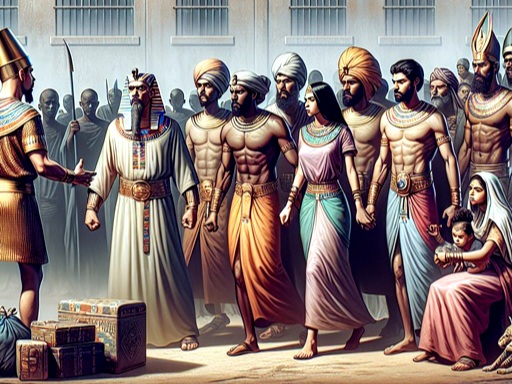
Then Pharaoh Senusret gave his princes orders concerning Abram, that they send him away with his wife, Sarai, and all that he had with him. And so they escorted him to the border and saw them on their way back to Canaan.
COMMENTARY and APPLICATIONS:
It is said that Abram and Sarai, later renamed Abraham and Sarah, faced 10 tests in their life. The first three are in this passage.
1. The first test was God’s call to leave both their home and their families, and go to a new land that God would show Abram later. They passed this test. They gathered up their household and belongings and headed south, accompanied only by a nephew, Lot, and his family.
God affirmed Abram’s obedience by appearing to him again when he reached Canaan and made a promise that all the land Abram had seen would be given to His descendents. Abram responded appropriately and sacrificed to God and worshipped Him. Even though the Old Testament is very Patriarchical in its presentation, you can be sure that Sarai was involved in worshipping God together with her husband.
This is often the same first test we face in our lives as Christians. Whether it’s after high school, college or some later time in life, God often calls us to leave everyone and everything that we’re familiar with and depend on, and go to a new place. I believe God does this in order to help us turn from depending on the familiar in our lives and turn to depending on Him. After all, that is what having a relationship with God is all about.
I think that if we are also obedient to go when and where called, that God will affirm our decision to go in faith. That is, after all, the meaning of one of the key verses about faith:
Faith and faithful obedience please God, and He will reward us.
2. The next test was the famine in Canaan. Abram elected to go to Egypt, which was almost famine proof. However, he neglected to do one very important thing, that is, ask God what he and Sarai should do because of the famine. There are several reasons why Abram could be excused for not thinking to ask God first. His relationship with God so far had been to worship Him and live according to his understanding of what God wanted His worshippers to do, as passed down by word of mouth from one generation to the next since Noah. God actually speaking to him was a new thing, and had only happened twice, so far.
Also, God had only appeared to Abram at a time of His choosing. It might have never occurred to Abram that he could ask God for guidance and expect that he would receive supernatural guidance in response.
(c) Free Bible Images, used by permission
It might well be that the anxiety of dealing with the famine–as he watched his flocks and herds and servants and their children slowly starve, as he struggled with the decision about what to do, maybe even questioning his decision to follow God into what now seemed to be a god-forsaken land–that all of this stress and anxiety gave him ‘brain lock,’ where he couldn’t decide what to do, where he couldn’t see a way out from a slow, but certain death, and he was just completely filled with anxiety and fear of losing everyone and everything.
I know I’m reading a lot into what was going on here, but I’m drawing from my life and from seeing similar situations in the lives of others. This situation just cries out as one where Abram should have sought God, day and night, on his knees, on his face, sacrificing from his dwindling flocks–whatever it took–until he reached a place of desperate faith and God broke through his miasma of fear and anxiety to reassure him of being protected and also telling him what to do next.
God made the promise to do this for the nation of Israel in Isaiah 41:10. Someone cleverly showed how the foundationsl idea of this promise is F.A.I.T.H:
We as Christians have a similar promise:
3. If Abram had sought God’s will, and going to Egypt was still the plan, the difference would have been that Abram and Sarai would have gone there trusting in God to take care of them. The third test, ‘Pharoah taking Sarai as his wife,’ might have been handled differently. Going with faith/trust in God, there would have been less fear. Granted, it was still a scary situation–two simple shepherds going to the seat of a highly sophisticated civilization–but it would have been easier to cope with that fear knowing your actions were being supported by your God.
(c) Free Bible Images, used by permission
So, instead of going to Egypt in faith and confidence in God, Abram went there in fear for his life because of the beauty of his wife. There is a phrase in Abram’s justification of his strategy of deceit where he said, “Say you are my sister… that my life may be spared for your sake.” Maybe Abram was still wrapped up in the fear he had just experienced facing possible death from the famine?
God had promised to give Canaan to Abram’s descendents. So far Abram and Sarai did not have even one child. If Abram was really understanding and trusting in God’s promise, then he should have realized that God would preserve his life. One wonders if Abram had thought that implication through? But not having done that, one failed test led to another test of faith.
Not to imply that God was just throwing one test of faith at Abram and Sarai after another. The tests will still come in life, no Divine source needed. That’s the fallen world we live in.
The difference is, in my opinion, that if we successfully negotiate one trial, that should put us in a better place in our faith to successfully negotiate the next one.
The opposite is true too, I think. When we’ve been unsuccessful in dealing with one trial, then it will be all that much harder to trust God in the next one. 1 Corinthians 10:13 is a key verse about dealing with trials. Following afterward is my paraphrase of it.**
**In the advanced Bible study class I took many years ago, we were taught to paraphrase a verse or passage at the end of our study of it as a way of showing our understanding of it. Here’s mine for this verse:
Every trial and difficulty that comes your way is the same thing that everyone else goes through. But YOU CAN TRUST GOD! God will NEVER allow you to be tested beyond what you can handle. Along with the difficulty, God will make a path through it. If you’ll just trust and follow Him, you can be confident that you will be able to hang in there and make it through to the end.
In Abram and Sarai’s case, God didn’t forget His promise. One phrase of God’s promise was, “…he who dishonors you, I will curse.” And that is what we saw Him do in Egypt. Pharoah dishonored Abram by taking his wife to be his own, even though Abram and Sarai had lied about their relationship, but that didn’t matter to God. God’s actions are not based on our imperfect obedience to His commands. What God has promised, He will fulfill. As He said in Isaiah 55:11
So, Abram failed his third test of faith–he chose the course of fear and deceit, rather than trust in God and in His promise. What about us? Do we remember to ask God for His wisdom and guidance when difficulties arise? Do we trust God will fulfill His promises? As the Bible says:
When we ask, do we then wait for an answer? Waiting for God is mentioned 34 times in the Old Testament. The most famous verse is Isaiah 40:31:
Let’s make sure we grab hold of these promises from God when we find ourselves in anxiety-causing situations in our own lives, follow the pattern–pray, trust, wait, follow. There is a time to wait on God, and there is a time to act in obedience, with faith and confidence in God’s provision of strength, guidance and protection. I’m praying that we can all learn to tell the difference!
THIS WEEK’S SONG:
When I think about Abram and Sarai wandering through an unfamiliar land, looking forward to some future promised by God, I’m reminded of this 19th century folk gospel song. Even though the lyrics actually refer to the Israelites crossing the Jordan River to claim the rest of the land promised by God, I think the plaintive sound well captures how alone Abram and Sarai might have felt sometimes in their life-long wanderings, and how lonely I have sometimes felt in this world too. At least they had each other!
Wayfaring Stranger, performed by the Hayde Bluegrass Orchestra.
Lyrics
I’m just a poor wayfaring stranger, Traveling through this world alone. Yet there’s no sickness, no toil, no danger, In that bright land to which I go. I’m going there to see my father, I’m going there no more to roam.
I’m only going over Jordan, I’m only going over home.
I know dark clouds will gather ’round me, I know my way is rough and steep; Yet beauteous fields rise up before me, Where God’s redeemed, their vigils keep. I’m going there to see my mother, She said she’d meet me when I come.
I’m only going over Jordan I’m only going over home.
Allow me to review what I felt were a couple of key points from my study of the second half of Genesis before we continue.
1. I realized that these origin stories, passed down orally and then written down by Moses or under his direction, were less about the historical figures, and more about ‘His-story ‘ that is, God’s shepherding of His plan from one generation to the next that would eventually produce the promised innumerable, great nation, AND produce He who would bring God’s blessing to ALL the nations, His Annointed Son, Jesus Christ, our Lord and Savior.
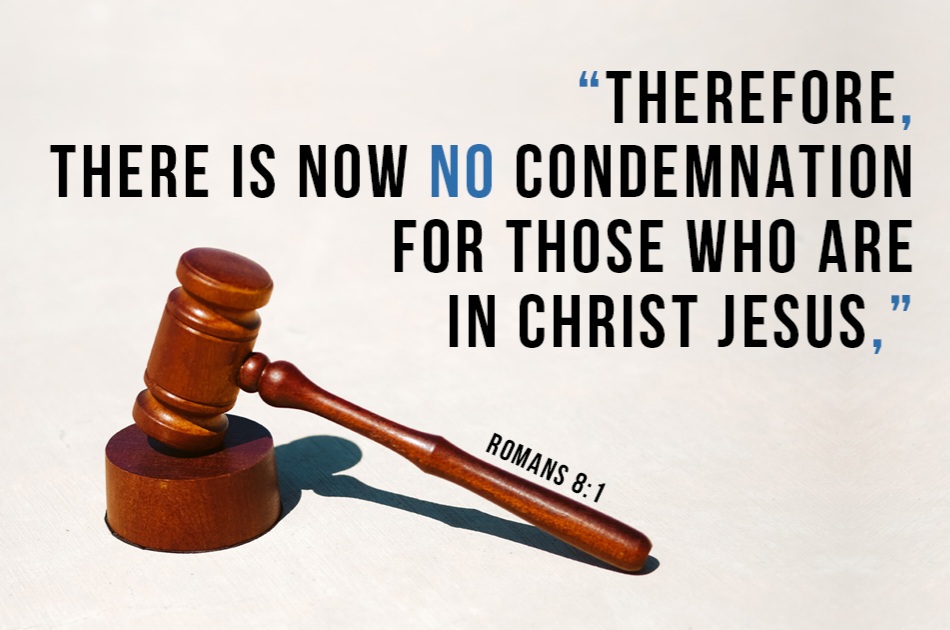
2. With that in mind, we should look for when God ‘shows up.’ Realizing that God is accomplishing His purpose through flawed, sinful people, I noticed that He used a gentle, but firm hand, in guiding His chosen people in the direction He needed them to go in order to advance His plan. And we shouldn’t be surprised when we see normal, sinful people act sinfully, but since God doesn’t condemn them (there is therefore no condemnation for those who are in Christ Jesus), then neither should we waste time condemning their sinfulness.
So, let’s keep an eye out for these things in the next section of Genesis, chapter 25, where we are introduced to the next generation, Jacob and Esau. Now for the story.
Isaac was forty years old when he took Rebekah, the daughter of Bethuel the Aramean, the sister of Laban the Aramean, to be his wife.
NOTE: Most of the following drawings (c) Free Bible Images, artist Jim Padgett, used by permission.
Rebekah and Isaac had been married for twenty years and she had not yet conceived.
Isaac prayed to the Lord for his wife, because she was barren. The Lord granted his prayer, and Rebekah his wife conceived. (God shows up #1)
The baby kicked and struggled within Rebekah more than she had ever heard of happening, and she thought, “Why is this happening to me? Is it going to be like this the whole pregnancy?”
So she went to inquire of the Lord. And the Lord said to her,“Two nations are in your womb, and two peoples from within you shall be divided; the one shall be stronger than the other, the older shall serve the younger.” (God showing up #2)
When her days to give birth were completed, just as God had said, there were twins in her womb.
The first came out red, all his body like a hairy cloak, so they called his name Esau, meaning “hairy.”
Next his brother came out with his hand grasping Esau’s heel, so his name was called Jacob, meaning “heel catcher.”
As the boys grew up, Esau became a skilled hunter, spending his time chasing game in the wildlands, while Jacob became a sedate man, spending his time on tasks around the encampment.
Isaac came to love Esau more because he brought the choicest of his game for his father to eat, but Rebekah loved Jacob more because they spent more time together and he was so helpful around the home.
Esau Sells His Birthright:
One evening, when Jacob was cooking a red lentil stew, Esau came in from a day running after game in the wildlands with nothing to show for it, and he was very tired and hungry. Esau came over to Jacob and said, in his usual gruff way, “Let me eat some of that red stew, for I am starving!” (Therefore his name was called Edom afterward, meaning “red”.)
Jacob replied in his quiet way, still stirring the pot, “Surrender your birthright to me from this day on and I will give you some of my stew.”
Esau said, “I am about to die from hunger! Of what use is a birthright to me right now?” Jacob looked at his brother with an unusual intensity and said, “Swear to me right now, that the birthright is mine from this day forward!”
So Esau swore to Jacob and surrendered his birthright to him. Then Jacob gave Esau some bread and a bowl of his lentil stew. Esau ate and drank hungrily, like a man who had not eaten all day, and then he rose and went on his way as though nothing unusual had happened.
Thus Esau did not esteem his birthright.
COMMENTARY: The best commentary on the Bible is the Bible. As I said in my introductory blog, we should interpret the historical books at the beginning of the Old Testament by what God said later about the people and events through the Prophets. Then, we should interpret ALL of the OT by what Jesus and the Apostles said about it in the New Testament. Here are some of those verses related to Genesis chapter 25:
A. GOD’S SOVEREIGNTY AND ELECTION. This is related to the prophecy about how the younger twin will rule over the older twin. Paul describes it this way in Romans 9.
“When Rebekah had conceived children by our forefather Isaac, though they were not yet born and had done nothing either good or bad—in order that God’s purpose of choosing might continue, not because of works, but because of Him who calls—she was told, “The older will serve the younger.”
If you’ve ever read through Romans or listened to a series on it, you might have noticed that it’s complicated and Paul goes into some deep theology. I’ve been looking over some commentaries on Romans 9, so let me try to uncomplicated Paul’s point here.
Paul is talking about the sovereignty of God’s choice for who He will use in accomplishing His purpose and who to offer His bmessings to. God chose Abraham, we’re not told why, and made a promise to produce innumerable descendents from him, especially One who will “bless all nations.”
Abraham and Sarah, having lost faith in God’s promise, had a son by her maid, who was named Ishmael. But afterward, some visiting angels promised Sarah would be pregnant by that same time next year, and so she was, and Isaac was born. Paul’s point is that God chose Isaac over Ishmael to continue His plan because Isaac was the ‘son promised’ by God. It was God’s choice again.
Paul’s next point brings us to Isaac’s twins. God chose the younger one (Jacob) and made a promise about him to Rebecca, that he would rule over His older brother. Because Jacob and Esau were still in the womb when God made this declaration, Paul points out that God’s choice was not based on anything they had done–either good or bad. It was God’s choice, again.
The choice that Paul is ultimately addressing is, why didn’t all of the Jews (Israelites) accept Jesus as the Messiah? And, why did God chose to start saving Gentiles when they started believing in the gospel of Jesus Christ?
Paul’s point here is, just because the Israelites are physically descended from Abraham, Isaac and Jacob, the Patriarchs to whom God made and confirmed His promise, it is no guarantee they will experience redemption through Jesus Christ at that time.
Because God is Sovereign, He was perfectly justified to have Paul and other missionary teams carry the gospel to the Gentiles and to confirm the Gentiles’ acceptance into God’s Kingdom, after the Jews started rejecting the gospel. That is, God has made them (and us!) honorary Israelites, and thus joint heirs of God’s salvation with the nation of Israel. After all, that was part of God’s original promise, to be a ‘blessing to all nations.’ (The Greek word interpreted ‘Gentiles ‘ ‘ethnos,’ actually means ‘nations.”)
So, Paul’s point, in part, is that God’s choices are not based on ‘works,’ that is, what a person has done good or bad, (for example, God’s choice of Jacob in the womb.) God’s choice about who to offer salvation to is not dependent on one’s ancestry as being descended from Abraham (for example God chose Isaac over Ishmael.) BUT God’s choices are made by His own decision, that is, His Sovereign will, and God’s choices have always been proven to be the right ones and the best ones to carry out His eternal plan of salvation for humankind.
Whew! I don’t know if I uncomplicated that or not! My take on this is, God is saying through Paul, ‘So, you’re a Jew and you think that entitles you to special treatment from God over everyone else? NOT!’ I chose who, what, when, where and how BECAUSE I AM GOD!
Paul’s concludes his argument in Romans chapter 9 by quoting from Exodus 33:19, where God proclaims His goodnes, that God will have compassion on whoever He chooses to have compassion on. And God will have mercy on whoever He chooses to have mercy on.
B. As it is written, “Jacob I loved, but Esau I hated.” (also quoted in Romans 10:13)
The Hebrew word translated “hated” here means to be hostile to and consider someone an enemy. The reference is to some prophecies about the country founded by Esau and his descendents, called ‘Edom.’
When God brought the descendents of Jacob back from Egypt to the land He had promised them, He instructed them to be careful not to take any land from Edom, because of the relationship between their founders, Jacob and Esau. However, when the Israelites were entering their promised land, they wanted to take a shortcut through Edom. They promised they wouldn’t take anything, they would stay on the highway, and if any of their animals drank any water, they would pay for it.
The Edomites not only said, ‘No!,’ they said ‘H#!! no,’ and lined up their army to attack the Israelites if they tried to cross. (See Numbers 20:14-21)
Again, at a later time in history, when Israel and Judah were being besieged by Assyria, leading to their defeat and exile, Edom joined the enemy of Israel by fighting their relatives, sacking Jerusalem and taking refugees captive and making them slaves. (See 2 Chronicles 28:17)
Therefore, God cursed the nation of Edom (Esau) for their treachery, and promised to completely destroy it, as He did. (See Joel 3:19, Amos 1:11, Obadiah 1:11-14, and there’s more in Ezekiel 25, 35 and 36.)
So, there wasn’t anything Esau did that caused God to ‘hate’ him. God actually honored his descendents. Instead, it was what the nation founded by his descendents did that caused God to declare them as enemies and then He become hostile to them.
Prophetic language frequently uses the name of the founder of a nation to refer to the nation, as ‘Jacob’ and ‘Esau’ are used in prophecies to refer to the nations Israel and Edom. Hence, when God says “Jacob I have loved” (feels a deep affection for), He’s referring to the nation of Israel. When He says, “Esau I have hated,” (declared a hostile enemy), He’s referring to the nation of Edom. It’s easy to get confused!
C. PROFANE / GODLESS / UNGODLY:
The Greek word used to describe Esau in this verse means the opposite of holy or sanctified. It is variously translated as profane, godless or ungodly. Godly people set apart the things of God as being special and important in how they treat them, talk about them, etc. Godless, ungodly or profane people treat what belongs to God as though it were ordinary or unimportant.
“This Greek word is used to label conduct, speech, or people that treat divine realities as common, trivial, or contemptible. While Scripture plainly identifies unbelief and immorality as characteristic of the profane, the term also warns believers that holiness may be undermined by careless attitudes, empty talk, and a willingness to trade eternal privilege for fleeting satisfaction.” (The Bible Hub)
That last is specifically what Esau did in reference to the Divine birthright that was his as the firstborn. Thus, we see Esau’s surrendering his birthright for one meal is condemned in Scripture, but not Jacob’s actions of wheedling it from Esau.
APPLICATIONS:
So, in light of these three Biblical commentaries, there are three (kind of obvious) applications:
1. Let us as ‘Gentiles’ thank God that He hasn’t left us out of His plan, that He has chosen to show compassion and mercy to us, and that we all have had the opportunity to be saved and redeemed from this world of sin and death, and from our own sinful self. AMEN!
2. Always remember to treat others, especially God’s chosen and blessed people, with kindness, acceptance and generosity. This is what the Bible calls ‘hospitality.’
3. Remember to treat everything having to do with God, Jesus Christ, the Holy Spirit, His Holy Bible, especially the Gospel, Christ’s Body, the Church, and God’s ordained ministers and pastors, as special and important. Never put anything above them in how you esteem them and speak about them. Remember to honor God in everything you do and say, more than what you think, more than how you feel, more than anything you might want, and even more than a anything you need. Quite a lofty goal, isn’t it? I know you fall short, so do I, but let’s TRY.
Considering the sovereignty of God reminds me of this worship song. I hope it carries you into an attitude and heart of worship as it does me. Song: How Great is Our God, by Chris Tomlin.
Luke 16 contains a parable about a dishonest manager (steward) who cleverly secures his future after being fired. Jesus’ moral is “The children of this world are wiser in their generation than the children of light,” and suggests we can learn to be better ‘children of light’ from them.
Now Jesus said to the disciples, “There was a rich man who had a manager, and this manager was reported to him as squandering his possessions. Therefore the rich man summoned the manager and said to him, ‘What is this I hear about you? Give an accounting of your management, for if it is true, you can no longer be my manager.’
While the manager was gathering the accounts, he said to himself, ‘What am I to do since my master will take the management away from me? I am not strong enough to dig; I am ashamed to beg… I know what I can do so that when I am removed from managing, people will welcome me into their homes…’
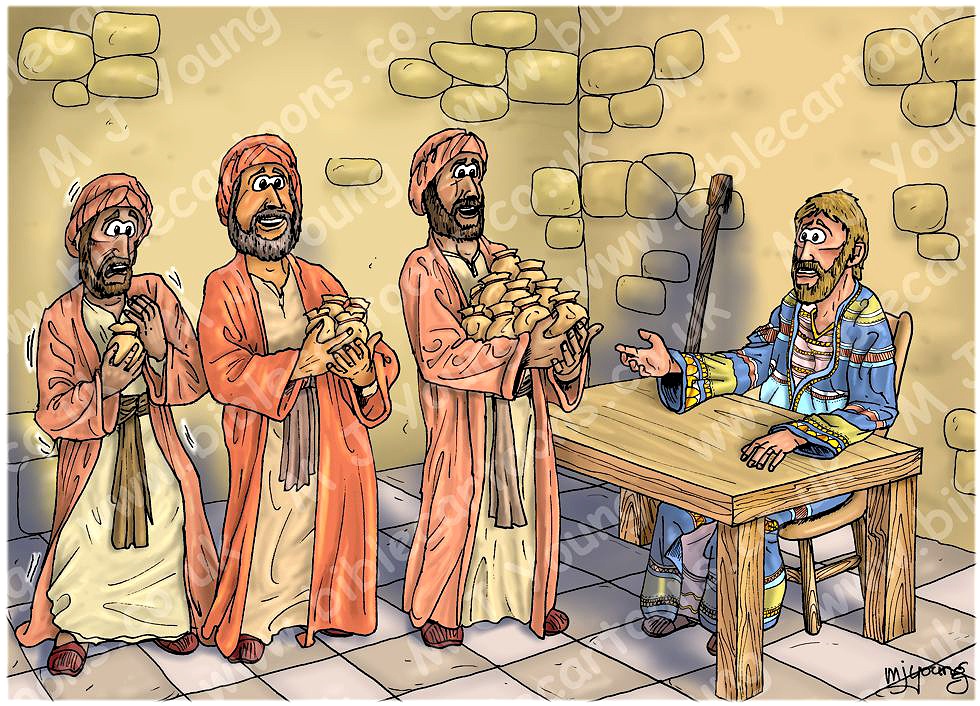
The manager then summoned each one of his master’s debtors, and he said to the first, ‘How much do you owe my master?’ And he said, ‘A hundred jugs of oil.’ And the manager said to him, ‘Take your bill, sit and write fifty.’ Then the manager said to another debtor, ‘How much do you owe?’ And he said, ‘A hundred bushels of wheat.’ The manager said to him, ‘Take your bill, and write eighty.’
And when his master found out, he actually complimented the unrighteous manager because he had acted shrewdly. For the sons of this age are more shrewd in relation to their own kind than the sons of light.
So, I was recently reading this article entitled, ‘Why Threat Actors Win.’ I was struck by the qualities the article described that lead to Threat Actors’ success and thought, maybe we could learn a little something from them that we could use in our approach to carrying the Gospel of Jesus Christ throughout the world? Those characteristics in general were described as being, “Threat Actors approach their objectives with relentless focus, strategic adaptability, patience, and an unwavering commitment to success.” Let’s look at each of these as described in the article in more detail and I’ll contrast them with how the Bible says we should be as Christians.
I. Threat Actors are committed to success. They exhibit a steadfast commitment to engage in their deceptive behaviors and to carry out their bad acts.
Compare that with this command to Christians:
The steadfast commitment is not different, but where it is applied is worlds apart, bad acts versus the good works of our Lord Jesus Christ.
A. Intrinsic Motivation: Threat Actors are motivated not only by the extrinsic reward of monetary gain, but from the intrinsic reward of outsmarting others.
Our intrinsic reward as Christians is supposed to be the experience of being in a personal relationship with Jesus Christ, more than anything else we might value in this world.
B. Psychological Traits: Psychologists Paulhus and Williams (2002) identified three traits common to Threat Actors, which they referred to as “The Dark Triad.”
1) Narcissism: That is an overinflated view of one’s importance, and an almost exclusive self love and admiration, which gives them a sense of being superior to everyone else, for whom they feel no sense of care or of their being important in any other way, except to fulfill the desires of the Threat Actor.
In contrast, we as Christians are supposed to be lovers of God first (the Greatest Commandment), put others second (the Second Greatest Commandment) and ourselves third. In 2 Timothy 3:1-4, Paul contrasts these as being opposite qualities–people being lovers of themselves rather than loving God.
2) Machiavellianism: Characteristics based on the worst of the ruling advice in Machiavelli’s ‘The Prince.’ Such as an obsession with manipulating people to meet their own ends and they constantly refine their skills to be able to do so. Threat Actors get great intrinsic reward from the exhilaration of outsmarting others.
In contrast we as Christians are supposed to serve God and one another. Jesus taught His disciples that Christian leaders should not lead in the same way as worldly leaders:
3) Psychopathy: Supression of feelings of sympathy or remorse allows Threat Actors to exploit others without reservations of conscience.
Sometimes it’s hard to tell the difference between a psychopath and a sociopath:
The “-path” comes from ‘pathology,’ meaning these are psychologically ‘diseased’ or socially ‘diseased’ people. Honestly, despite how far off center these conditions are from how God intends us to be, we all have some of these tendencies, because they are just the natural, but extreme, expression of our fallen, sinful state.
Just as psychologists have developed the concept of “The Dark Triad,” they have developed what would be the opposite qualities called “The Light Triad,” which essentially are the positive qualities that the Bible says we should have in our lives, but psychologists do it without the Christian’s God-centered emphasis.
1. Instead of Machiavellian manipulation, we should be Altruistic = unselfish regard for the welfare of or devotion to improving the life of others. (from Merriam-Webster).
2. Instead of Psychopathic, we’re to be Empathic = sensitive to, awareness of, and understanding about the feelings, thoughts, and experiences of others. (from Merriam-Webster).
3. Instead of Narcissistic, we’re to be Compassionate = a sympathetic awareness of others’ distress, that leads to a desire and actions to alleviate it. (from Merriam-Webster).
As Christians, if we wish to grow away from the ‘dark’ qualities and toward the ‘light’ qualities, we need to double down on our relationship with God. As we grow close to Him and He grows within us, we truly earn Jesus’ appellation in this parable as being ‘children of light.’
II. Threat Actors are adaptable and innovative.
A. ADAPTABLE: Threat Actors quickly learn from failures, pivot and employ other “best practices” to keep them ahead of their targets. Their ability to quickly pivot and change their tactics keeps them ahead of the defenses of their target.
B. INNOVATIVE; Threat Actors are continually learning and evolving their tactics. They quickly adjust to changes in technology, prevailing opinion, and other changing conditions to stay one step ahead of their targets’ perception of threat.
Paul talked about his adaptability in sharing the gospel with different kinds of people in 1 Corinthians 9: 19-23.
“Though I am free and belong to no one, I have made myself a slave to everyone, to win as many as possible. To the Jews I became like a Jew, to win the Jews. To those under the Law I became like one under the Law (although I myself am not under the Law), so as to win those under the Law. To those not having the Law, I became like one not having the Law (though I am not free from God’s Law, but am under Christ’s Law), so as to win those not having the Law. To the weak I became weak, to win the weak. I have become all things to all people so that by all possible means I might save some. I do all this for the sake of the gospel, that I may share in its blessings.”
III. Consistency in Efforts.
A. Persistent Targeting. Threat Actors are not discouraged even when they are initially unsuccessful or it appears their efforts have been thwarted. They will continue their efforts until they find a way to carry out their intended action. Their commitment to be successful often outlasts the target’s commitment to defense.
We are also commanded to be persistent, but instead of trying to harm people, we should be working with God to bring them to salvation, which is for their good not only for eternity, but for their life in this world as well. (1 Timothy 4:8)
B. Exploiting Vulnerabilities. Threat Actors systematically probe for weaknesses, whether it is in systems, processes or human behavior. They are willing to invest their patience to identify and exploit vulnerabilities.
Our vulnerabilities are an opportunity for God’s power to shine through us, but we have to take them to Him in faith and submission, through prayer.
The vulnerabilities of our brothers and sisters in the faith, who might not be at the point of being able to take them to God by themselves, are an opportunity for us to come alongside them and comfort them with the comfort we have received (2 Corinthians 1:4), to pray with them, and to guide them through the process of trusting God, even during their bad times.
The vulnerable times in the non-Christians we know may call for us to do something more practical, as in the compassion ministries (Matthew 25:31-46), but also to pray for them, especially that the situation will help them realize their need to be in relationship with God and be ready to share the gospel with them when it seems God is using the circumstances to lead them to Him.
C. Learning From Failure. Threat Actors view failure as a learning opportunity. They carefully analyze unsuccessful attempts in order to refine their techniques, thus increasing their success rate over time.
I’m sure we can all learn a lesson about not letting failure keep us down, but instead, we should learn from it and move on. I’ve found that as my faith in God has grown, i don’t fear failure as much as I used to. I think that fear of failure is a holdover from childhood or adolescence when we needed a lot of positive feedback to help us develop a positive self image. If we don’t receive enough praise from our parents or others, then we tend to go for the ‘big score.’ We try to accomplish something so big, so great, that we are certain it will get us recognized as the great person we want to be thought of as.
When we fail or seem to fail by not getting the great admiration we are seeking, then it paralyzes us and can lead us to obsess about how others think about us, causing us to live on an emotional roller coaster. Obviously not a healthy situation, and it can lead to other emotional extremes.
After coming to a right relationship with God through Jesus Christ and being assured of His love for me, I am more concerned now about God’s greatness than my greatness. That short circuits that whole emotional unbalance thing for me.
IV. APPLICATION / EVALUATION
To be honest, everyone is somewhere on a continuum between each pair of dark and light qualities. That is because the dark qualities simply represent the extreme effects of sin. Hopefully we are moving away from this sinful self toward God’s light at the other end of the continuum as ‘children of light.’
We do that by focusing on the character of God as revealed by Jesus Christ, and strive to grow toward Him, which will automatically move us away from the bad end and toward the good end.
Evaluate where you think you are for each of the ten positive qualities as related to sharing the gospel using this 5-point scale, then total at the end to see where you are overall in your life right now.
1. Rarely (1-2 per year) 2. Occasionally (1-2 per quarter) 3. Often (1-2 per month) 4. Regularly (1-2 per week) 5. All the time (1-2 most days)
1. I am committed to the Great Commission and I share the gospel with the unsaved I know.
2. Intrinsic motivation: The love of Jesus Christ moves me to share the gospel with people around me and that I meet.
3. I love God more than I love myself or anything else in this world, and put him first when opportunities arise to share the gospel with others.
4. I seek to serve others rather than try to get something from them.
5. I am persistent in sharing the gospel with someone, even when they say they’re not interested.
6. When I am unsuccessful in sharing the gospel with someone, I pivot and try a different approach.
7. I learn new ways to relate to people from different backgrounds so that I can more effectively share the gospel with them.
8.A. God has pointed out at least one unsaved person in my life that I pray about and am trying to lead them to Jesus Christ.
9. When people that I know are vulnerable due to loss or tragedy, I step in and offer them God’s comfort and pray with them, and also pray for their consolation.
10. I use my failures in sharing the gospel as motivation to seek and learn new ways to share it better the next time.
How did you do? I’ll be honest, I rated only an 18. This is what I see the results as meaning:
10 to 19 = You are minimally involved in sharing the gospel. You are mostly a spectator. (That’s me!)
20 to 29 = You are a beginning laborer in God’s harvest, dedicated, active in sharing the gospel, but still learning how to do it more successfully. (That was me in the Navigators.)
30 to 39 = You are an experienced laborer in God’s harvest. You’ve led others to Christ and you mentor other young Christians in learning how to do so.
40 to 49 = You are a Master Laborer in God’s harvest, and should be leading an evangelism ministry, as well as teaching others how to share the gospel successfully.
Would you like to improve in sharing the gospel as a regular part of your life? Prayerfully read back over the 10 evaluation statements and ask God to point out an area that He’s ready to help you improve in. Then commit yourself to step out in faith in that area, trusting that God will help you in your obedience.
For me I think it is #3. I need to grow more in my love for God and Jesus Christ, so that His love and the gospel will just gush out from within me as a ‘super’-natural part of my life.
Check out this song about the gospel and what it means to people in different situations. Maybe it will help motivate you to share it more. I find it does that for me.
A: APPLICATION: We see several godly characteristics exhibited by Rebekah in the events detailed in the second half of Genesis chapter 24 that are worthy of being emulated. Here are five that I saw.
1.a. COURTESY: At the well, Rebekah exhibited courtesy to a thirsty traveler by being willing to give him a drink from her jug when asked. She also answered him politely when he asked about her family. But Rebekah also went the extra mile when she offered to fill the trough for Eliezer’s camels to also drink. It would have required at least several trips up and down the hill to the well to fill her water jug and dump it into the trough until it was full.
b. HOSPITALITY: When Eliezer inquired about a place for he and his camelcade to stay, Rebekah readily offered the hospitality of her home. The gifts of gold jewelry might have had something to do with her eagerness, but offering hospitality to travelers was a common practice of that time as there were no public inns or stables.
2. SUBMISSION:
a. To her mother. Rebekah returned home and told her mother, her immediate superior in the family hierarchy, what had happened.
It should be mentioned that families during Biblical times were divided into the men’s and women’s households. The women’s household is mentioned twice in Genesis 24. When Rebekah was placed into Sarah’s tent, she was essentially being put in charge of the women’s household that Sarah had previously ruled over. Because Rebekah had been faithfully submissive to her mother at home, she had learned how to rule over her own household when the time came.
b. Submissive to the head of the family. Rebekah was also submissive to the greater authority of her father and brother over the entire family. At no time during the betrothal negotiations did she speak up or object.
In Biblical times, daughters were literally ‘given away’ by the fathers to be brides, although there was a ‘bride price’ to compensate the family for the loss of their daughter. As we saw, Abraham sent many valuable items with Eliezer for the bride price that he knew would appeal to his kinsmen.
That the father Bethuel is only mentioned while inside the house, and that Laban was involved in the negotiations, suggests that the father was infirm and had ceded at least some of the family authority to Laban as the the oldest son.
3. FORETHOUGHT. Rebekah was ready to express her preference when asked. She didn’t speak up and express an opinion before because traditional submissive rules would not allow her to. However, that didn’t mean she couldn’t think about what everything meant and decide what she wanted to do…, if she was asked. And she was asked, and she had her answer ready.
4. ALERTNESS/ATTENTIVENESS: When the caravan was approaching the large home encampment of Abraham and Isaac, Rebekah probably suspected she was nearing their destination. There might even have been comments from the men about being close to home, etc. That alertness allowed her to spot the handsome young man pensively walking in the fields and wonder if this might be her prospective husband. If it was, then she couldn’t approach him on camelback with her head higher than his. Nor could she have him watch her go through the awkward and maybe even embarrassing process of getting down from the camel. By meeting him on foot, she reinforced her willingness to be submissive to him, and also her womanly walk would have enhanced her feminine desirability in Isaac’s eyes.
5. PROPRIETY: Once Rebekah verified the young man hailing the caravan and walking in their direction was her betrothed, she immediately veiled herself. (See previous blog about what that veiling meant, as in this photo.) One can assume while she was riding with the servants, Rebekah didn’t feel the need to cover her face. But per Middle Eastern customs of the time, a husband never saw anything of his bride except her eyes until the wedding night.
B. . SUMMARY: Rebekah was quite a smart, intelligent and capable young woman. Instead of rebelling against the hierarchical culture she was born into with strictly defined roles for women, a culture and role that many today would consider oppressive, Rebekah accepted her hereditary role, devoted herself to obedience, and conformed to societal expectations. As a result, her upbringing allowed her to step right in and fill Sarah’s place as head of the women’s household.
Also, Rebekah had learned how to be a good wife, as witness the growing love beyween she and Isaac that was soon enough to fill the hole in Isaac’s heart left from his loving mother’s death.
This cultural lifestyle was not oppressive, it was what we as Christians teach–liberation by submission to God’s will. We can all learn a lot of lessons in godly behavior from Eliezer and Rebekah in Genesis chapter 24, even today.
C. NOTES ON MULTICULTURALISM: One thing I’ve noticed studying cultures around the world and throughout history are common characteristics that contribute to success and longevity of the culture.
1. A path to obtaining the necessities of life for all–water, food, clothing, and shelter–is essential for a successful culture.
2. Another is the ability to guide the natural instincts and desires of young men and women into productive and fulfilling roles, where lifelong relationships are formed that produce healthy children and then enable them to be raised to maturity to take their place in their society and continue it.
The Middle Eastern society that Abraham and his kinsman were a part of had lasted for thousands of years. Before we criticize how they maintained that stability, we should look closely at the failings of our own society, that has lasted only a little over a couple hundred years, and wonder, will we stand the test of time for that long?
D. A personal note: When I was a senior in high school, class of 1971, our school (West Mecklenburg) and others in Charlotte were rocked by race riots and closed down for three days so things could cool off. Twenty years later, 60 Minutes did a story on what happened at my school, showing just how significant it was in local history.
At our baccalaureate, the theme song chosen was Sly & the Family Stone’s ‘Everyday People,’ about accepting others who were different than you. Coming out of the frightening experience of the riots and wanting peace between the White and Black subcultures, that song became an anthem for me of what I wanted our American culture to become.
Unfortunately, it’s 55 years later and we still have a long way to go. However, I hope the song reminds you how God wants us to accept people from different cultures, or subcultures, as one day people from every tribe, and tongue, and people, and nation, will stand before God’s throne and worship Him together. (Revelation 5:9)
Instead of continuing the character study of Eliezer begun in the previous blog, I’d like to focus more on Rebekah for the second half of Genesis chapter 24. After all, she is one of the Matriarchs of the Jewish nation and revered as such.
The culture she grew up in is very foreign to us today. The account lends itself well to story telling mode, so I’m going to present it that way, rather than strictly by the Scriptural account. Be attentive to what we see about her character and we’ll summarize my observations for our Application section at the end.
1) Rebekah at the Well: Eliezer arrived at the city of Nahor in the evening, the time when women go out to draw water, and made the camels kneel down outside the city by the well.
Eliezer himself also knelt and prayed, “Lord, God of my master Abraham, please grant me success today, and show kindness to my master Abraham. So look, I am by the spring, and the daughters of the city are coming out to draw water. Now, may it be that the young woman to whom I say, ‘Please let down your jar so that I may drink,’ and who answers, ‘Drink, and I will water your camels also’—may she be the one who You have appointed for Your servant Isaac; and by this I will know that You have shown kindness to my master.”
And it came about, before he had finished praying, that a beautiful young woman, an unmarried virgin, came out with her jars on her shoulder. She went down to the spring, filled her jars, and came back up.
Then Eliezer hurried over to meet her, and asked, “Please let me drink a little water from your jar.” And she said, “Drink, my lord”; then she quickly lowered her jar to her hand, and gave him a drink.
(c) Review & Herald Publishing Association
Now when she had finished giving him a drink, she said, “I will also draw water for your camels until they have finished drinking.” So she quickly emptied her jar into the trough, and ran back to the well to draw more, and she drew enough for all 10 of his camels.
Meanwhile, Eliezer was closely watching her to determine whether the Lord had made his journey successful or not.
When the camels had finished drinking, Eliezer took a gold ring and put it in her nose, and two bracelets and placed them on her arms. He then asked, “Please, tell me, whose daughter are you? Is there room in your father’s house for us to spend the night?” Rebekah answered, “I am the daughter of Bethuel, the son of Milcah, whom she bore to Nahor.” She added, “We have plenty of both straw and fodder for your camels, and room for you and your men to spend the night.” Then Rebekah ran back to town to tell her mother’s household about these things.
Eliezer bowed his head and worshiped the Lord saying, “Blessed be the Lord, the God of my master Abraham, who has not forsaken his steadfast love and his faithfulness toward my master. As for me, the Lord has led me to the house of my master’s kinsmen.”
Example of a modern nose ring from the Middle East. According to the description, the one given to Rebekah would have been smaller and can be seen depicted in the first drawing in section 3.
2) At Rebekah’s Home
Now Rebekah had a brother whose name was Laban. When Laban saw the ring in her nose and the bracelets on her wrists, and when he heard his sister Rebekah, say “This is what the man said to me,” he went to the spring and found the man standing there by his camels. And Laban said to him, “Come to my house, blessed of the Lord! Why do you stand outside, since I have prepared a place for you in the house, and also a place for your camels?”
So Eliezer entered their home. Then Laban unloaded the camels, and he gave straw and feed to the camels, and water to wash Eliezer’s feet and the feet of the men who were with him.
But when food was set before him to eat, Eliezer said, “I will not eat until I have stated my business.” And Laban said, “Speak on.” So Eliezer said, “I am Abraham’s servant. The Lord has greatly blessed my master, so that he has become rich…”
“…and I bowed and blessed the Lord, the God of my master Abraham, who had guided me in the right way to take the daughter of my master’s brother for his son.”
“So now, if you are going to deal kindly and truthfully with my master, tell me; and if not, tell me now, so that I may turn to the right or the left.”
Then Laban and Bethuel replied, “The matter has come from the Lord; so we cannot speak to you bad or good. Here is Rebekah before you, take her and go, and let her be the wife of your master’s son, as the Lord has spoken.”
When Abraham’s servant heard their words, he bowed himself to the ground before the Lord. And then Eliezer brought out articles of silver and articles of gold, and fine garments, and gave them to Rebekah. He also gave precious things to her brother and to her mother. Then he and the men who were with him ate and drank supper, and spent the night.
When they got up in the morning, Eliezer said, “Send me away to my master.” But Rebekah’s brother and her mother said, “Let the young woman stay with us for a few days, say ten; afterward she may go.” However, Eliezer said to them, “Do not delay me, since the Lord has prospered my way. Send me away so that I may go to my master.” And they said, “We will call the young woman and ask her.” Then they called Rebekah and asked her, “Will you go with this man?” And she said, “I will go.” So they sent their sister Rebekah and her nurse, with Abraham’s servant and his men.
(c) Free BibleImages, used, by permission.
Then Rebekah and her female attendants mounted the camels, so Abraham’s servant took Rebekah and departed.
3) A Wedding!
Now Isaac had just returned with his flocks to his home base in the Negev after a journey to Beer-lahai-roi, the well where Hagar had been rescued by God after Abraham and Sarah exiled her with her son Ishmael. After supper, Isaac went out to walk in the fields and think. It was toward evening when he raised his eyes and saw a caravan of camels approaching.
Rebekah looked up and saw Isaac walking toward them. She stopped her camel and dismounted. Eliezer turned back and dismounted beside her. She asked the servant, “Who is that man walking in the field to meet us?” And Eliezer said, “He is my master.” Then she took her veil and covered herself.
Eliezer walked over to meet Isaac and reported everything that he had done on his mission. Then Isaac brought Rebekah into his mother Sarah’s tent, where the female servants stayed.
(c) Free Bible Images, used by permission
In due time, Isaac took Rebekah as his wife and Isaac came to love her very much. So he was finally comforted after his mother’s death.
NOTE about women ‘veiling’ in Biblical times. There are two problems with the depictions of Rebekah in the available pictures. First is that all Middle Eastern women wore a shawl to cover their hair. In addition, young, unmarried women pulled one end across the lower half of their face while they were in public. That is how Eliezer could tell the difference between the married women and unmarried ones while they were filling their water jugs at the well–the married ones had their faces showing, the unmarried ones had only their eyes showing. Even at home while their family entertained guests, the unmarried daughters would ‘veil’ their faces.
The second misrepresentation is that Rebekah’s ‘veil’ was a gauzy, translucent fabric such as is used now for veils. That type of fabric was not available in the Middle East at that time.
If you look at pictures of ‘veiled’ women such as the one I inserted above, you can see how beautiful a young woman can appear with just her eyes showing. The husband never saw any more of his prospective wife than her eyes until their wedding night. Understanding this custom also sheds some light on the comment later about Leah having ‘weak eyes.’
We’ll look at some of the character qualities we can see about Rebecca in my next blog.
One of my favorite Christian wedding songs is by Noel Paul Stookey of Peter, Paul and Mary, The Wedding Song (There is Love) (c) 1971.
No matter how long you’ve been married, listen to the message and worshipful tone of this song, remember the feeling you had when you were first married, and maybe understand a little more about how God feels about marriage. After all, He invented it!
There is a lot going on in Chapter 24 with a lot of people. We see Abraham, the concerned father, making sure an appropriate, believing wife is found for his son, Isaac. We see Isaac in action for the first time since Abraham tried to sacrifice him. We see Abraham’s Chief Steward assigned the task of traveling back to Abraham’s kinsmen to find that wife. We see the young kinswoman Rebekah and her father Laban as they negotiate the marriage arrangements. And at the end we see Isaac and Rebekah meet and marry. A happy ending for the chapter.
1. Notes on Biblical interpretation:
In the 3rd century, Church theologian Origen formulated the principle of the three senses of Scripture (literal, moral, and spiritual) based on the Jewish method of interpreting their Scriptures (our Old Testament) taught in a Jewish school of thought in Alexandria, Egypt.
Origen based his ideas for interpretation on Paul’s approach to interpreting the Old Testament in Galatians 4:21 to 31 in which Paul compares Abraham’s son Isaac as representing Christians.
The three methods of Biblical interpretation are defined as:
• Literal (Grammatical-Historical): This approach focuses on the plain, straightforward meaning of the text, considers the original language, the historical context, and intended audience. It seeks to understand what the text literally says and meant in its original setting.
• Allegorical: This method interprets the text as having a deeper, symbolic meaning beyond the literal. It often sees people, places, and events in the Old Testament as foreshadowing or representing spiritual truths in the New Testament. For example, in 1 Corinthians 10:2, the crossing of the Red Sea is seen by Paul as a symbol of Christian baptism.
• Moral Principles: This approach focuses on the ethical principles that can be derived from the text. It seeks to understand how the text can inform and guide our godly behavior and choices as Christians.
(Note that later Christian theologians added a fourth and then a fifth way to view and interpret the Bible. I find those approaches so ethereal and esoteric that my concrete-thinking brain has problems following them. That is why I just stick to the original three.)
William Dyce’s oil painting of Eliezer (1860).
Eliezer of Damascus, Abraham’s chief steward and presumptive heir before Isaac was born, is the key figure in Genesis 24, so I’m going to focus on His words and actions and in the Application section pull out some principles we can follow as stewards of the grace of God and the gospel of Jesus Christ.
A. The charge:
Scripture: Now Abraham was old, well advanced in years. And the Lord had blessed Abraham in all things.
Depiction of Abraham leaving Nahor with his family, servants, livestock and possessions.
Commentary: Abraham wasn’t sure how much longer he would live and he wanted to ensure the succession of his household and belongings to his son and heir, Isaac. Earlier in Genesis, Abraham is described as being rich in livestock, after all, he was a herdsman/shepherd, as well as rich in gold and silver. An extra-Biblical source states that Abraham owned 14,000 sheep, 6,000 camels, 1,000 yoke of oxen, and 1,000 female donkeys, plus an unspecified number of goats, and male and female servants.
Scripture: One day Abraham called his chief steward, the servant who had been with him the longest, and said “Swear by the Lord, the God of heaven and earth, that you will NOT take a wife for my son from the daughters of the Canaanites, among whom I dwell, but will go instead to my country and to my kindred, and take a wife for my son Isaac.
Commentary: Abraham wanted a wife for his son who would share the same godly values that he had grown up with back home, and who shared faith in the same God, as well as one suited to rule the women’s side of the extensive household well.Scripture: The servant said to Abraham, “What if the woman is not willing to follow me back to this land? Should I then take your son back to the land from which you came?” Commentary: Eliezer is addressing a realistic concern and asking Abraham for additional guidance in case it happens.
God had promised Abraham that he would have many, many descendants. (c) Free Bible Images, used by permission.
Scripture: Abraham said to him, “DO NOT take my son back there. The Lord, the God of heaven, who took me from my father’s house and from the land of my kindred, and who spoke to me and swore to me, “To your descendents I will give this land,” HE will send His angel before you, and you shall take a wife for my son from there. But if by chance the woman is not willing to follow you back here, then you will be freed from this oath. Only you MUST NOT take my son back there.
Commentary: Note how Abraham falls back on two things to guide his response to his servant’s concern:
1) First, what God had done on the past in taking Abraham from his ancestral home and leading him to this far country.
2) Second, God’s promise to him to give all the land where he now lived to his descendents.
3) Abraham concluded that what God had done with him was meant to continue down through his descendents, meaning, Isaac was supposed to get married, have more descendents, and continue living in the Promised Land.
Also, Abraham had previous experience with God sending angels to carry out His will. It might seem presumptive for him to speak on God’s behalf, but I think it was more of a case of a man of faith in God, and experience with God, knowing how he could trust God to act in carrying out His promises.
Renaissance painting of Eliezer swearing to Abraham.
Scripture: So the servant swore to his master, Abraham, to take on this commission. Then the servant took ten of his master’s camels and departed, taking all sorts of choice gifts from his master; and he departed and traveled to the city of Nahor in Mesopotamia.
Nahor was located in Paddan-Aram in northern Mesopotamia, near the city of Haran.
B. There is a lot glossed over in this last statement. Nahor, where Abraham’s kinsmen lived, was at the top of the arc around the Fertile Crescent (area in green on the map), which would have been a journey of about 550 miles, following the trade routes traveled by caravans. The Fertile Crescent was an area where there was enough rainfall for plants to grow, and therefore to support farming, orchards and grazing. There would be both forage and water for the animals along the way, as well as towns and cities where supplies could be bought.
A modern camel train in the Middle East.
A camel caravan travels between 20 and 25 miles per day. For the distance to Nahor, it would have taken between 22 and 27 days, assuming no extended stops for rest and resupply. So we can say almost a month as an approximate figure for the trip, then the time there negotiating the bride price, and then another month back.
Remember, there was no way to communicate across distance in those days. The reason Abraham chose his most trusted lieutenant to represent him, gave detailed instructions, but kept it simple, was that he was empowering Eliezer to represent him in this very delicate negotiation and trusted his judgment to act as he would have. Essentially, Abraham would be obligated to accept whoever Eliezer brought back with him for his son’s wife.
As we’ll see in the second half of Chapter 24, Abraham chose his representative well.
Camel caravan crossing the Arabian Desert.
C. So, what might have been the composition of the 10-camel caravan led by Eliezer? The chief steward himself would have served as the caravan master and ride one camel. He already had the experience of traveling south from Damascus with Abraham and things in those days didn’t change so much that his experience on the trail would have been out of date.
Just a note about the terrain they traveled over in their journey. The photos I pulled of modern camel caravans in the Middle East all show desert scenes. The trade route used in the Fertile Crescent most assuredly was NOT desert. So, why the camels?
Live action recreation of Joseph and Mary entering Bethlehem.
The only other beast of burden available in those days were donkeys. They were more often used to carry smaller loads of supplies and goods, rather than being ridden, except for short trips, although women and children could ride them, such as a pregnant Mary riding one from Nazareth to Bethlehem, or an injured person could be placed on one, as in the Parable of the Good Samaritan.
A riding camel can typically carry 200 to 300 pounds, so that means the men could ride during the journey and not be worn out from walking. Also each man could carry some water and supplies on their camel, at least enough for the day. The rest of the weight was accounted for by the saddle and woolen saddle blankets.
South end of a northbound baggage camel.
They would have needed at least two baggage camels to carry the provisions and extra water, the gold and silver gifts, and possibly a tent for bad weather and for the women to sleep in on the way back. Baggage camels tended to be bigger than riding camels with corresponding larger carrying capacity around 300 to 400 pounds.
Cameleer leading a camel at a desert safari camel ride festival.
There would have been at least two camel handlers, or ‘cameleers,’ who would have ridden a camel and led a cargo camel each, along with a spare riding camel for the young woman and her maid to ride back on. Their luggage would fit into the area vacated by the gifts given to her family for the bride price.
Drawing from the 1800’s of armed men escorting a baggage camel.
There would have been at least two guards against bandits, although all of the men in the caravan would have been able to fight. The most common weapon for fighting from camelback was a long stabbing spear.
End of the trail for today.
And there were probably a couple of servants who would set up camp each night, prepare the meal, and then break camp in the morning. Division of labor would have the camel handlers seeing to the animals, and the guards patrolling the perimeter of the camp, alert for danger, all under the watchful eyes of the caravan master.
In short, the 10-camel caravan was not so small that it would have been considered easy pickings, having 7 men, with 2 of them dedicated guards, nor would it have been so large that it was difficult to manage on a long journey, or appear threatening to a town or city along the way. It was selected perfectly to meet the needs of the journey as would be expected from an experienced chief steward of that time.
D. APPLICATION:
So, what did we learn about Eliezer? We learned he was from Damascus and was probably hired by Abraham as he passed through on his way from Nahor to the land God was leading him to. He was probably hired as a promising young steward to help Abraham manage his embarrassing increases in livestock and the employees needed to tend them. Here are some of the qualities we can see or infer:
1. Eliezer probably worked hard, as well as smart, to distinguish himself enough to be promoted eventually to chief steward, and he had qualities that resulted in longevity as he is described as Abraham’s oldest servant.
2. Eliezer also demonstrated exceptional loyalty. In the text, he refers to Abraham and his belongings as ‘his master’ or “his master’s’ several times.
3. By being chosen to handle this important task, we see that Abraham trusted his judgment.
4. And we can infer from the efficiency of the 10-camel train for a month’s travel that Eliezer was very competent and efficient, and probably had leadership qualities in order to lead this caravan.
E. These are all qualities we need in order to be faithful stewards of the grace and gospel that God has entrusted to us as Christians. Try doing this self assessment on these qualities.
1.a. Do I work not just hard, but smart, in order to improve my utility as God’s servant?
1.b. Am I committed to serving God for the ‘long haul’ and have I organized my life to facilitate that?
2. Am I implicitly loyal to God and Jesus as my Lord, acknowledging Him as my Master, and realizing everything I have belongs to Him?
3. Have I filled my life and mind with God’s Word so that I exhibit sound, godly judgment in all my decisions?
4.a. Am I constantly improving my skills so that I can be more effective and efficient in my service to God and to Jesus Christ?
4.b. Do I step out and lead in obedience when I am assigned to or put in charge of a task?
Quite an intimidating list, huh? And there is even more in the second half of Chapter 24.
This week I want to leave you with a secular song that I think of whenever I think of a long journey. As a young Christian in the 60’s, there weren’t any contemporary Christian songs yet, so I was drawn to contemporary secular songs that contained references to God or expressed Christian values.
He Ain’t Heavy, He’s my Brother by the Hollies was one of my favorites. I hope that you will enjoy the worshipful sound and message of commitment to helping our brothers along the way as much as I do.
To understand what’s happening in Genesis Part 2 a little better, it’s helpful to look at some of the things from the first half. Just prior in Genesis 23 was the death of Sarah–she was 127 years old, Abraham was 137 years old at the time and Isaac was 37 years old.
The average life expectancy in the United States is abput 86.5 years–84 years for men and 87 years for women. The ages in Genesis seem astounding to us, but follow a pattern of people living longer early in Genesis, then living shorter lives as time went on.
In the genealogies in Genesis 5 to 11, pre-Flood, we see long lifespans of:
Adam = 930 years, Seth = 912 years (third son of Adam), Jared = 962 years (Father of Enoch), Methuselah = 969 years (son of Enoch and grandfather of Noah) and Noah = 950 years.
A special note about the man who lived the longest: God said that He was not going to destroy the world as long as Methuselah was alive. His name actually means “His death shall bring.” God supernaturally extended his life because He was giving the people as much time as possible to repent. This is a reflection of God’s nature as summarized by Peter:
After the flood only Shem, Noah’s son, lived more than 200 years at 600 years but he was born pre-Flood.
The Institute for Creation Research, who approaches the information in Genesis as being true and accurate, posits that something about the Flood changed the world resulting in the shortened lifespan. The Genesis account seems to indicate there was some sort of protective cloud layer around the Earth that filtered out more harmful cosmic and ultraviolet rays than the current atmosphere. Shortened lifespans, beyond poor nutrition, disease and natural disasters, are caused by the accumulation of genetic defects. One of the biggest cause of genetic mutations is ionizing radiation.
The world’s perspective today has been that advances in science have led to longer lifespans for humankind. That is true when looking back at the historical records available, but doesn’t account for the Biblical record.
2. Later Puberty and Marriage
Genesis 24 begins 3 years later with Abraham now 140 and Isaac 40 years old. Abraham decides Isaac is ready for a wife.
It was the custom at that time, and still is in much of the Middle East and India, that parents arrange the marriage of their children. Modern customs in those areas usually don’t force the young couple to marry, but they can provide their input and approval for the match.
Once again, it is inconceivable that someone wouldn’t get married until 40 years old. In Jesus’ times, young men and women married as soon as they had completed puberty and achieved sexual maturity, about 14 to 15 for young women and about 19 to 20 for young men. That’s not significantly different than now when puberty for girls typically ends around ages 15 to 17, while for boys, it generally concludes around ages 16 to 18, on average. We have earlier onset of puberty today due to improved health and nutrition, and it lasts longer, producing larger men and women.
My conclusion from the general data about puberty and sexual maturity is that it is partially a function of total genetic lifespan. The longer lived the people, the later the completion of puberty. Running the numbers, that’s 21% through a man’s life today, on average, when he reaches sexual maturity. For Isaac, 40 would have been 22% of his lifespan before he died at 180. So, it is not inconceivable he had recently completed puberty and was just then fully mature.
3. God Promises Long Life
Some people think the ages in Genesis are in error due to misunderstanding of ancient numbering systems. Maybe so, but one thing for sure, living a long life is one of the blessings of walking with God.
Here are some examples of promises of long life from the Bible:
The 10 Commandments:
Paul notes that this is the first of the 10 Commandments with a promise attached.
Obedience to all of the Commandments of Moses came with a promise of long life from God.
In Proverbs it is considered the highest wisdom to obey God’s commands, with these same promises of long life and other blessings promised:
While these verses suggest a connection between a godly life, longevity and prosperity, especially for the Jews under the Law of Moses, they are not absolute guarantees of a specific lifespan.
4. What contributes to longer lives today?
Modern science has determined there are certain physical, social and psychological practices that lead to a longer than normal life. There are the expected healthy physical habits of eating right, exercising regularly and getting plenty of sleep–and avoiding the unhealthy physical habits such as drinking alcohol and smoking and avoiding risky behavior. Also be sure to have regular health checkups and screenings. Most of the common killers of age–cancers and heart disease–can be avoided or caught early enough to be treated effectively.
It is also interesting that aging studies have shown the importance of having some belief that gives you a feeling your life has meaning, to have something that gives you a purpose, and having a community of friends with whom you regularly interact, are also characteristics shared by those who live longer than normal lives. These lifestyle characteristics were first discovered when it was found people with a deep, abiding religious faith tended to live longer. No surprise to me, because my faith in God gives my life meaning, helping to fulfill the Great Commission of Jesus Christ gives my life purpose, and I have a circle of Christian brothers and sisters with whom I regularly interact in a meaningful way. God has given us everything we need psycho-socially to want to keep living for as long as we can in Himself and in His Church, but I also believe there is a supernatural blessing from God that will extend our lives to their maximum.
5. Application–Eternal Life
When it comes down to it, we’re going to live forever. Maybe not in this life and on this world, but we have eternal life in Christ Jesus, our Lord.
In the Old Testament, we see that a long life was a blessing from God given to His faithful Chosen People. In the New Testament, we have the promise of eternal life given to those who believe in Jesus.
This actually creates a different situation for us as Christians. Rather than be concerned about how LONG we will live, God wants us to focus on HOW we live the rest of our lives on this world.
Instead of living our lives for ourselves for as long as we can, God wants us to spend our lives in service to Him, the Gospel and the Great Commission–to invest our lives in bringing others to Christ and guiding their growth to maturity as Christians. This, in essence, is spiritual reproduction. Where are you in that process? If you need to refocus your attention on our eternal God, try this worship song.
I’ve been working on what was going to be my next series on the Basics of the Christian’s life–the Bible (spiritual nourishment), prayer (spiritual communication), and temptation (spiritual protection). But a couple of days ago as I returned to my car from Walmart, the show on Truth radio just ending was Matt Slick Live.
I didn’t quite catch what the caller had been talking about, but Matt responded, “What I’ve found works best for me is to approach God’s Word with a devotional attitude rather than a scholarly attitude.”
Zing! Talk about an arrow to the heart! I felt like God was using that statement to point out how much I was approaching the Bible with a scholarly attitude, old scholar that I am, and not enough with a devout attitude.
So, while I work on that attitude of devotion, I’m going back to what I had originally planned for my next series, and that is some things I learned from the Spring Men’s Bible Study on Genesis, Part 2.
INTRODUCTION: As we were studying the second half of Genesis, I began to notice two main things. But first a little bit about Biblical interpretation.
1. The first is to interpret the old by the new. That means we, as Christians, interpret the Old Testament based on what the New Testament says.
(b) Secondly, within the Old Testament, interpret the Books of the La,w and history based on what the Prophets and Psalms say about them.
(c) And then, within the New Testament, interpret the Gospels by the Epistles. So, as I tell and comment on these origin stories of the Patriarchs, I’ll also include what the Bible says about them later in order to better understand God’s perspective.
2. The second thing to keep in mind is to interpret passages in the Bible based on the type of writing represented. Genesis is a collection of historical stories passed down by word of mouth that were written down by Moses, or under his direction. As such, they are considered historical narrative. That is, these people did/said these things to/with each other at these places. The basic questions answered are who, what, when (in terms of sequence) and where. There is no editorializing, they are not allegories (made up stories to communicate moral truths). But they can be viewed allegorically as true life examples that can help us understand how God interacts with people.
OVERVIEW: 1. So, one thing I noticed is that a lot of the historical characters are doing things that we as Christians would consider morally wrong, even just plain sinful. I thought a lot about that and realized that I should not spend time condemning these historical characters when the Bible is not condemning them. The truth of the matter is, they are not anyone particularly holy. These are, quite simply put, unredeemed sinners. As such, we should not be surprised that they act sinfully.
2. The second thing I realized is these stories are not actually about the historical characters! Instead this ‘His story’ is really about God shepherding His plan of salvation for humankind along from one generation to the next. Therefore, I learned to look for God’s touch and for instances when He ‘showed up.’
What I began to see was God Is very skillful at moving people in the direction needed and that His touch was light. Essentially, God is trying to ‘herd cats.’ Instead of forcibly moving people like helpless pawns on a chess board, He skilfully works within sinful human nature to accomplish His divine purposes.
APPLICATION:When I begin to see all that, I was even more impressed by God’s capabilities. If you’ve ever tried to get a recalcitrant child (or even an adult) to do something they don’t want to do, then you should know how difficult that can be. That God is very skillful in shepherding recalcitrant people has several implications, I think, for us.1. As Christians, we’re supposed to be willingly obedient all the time to God’s commands and guidelines. If that is true about you, raise your hand…🖐
Yeah, me neither. Bill Gothard pointed out in his seminars in Basic Youth Conflicts and Basic Life Principles, that God initially gives us the chance to obey Him and move willingly in His direction. If we won’t do that, since it is so important to God that we live correctly in our relationship with Him, and because it is to our best benefit, then He goes to a harsher Plan B.
The example that he used when I went to his seminar was of a young woman who was unhappy with the continuous restrictions placed on her freedoms by her parents. She decides that the best way to get out from under their thumb was to get married (this was a long time ago when young women didn’t have today’s opportunities to be on their own.)
So, she gets married and has to maintain a household. Then she gets pregnant and has to care for a child. The responsibilities that her parents were trying to teach her, and against which she rebelled, now become necessities in her life. She is actually less free than before, but she’s learning!
(a) So, what should we do? First of all, when you know God is telling you to start doing something new in your spiritual life or to stop doing something that is sinful, Just Do It! As a take on the sports apparel motto, that is the path to victory (Nike = the Greek goddess of victory.)
(b) Next, don’t listen to the lies of our Enemy like, ‘It’s okay, it won’t hurt anything.’ ‘It doesn’t matter what you do, it won’t make a difference.’ ‘No one will ever know.’ ‘Do you really think you can change anything?’ ‘Come on, everybody does it!’ ‘Try it, it feels sooo good.’ It won’t hurt to do it just once.’ And I can go on and on. Recognize the lies of the Enemy, which are also the lies of the World, for what they are–LIES–and fix your eyes on Jesus in obedience instead.
(c) And if you don’t hasten to obey, then don’t be surprised if God goes to Plan B by disciplining you. Our pastor @jdgreear.com points out that God’s discipline in our life is actually a sign of His love and grace. God loves each of us so much that He’s willing to meet us where we are, but He also loves us so much, He doesn’t leave us where we are–in the squalor and slavery of sin.
Like our recent sermon series @summitchurch.com about God rescuing the children of Israel from slavery in Egypt in Exodus, God also wants to rescue us from a life of slavery to sin (whether we realize we’re in it or not) to a life of freedom serving Him. He wants to take us to a better place in our lives, just like He took the Israelites to the promised land.
(d) My mantra in that situation in my life lately has been, ‘The judgments of God are just.’ God knows what we need in order to be changed into that new person He created us to be in Jesus Christ. He knows how long the metal must be heated, how long it must be pounded into shape and how many times it must be taken through the process to produce the strength that is needed for His purposes. If you could not learn to submit yourself in obedience, learn to submit yourself in God’s judgment. And as He promises, at the proper time He will lift you up.
So, if you wake up one day to realize you’ve become a slave to sin, cry out to God for deliverance and He’ll hear you. Make every effort to follow His ‘way of escape’ (1 Corinthians 10:13), however it is presented.
2. The other implication of God’s skillful ability to direct people along His plan has to do, in my opinion, with intercessory prayer. If you are praying for a wayward family member or friend, you can believe and trust that God is exerting subtle and skillful pressures to gently bring them back to right relationship with Him and with you.
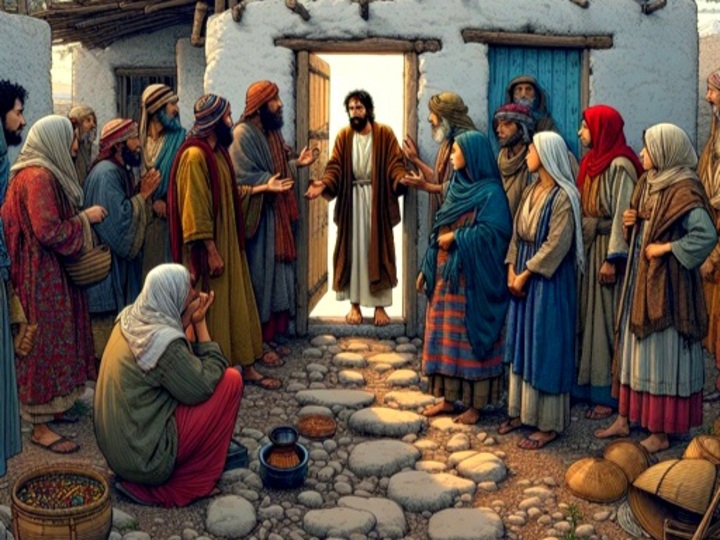
If they are in a harsh situation and suffering hardship, don’t try to bail them out of it! Keep praying, keep trusting God that He will bring them to that ‘Aha’ moment like the prodigal son, where they’ve been humbled enough to return to what they will finally realize was best all along.
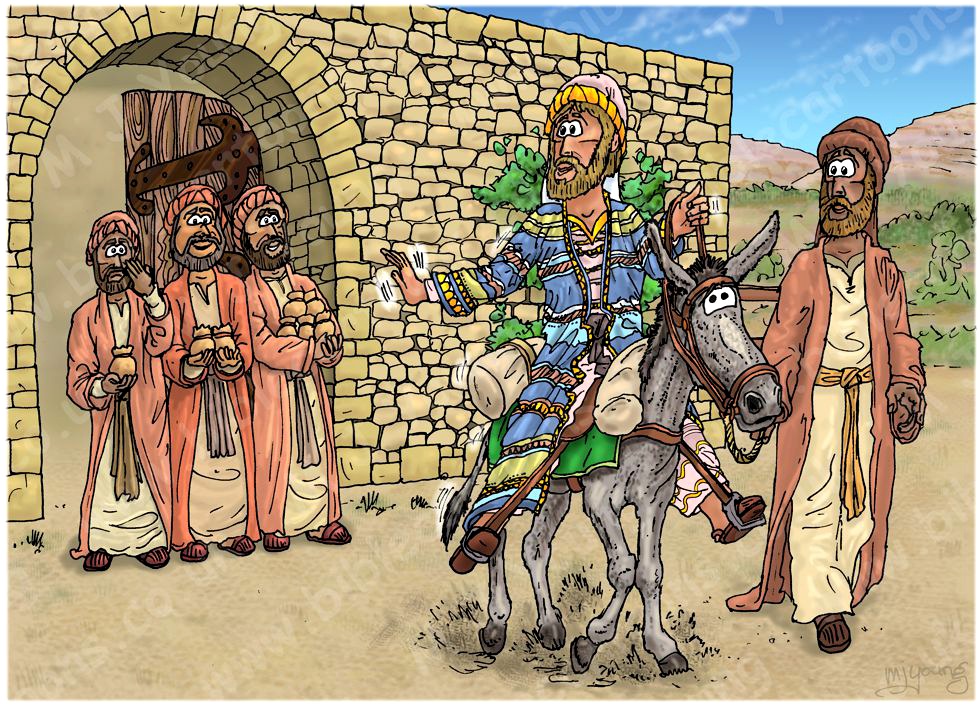
If you need some encouragement to keep praying for something or someone, listen to Matthew West’s recent song, Don’t Stop Praying.
We’ll start next with Genesis chapter 24, Finding a Wife for Isaac.