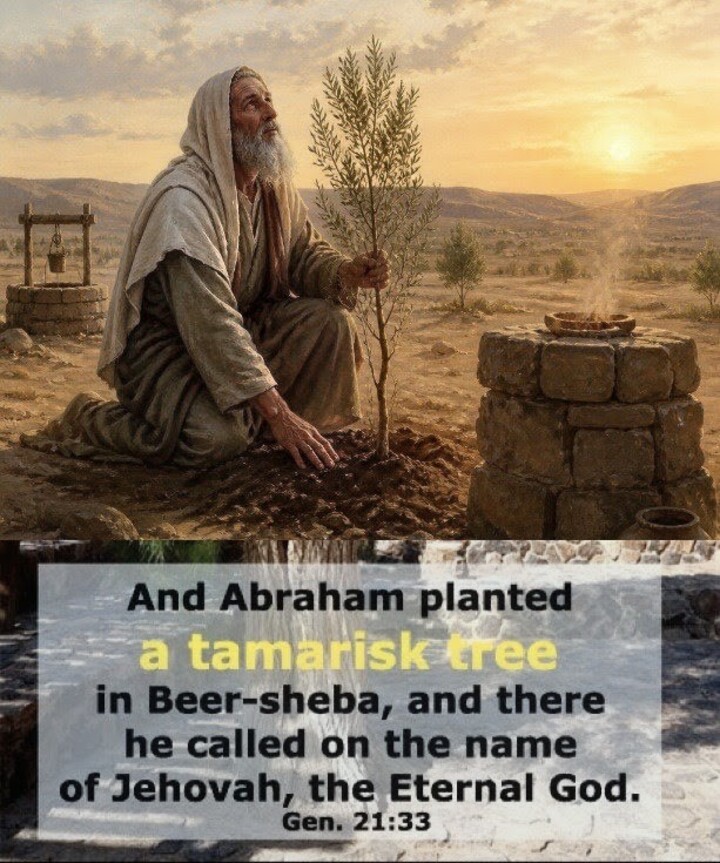
H2a4 Names of Godfrom the Beginning 4.El-Olam,“The Eternal God” or “The Everlasting God.”
“The Eternal God” is the fourth Name of God from Genesis that I’ve been looking at. I ended up with too much material for a single blog, again, so I’m splitting it into four devotionals.
📜 I. HISTORICAL READING 1: Genesis 20:
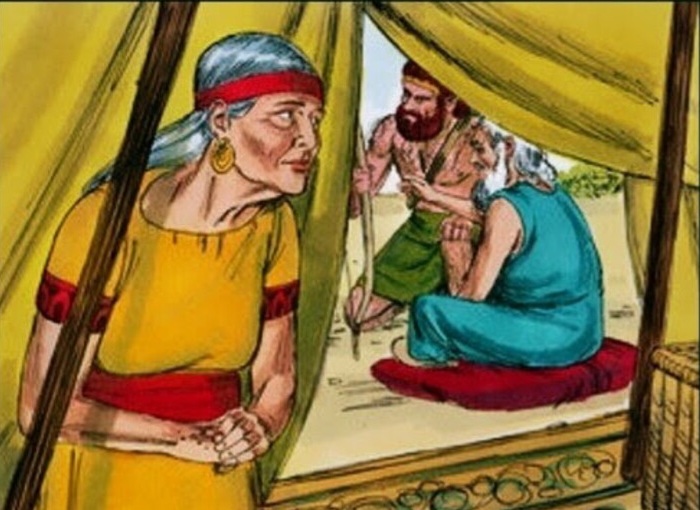
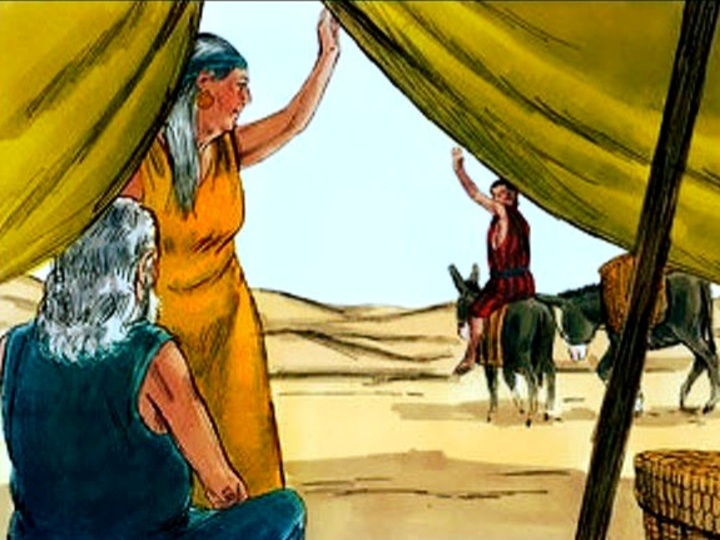
SETTING THE SCENE In Genesis chapter 20, Abraham and Sarah had moved into the Philistine city of Gerar for a while. Even though Sarah was old by our standards, she was still a very beautiful woman and the King, Abimelek, sent soldiers to bring her to the palace to add to his harem. Abraham had been telling everyone that Sarah was his sister instead of his wife.
That night, God appeared to King Abimelek in a dream and told him that he was a dead man for taking the wife of His chosen one. Since the king had not known, God said he would allow Abraham to pray and end the plague of barrenness for everyone in his household, as the sentence of death included no future generations would be born either.
King Abimelek made a generous restitution to Abraham and Sarah and they moved away. See the following blog for a more in-depth treatment.
However, in Genesis chapter 21, after Isaac was born, Abraham moved the family close to the city of Gerar and when King Abimelek heard about it, he became a little worried… (continued in the next blog.) _________________________
📜 IIa. OLD TESTAMENT VERSE 1, Psalm 90:2
The actual Name in Hebrew, El Olam, appears only twice, but the word, ‘olam,’ meaning eternal or everlasting, is frequently applied to God in the OT. We’ll look at four of the key verses, one in each devotional.
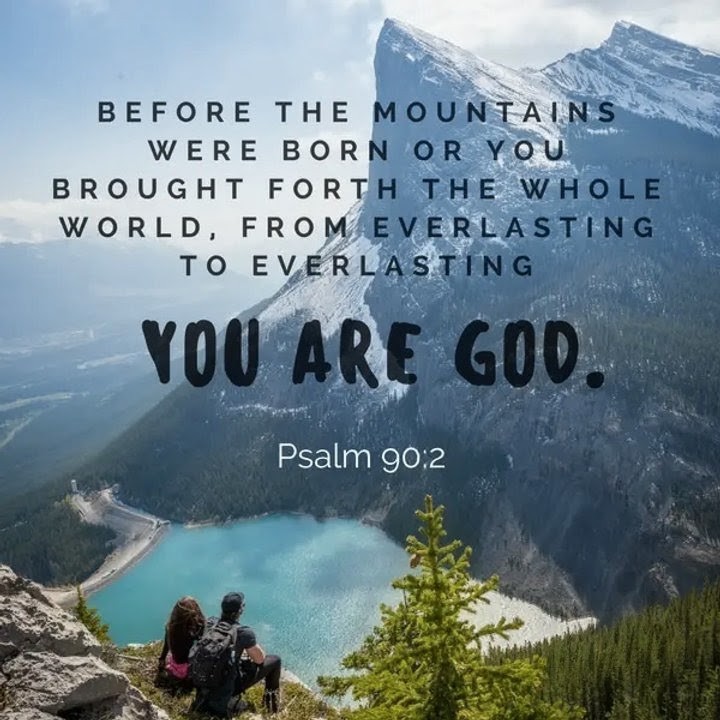
Psalm 90 is considered the oldest psalm, since it was written by Moses. In verse 2, he uses this phrase, “…even from everlasting to everlasting, You are God.” In the Hebrew, that is “ume‘OlamadOlam,” the same Hebrew word as our theme Name.
🤓 COMMENTARY: I think we can say that Moses understood or came to understand what God meant when He revealed Himself to Moses as “YHWH,” ‘I am that I am;’ meaning He was the self-existent God.
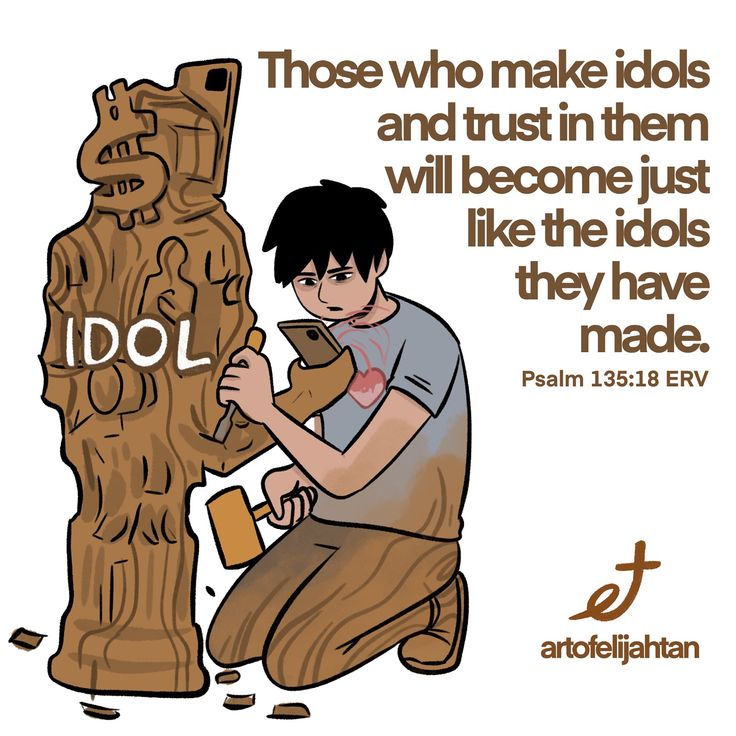
YHWH was not the product of people’s imagination, as the historical cultural gods were. He was not an idol made by someone’s hands and declared to be a god. He was the God who initiated creation of the Universe, with the implication that He exists outside of His creation and is not subject to its limitations, including time.
God as the ‘Initiator’ can be seen throughout the Bible in that He initiated contact with the people he chose in Genesis, then with Moses, with prophets throughout the nation of Israel’s history, and finally by sending His Only Begotten Son, Jesus, the Christ.
📃 IIb. NEW TESTAMENT VERSE 1. There are also many NT verses with the same idea of the ‘Eternal God.’ We’ll also look at four key ones, one each in the four devotionals.
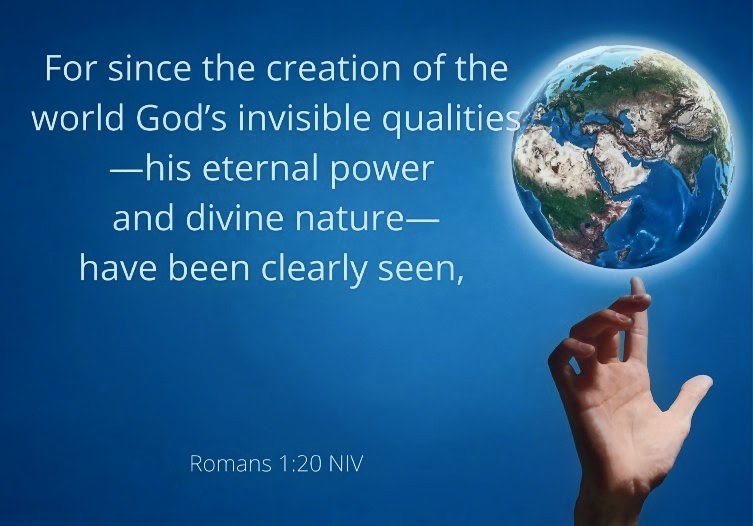
1. In Romans 1:20, Paul’s dissertation to the Christian believers in Rome, he states that the basic characteristics of God, that is, the invisible Supreme being, should be obvious by His visible creation.
🤓 COMMENT: Although Paul listed those invisible qualities as God’s “eternal power and divine nature,” he could just as easily have reversed the nouns and adjectives to say, ‘His eternal nature and divine power,’ and been just as accurate, and in line with the Hebrew Name, “El Olam.” __________________________
🙌 III. WORSHIP 1. Earlier, I mentioned how the Eternal God was the initiater of Creation and of contact with many of the people in Genesis. It was because He had a plan; a plan to save a remnant from this sin-stained world, and we are the beneficiaries of that plan today. Pray the following from various verses about the Eternal God and His plan as a way to worship and thank Him for His initiative.
Thank You, Jesus and JehovahEl Olam, The Everlasting LORD God, ♾️ 🅰️ The beginning and the end, ♎️
🤲 Thank You that You came to save me. ✝️ 🤲 Thank You that You prayed for me; 🙏 That I would know You, Jesus, the Christ ✝️ And through You Your Father, the Everlasting God, ♾️ 🤲 Thank You for the Good News of Your salvation. ✝️ 🤲 Thank You for the gospel of Your love, ❤️ –Your undying love, Thank You My Eternal, Heavenly Father. ♾️
O precious Son of God, ✝️ Eternal God, Yourself; ♾️ – By Your stripes, I am healed, 🇨🇭 – By Your love, I am filled.💗 – By Your blood I am cleansed,🩸 – By Your death, I am freed, 🔗 To live forever and ever in Your Presence. ♾️ Amen!Now I stand righteous and pure– 🅾️ Before You, Heavenly Father, 👳♂️ the Ancient of Days, 🇱 Before You, Son of God, ✝️ by whom all creation was made, 🌌 🅰️ Before You, Holy Spirit, 🕊️ by whom I was called and saved. ✝️ Ⓜ️ Before You, Eternal Three-in-One, 🔺️ who I worship and praise. 🙌🧎♂️🧎♀️I kneel before You and give praise and thanks to You, Jesus, my Savior; ✝️ My Everlasting Lord, Adonai Olam’i. ♾️
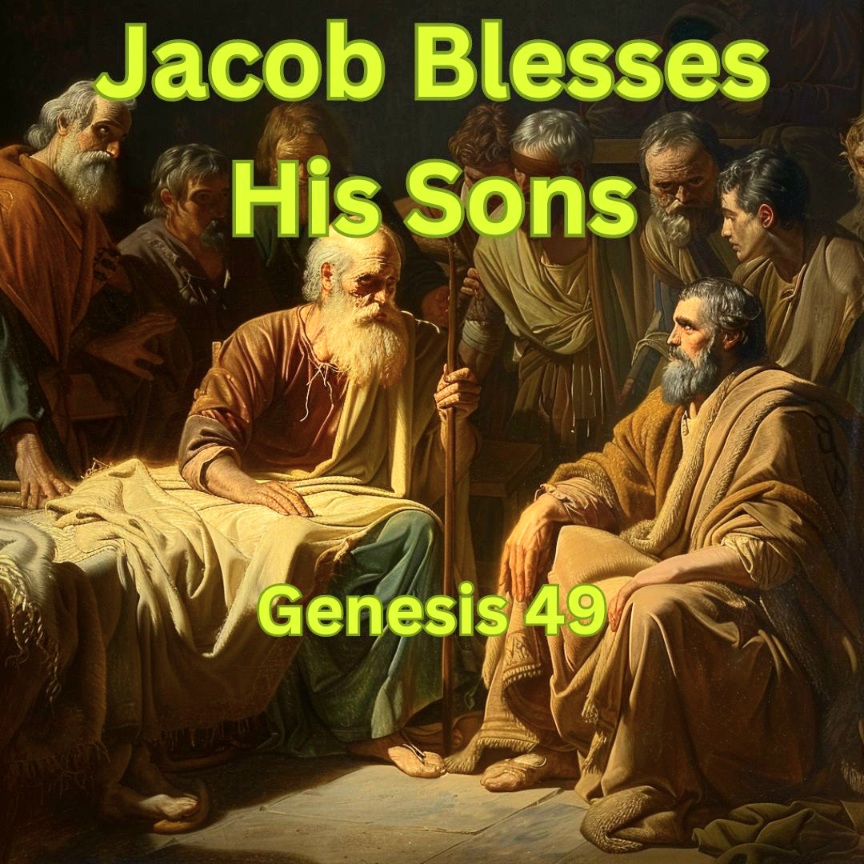
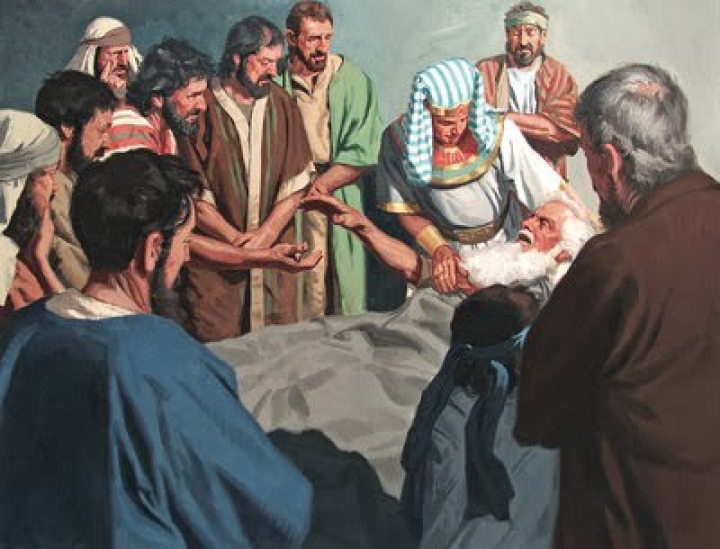
Then Jacob called together all twelve of his sons and said, “Gather around me, and I will tell you what will happen to each of you in the days to come.”
“Come and listen, you sons of Jacob; listen to Israel, your father.”
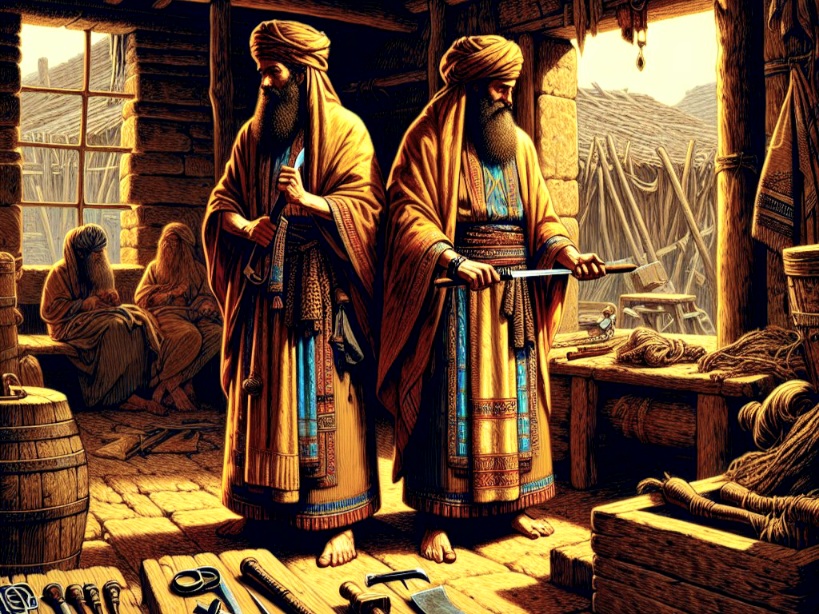
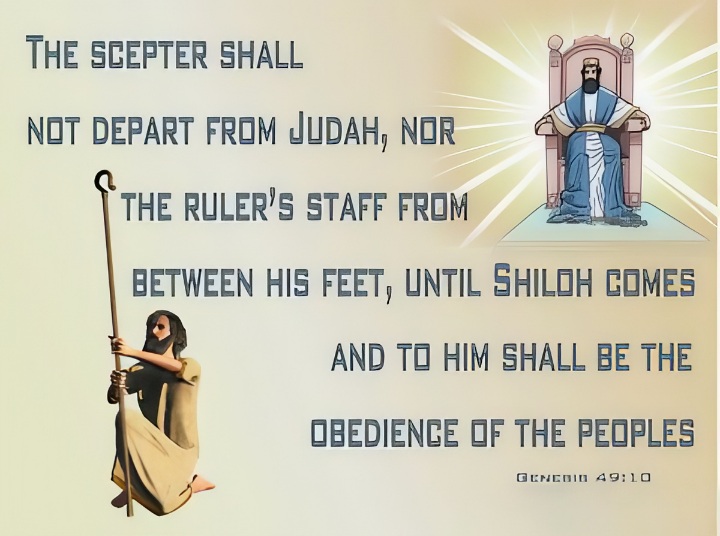
“Reuben, you are my firstborn, my strength, the child of my vigorous youth. You are first in rank and first in power. But you are as unruly as a flood, and you will be first no longer.”“Simeon and Levi are two of a kind; their weapons are tools of violence. For in their anger they murdered men. A curse on their anger, for it is fierce; A curse on their wrath, for it is cruel. I will scatter them among the descendants of Jacob; I will disperse them throughout Israel.”“Judah, your brothers will praise you. You will grasp your enemies by the neck. All your relatives will bow before you. The scepter will not depart from Judah, nor the ruler’s staff from his descendants, until the coming of the One to whom it belongs, the One who all nations will honor.”(A prophecy of Jesus, the Messiah.)
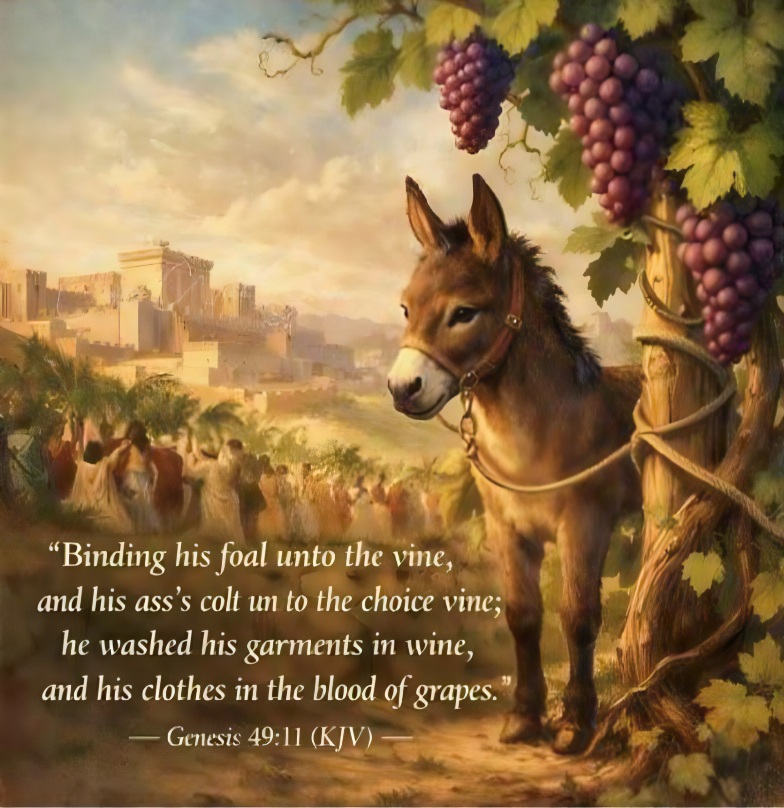
“Joseph is the foal of a wild donkey, Like one of the wild donkeys on the ridge. Archers attacked him savagely; they shot at him and harassed him. But his heart remained faithful, and his arms were strengthened by the hands of the Mighty One of Jacob, by the Shepherd, the Rock of Israel.”
“May the God of your father help you; may the Almighty bless you, with the blessings of the heavens above, and blessings of the deeps below, and blessings of wives and children.”
“May my fatherly blessings on you surpass the blessings of my ancestors, reaching to the heights of the eternal hills. May these blessings rest on the head of Joseph, who is a prince among his brothers.” ________________
😲 Wow❗️Who knew that Jacob was a prophet? I certainly didn’t. I had the same surprise when God told King Abimelech in his dream that Abraham was a prophet!
I am amazed when I look at prophecies like this in the Old Testament, especially those about the Messiah, then read later in the history how those things come true, especially about Jesus in the gospels.
There are people who don’t believe in things like true prophecies about the future, but as a Christian, I very much do believe. I believe Biblical prophecies are how God communicates what He’s planning to do so that we won’t be taken by surprise when it happens. Amazed? Yes, but not surprised.God has a plan for salvation of the World from His own wrath that is being held back until the “great and terrible day’ of His judgment, and we’re getting a glimpse of that judgment in the Revelation part of these devotionals.
God invites us who believe and have committed our lives in service to Him to be active participants in His plan of salvation.
In such a great endeavor–encompassing thousands of years and every place and people in the entire world– there are many diverse roles available. My hope is that each of you who read my blogs will be taught, as well as be inspired to move toward that role God has created your new person to fulfill in the Body of His Son, Jesus Christ, and in His plan to redeem as many people as possible from the world. Amen! ________________II. INSTRUCTIONAL Reading 6. Job 27 Job’s Final Word to His Friends
(THEME) As surely as God lives, He has denied me justice, The Almighty has made my life bitter without cause.
I vow by the living God, who has taken away my rights; By the Almighty who has embittered my soul— That as long as I live, while I have breath from God; My lips will speak no evil, My tongue will tell no lies.
I will never concede that you all are right; I will defend my integrity until I die. I maintain my innocence without wavering. My conscience will be clear for as long as I live.
(THEME 2) May my enemies be punished like the wicked, my adversary like those who do evil.
For what hope has the godless when God cuts them off, when God ends their life? Will God listen to their cry when trouble comes upon them? Can they take delight in the Almighty? Can they ever call upon God?
Let me teach you about the power of God; I will not hold anything back about the ways of the Almighty.
– This is what the wicked will receive from God; – This is their inheritance from the Almighty:
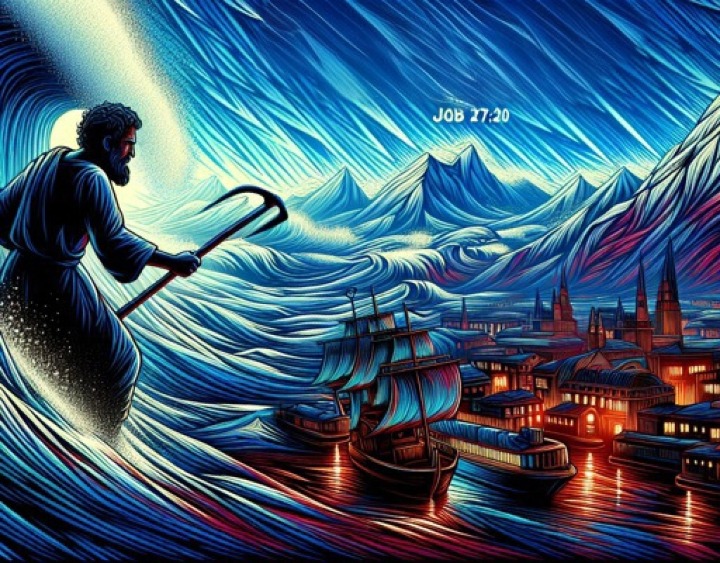
1. They may have many children, but their children will die in war or starve to death. and not even their families will mourn them.2. Evil people may have piles of money and store away mounds of clothing. But others will wear their clothes And divide the money between them.3. The wicked build houses fragile as a spider’s web, As flimsy as a shelter of branches. Then storms come and destroy them, Rising waters wash them away.4. The wicked go to bed rich, but wake up to find all their wealth is gone. Everyone they know jeers at them; They are mocked by those they thought friends.5. Terror overwhelms the wicked like a flood, – They are blown away by the storms of the night. Winds beat them down without mercy; – They struggle, but cannot flee their power. – They are swept away and then… …they are gone.
This is their end. __________________
😲 Whew! That is harsh.
It’s almost like Job is contrasting what happened to him with what God will do to the wicked–that is they are destroyed, but he is still alive. That seems a very important point. This is toward the end of the Book of Job from the human perspective. In the story afterward, God does answer Job’s demand for a confrontation and has some unexpected answers for Job and for his friends, but doesn’t necessarily answer Job’s questions about the why of what happened to him.
The main points in Job following these six passages about theAlmighty are:
1. God answers Job and then questions him.2. God shows how puny we are compared to Him by examples like, “If you cannot stand up to Leviathan that I have made, who then can stand up to Me?”3. Job repents of his arrogance and humbles himself before God.
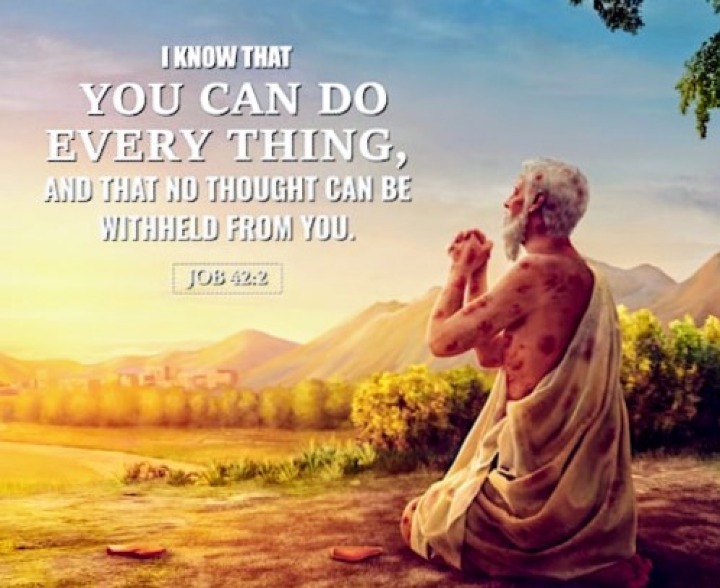
Job 42:1-6 Then Job replied to the Lord: “I know that you can do anything, and no one can stop You. You asked, ‘Who is this that questions My wisdom with such ignorance?’ It is I—and I was talking about things I knew nothing about, Things far too miraculous for me.
I had only heard about You before, but now I have seen You with my own eyes. I take back everything I said, and I sit in dust and ashes to show my repentance.” _________________
III. WORSHIP6. Revelation 19: Celebration over Babylon’s Fall
SETTING THE SCENE: excerpts from Revelation 18, The Judgment of that Great City, ‘Babylon.’
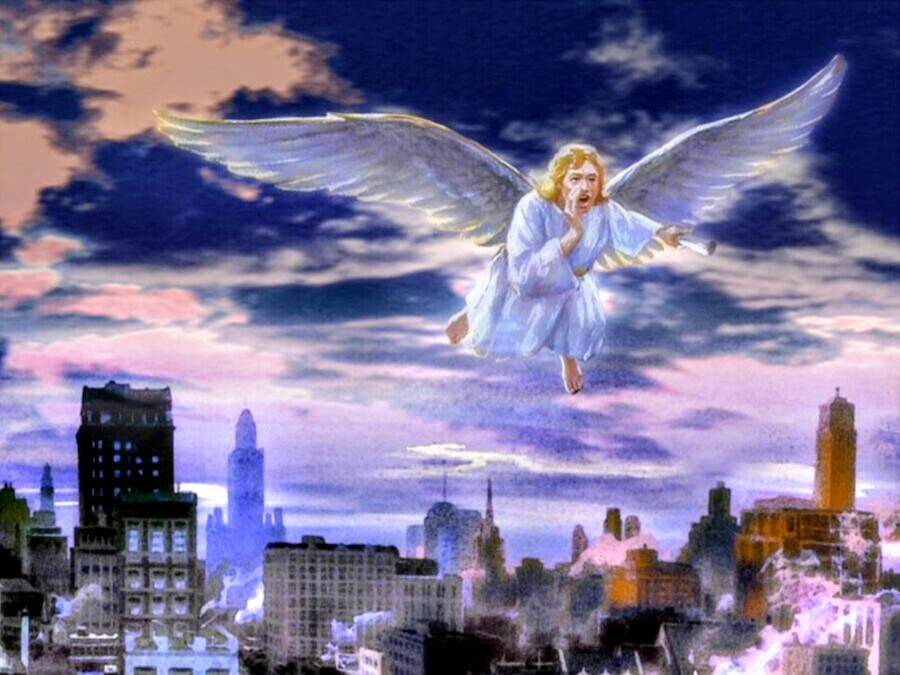
I, John, saw another angel come down from heaven with great authority, and the Earth grew bright with his splendor. He gave a mighty shout:
“Fallen, fallen is Babylon the Great!”
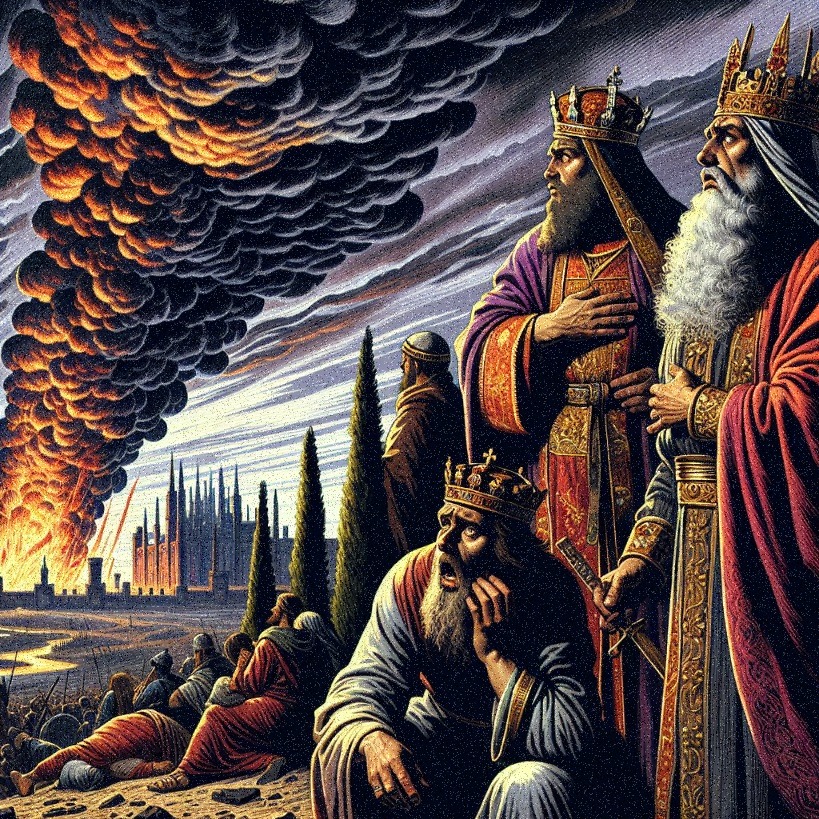
Then I heard another voice calling from heaven…“She will be completely consumed by fire, for the Lord God who judges her is mighty.”The kings of the world will mourn for her as they see the smoke rising from her charred remains. They will stand terrified by her great torment and cry out,
“Alas, alas, how terrible for you, O Babylon, the Great City! In a single moment God’s judgment has come upon you.”
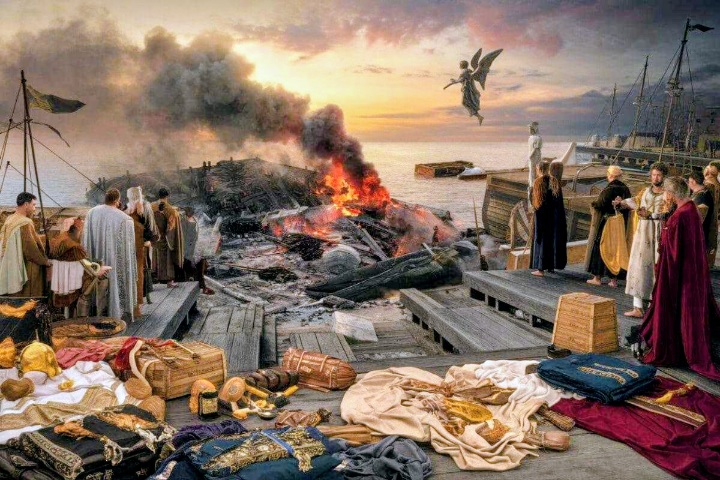
The merchants who became wealthy by selling to her will stand terrified by her great torment. They will weep and cry out,
“Alas, alas. How terrible for that Great City! She was clothed in finest purple and scarlet linens, decked out with gold and precious stones and pearls! In a single moment all the wealth of the city is gone!”
And then the angel said,
“Rejoice over her fate, O heaven and people of God–apostles and prophets! For at last God has judged her for your sakes. For the blood of the prophets and of God’s holy people flowed in her streets, Even the blood of people slaughtered from all over the world.” _________________
NOTE: ‘Babylon,’ is not so much a city or a person as used in Revelation, but a symbol for a system of belief and government set up as a substitute and in opposition to God and His rule, although it will probably have a central seat of government.
Their goal is to deceive as many people in the World as possible, especially believers in God and Jesus Christ, and to lead them away from faith in God and into a life of sin that will make them liable to the judgment of God. Those faithful to God that they cannot corrupt, they persecute and murder. __________________
Revelation 19: After this, I, John, heard what sounded like a vast crowd in heaven shouting, (Pray back to God.)
Hallelujah! Praise to You, O Lord!
Salvation and glory and power, belong to You, my God. Your judgments are true and just. You punish those who corrupt the World with immorality. You avenge the murder of Your servants.
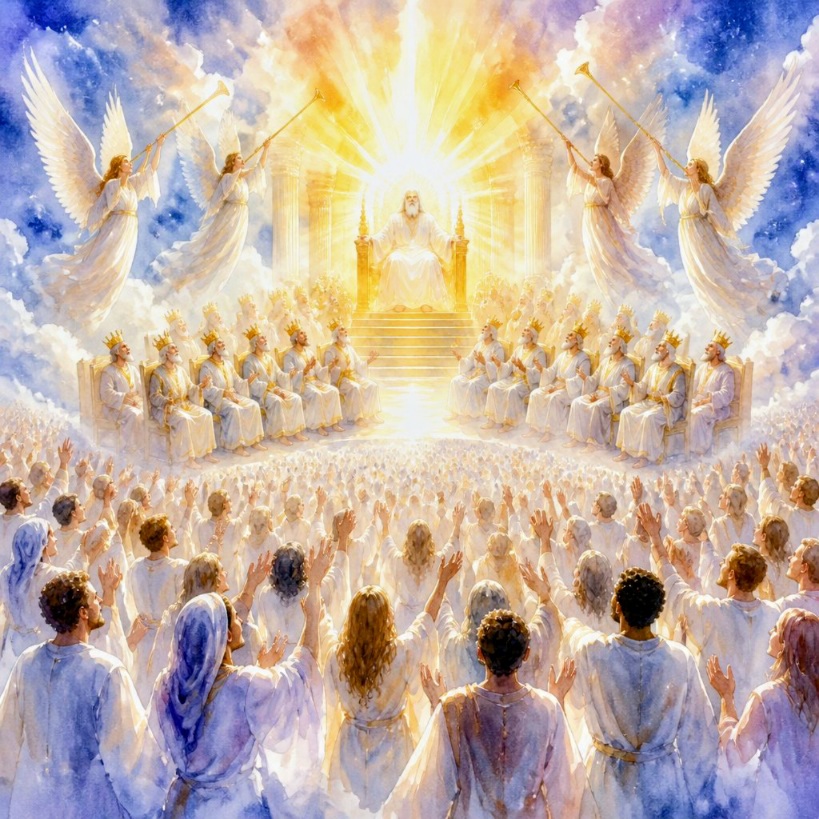
I join with those worshipping You around Your throne in heaven, I fall down and worship You, O God, Who rules from Your heavenly throne,
Hallelujah!Amen.
I give praise to You, my God, For I am Your bond-servant. I revere You, O Lord; For in the small and in the great, You alone are God.
I join the great multitude in heaven and on Earth in saying,
Hallelujah! Praise the Lord!
For You, O Lord my God, theAlmighty, reign!
Thank You for the blessings of your salvation. Thank You that I’m invited to the wedding feast of the Lamb. Thank You for the truth of Your words that You have given us; Thank You for Your prophets and Your Son.I worship only You, O God, For You alone are worthy.
I thank You for your prophecies That tell us what is to come. I thank you for Your gospels, That give witness of Your Son– My Lord and my Savior, My Brother and my Bridegroom, My Hope in Glory, My Everlasting God.
Alleluia to what was from the beginning! Alleluia to what was done by the Savior! Alleluia to what is to come,
Forever and ever…AMEN!
__________________
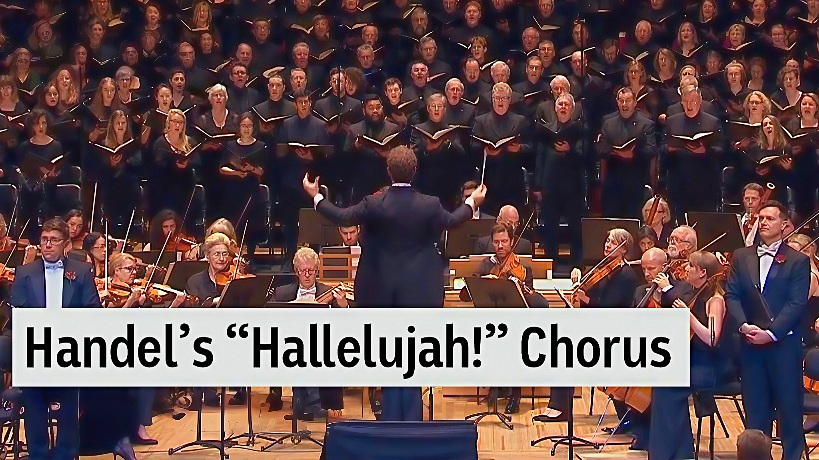
If you’re familiar with the “Hallelujah” Chorus from Handel’s Messiah, it is from Revelation 19. Although the language is archaic English from the Authorized English Version of the Bible at that time in history, what we call the King James Version now, the song is still very inspiring and captures the magnificence of the heavenly worship depicted in Revelation.
Here is an inspiring version of the “Hallelujah” Chorus from the British Royal Choral Society to end our devotional series on God Almighty!
NOTE that what is translated in our modern English Bibles as “The Lord God Almighty,” is translated in the Chorus as “The Lord God Omnipotent;” another awe-inspiring way to describe El Shaddai, God Almighty!
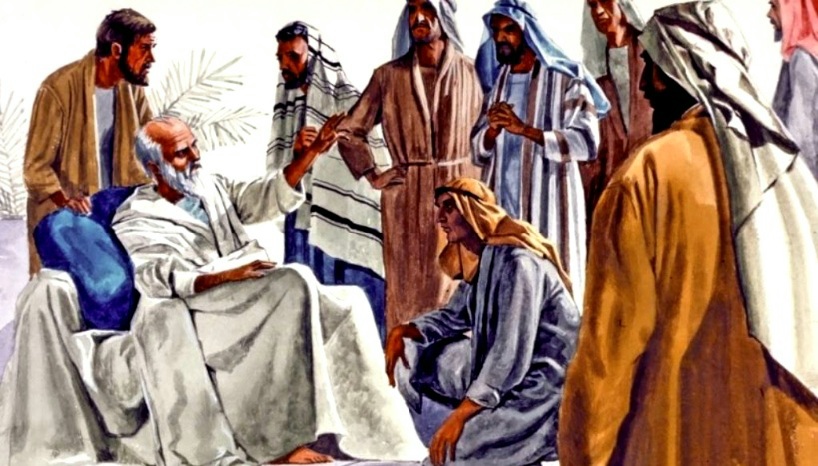
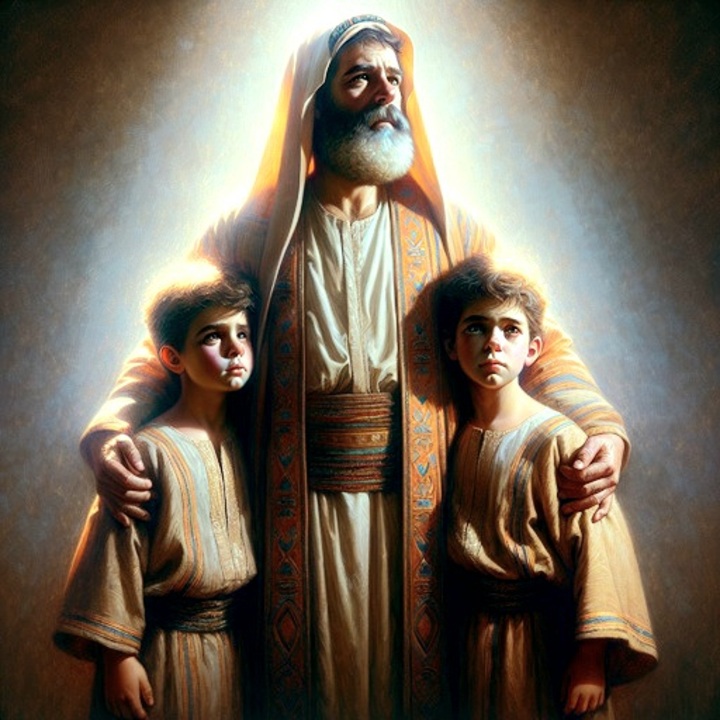
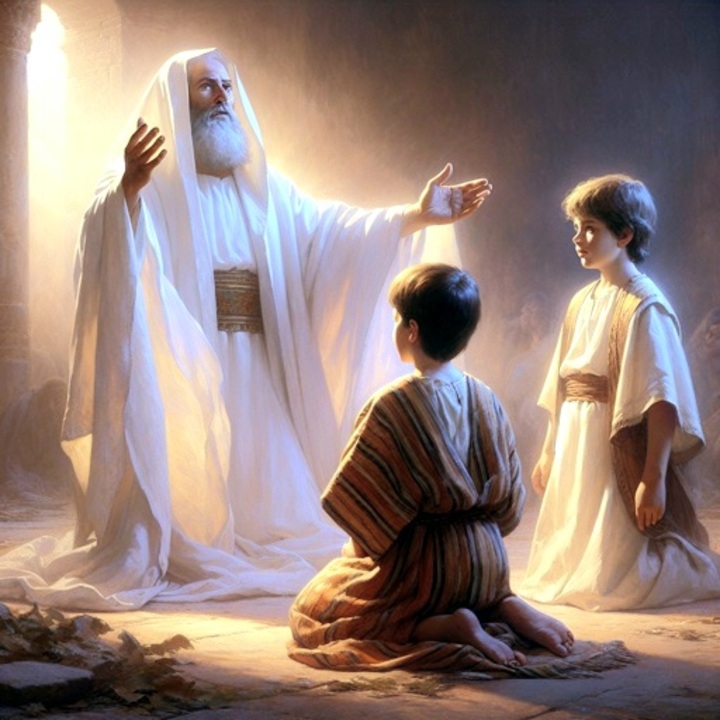
One day, not long after Jacob and all of his family had moved to Goshen in Egypt, word came to Joseph, “Your father is failing rapidly.” So Joseph went to visit his father, and took with him his two sons, Manasseh and EphraimWhen Joseph arrived, Jacob was told, “Your son Joseph has come to see you.” So Jacob gathered his strength and sat up in his bed.
Jacob said to Joseph, “God Almighty appeared to me at Luz in the land of Canaan and blessed me. He said to me, ‘I will make you fruitful, and I will multiply your descendants. I will make you a multitude of nations. And I will give this land of Canaan to your descendants after you as an everlasting possession.’
“Now, I am claiming as my own sons these two boys of yours, Ephraim and Manasseh, who were born here in the land of Egypt before I arrived. They will be my sons, just as Reuben and Simeon are my sons.
Then Jacob looked over at the two boys. “Are these your sons?” he asked.
“Yes,” Joseph told him, “these are the sons God has given me here in Egypt.”
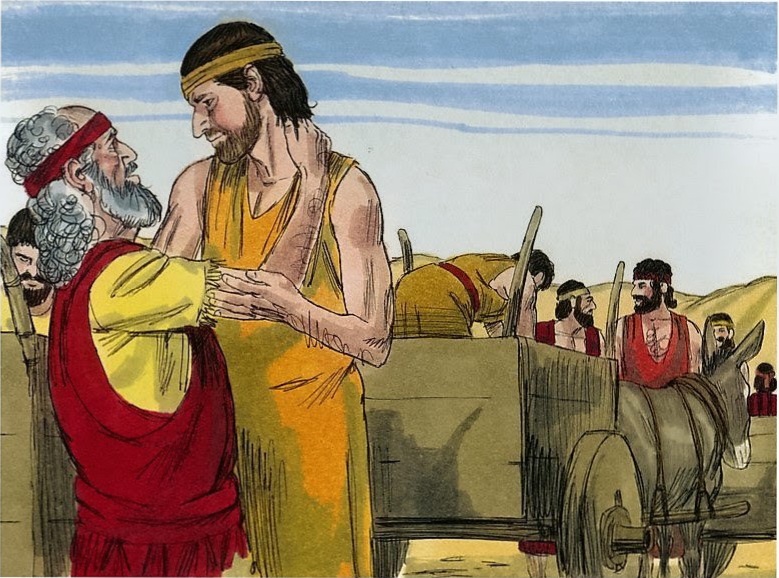
And Jacob said, “Bring them closer to me, so I can bless them.” Jacob was half blind because of his age and could hardly see. So Joseph brought the boys close to him, and Jacob kissed and embraced them.
Then Jacob said to Joseph as tears ran down his weathered face “I never thought I would see your face again, but now God has let me see you and your children, too!”
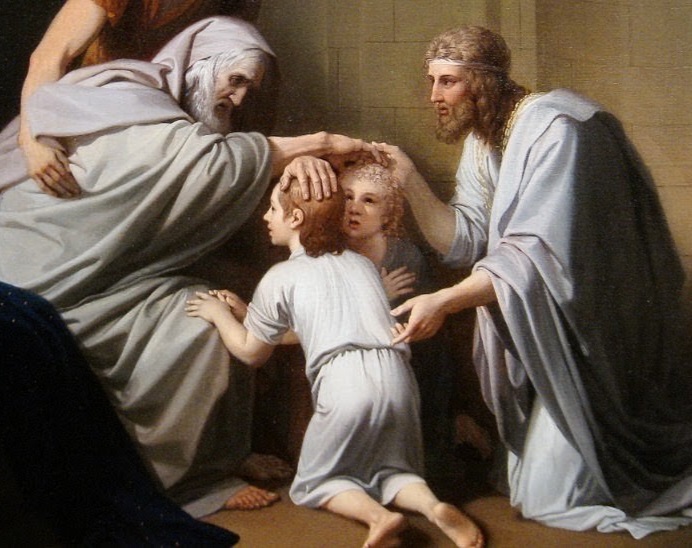
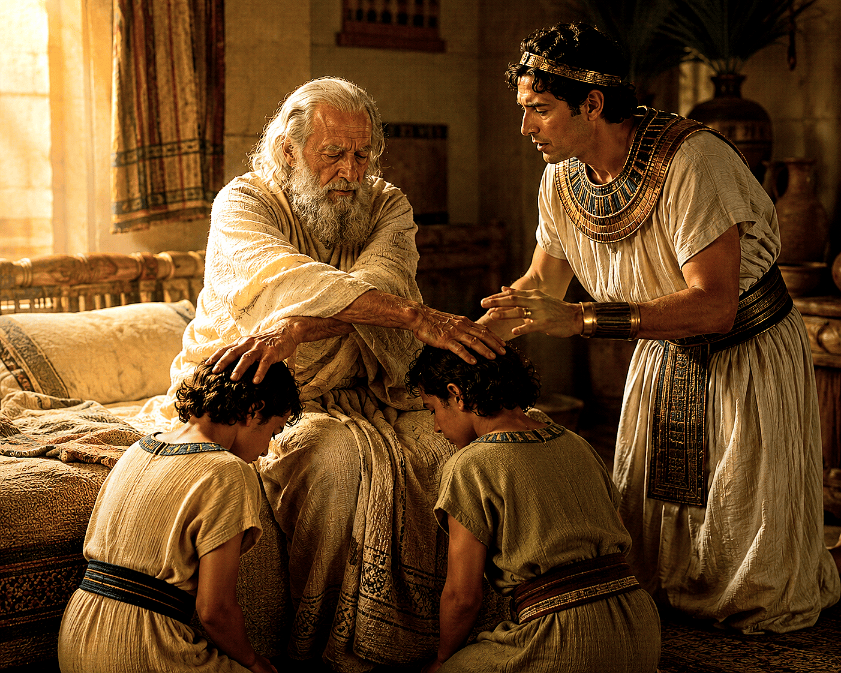
Joseph moved the boys, who were at their grandfather’s knees, in front of Jacob. With his right hand he directed Ephraim, the younger son, toward Jacob’s left hand, and with his left hand he put Manasseh, the firstborn son, at Jacob’s right hand. But Jacob crossed his arms as he reached out to lay his hands on the boys’ heads. He put his right hand on the head of Ephraim, though he was the younger boy, and his left hand on the head of Manasseh, though he was the firstborn. Then he blessed Joseph and the boys saying,
“May the God before whom my grandfather Abraham and my father, Isaac, walked— The God who has been my shepherd all my life, to this very day, The Angel who has protected me from all harm— May he bless these boys. May they preserve my name, and the names of Abraham and Isaac. And may their descendants multiply greatly throughout the earth.”
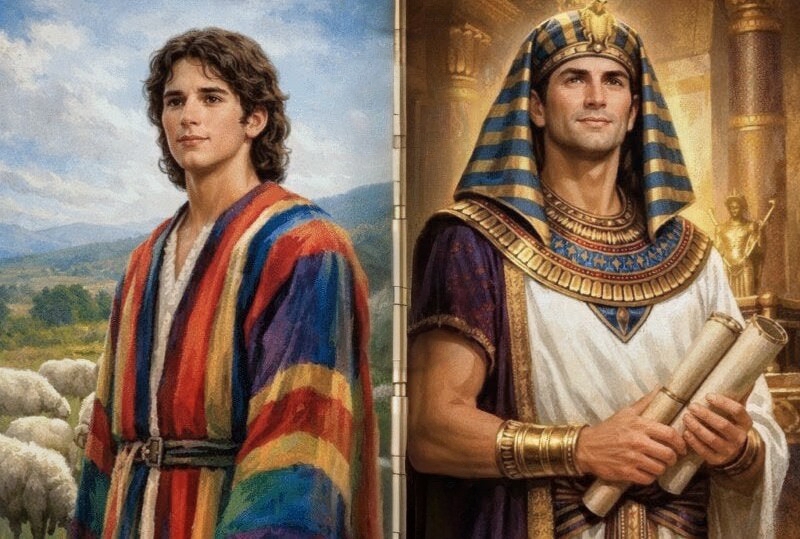
But Joseph was upset when he saw that his father had placed his right hand on Ephraim’s head. So Joseph lifted it to move it from Ephraim’s head to Manasseh’s head. “No, my father,” he said. “This one is the firstborn. Put your right hand on his head.”
But his father refused. “I know what I have done, my son,” he replied.
Then Jacob said to Joseph, “Look, I am about to die, but God will be with you and will take you back to Canaan, to the land of your ancestors. _________________
🤓 It looked like everything was going well between Jacob, his son Joseph, and his two grandsons when Jacob changed things up.
The tradition was that the primary blessing would be passed to the older son. The laying of the right hand indicated which son would receive the double portion. However, despite Joseph’s careful maneuvering to have his older son on the right side of his half-blind father, Jacob crossed his arms and awarded the double portion to the younger son.
🤔 Jacob was not a stranger to crossed blessings. When his mother was having a difficult first pregnancy, she went to a prophet to seek help from God. She was given a prophecy that she had twins and that the older would serve the younger. This was very much in contradiction to tradition, as was Jacob’s mixed-up blessing of Joseph’s two sons.
❓️ Do you have certain ideas about how God should do things? Maybe it’s just the expectations of tradition. Maybe it’s based on what you want Him to do. It may come as a surprise to you, but God is not limited to our expectations or desires!
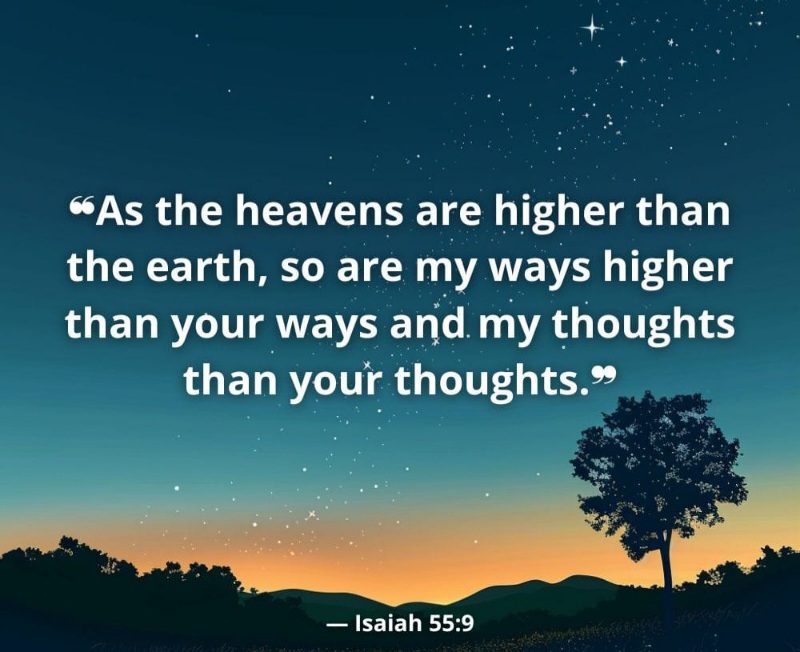
🍎 God has His own plans for the salvation of the world and His own ways of doing things. As He says in Isaiah 55:9:
😕 Are you aware of any ways that you might be trying to make things happen the way you think they should come out, rather than trusting in and waiting on God❓️
🙁 Have some things you’ve been praying about played out differently than you were expecting❓️
☹️ Does it appear God is not even answering your prayers about something❓️
🤔 What can you learn from this situation with Jacob passing on blessings from God to his grandsons, while Joseph tries to manipulate things to come out the way he’s expecting them to, that will help you ‘let go and let God?’
____________________II. INSTRUCTIONAL Reading 5, Job 22, Eliphaz Speaks Again
(THEME) What pleasure would it give the Almighty if you were righteous? What would He gain if your ways were blameless?
The atheists say to God, “Leave us alone! • What can the Almighty do for us? • Who is the Almighty, that we should serve him? • What would we gain by praying to him?”
(Eliphaz says about them:) Let them see their destruction with their own eyes; Let let them drink the cup of the wrath of the Almighty!
(CONCLUSION) But Job, if you return to the Almighty, then you will be restored; If you remove wickedness far from your house. then the Almighty will be your treasure, He will be like fine silver for you.
Surely then you will find delight in the Almighty? Surely then you will be able to lift your face to God?
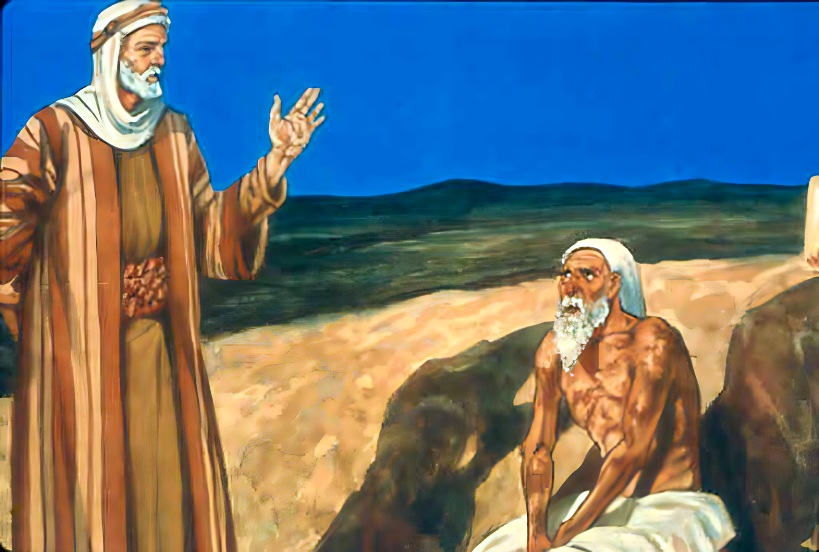
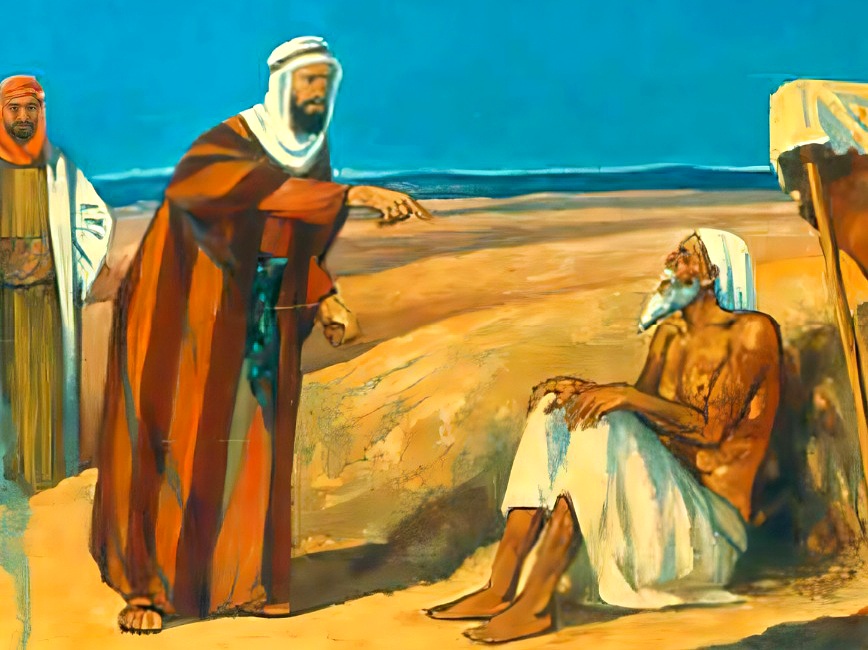
🤓 Just as before, Job’s friend thinks Job has been cursed by God–that he has lost everything he had and been stricken with illness because of some great sin. Eliphaz says, in essence, “Quit saying you’re innocent and repent, already. God will forgive you if you’ll just repent!”
This is a truth about God and in principle he is right, but in application he was totally off base.
🤕 There is a lot we can learn about responding to suffering from persecution (the meaning of Job) from this book of the Bible. In order to stay with the flow of these devotions about El Shaddai, I’m going to publish that in a separate blog before I move on to the next Name of God. But think about this one personal thing:
🍎 Do you sometimes come across as accusatory when talking with people who are having some kind of difficulty, or are suffering pain from some event or loss? ❓️
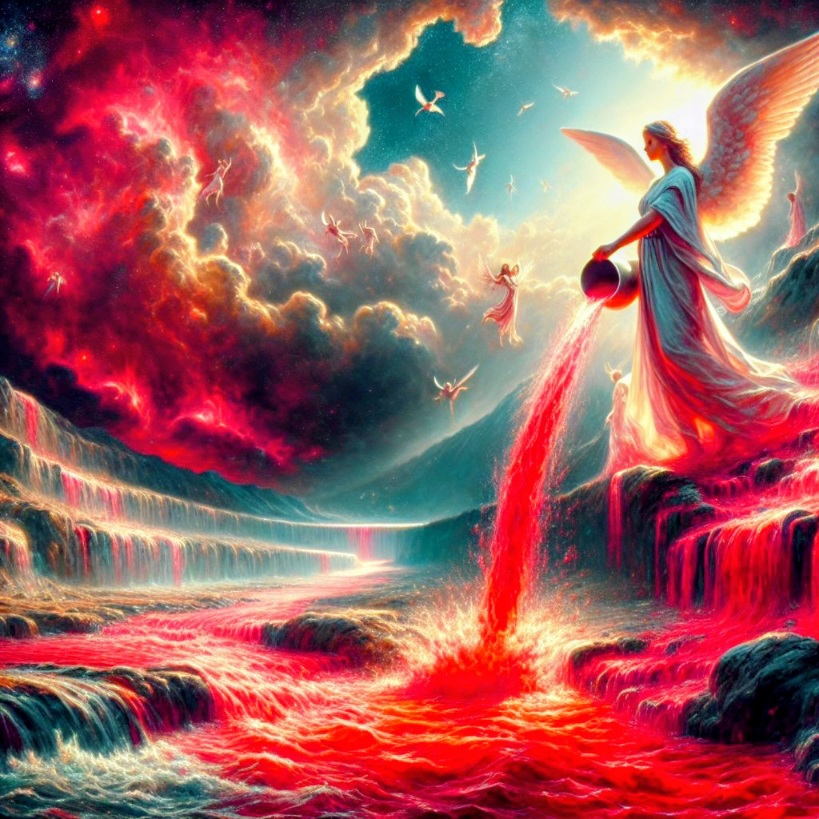
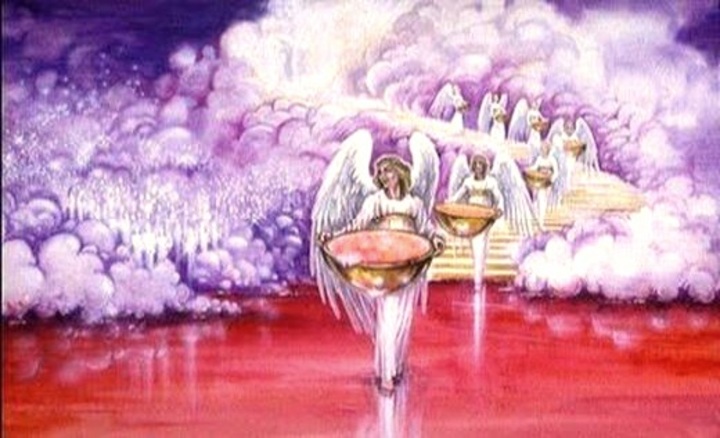
“Then I, John, heard a loud voice from the temple, saying to the seven angels, ‘Go and pour out on the Earth the seven bowls of the wrath of God.’”
“…After the third angel had poured out his bowl on the rivers of the Earth and they turned to blood, I heard the angel of the waters say… “
(Pray back to God 🙏) Righteous are You, O Holy One; Who is and who was. ♾️
You are righteous, because You judge wickedness; ⚖️ You judge those who shed the blood of Your saints and the prophets. 🩸 You give them blood as their judgment, You pass judgment as they deserve.
Yes, Lord God, Almighty, 💪 True and righteous are Your judgments.
No one can stand against You on the day of your judgment, O God, Almighty. 💪
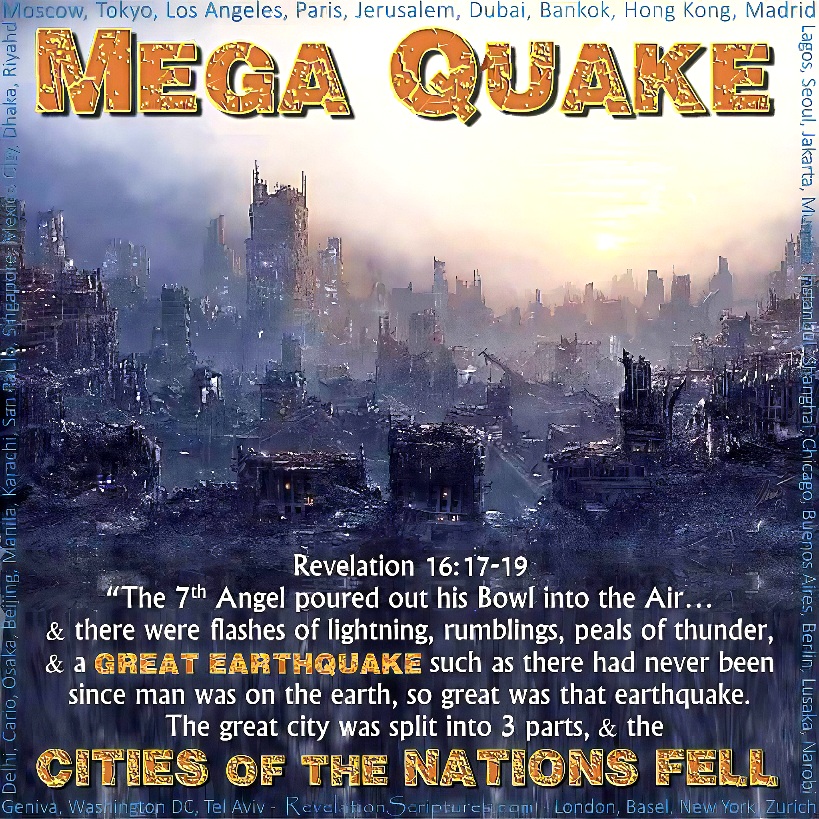
Every city will fall 🌃🏙🌆🌇 on that great and terrible day, Every island will flee 🏝 from the outpouring of Your wrath, The mountains will bow before You and be no more. 🌋 But I will be sheltered in the shadow of Your wings. 🦅I remember the words of Your Son, Your Only Begotten Son and my Savior, Jesus Christ, ✝️
“Behold I am coming like a thief, 🥷 Like a thief in the night when no one expects it.”
“Blessed is the one who stays awake; 🪔 Those who are alert and ready when the Bridegroom comes. 👰♀️ Blessed are those who buy robes from Him, Robes of righteousness that cover their sin. 🥼 Blessed are those whose sins are covered when He comes, 🧍♂️🧍♀️ Who stand before Him without shame. For God’s judgment will pass over them, When that day comes.” 🕊
🙌 THANK YOU, JESUS❗️
Thank You for warning me to be alert and I will be! 👀 Thank You for Your robe of righteousness that covers my sin. 🥼 Thank you for the forgiveness in which I stand. 🧍♀️🧍♂️ Thank You that I don’t have to be afraid of God’s Judgment Day. 🤲
I. HISTORICAL READING 4: Calling on El Shaddai for Mercy
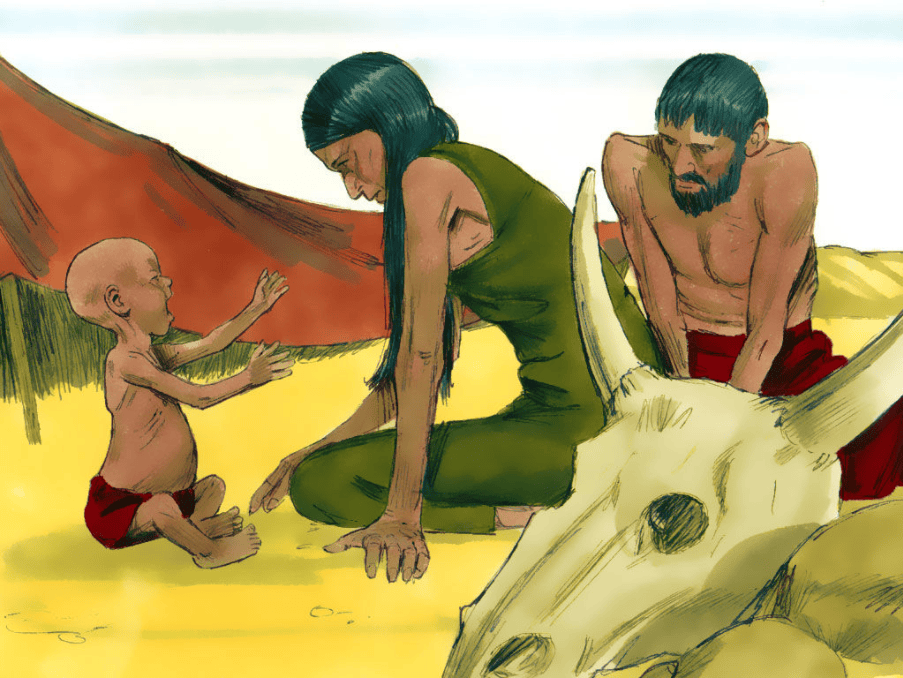
BACK STORY:– A severe famine strikes the Middle East and it doesn’t rain for seven years.
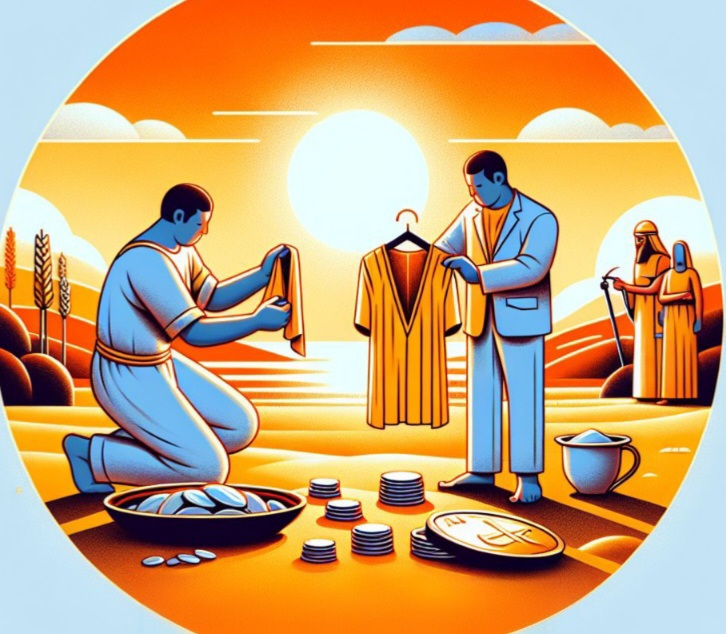
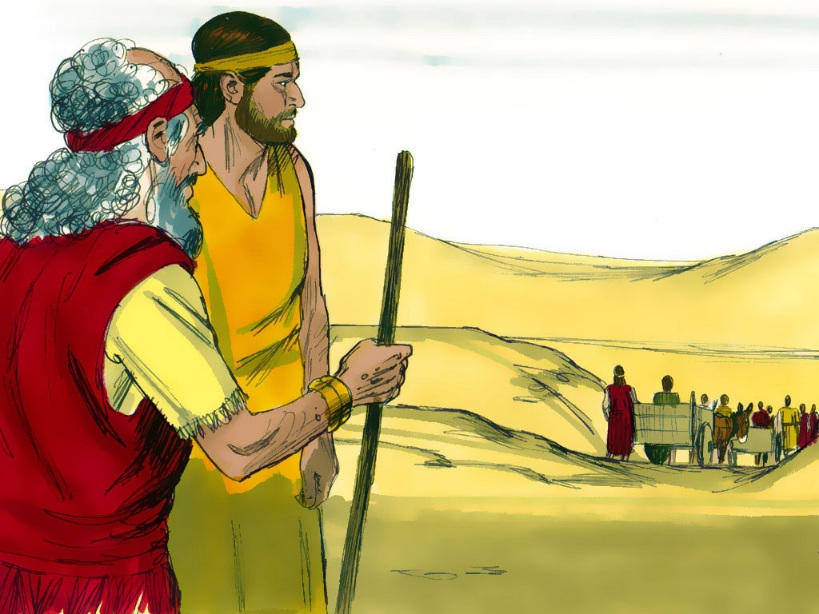
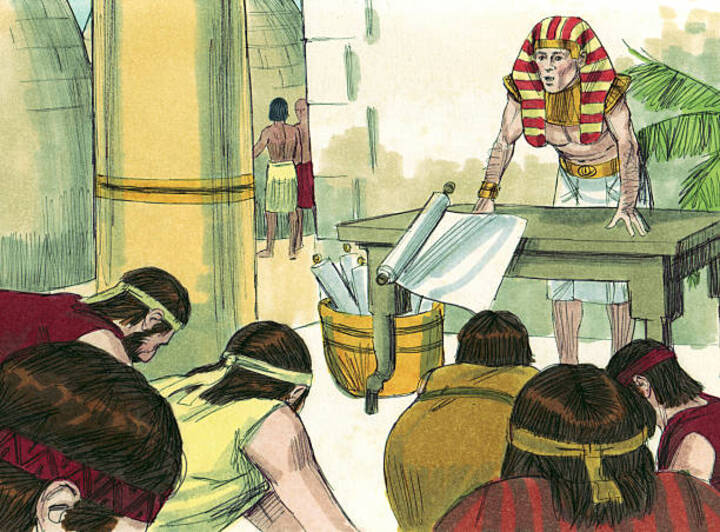
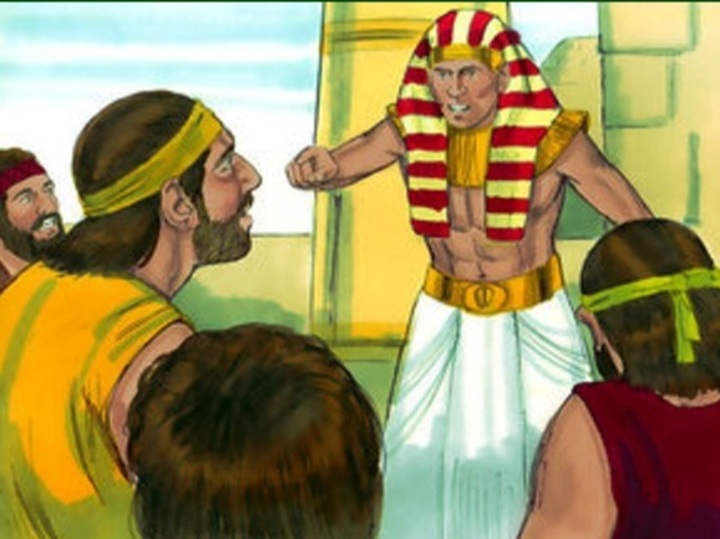
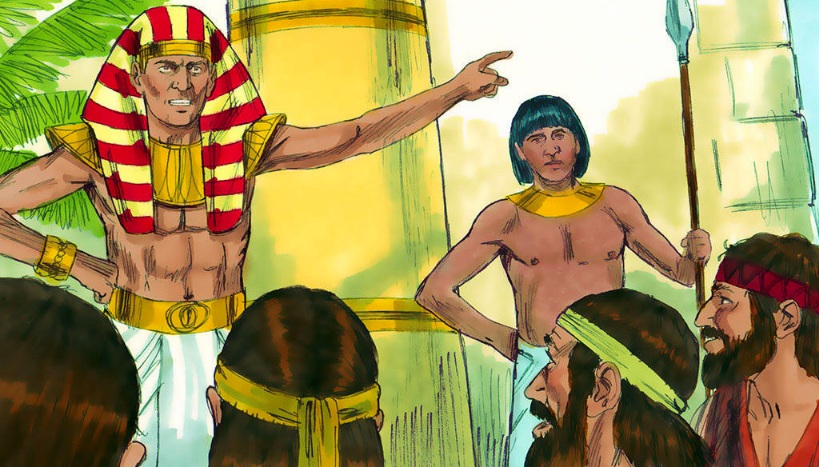
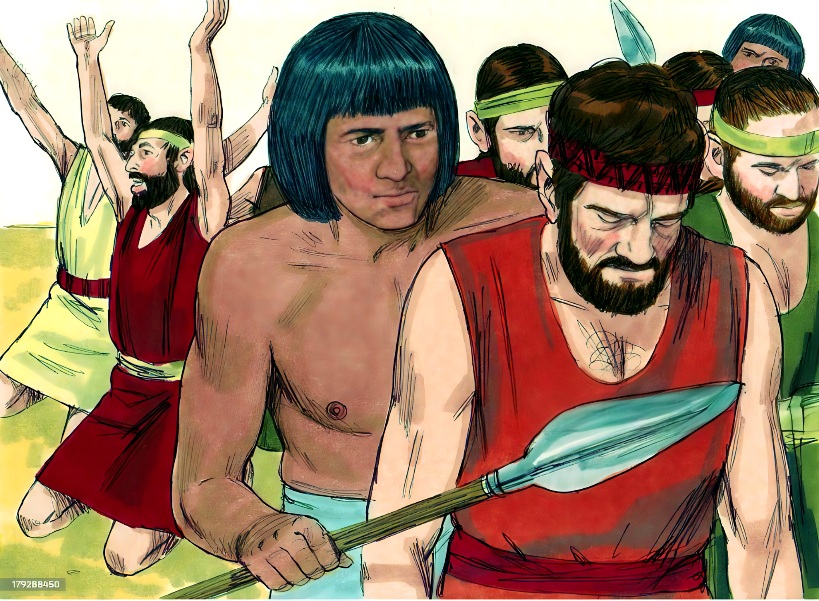
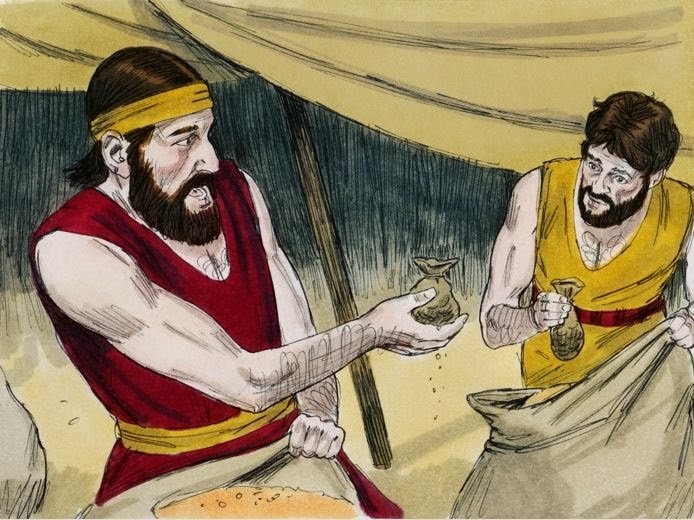
– As the food stores run out, Jacob/Israel and his family living in Canaan, hears that there is food in Egypt.– Jacob/Israel sends his 10 sons in a caravan to Egypt to buy food for them, but keeps His youngest son, Benjamin, at home with him. He still has not recovered from Rachel’s death, his first and best love, and the loss of her other son, Joseph. – When the 10 brothers go to see the special governor overseeing the famine response in Egypt, they don’t realize it is their brother Joseph that they sold to slave traders about 22 years before.Joseph recognizes his brothers, but does not reveal himself to them. Instead, he decides to test them to see if they have become better people.1. First he accuses them of being spies for a foreign country. When they defend themselves, they mention their elderly father and youngest brother, Benjamin. 2. Next, Joseph says he will believe them if they bring their brother back with them when they come to buy food the next time.3. However, to make sure they will come back, one of the brothers must stay behind as a prisoner. 4. For the last test, Joseph has the servants place their payment–bags of gold and silver–in the mouth of the sacks of grain for the 10 men. They discover it when they make their first stop on the way back and open a bag for some food. – Now the food from Egypt has run out and they need to make another trip, but they HAVE to take their youngest brother to get their other brother out of jail. And what are they going to do about the original payment they found stuffed in with the grain?
At this point we see the God-blessed wisdom from old Jacob/Israel.📖 READ: Genesis 43:11-15; Then their father Israel said to his sons,
“If you must go back to Egypt, then do this: take some of the best products of the land, and carry them down to the Egyptian ruler as a present–a little balm and a little honey, aromatic gum and myrrh, pistachio nuts and almonds.
“Take double the money to pay for the grain this time, and take back with you the money that was returned in the mouth of your sacks; perhaps it was a mistake.
“Take your brother, Benjamin, also, and return to Egypt; and may El-Shaddai,God Almighty, grant you mercy in the sight of the Egyptian ruler, so that he will release to you your other brother and allow Benjamin to return also.
“And as for me, if I am bereaved of my children, then I am bereaved.”
So the sons of Israel took presents, and they took double the money, and they took Benjamin; and then they arose and went down to Egypt to face once more the ruler…who was their long-lost brother, Joseph.
🤔 When faced with what looked like an impossible situation, where he was going to lose at least one of his sons, Jacob/Israel falls back on his God, El Shaddai, as a source of hope. It wasn’t a great statement of faith, “MAYBE El-Shaddai will grant you mercy in his eyes.”
A lot of bad things had happened in Jacob’s life the past few years. The great love of his life, Rachel, had died giving birth to her second son, Benjamin. Jacob’s father and mother, of course, had passed away. His other sons had engaged in some outrageous scandals, filling him with great disappointment. In response, Jacob was clinging even more tightly to his youngest son, Benjamin. In a way, he was looking for this last son to be the success his older brother Joseph had been becoming, just before he was ravaged by wild beasts, or so Jacob believed. Benjamin was Jacob’s last hope of leaving a legacy of success.
The heart attitude, when we try to feel successful through the achievements of our children, is one of selfish self-centeredness. Jacob was putting his hope in something less than the God who had called him. God acted to break that false hope and re-center it where it should have been, on Himself.There was also a lot going on behind the scenes that Jacob didn’t know about–God’s plans to preserve the extended family from the famine and move them to Egypt where they could grow into a mighty people–part of His covenantal promise realized and the next step in His plan.
🍎 We tend to have the same wrong heart attitudes that father Jacob exhibited, because they are common human failings.
💔 Have you fixed your heart on someone as more important to you than God is? That is the essence of idolatry.🗿
❓️Do you see where God is putting you in a situation where you need to detach heartstrings from your ‘idol’ and re-attach to Him? If so, how do you think you can make it easier on yourself?
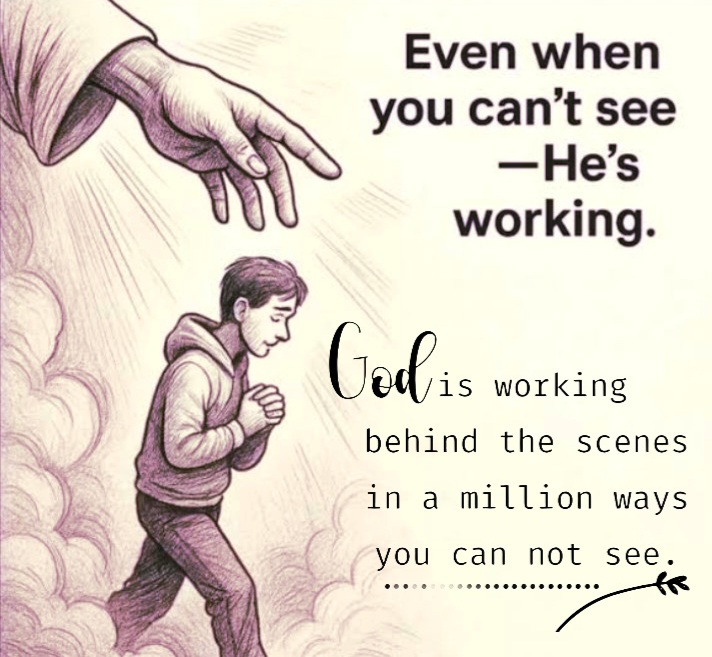
👀 Do you realize God is active behind the scenes, carrying out His plan for salvation? You might not be aware of specifics, but you can be sure that He is. How can you integrate this understanding into how you respond to problems as they crop up?
Lyrics: Vs. 1. You are here, moving in our midst I worship You, I worship You You are here, working in this place I worship You, I worship You
(Chorus) You are Way maker, miracle worker, promise keeper Light in the darkness, my God That is who You are. You are, Way maker, miracle worker, promise keeper, Light in the darkness, My God, That is who You are.
Vs 2. You are here, touching every heart I worship You, I worship You You are here, healing every heart I worship You, I worship You You are here, turning lives around I worship You, I worship You You are here, mending every heart I worship You, I worship You
That is who You are, That is who You are That is who You are, That is who You are.
Even when I don’t see it, You’re working Even when I don’t feel it, You’re working You never stop, You never stop working You never stop, You never stop working.
“Be quiet and let me speak now, then let come to me what may.
“Oh, that someone would listen me! Look, here is my signed complaint, And the indictment which my adversary has written against me.”
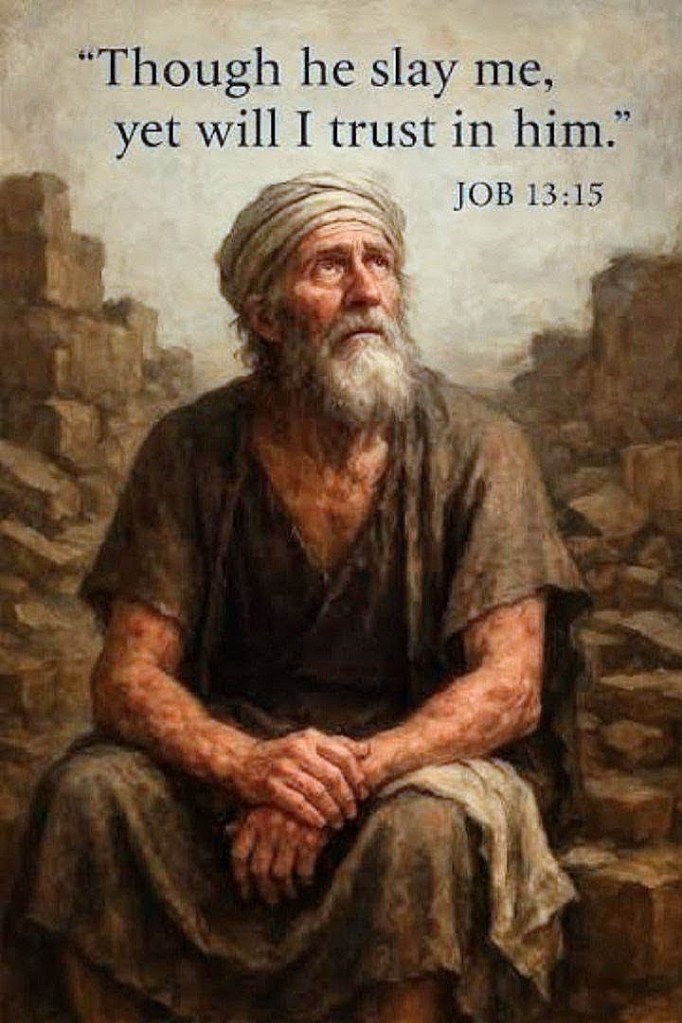
“Why do I put myself in jeopardy – and take my life in my hands by calling on God? Even though He slays me, Yet I will still hope in Him. I will surely defend myself to His face. Indeed, this will actually turn out for my deliverance, Because an atheist would not dare come before Him!
“How many wrongs and sins have I committed? God, show me my offenses and my sin. Why do you hide your face from me – and consider me your enemy?”
“Only grant me these two things, O God, • and then I will not cower from You: Withdraw Your hand far from me, • and stop frightening me with terror. Then summon me and I will answer, • or let me speak, and then You reply to me.”
CONCLUSION: “Let the Almighty answer me! For I’ve done nothing wrong, I deserve my day in the heavenly court!”
😲 WOW❗️What do you think about Job demanding a personal audience with God, where he can state his complaints, present his case for innocence, and then call God to account for making a mistake? 🤔
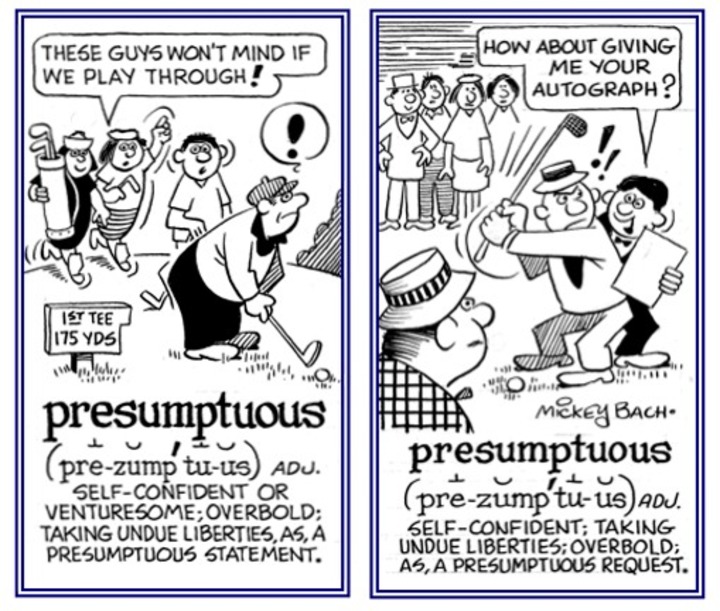
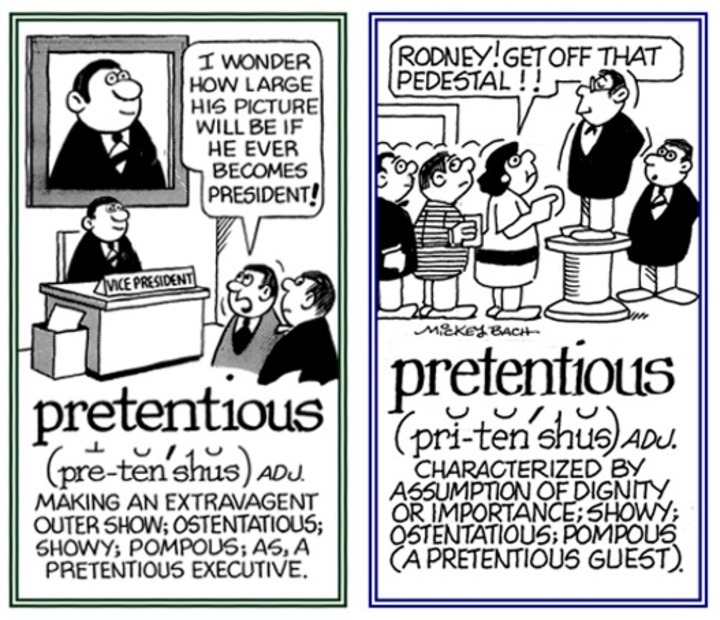
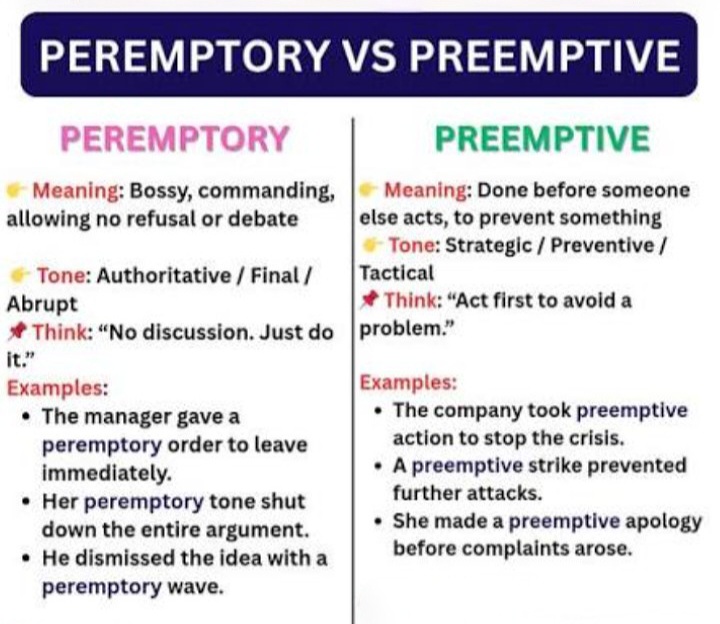
Words that come to mind are presumptuous, pretentious and preemptory.
DEFINITIONS:
1. Presumptuous = overly confident in an expectation or assumption, especially in a way that is rude.
✅️ Job was presuming he had the right to demand God give an accounting for what had happened to him. That implies Job thought he was greater than God.2. Pretentious = having or showing an excessive appreciation of one’s own merits.
✅️ Job didn’t think he had done anything to deserve such harsh treatment and that God was wrong for allowing it to happen. Job was magnifying his importance.3. Preemptory = acting out of turn, taking someone else’s role or authority for yourself.
✅️ Job felt like he had the right to demand God answer his complaints. It doesn’t work that way. God demands an accounting from us, not the other way around.
🍎 What about you? Do you sometimes feel God is letting you down and not meeting your expectations?
🥱 I think our tendency is just to ignore God when we’re not getting what we want and start looking to get it for ourselves somewhere else. 👀 That makes us functional atheists. Maybe He’s not the One who walked away.
🔃 Say what you will about how off base Job and his friends could be, at least they understood the preeminence of God in the world and life. We no longer see the hand of God in everything, especially compared to our forefathers of the faith, even in the United States. Maybe that’s because we’re not looking. Maybe it’s because we’re not seeking God in prayer for our needs, then waiting for Him to act when the time is right.
❓️Can you think of some need in your life right now where you’ve lost faith in God’s provision?
❓️How do you think you can walk that back and trust in God again, rather than demanding you get what you want, how you want it and when you want it?
_______________________
III. WORSHIP4. Revelation 15, Pause Before the Final Seven Plagues:
SETTING THE SCENE:
“I, John, saw in heaven another great and marvelous sight:
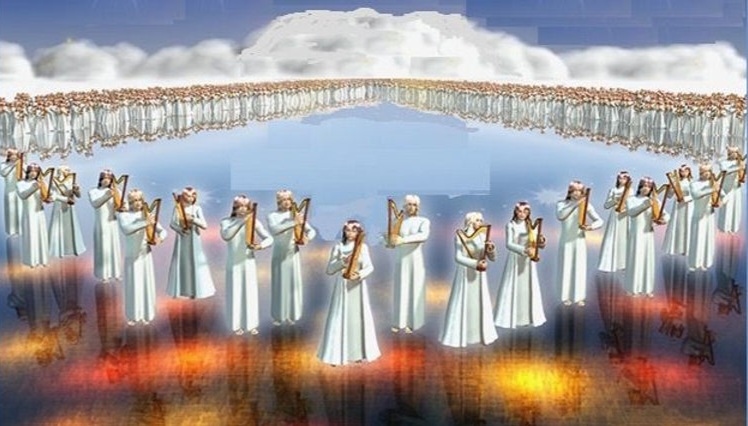
“Seven angels with the last seven plagues, the final plagues of God’s judgment; And I saw what looked like a sea of glass glowing with fire.”“Standing beside the sea were those who had been victorious over the Beast, and over his image, and over the number of his name, which is 666, even though it had cost them their lives on the Earth.
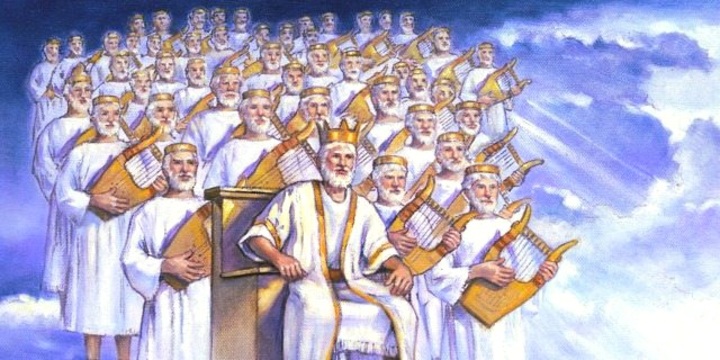
“They held harps given to them by God and they played the harps and sang the song of Moses, the bond-servant of God, and then they sang the song of the Lamb…”Song of Moses 2 – Deuteronomy 32, (Begin praying back to God.)
I praise Your name O LORD Yahweh; I praise Your greatness, O my God! 🙌 You are my Rock, Your actions are perfect, and all Your ways are right.
You are a righteous God who does no wrong, You are faithful and true. You are our Father, our Creator, You made us and You formed us. There is no God besides You.
You put to death and You bring back to life, You wound us and You heal us. ⚕️ No one can escape out of Your hand. No one can escape the wrath of Your judgment.
You will avenge the blood of Your servants; You will punish Your enemies – for what they have done, ⚖️ For what they have done to Your people, – and for what they have done to me.
Selah (Pause and think about it.) 🤔 __________________________________________
(The song of the Lamb,🐑 continue praying back to God.)
Great and marvelous are Your works, O Lord God Almighty! 💪 Righteous and true are Your ways.
You’re King of the nations! 👑 You’re King of ALL the nations!
I revere You, O Lord; 🙌 For You alone are holy, I glorify Your name! For You alone are worthy.
I bow in worship to You, 🛐 Because Your righteouness will be revealed– When Your justice is made clear; When Your power’s no longer concealed.
You’re the God who lives for ever and ever. Heaven is filled with Your glory and power. I fall down before Your Greatness in honor, I declare You, O God, my Lord forever. 🧎♂️🧎♀️
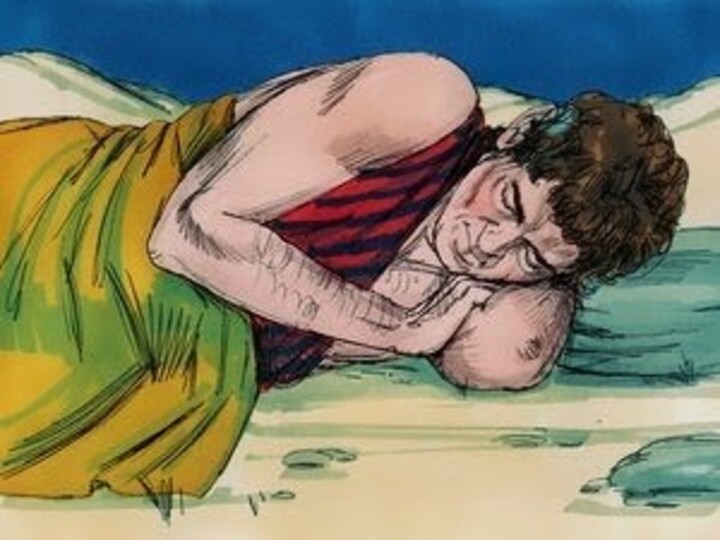
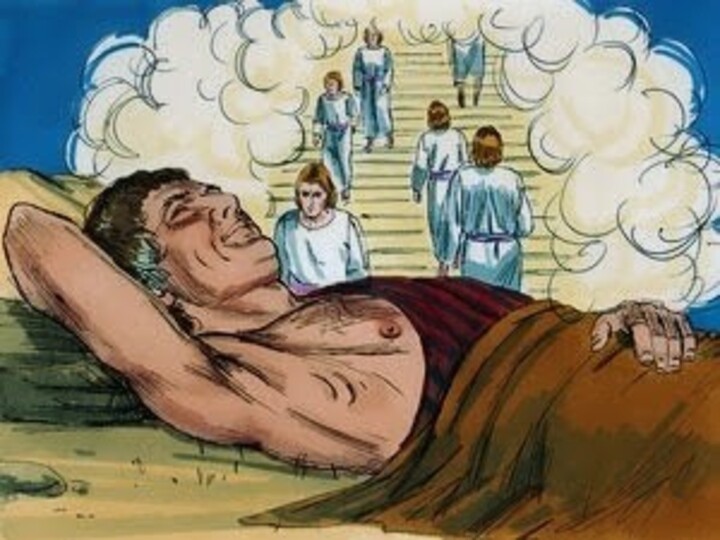
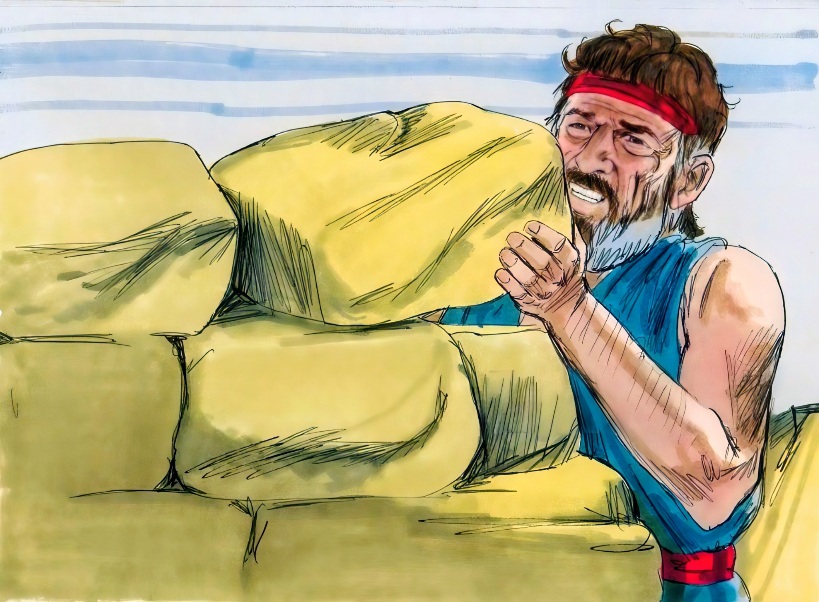
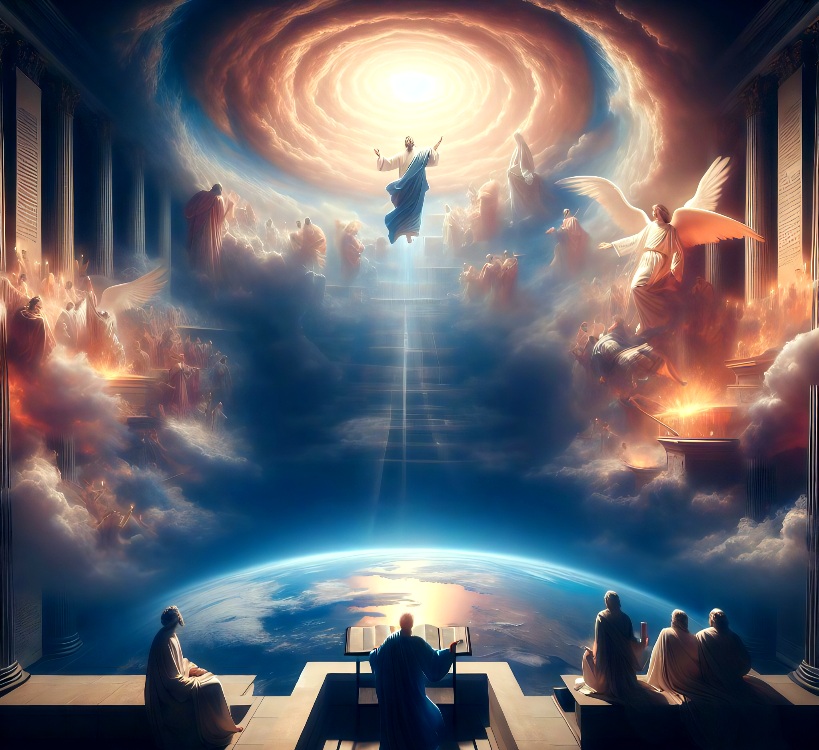
BACK STORY: Genesis 28, Jacob’s DreamAs Jacob was traveling to Harran, he stopped at a convenient place for the night because the sun had set. Taking one of the stones there, he put it under his head and lay down to sleep. As he slept, Jacob had a dream in which he saw a stairway resting on the earth, with its top reaching to heaven, and the angels of God were ascending and descending on it.
There above it stood the Lord, and He said: “I am the Lord, the God of your grandfather Abraham and the God of Isaac. I will give you and your descendants the land on which you are lying. Your descendants will be like the dust of the earth, and you will spread out to the west and to the east, to the north and to the south. All peoples on earth will be blessed through you and your offspring.
I am with you, • and I will watch over you wherever you go, • and I will bring you back to this land. • I will not leave you until • I have done what I have promised you.”
When Jacob woke up from the dream, he thought, “Surely the Lord is in this place, and I was not aware of it.” He was touched by the fear of God and said, “How awesome is this place! This is none other than the House of God; this is the Gate of Heaven.”The next morning when Jacob got up, he took the stone he had placed under his head and set it up as a pillar and poured oil on top of it. He called that place Beth-El, the House of God.
Then Jacob made a vow, saying, “If God will be with me and will watch over me on this journey I am taking, and will give me food to eat and clothes to wear, so that I return safely to my father’s household, then the Lord will be my God. This stone that I have set up as a pillar will be God’s house, and of all that you give me I will give you a tenth.” ___________________ Twenty years later…
• Jacob has married…twice. • He’s had 12 sons, as well as many daughters, by his wives and their two maids. • He has prospered while working for his uncle by the blessing of God, gaining not only a large household, but extensive flocks and servants. • He’s returned to Canaan and reconciled with Esau. • He moved his flocks and people to Shechem to put space between his and Esau’s extensive families, households and flocks and herds.
And now we pick up the story…Genesis 35:1-12;Jacob Moves to Bethel
Then God appeared to Jacob in Shechem and said, “Arise, go up to Bethel and live there, and make an altar there to God, who appeared to you when you fled from your brother Esau.”
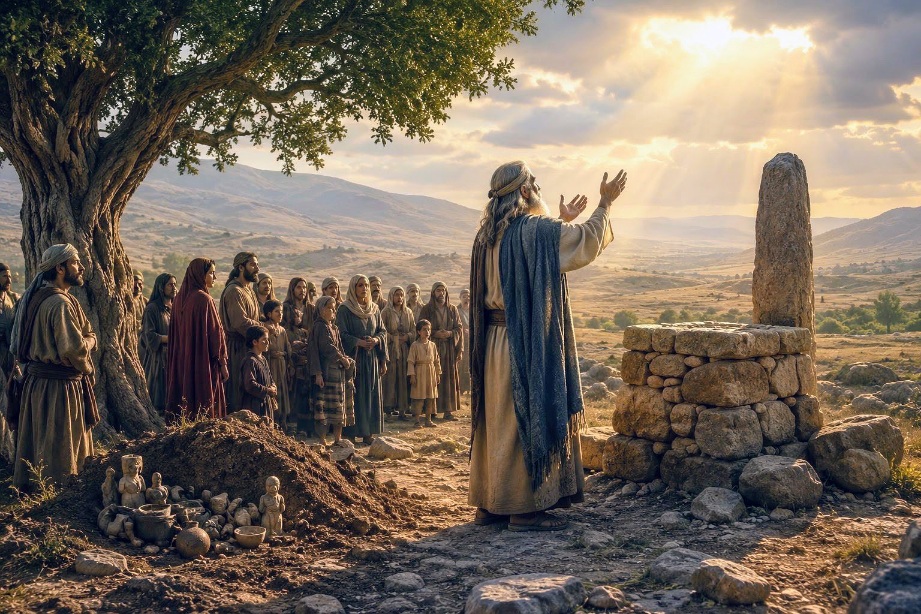
So Jacob traveled to Luz (that is, Bethel), which is in the land of Canaan, along with all his household, flocks and herds. He built an altar there and called the place El-Bethel, “The House of God,” because God had revealed Himself to him there when he fled from his brother.
Then God appeared to Jacob again there, and He blessed him. God said to him,
“Your name is Jacob; But you shall no longer be called Jacob, • Instead Isra-el shall be your name. For you have struggled with God • and with men, • and you have triumphed.
Thus God named him ‘Israel.’ God also said to him,
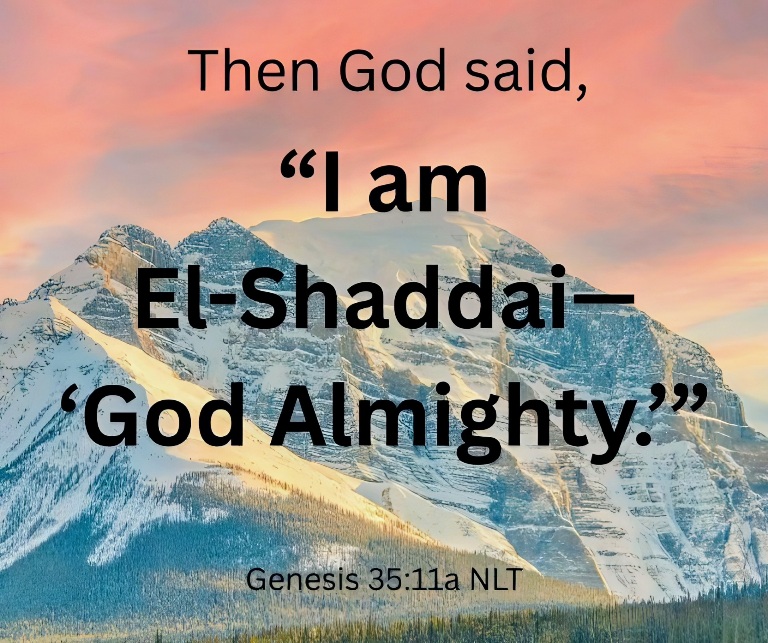
“I am El-Shaddai,God Almighty;
Be fruitful and multiply; A nation and a multitude of nations • shall come from you, And kings shall come forth from you. The land which I gave to Abraham and to Isaac, • I will give it to you, And I will give the land to your descendants after you.”
___________________
🤔 Thoughts to ponder: God reaffirmed His choice of Jacob to continue the line of the Messiah by repeating the promises of the covenant made to his grandparents, Abraham and Sarah, and with his father Isaac.
Was Jacob chosen because he was a great guy, deserving of these special blessings and promises from God?
Well, NOT REALLY!
The Bible says, “God chooses whom He chooses.” (See Romans 9:18). It’s not that the people God chooses to carry out His plans are particularly qualified, instead God breaks them, then re-makes them and molds them into the people He needs them to be. We can see this in the story of Jacob, also in the story of his eleventh son, Joseph.
🍎 God does that in our lives too. This principle is often summarized in the quote,
The ‘equipping’ process is often stepwise–we find ourselves in a difficult position and as we deal with it, we find we have to develop in a certain way. But one step is not the end of the process–it’s a lifelong process if you choose to walk with God and follow Jesus.
❓️When you look back at your life so far, do you see times and places where God was ‘equipping’ you to do things for Him through difficult circumstances?
When we gain that perspective, it can help us with our faith in God when we find ourselves having to go through difficulties again.
❓️Is there some current difficulty that a fresh perspective of the sovereignty of God could help you deal with it better in faith and trust in God? _______________________
📖 II. INSTRUCTIONAL READING 3.
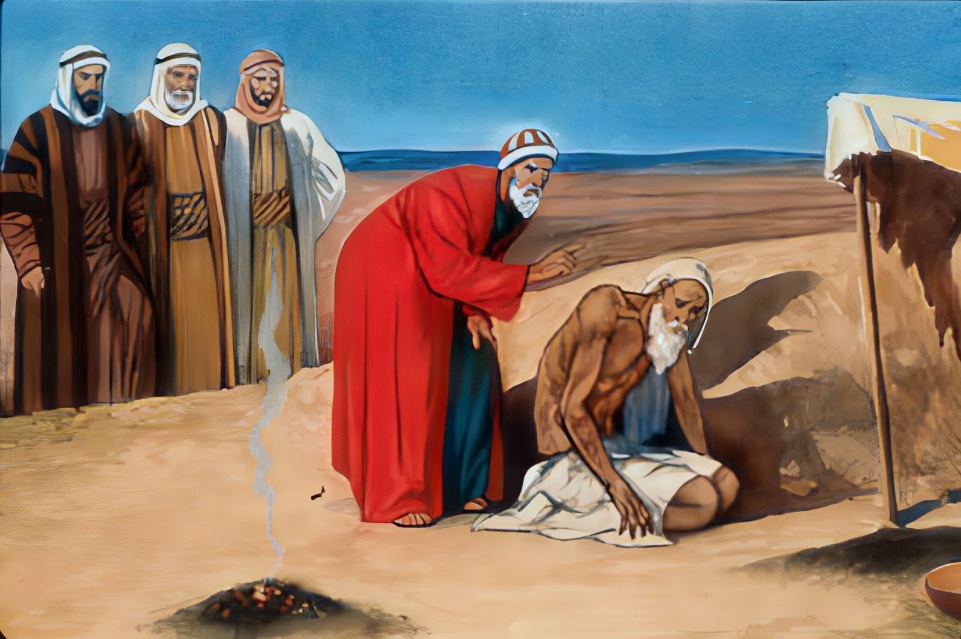
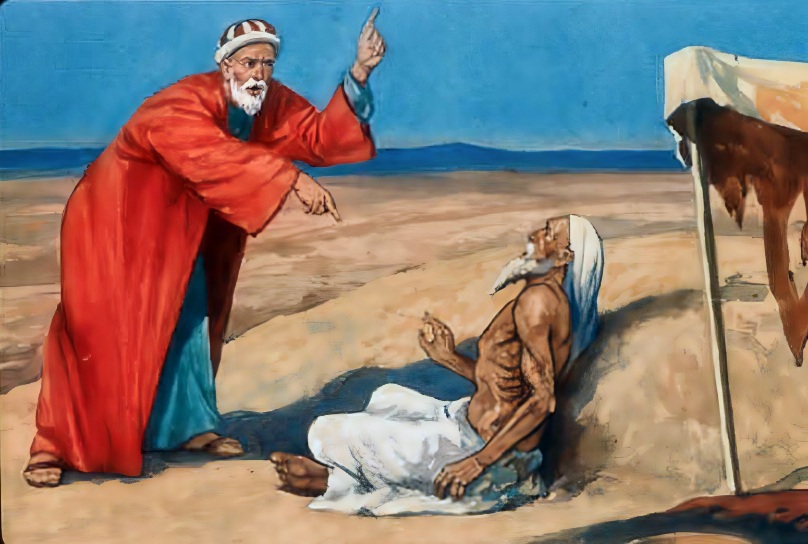
Job 11: ZOPHAR speaks,(THEME 1) “Can you fathom the mysteries of God? Can you probe the limits of theAlmighty?
They are higher than the heavens above— • What can you do? They are deeper than the depths below— • How can you know? Their measure is longer than the earth • and wider than the sea. If He comes along and convenes a court of judgment, • who can oppose him? Surely He recognizes deceivers; • and when he sees evil, does he not take notice?”(THEME 2) “If you devote your heart to Him • and stretch out your hands to Him, If you put away the sin that is in your life • and allow no evil to dwell in your home; Then, free of fault, you can lift up your face; • You will stand firm and without fear. You will surely forget your trouble, • recalling it only as water under the bridge. Life will be brighter than noonday, • and darkness will become like morning. You will be secure, • because there is hope; You will look around • and be able to take your rest in safety. You will lie down, • with no one to make you afraid, And many will court your favor.”
(CONCLUSION) “If we do right, we have no reason to be ashamed before God.” _________________
🔎 Zophar made the same mistake as Eliphaz in trying to put God into a neat, little, cause-and-effect box where he felt he could control how God treated him. The things he said could be considered generally true on the surface, but there was a deeper truth he was missing.
🤔 Think about Zophar’s conclusion and compare it to the ‘bad news’ part of the gospel. For example, verses in Romans say, “There are none good, no, not even one.” And, “ALL have sinned and fall short of the glory of God.” Does it sound like Zophar understands the full picture?
_______________________
🙌 III. WORSHIP 3. Revelation 11:13-18
SETTING THE SCENE: “…there was a severe earthquake and a tenth of the city collapsed. Seven thousand people were killed in the earthquake, and the survivors were terrified, but gave glory to the God of heaven. Thus the second woe has passed; the third woe is coming soon.”
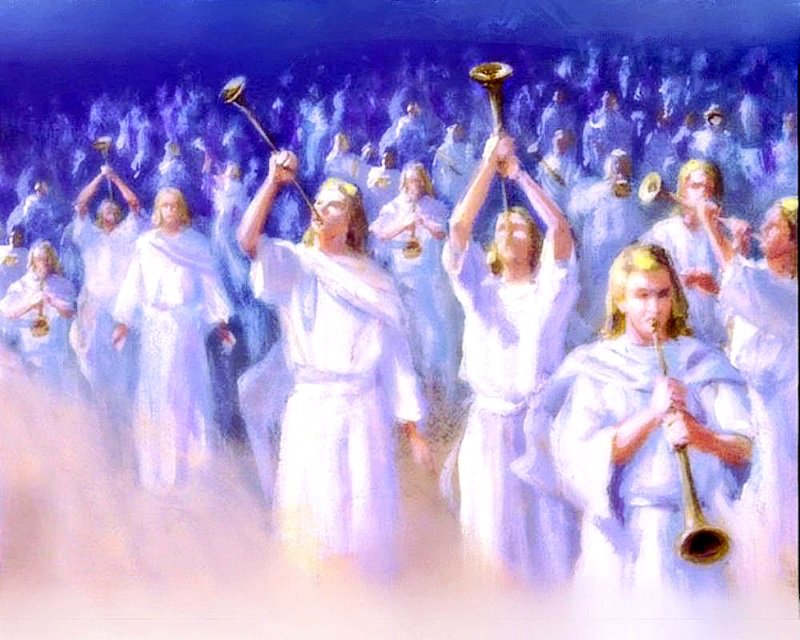
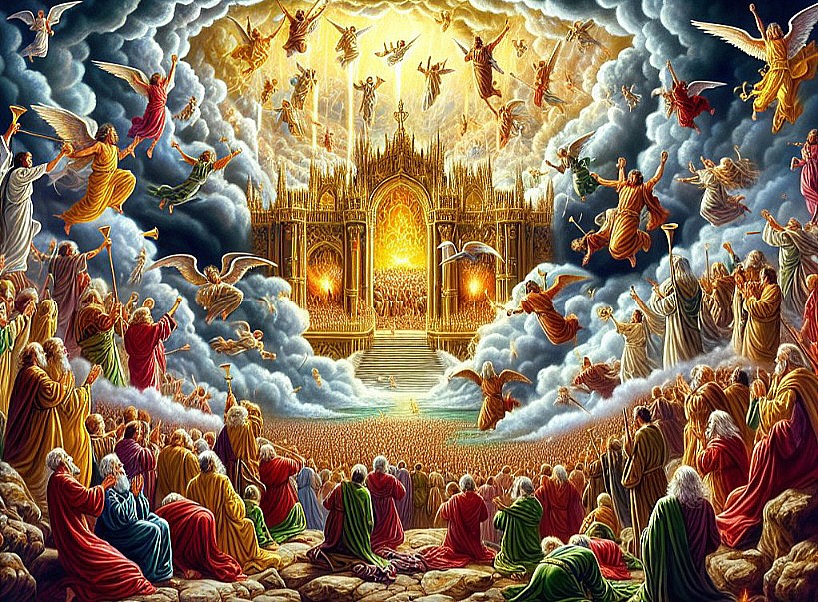
The Seventh Trumpet: “The seventh angel sounded his trumpet, and there were loud voices in heaven saying:”
(Begin praying back to God)
“Thy kingdom come Thy will be done, On earth as it is in heaven…”“The kingdoms of this world are Your kingdoms, • Our Lord and our Christ, And You will reign over them forever and ever.”Along with the twenty-four elders • Who sit on their thrones before You, O God, I fall on my face and worship You.
I give You thanks, O Lord God, Almighty, • Who is and who was, Because by Your great power • You reign over heaven and Earth.Let the nations rebel, • And rage against Your rule. The day of Your wrath will come, • When You judge the living and the dead. The time of Your judgment will come, • When you destroy those who destroy Your Earth.
But the blessed day of our hope will come too, When You reward me, Your bond-servant, • Along with Your prophets • And Your holy saints, When you call out all who fear Your Name, • The small and the great from the grave. To be forever with You, our eternal reward.
Though I am small in Your sight, • I choose to serve You with all that I am. Although I am ignorant of Your Word, • I choose to listen to it through Your prophets. Though my sins have stained me scarlet, Yet You have sanctified me by the blood of Your Christ, • And washed me white as snow.
Though my eyes fall short, sometimes, of seeing Your glory, • Yet I revere and honor Your Name,
You are the Lord God ALMIGHTY!
Although I deserve to be condemned by Your judgment, • And destroyed forever, Yet You have chosen to save me, • And give me eternal life with You.
Thank you, Lord God Almighty. Thank you, Lord Jesus Christ.
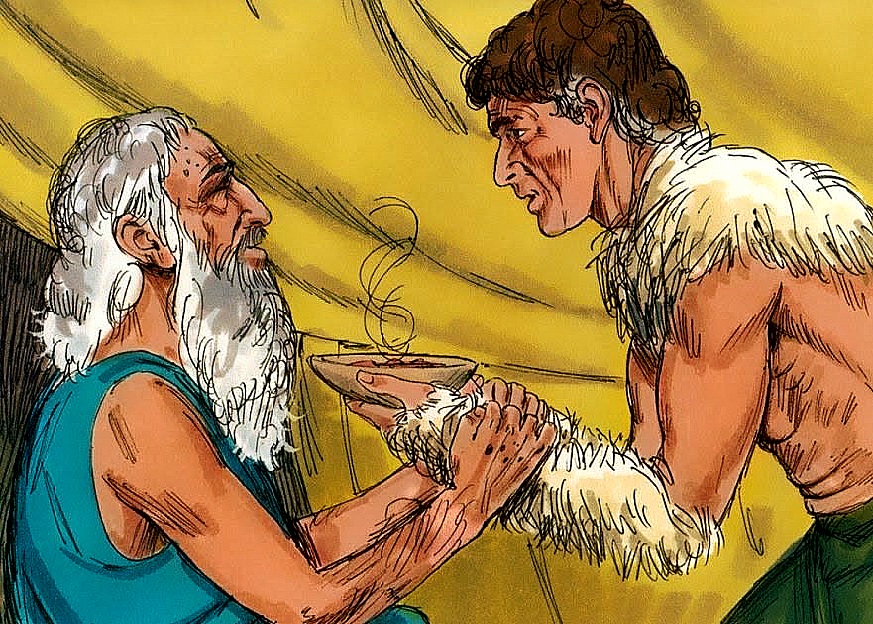
Setting the scene: Genesis 27: When Isaac was old and his eyes were so weak that he could no longer see, he called for Esau, his older son, and said to him, “I am now an old man and don’t know how much longer I have before I die. Now then, get your bow and arrows and hunt some wild game for me. Prepare the kind of savory stew that I like and bring it to me to eat, so that I may give you my blessing before I die.”
Now Rebekah was listening as Isaac spoke to Esau. So when Esau left for the country to hunt, she said to her favorite son, Jacob, “I overheard your father say to your brother Esau, ‘Bring me some game and prepare me some savory stew to eat, so that I may give you my blessing in the presence of the Lord before I die.’ Now, my son, go out to the flock and select two choice young goats, so I can prepare some savory stew for your father, just the way he likes it. Then take it to your father to eat, so that he may give you his blessing before he dies.”
Jacob then said to his mother, “But my brother Esau is a hairy man, while I have smooth skin. What if my father touches me? I would be discovered as tricking him and I would bring down a curse on myself rather than a blessing.” But his mother said to him, “Let me worry about the curse. Just do what I say; go and get the goats for me.”
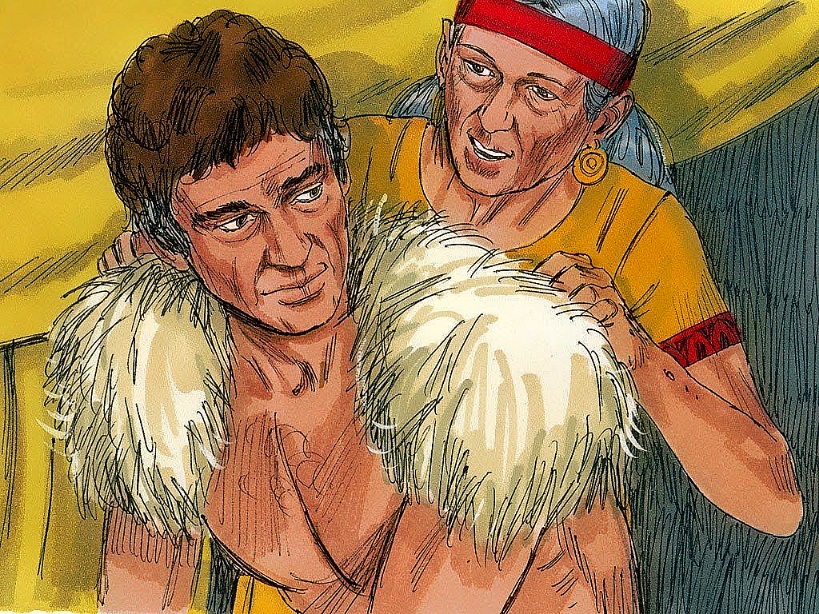
So he went and picked out two young goats and brought them to his mother. She prepared some savory stew with them, just the way his father liked it. Then Rebekah took some clothes she had of Esau, her older son, and put them on her younger son Jacob. She also covered the back of his hands and the smooth part of his neck with the skins from the goats. Then she gave Jacob the savory stew and the bread she had made to take to his father.
Then Jacob went in to his father and said, “My father.” “Yes, my son,” Isaac answered. “Who is it?” Jacob replied, “I am Esau, your firstborn. I have done as you told me. Please sit up and eat some of my game, so that you may give me your blessing.”
So, Jacob moved closer to his father Isaac, who touched him and said, “The voice is the voice of Jacob, but the hands are the hands of Esau.” He did not recognize him as Jacob for his hands were hairy like those of his brother Esau.
But then he asked one more time, “Are you really my son Esau?”
“I am,” Jacob replied.
Then Isaac said, “My son, bring me some of your game to eat, so that I may give you my blessing.”
Jacob brought the bread and stew to him, and some wine to drink with it. Then when his father was finished eating, Isaac blessed him saying,
God will give to you heaven’s dew, • and earth’s richness— • and abundance of grain and new wine. Nations will serve you, • and peoples will bow down to you. You will be lord over your brothers, • and the sons of your mother will bow down to you. Those who curse you will be cursed, • and those who bless you will be blessed.”
After Isaac finished blessing him, Jacob had barely left his father before Esau came back from hunting. He prepared some savory stew and brought it to his father saying, “My father, please sit up and eat some of my game, so that you may give me your blessing.”
His father Isaac asked him, “Who are you?”
“I am your son,” he answered, “your firstborn, Esau.”
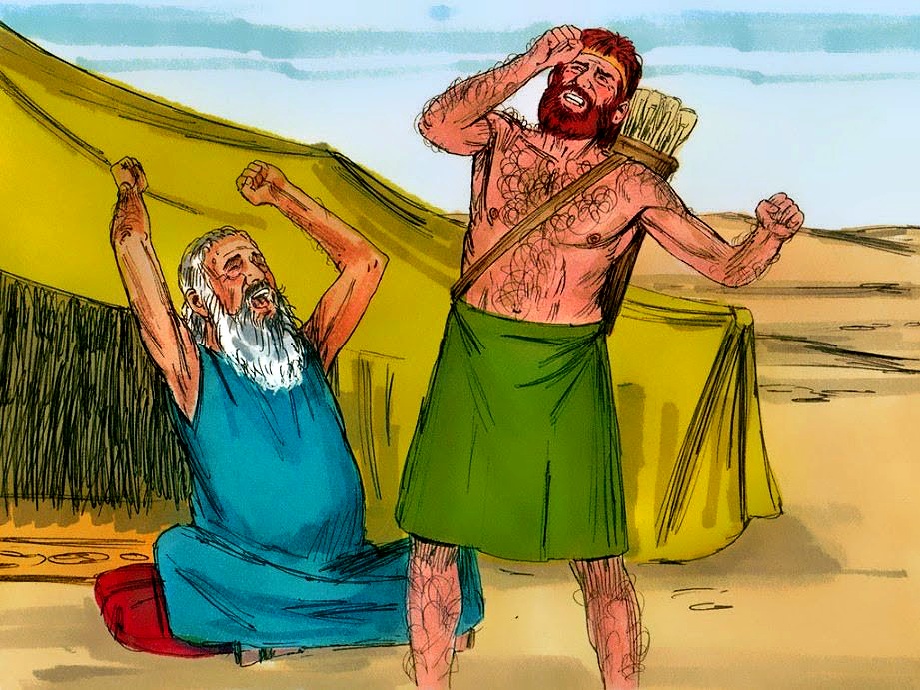
Then Isaac trembled violently and said, “Who was it, then, that brought game to me? I ate it just before you came and I blessed him—and indeed he will be blessed!” When Esau heard his father’s words, he burst out with a loud and bitter cry and said to his father, “Bless me too, my father!”
But Isaac said, “Your brother has come deceitfully and taken your blessing. I have made him lord over you and have made all his relatives his servants, and I have blessed him with grain and new wine. So what more can I possibly do for you, my son?”
Esau said, “Isn’t he rightly named ‘Jacob’? This is the second time he has taken advantage of me: He took my birthright, and now he has taken my blessing.” Then Esau wept loudly.
Esau held a grudge against Jacob after that, because of the stolen blessing his father had given to him. He said to himself, “The days of mourning for my father are near; then I will kill my brother Jacob.”
When Rebekah was told what her older son Esau had been saying, she sent for Jacob and told him, “Your brother Esau is planning to avenge himself by killing you after your father dies. Now then, my son, flee at once to my brother Laban in Harran. Stay with him until your brother’s fury subsides. When your brother is no longer angry with you and forgets what you did to him, I’ll send word for you to come back from there.”
__________________
🤔 Think about it…
❓️ What attitude do you think Isaac had toward Jacob after the deception?
❓️ Do you think Isaac would be supportive in any way toward Jacob after this? ___________________
Genesis 28, the story continues…
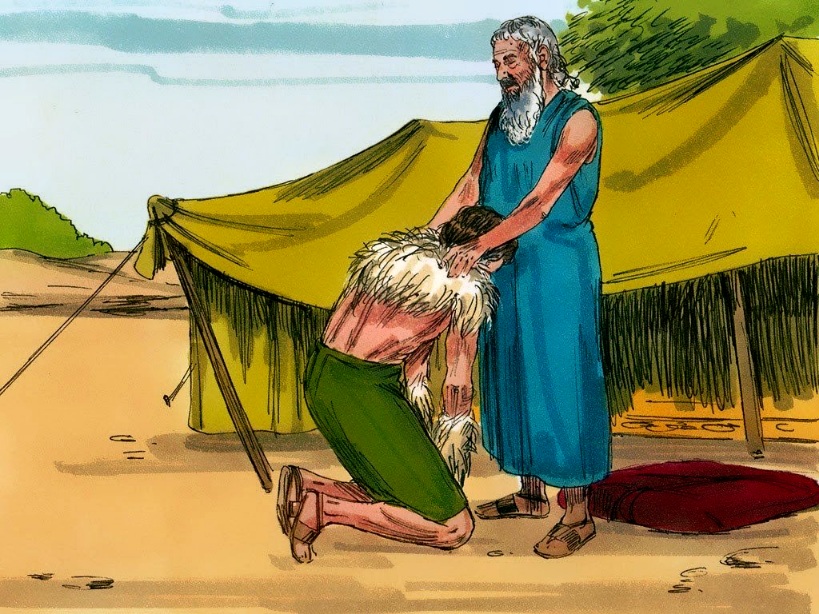
So, when Isaac heard Jacob was leaving, he called for him and blessed him further, saying,
“May God Almighty bless you and make you fruitful and increase your numbers until you become a multitude of peoples.”
“May He give you and your descendants the blessing given to Abraham, so that you may take possession of the land where you now reside as a foreigner, the land God gave to Abraham.”
Isaac also commanded Jacob saying, “Do not marry a Canaanite woman. When you arrive in Paddan Aram, go directly to the house of your mother’s father Bethuel. Take a wife for yourself there, from among the daughters of Laban, your mother’s brother.”
Then Isaac sent Jacob on his way, and Jacob left for Paddan Aram. ________________
❓️Did you see that coming? After Jacob had stolen the blessing of the firstborn by deceiving his father, Isaac actually blessed Jacob further with the blessings God had given Abraham, for “he and his descendents.” So now Jacob becomes the official carrier of God’s promise to the next generation. It would appear that Isaac had come to accept the passing on of God’s blessing from Abraham to him, Isaac, now to Jacob, as a ‘done deal.’
It makes more sense in this light that Isaac would be concerned about who Jacob marries, because his wife would become a co-inheritor of the blessing, just like Sarah was. __________________
II. INSTRUCTIVE 2. Job 8, BILDAD says,
“Does God pervert justice? Does the Almighty pervert what is right?” (THEME)
“But if you will seek God earnestly, • and plead with the Almighty; If you are pure and upright, • even now He will rouse himself on your behalf; • and restore you to your prosperous state. Your beginnings will seem humble, • so prosperous will your future be.”
“Ask the former generation, • and find out what their ancestors learned; For we were born only yesterday and know nothing, • and our days on earth are but a shadow. – Will they not instruct you and tell you? – Will they not speak words from their understanding?”“Surely God does not reject one who is blameless, • or strengthen the hands of evildoers. He will yet fill your mouth with laughter, • and your lips with shouts of joy.”
(CONCLUSION) “Because God does not pervert justice, • nor does the Almighty pervert what is right.” __________________
🤔 Ponder this: Bildad thought Job was suffering because Job had sinned. Bildad had placed God in a ‘box’ where he thought everything was simple and straight forward. That is, if you do good, God will reward you. If you sin, God will punish you.
❓️Do you see ways that you believe this overly simple concept of who God is in your own thinking?
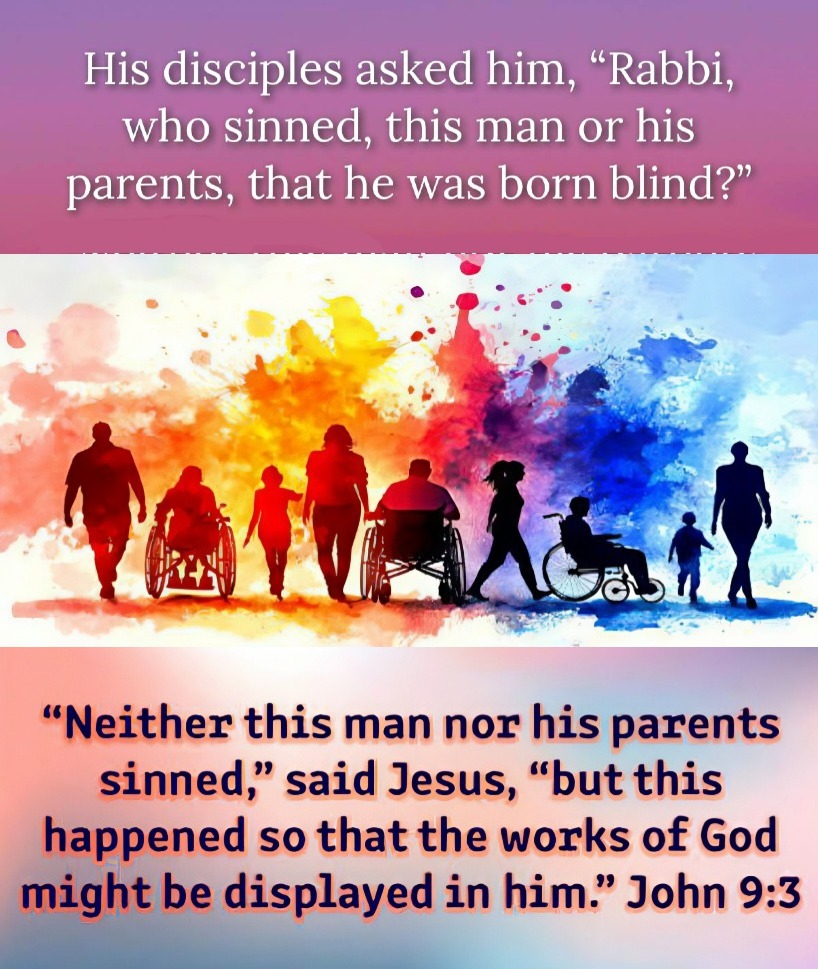
🤔 The Jews in Jesus’ time had turned this idea around. They believed that if you were prosperous, that you had been approved by God and that He had blessed you.
The flip side was that if you were poor, had been born with a disability, or had some bad things happen to you (like Job), that you had been judged by God for either your sins, or maybe your parents’.
❓️ Did Jesus agree with this belief about how God rewarded and punished people?
❓️What do you believe about suffering versus prosperity and God’s part in it? __________________
III. WORSHIP2. Revelation 4, God’s Heavenly Throne
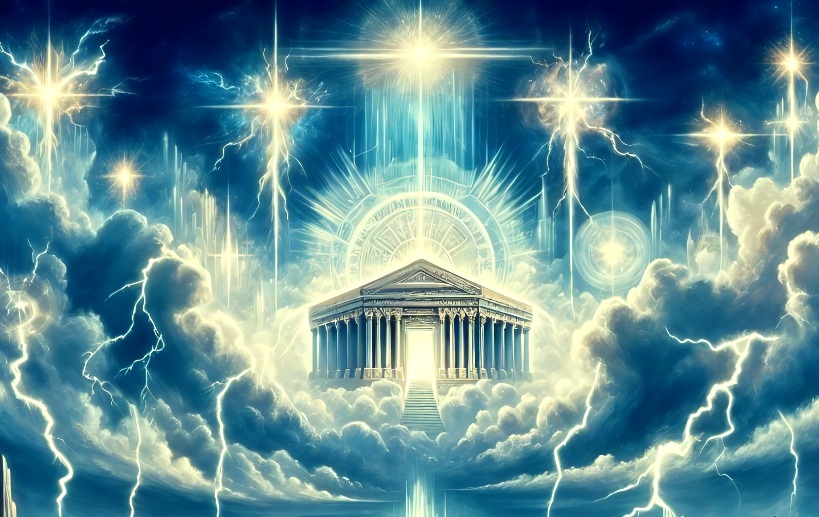
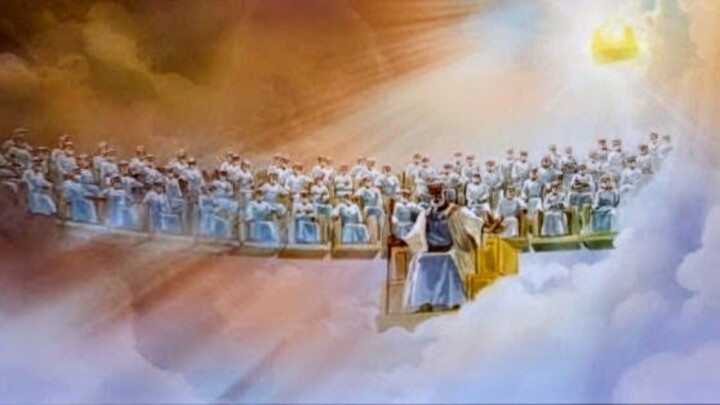
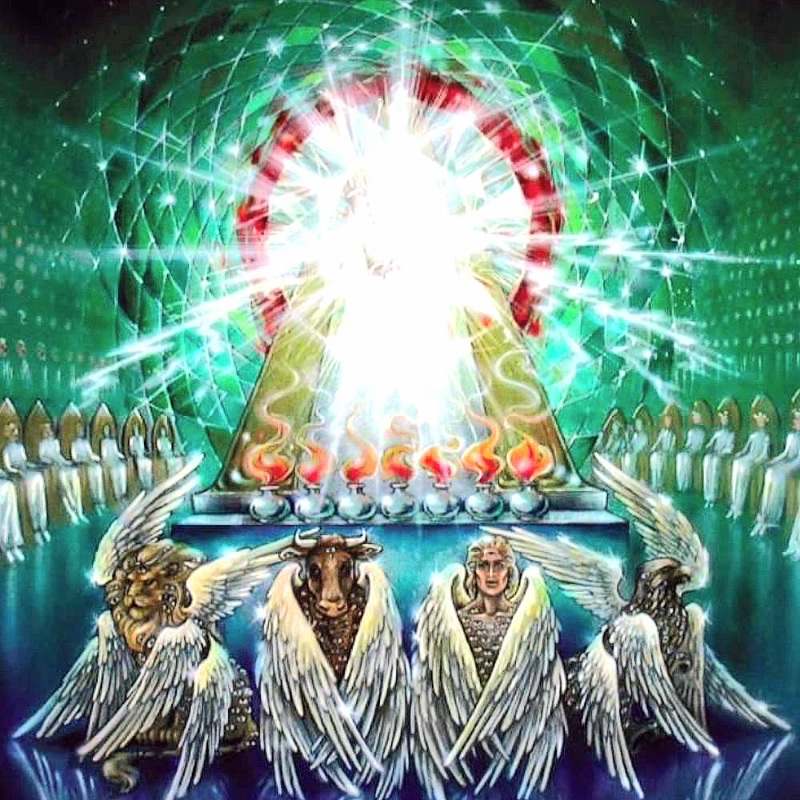
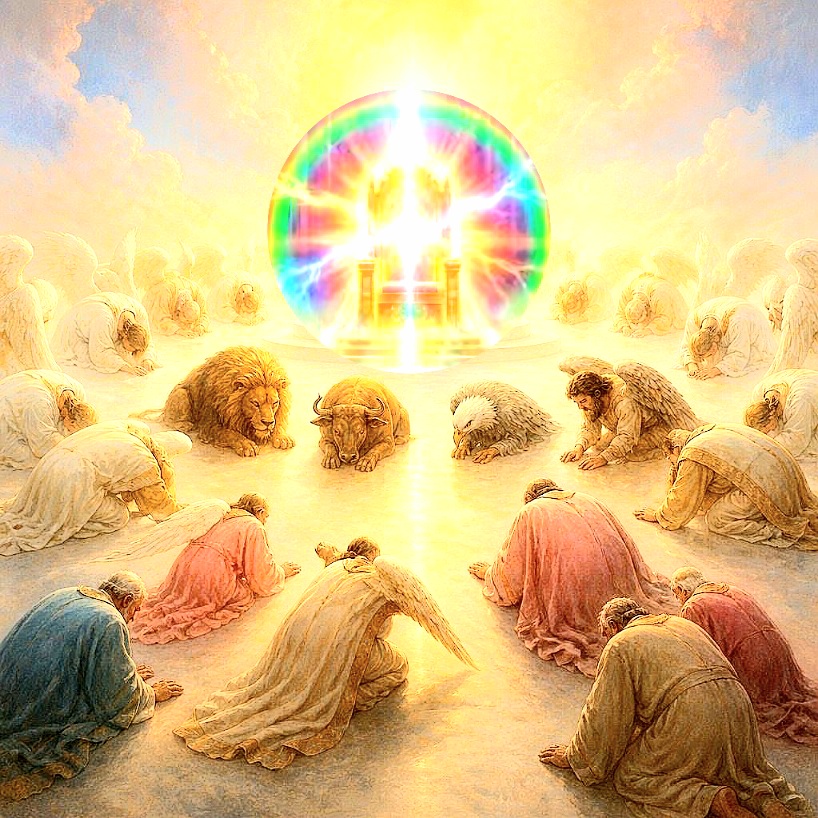
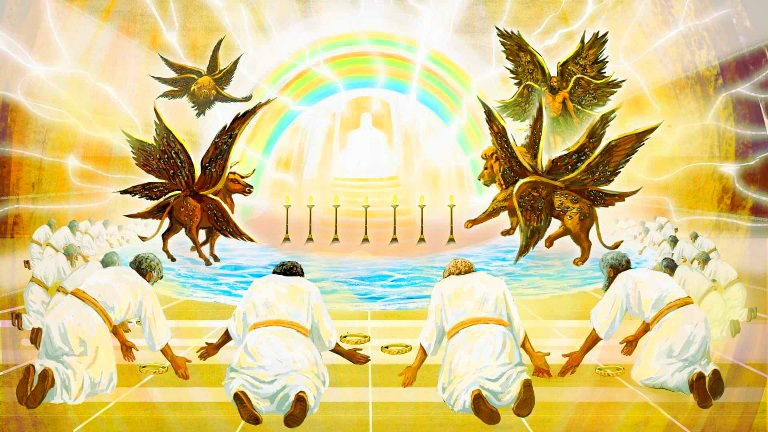
Setting the scene: “In the spirit I, John, found myself in heaven and I saw in front of me a throne with Someone sitting on it. And the One who sat there had the appearance of jasper and ruby. A rainbow that shone like an emerald encircled the throne.”
“Surrounding the great throne were twenty-four lesser thrones, and seated on them were twenty-four elders. They were dressed in white and had crowns of gold on their heads.”
“From the throne came flashes of lightning, rumblings and peals of thunder. In front of the throne, seven lamps were blazing. Also in front of the throne there was what looked like a sea made of glass, as clear as crystal.”
“Around the throne were four living creatures. The first creature was like a lion, the second was like an ox, the third had a face like a man, and the fourth was like an eagle. And the four living creatures, day and night, do not cease to say…”
(Now pray to God in worship)
“Holy, holy, holy are You, Lord God, Almighty, Who was and Who is and Who is to come.”
I give glory and honor and thanks; 🙏 • to You Who sits on the throne of heaven, 🪑 • to You Who lives forever and ever. ♾️
I bow down before You 🛐 • Who rules from the throne, 🪑 I worship You 🛐 • Who lives forever and ever, ♾️
I cast my rewards before Your throne, 👑 For You are more worthy, 🥇 • my Lord and my God, 🛐 You are worthy to receive 🤲 • glory and 💥 • honor and 🏆 • power.💪
You are worthy, 🥇 • because You created all things. 🌌 You are worthy, 🥇 • because of Your will all things exist, ⚛️
You are worthy, 🥇 • because You created me.🙋♂️🙋♀️ You are worthy, 🥇 • because for Your will I exist. 🧎♂️🧎♀️
I love You, ❤️ I adore You, 😍 I worship You, Lord God Almighty, 🛐 I worship You on Your heavenly throne!🪑
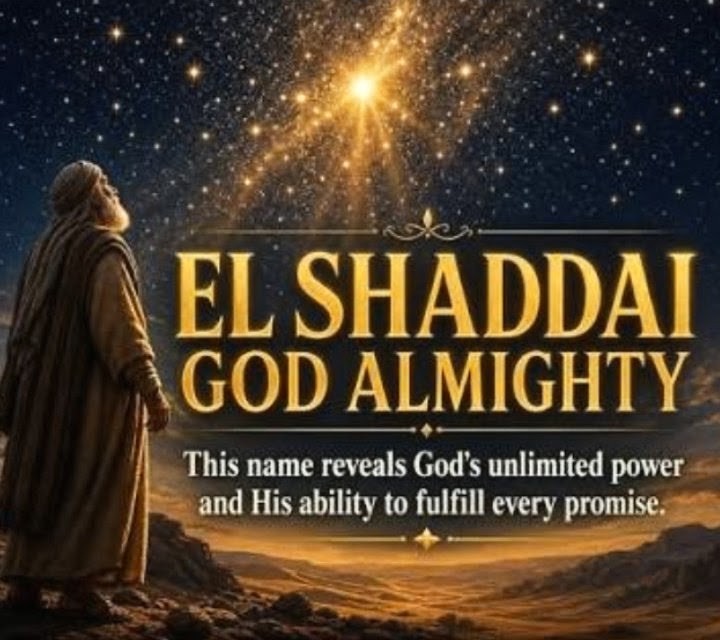
🙏 The following 6 devotionals on El Shaddai, ” God Almighty,” and Shaddai, the “Almighty” pull from:
1. The six occurrences in Genesis, which give us historical context, 2. Six passages about the Almighty in Job, which are very instructive, and 3. Six episodes of worship of the Lord God Almighty in heaven as described in Revelation.
It will be the ones from Revelation that are most appropriate to pray back to God and Jesus as worship.
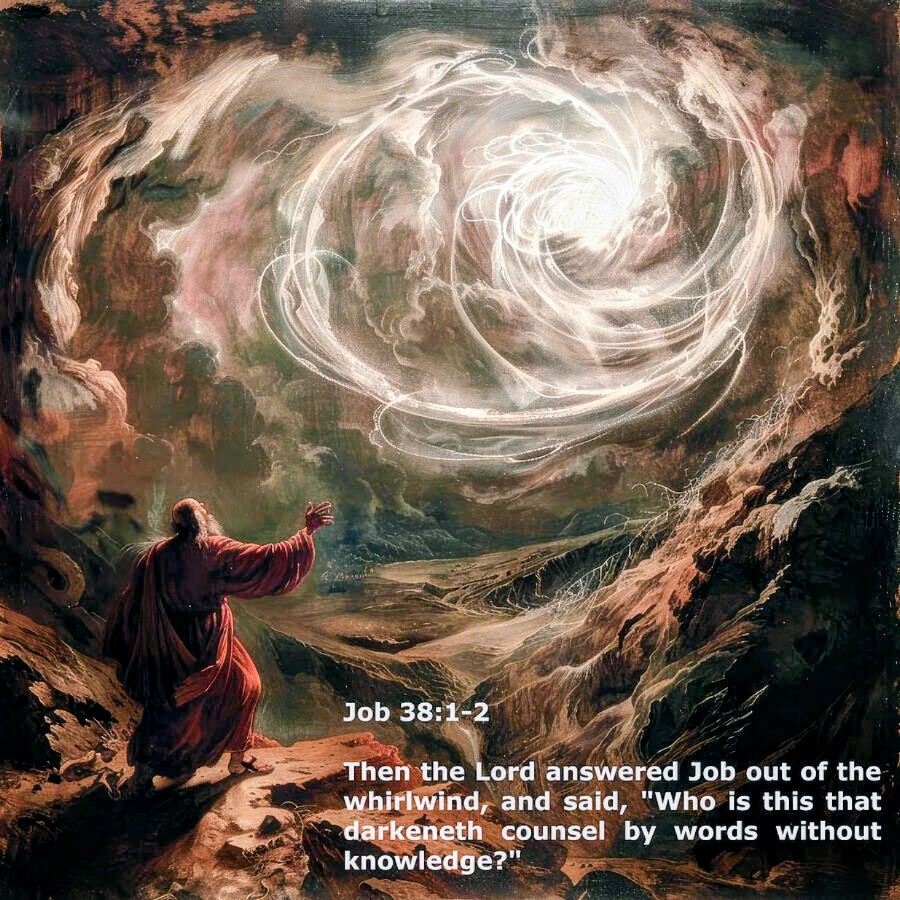
God speaks to Job from the whirlwind.
🤔 REFLECT: God as the ‘Almighty,’ Shaddai, was already known in Abram’s time from a Middle Eastern oral tale of suffering from persecution, called in the Hebrew “Iyov,” that was later codified and expanded into what we know as “The Book of Job.” Thirty-one of the 48 Old Testament uses of Shaddai appear in Job.
Up until Genesis 17, the Name of the God that had called Abram to leave his home and family was not stated, instead, whenever God was mentioned, as in Genesis 13:18, YHWH is used in the existing manuscripts. Some Bible interpreters point to these passages as indications that YHWH was a known Name of God prior to the burning bush revelation in Exodus. However, that interpretation directly contradicts God’s own statement in Exodus 6:3,
“I appeared to Abraham, to Isaac, and to Jacob as El-Shaddai—’God Almighty’—but I did not reveal my name, Yahweh, to them.”
Instead, history points to a movement among Jewish scribes called the “Yahweists.” They went back to Genesis and changed many references using God’s other names to YHWH, so there was no doubt this was the same God of Israel. Since that is how the existing manuscripts read now, thousands of years later, that is how they are translated.
I.HISTORICAL BACKGROUND: Questions to ponder: 🤔 1. What did God do? 2. What did the people do? 3. What did God promise to do in the future? 4. What did God expect the people to do in the future?
📖 READING 1a: Genesis 17:1-8, 25-29; God’s Covenant withAbraham and Sarah
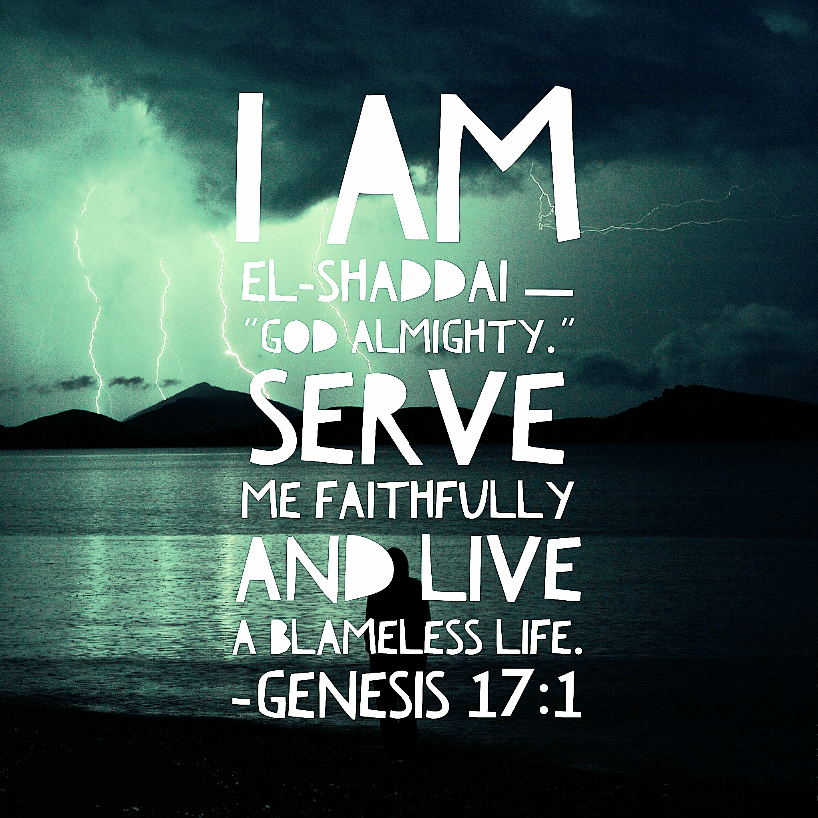
Now when Abram was ninety-nine years old, the Lord appeared to Abram and said, “I am El-Shaddai,God Almighty;
Walk before Me, and be blameless. • I will establish My covenant between Me and you, • and I will multiply you exceedingly.”
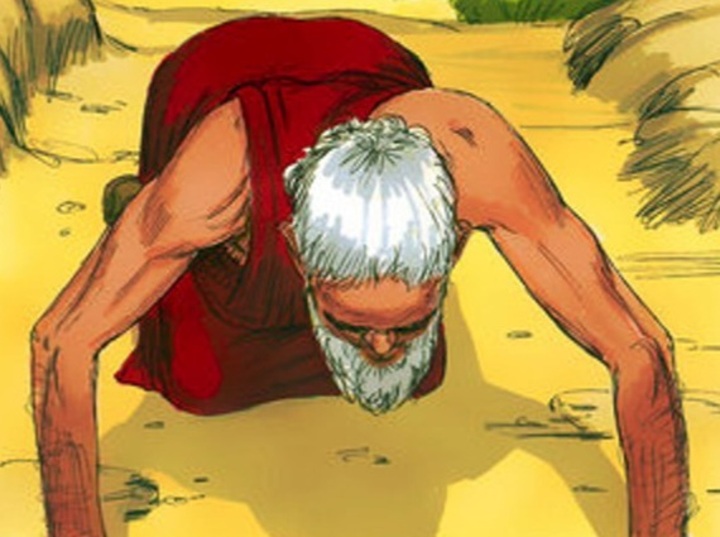
Abram fell on his face, as God continued talking with him, saying,
“As for Me, behold, My covenant is with you, and you will be the father of a multitude of nations. No longer shall your name be called Abram, but your name shall be Abraham; For I have made you the father of a multitude of nations. • I will make you exceedingly fruitful, and • I will make nations of you, and • Kings will come forth from you.
I will establish My covenant between Me and you and your descendants after you throughout their generations for an everlasting covenant, to be God to you and to your descendants after you.
I will give to you and to your descendants after you, the land of your sojournings, all the land of Canaan, for an everlasting possession; and I will be their God. . .”
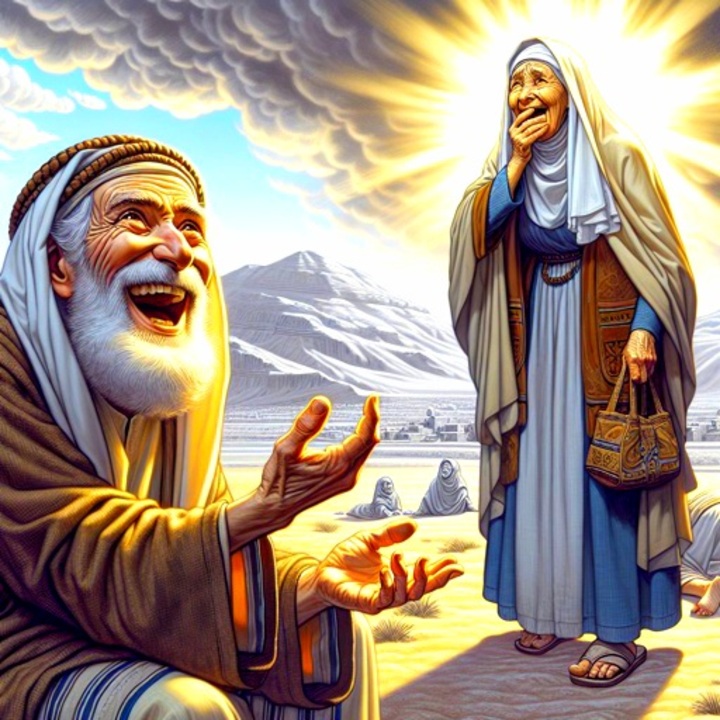
Then God said to Abraham, “As for Sarai your wife, you shall not call her name Sarai, but Sarah shall be her name. I will bless her, and indeed I will give you a son by her. Then I will bless her greatly, and she shall be a mother of nations; kings of peoples will come from her.”Then Abraham fell down and laughed, and said in his heart, “Will a child be born to a man one hundred years old? And will Sarah, who is ninety years old, bear a child?”
But God said, “Sarah your wife will bear you a son, and you shall call his name Isaac; and I will establish My covenant with him for an everlasting covenant for his descendants after him.”
🤔 REFLECT: What word(s) or phrase(s) did you notice that God, El Shaddai, used over and over again in His message?
What do these repetitions reveal to you about God Almighty?
___________________ II. 🎓 INSTRUCTIONAL from Job:
In Job there is a lot of correct theology, but some very incorrect assumptions about the why of what happened to Job. While the things said about God in Job are generally true, the Almighty is infinitely so much more than our finite minds can grasp.
🤔 Question to ponder, what do we learn about God Almighty from this passage?
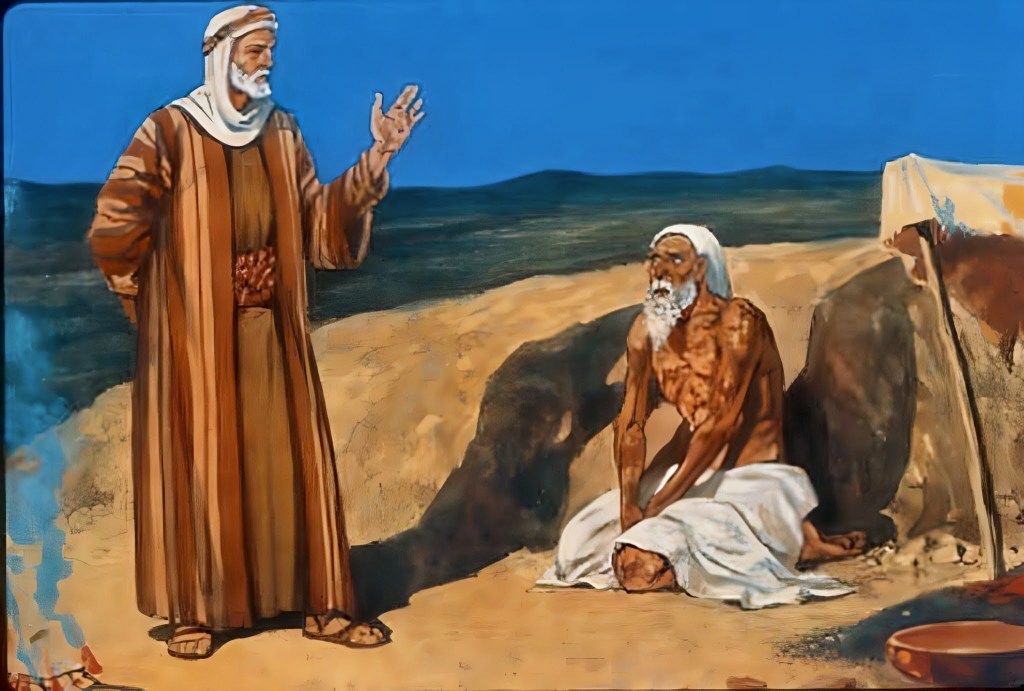
📖 READING 1b. Job 5, Eliphaz says…, Suffering is fatherly discipline, not arbitrary cruelty.
“Blessed is the man who God corrects; so do not despise the discipline of the Almighty.” (THEME)
For He wounds, but He also binds up; • He injures, but His hands also heal. From six calamities He will rescue you; • Even in seven no harm will touch you.
In famine He will deliver you from death, • and in battle from the slash of the sword. You will be protected from the harsh tongue, • and need not fear when destruction draws nears. In fact, you will laugh at destruction and famine!
You need not fear even wild animals. For you will have a treaty with the fields, • So that the wild animals will be at peace with you. You will know that your house is secure; • You will take stock of your property and find nothing missing. You will know that your children will be many, • and your descendents will be plentiful like the grass. You will come to the grave in full vigor, • like sheaves gathered in harvest time.
(CONCLUSION) So, do not despise the discipline of the Almighty, because He will bless those whom He corrects.”
🤔 REFLECT: These statements could be interpreted as promises. What do you think you would have to do to receive these promises from God? _______________________
III. WORSHIP: Praying back to God. 🙏Revelation 1:5-8; A Doxology to Jesus Christ.
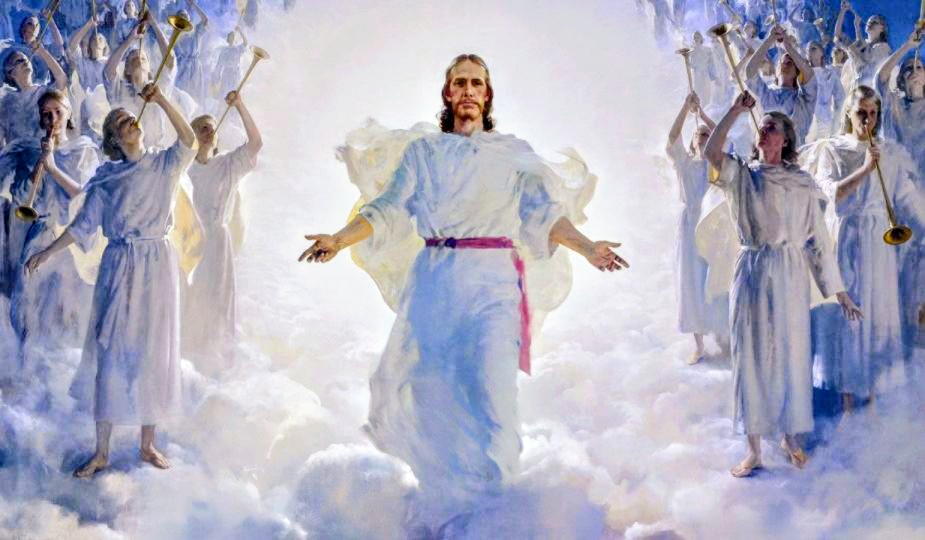
Dear Jesus Christ ✝️, my Lord and Savior: You are the Faithful Witness for God, • Your and my Heavenly Father. You are the firstborn from the dead. 🌅
Thank You for giving me this assurance that I too will rise from the dead on the Last Day. All power and authority have been given to You, Jesus, ✝️ • You are the ruler of all the kings of the earth. 👑 I submit myself to Your rule over me as my Lord. 🛐
Thank You for loving me, Jesus, 💖 • and for redeeming me from my sins by Your blood.❤️ Thank You, Jesus, for sanctifying me 🤍 • and making me a part of Your kingdom of priests to God, Your Father.
( To Him be glory and dominion forever and ever❗️)
Thank You, Jesus, that You will come back with the clouds, ⛅️☁️ • and every eye will see You, 👀 • and the nations will mourn over You, 😪 But I will rejoice as I rejoice over You now! 🥳 Hallelujah❗️
Jesus, you’ve promised that this shall be so, 🌎 world without end, ♾️ 🙏 I accept it in faith and believe. 🛐 👋Amen and amen❗️
○ The first name, Elohim, used ~2,600 times in the Hebrew Bible, established that there was a pre-existent, supernatural being that created the heavens and the Earth, and still claimed dominion over and possession of all His creation.
This is basically the definition of “God,” and Elohim is interpreted as such in English. In the Bible, we, as a part of His creation, are expected to acknowledge and worship Elohim, God the Creator, as He deserves.
● The second name, Elyon, used only 53 times on the Hebrew Bible, emphasizes God’s preeminence in His creation–the ultimate Authority and Supreme Judge. He didn’t just create the Universe and walk away, as some people think and some religions teach. He has a vested interest, especially in us, because we were made in His image. He has expectations for how we live our lives, and El Elyon, God Almighty, will hold us accountable.
🤔 REFLECT This third of the three most common Genesis Names for God, El-Shaddai, used 48 times in the Hebrew Bible, is translated as ‘God Almighty.’ It is the first time we see God get personal. El-Shaddai is God’s covenant Name with Abram and his descendents, inheritors of God’s promises to: 1. Become a great nation and 2. Messiah will come through their lineage.
These blogs on El-Shaddai will be divided into seven devotional segments. There are six passages in Genesis where El-Shaddai is used by the Patriarchs, but then historically it drops to just an occasional use by Israel in the rest of the Old Testament, having been replaced by a new covenantal Name. I will be pairing these six passages with six New Testament passages where the Greek translation of ‘Almighty’ is used in the worship of God and the exalted Jesus Christ.
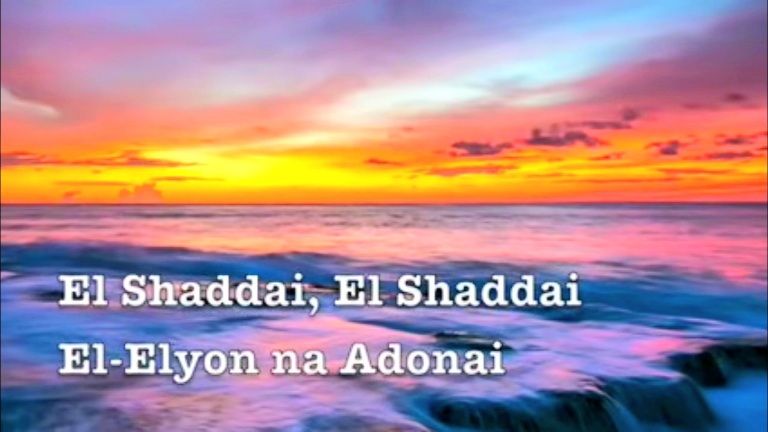
🎶 RECORDING 🛐😔 Before we repeat a passage back to God as El-Shaddai in prayer, there is a very pretty contemporary worship song using some of the names of God, especially featuring this week’s name, “El Shaddai.” Listening to it always puts me in a worshipful frame of mind and it helps with the pronunciation of some of the Hebrew names for God.
written by Michael Card and John Thompson, recorded by Amy Grant, 1982
LYRICS EXPLANATION:
Divine Names and Hebrew Phrases (Chorus)
El Shaddai“ = “God Almighty” first revealed to Abraham in Genesis 17:1.
“El Elyon na Adonai“ = Combines “God Most High,” Genesis 14:22, with the Hebrew particle of entreaty, na, meaning “O” or “we beseech you” and Adonai, “My Lord.”Erkamka na Adonai ” = from Psalm 18:1, “I love you, O Lord.”Age to age You’re still the same” reflects God’s unchanging nature. In Genesis, Abraham calls Him El Olam, ‘The Everlasting God.’
Old Testament Deliverance and Provision (Verse 1)
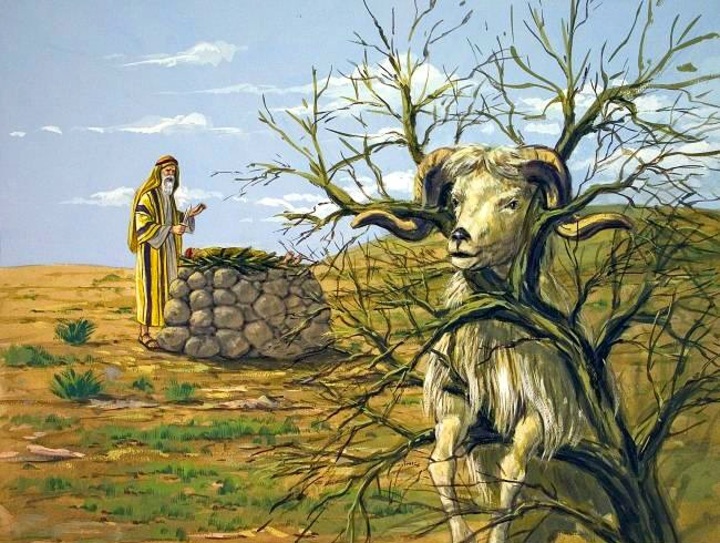
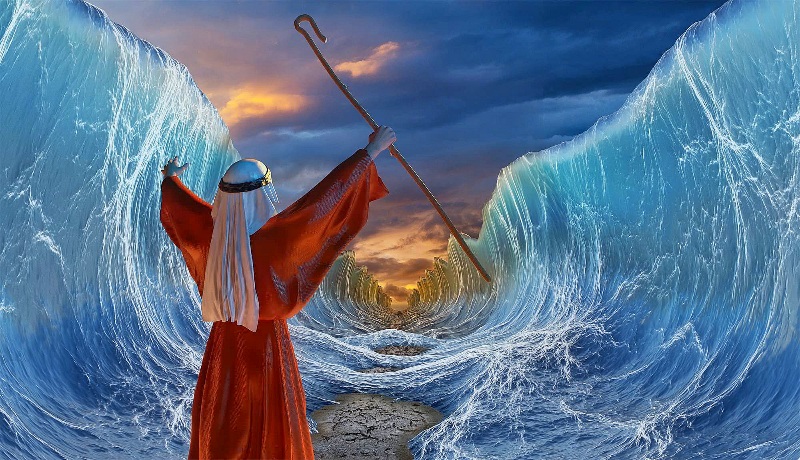
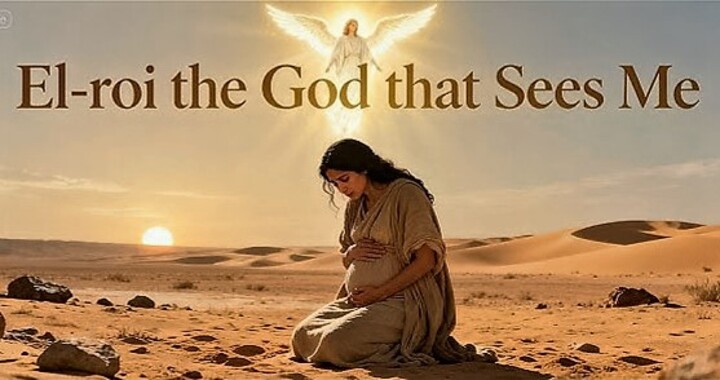
“Through your love and through the ram, You saved the son of Abraham.” Refers to the binding of Isaac on Mount Moriah where God provided a ram as a substitute sacrifice (Genesis 22:13). Jehovah Jireh.“Through the power of Your hand, You turned the sea into dry land.” The parting of the Red Sea during the exodus from Egypt (Exodus 14:21–22, Psalm 74:13.)“To the outcast on her knees, You were the God who really sees.” This is Hagar in the wilderness naming God, El Roi, “the God Who Sees Me”, Genesis 16:13.“And by Your might, You set your children free.” The liberation of Israel from slavery in Egypt (Deuteronomy 5:15, 6:21, and 7:8:). _______________________
The rest of this first blog for El-Shaddai contains a personalized devotion from Psalm 91, a very well-known use of El-Shaddai in one of only three of the Psalms.
🙏 REPEAT: pray Psalm 91; The Security of Trust in the Almighty.
By faith I shelter in You, • El-Elyon, the Most High God; In faith I hide in Your shadow, • El-Shaddai, Almighty God. Because I trust in You, • My Lord and my God.
• O LORD,YHWH, You are my refuge and my fortress: • Deliver me from the snare of the entrapper, • Protect me from the deceit of sinners. • Save me from the wrath of the storm.
I seek refuge under Your wings, Adonai; • Cover me with Your pinions, • Shield me with Your faithfulness. • Assure me with Your love.
Selah (Stop and think about it.) 🤔
Because of Your protection, • I am not afraid of the terrors at night, • I am not afraid of the sneak attack from ambush, • I am not afraid of the sickness that creeps unseen, • I am not afraid of the disaster that looms waiting, Whether day or night, You protect me.
A thousand may fall at my side, • And ten thousand at my right hand; But I know destruction will not come near me. • I will only see it with my eyes, When You punish the wicked.
I know this because I make you, OYHWH, • I make You, the LORD, my refuge, I make You, O Most High, • I make You, Elyon, my dwelling place.
You have promised, • That no evil will happen to me, You have promised, • That no plague will come near my home. You have promised…,
I trust in You, YahwehShaddai, • Therefore I trust in Your promises, O Mighty LORD.
Selah (Stop and think about it.) 🤔
O LORD, you have given Your angels charge concerning me, • They guard all my comings and goings. • They bear me up in their hands, So that I don’t even stub my foot against a stone.
If I step on a lion’s tail, • Even the young lion I will stomp into the ground. If I step on a cobra’s coils, • Even the serpent I will trample into the dirt. Because you are my Shield, my Shaddai. • You are my Protector, Lord Adonai.
Selah (Stop and think about it.) 🤔
• I love You, O Lord, my God, Adonai Elohim, deliver me when I stumble. • You are my LORD and my God, Yahweh Elohim, lift me up when I fall. • Because You are my LORD.
Because I know You by Name. When I call on You, my Lord, • O Adonai, please hear me; My God, when I am in trouble, • O Elohim, please save me.
You have honored me with knowledge, • The knowledge of Elyon, the Most High; Please grant me a long and satisfying life; • And at the end that may I see Your face,Yah-Shua, That I may see the face of Jesus, • the God of my salvation.
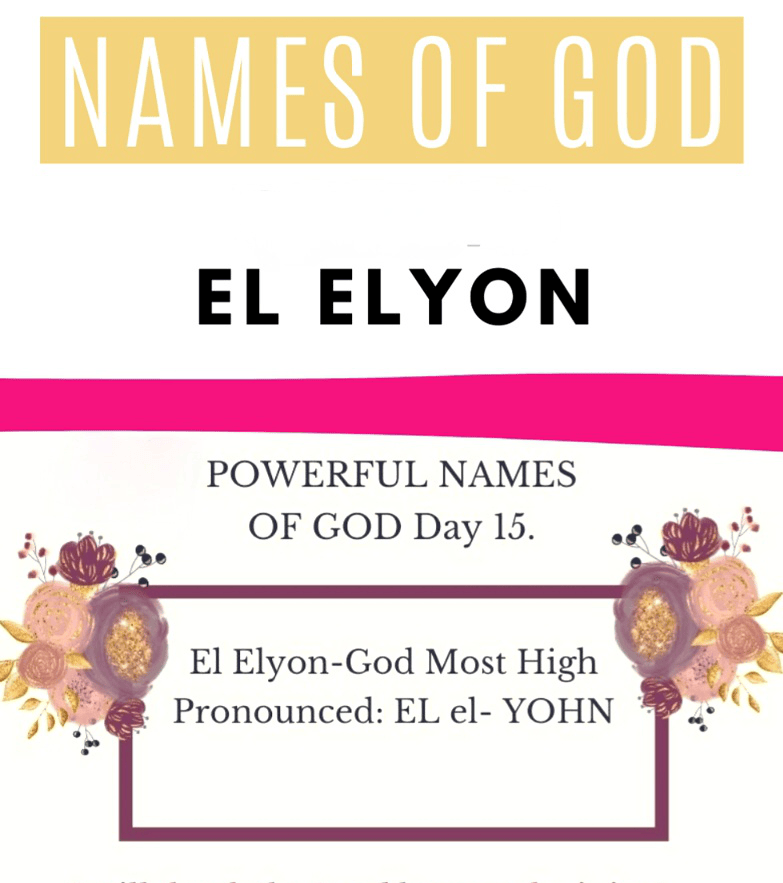
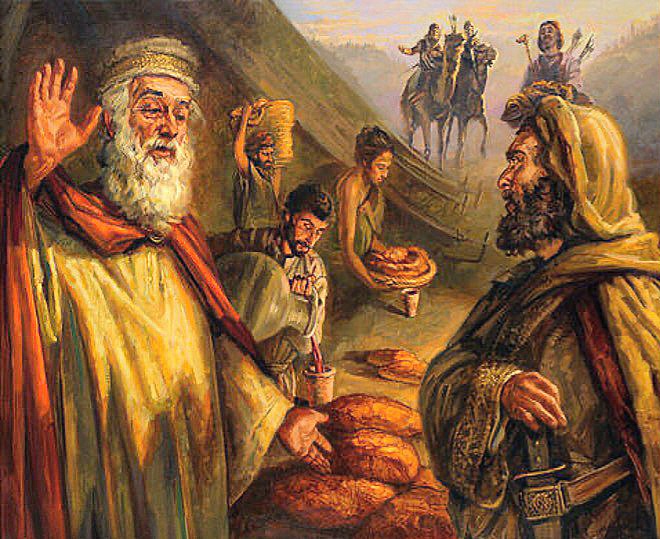
📖 READ: Genesis 14In Genesis 14:18, Melchizadek, King of Salem, was identified as a priest of El Elyon.
:19, Melchizadek blessed Abram and identified him as belonging to El Elyon, also identified as “Owner / Possessor of the Heavens and the Earth.” :20, and Melchizadek blessed (praised) El Elyon and identified He was who had delivered the enemies into Abram’s hand.
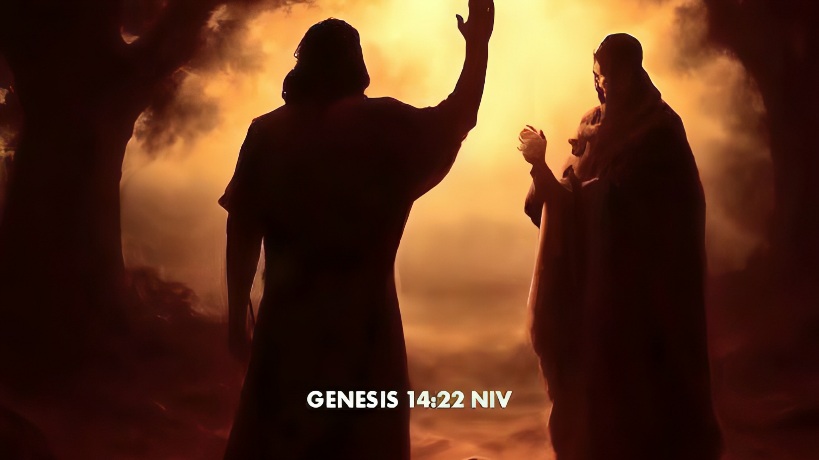
:22 Abram said, “I have raised my hand to YHWH El-Elyon, Creator of heaven and earth,” meaning he had made a vow to his God, who He also identified as El Elyon, but with the added name of YHWH.
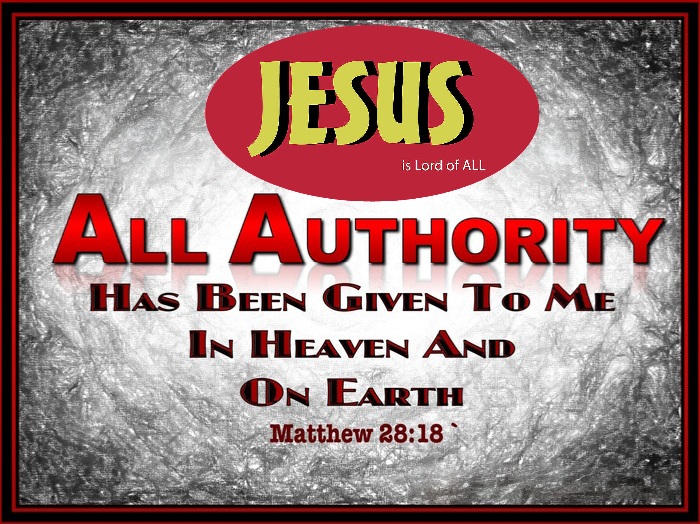
New Testament equivalent: Jesus was referred to by demons as “Son of the Most High.” In Matthew 28:18a, the resurrected Jesus stated He had been given the same position as El Elyon when He said:
====================
🤔 REFLECT: El Elyon, the “Most High God,” emphasizes God’s ultimate authority, transcendence, and supremacy over all other powers and deities. El Elyon is used throughout the Hebrew Bible to emphasize that God has no rivals, equals, or superiors.
Some synonyms in Western history are:
“The Supreme Deity” = the ultimate, all-powerful, and eternal divine entity that created, sustains, and rules the universe.
“The Supreme Judge of Mankind” = the ultimate divine authority appealed to by the American founders for the righteousness of their cause.
Therefore, praying to Elyon is like taking your plea to the Supreme Court. Consider using this Name when you wish to praise and exalt God “to the highest,” (kind of like the angels at Christmas), and to take your requests to the God who is the Highest Authority. =================
🙏 REPEAT back to God in prayer:
Psalms employs the title Elyon thirty times, often pairing it with YHWH, God’s covenant name with Israel. El Elyon is used interchangeably with both Elohim and YHWH. This interchangeability reminded Israel that there were no circumstances outside the authority of their covenant God, because He is also the Creator God, who has existed from the beginning, as well as the Most High God, above everyone and everything on Earth, as well as in Heaven.
In the Psalms, Israel’s worship books, the use of Elyon reminded them that the One they approach in prayer and worship, although He is enthroned above all creation, is willing to listen to their prayers, step down from His position of ultimate authority, and reach out to save them in response.
In the following four Psalms, different kinds of prayers toYHWH Elyon are interpretively personalized. Read through them and maybe use one of them when you find yourself in a situation where you need to take your plea to the “Supreme God,” knowing that He will hear you, listen to you, and reach out to help on your behalf.
The Psalms with Elyon used here are:
1. Psalm 47 – Praise to theMost High God, Ruler of all the Earth.
2. Psalm 9 – Praise to the Most High God and prayer for deliverance from enemies.
3. Psalm 57 – Praise for El-Elyon and prayer for safety from enemies.
4. Psalm 97 – A song of praise to the Sovereign Lord.
============================
1. Psalm 47. Praise to the Most High God, Ruler of all the Earth.
Prayer isn’t just about asking for God’s help, it is also about praising and worshipping Him. Let’s start out with a psalm of praise to El-Elyon, the Most High God.
👏 I clap my hands, I shout to You, O Elohim God, I shout with a loud voice of triumph! Yeah! 😲
🛐 I bow down in homage to You, the Most High LORD, For You,YHWH Elyon, are the Great King over all the Earth. 👑
🌎 And one day all the peoples of all the nations, will bow down at Your feet. 🛐
Selah. (🛑 Stop and think about it.🤔)🪑 One day You will rise up from Your throne with a shout, OYHWH, and You will give me an eternal inheritance. 🙏 Thank you, Jesus, Son of Elyon,the Most High. ✝️ 📯 When Your coming is announced with the blast of a trumpet, You will reward me and all those whom You love. 🙏 Thank you, Jesus, Son of Elyon,the Most High. ✝️ I praise You, Elohim; 🙌 😲 O God, I shout praises to You! 👑 I praise you, my King; 🙌 I praise You over and over again! 🙌 🙌👑 🌎 For You, Elohim God, are the King of all the Earth; So I praise You with everything I am. 🙌 😲
👑 🌎 It is You, Elohim God, who reigns over the nations; So I kneel to You in submission. 🛐
👑 🪑 It is You, Elohim God, who sits upon the holy throne, So I bow my head to honor You. 😔🙌 I greatly exalt You, Elohim God, Above all else and above all others. For You, and You alone, are El-Elyon, The Most High God!!!
AMEN❗️
====================
2. Psalm 9 – Praise to the Most High God and prayer for deliverance from enemies.
I praise you, YHWH; 🙌 ❤️ O LORD, I praise You with all my heart. 🌈 I think about Your wonders from the past; 🥳 And I am gladdened, I rejoice in You!
I praise Your Name Elyon. O Most High God: 🙌 🙏 Please turn back my enemies from their path. 🙏 Please cause them to stumble and fall out of favor.You who sit on Your throne of righteousness judgment: 🪑 🙏Please support the rightness of my cause.
In the past: ⚡️ You have rebuked nations, ⚡️ You have destroyed wicked cities, ⚡️ You have blotted them out of remembrance.
But You, O LORD, You endure forever; ♾️ 🪑 Your throne is established for judgment. 🌎 You will judge the world in righteousness, and ⚖️ You will judge all peoples in Your uprightness.
Selah. (🛑 Stop and think about it.🤔)But now, even now, O LORD, • Be my refuge when I feel oppressed; • Be a retreat when times are troubled.
I know Your Name, YHWH…Jesus, So I put my trust in You. ✝️
O LORD, do not forsake me as I seek You!
Have mercy on me, O Lord! • Consider my troubles and those who oppress me! • Lift me up from the depths of despair!
🙌 Then I will be able to praise You to everyone; 🥳 Then I will rejoice out loud for Your salvation!
🙏 O Lord, cause my enemies to fall into the trap they have set for me! 🙏 O Lord, entangle their feet in the net they have laid in my path! 🙏 O Lord, show everyone how righteous is Your judgment when the wicked are ensnared in the work of their own hands.
Selah. (🛑 Stop and think about it.🤔)Arise, O LORD, on my behalf! 🌄 Do not let wicked people prevail against me! ⚡️Judge those who are clearly wicked in Your sight. ⚡️Put the fear of You into the wicked, O Lord! ⚡️Make the wicked realize they are mere mortals!🙏 And so, I thank you El-Elyon. For the deliverance yet to come,
🙏 I thank You, Most High God; Because I know You are faithful,
🙏 I thank You, O LORD. Because I know you hear my prayers.👂 AMEN❗️
3. Psalm 57 – Praise forEl-Elyonand prayer for safety from enemies.
My soul trusts in You; 🙏 Be merciful to me, O God. 🙏 Hide me in the shadow of Your wings. 🙏 Shelter me until this storm passes by.I cry out to You, El Elyon; 😫 Fulfill Your promises to me, Most High God. 🙏 Please send help from heaven and save me; 🙏 Please rebuke those who would swallow me up; 🙏 Please, O God, send me Your assurance. Yes, Elohim, send forth Your mercy. 🛐
Selah. (🛑 Stop and think about it.🤔)Even so, my heart remains steadfast, Elohim; 💞 ❤️ O God, I set my heart on You. 🎶 My heart sings, and 🙌 I give praise to You!Awaken, my God, my Glory! 🌅 Rise like the dawn for me in my need!
I praise You, my Lord Adonai. 👑 🙌 I will profess You before all people; 😲 🌌 For Your mercy reaches to the heavens, ⛅️ And Your lovingkindness reaches to the sky.
I exalt You, Elohim; 🙌 O God, I exalt you to the heavens.🌌
Most High God, let Your glory fill all the earth. 🌎 🌏🌍 El-Elyon, let Your glory shine in me. 🌞
AMEN❗️
================
4. Psalm 97 – A Song of Praise to the Sovereign Lord.
You reign, O LORD,YHWH! 👑 🌎 I rejoice with all the Earth! 🥳 I celebrate with all the nations!
Righteousness and justice ⚖️ are the foundations of Your throne.🪑 ⚡️ Your power lights up the World; 🌎 All the Earth trembles before You. 🗻 The mountains bow low at Your presence, O LORD.
bow low before You too, 🛐 O Adonai,Lord of all the Earth. 👑 🌎
Selah. (🛑 Stop and think about it.🤔)The heavens declare Your greatness, O LORD, 🌠 🌈 I see Your glory displayed in them. 🛐 I am not ashamed before unbelievers, because I worship You, El-Elyon, 🙌 I exalt You, O God, above all other gods.
I hear Your words and they make me glad, 🥳 I rejoice because of Your righteous judgments, O LORD.
For You areYHWH Elyon, the Most High LORD, 👑 🌎 You are Ruler over all the Earth. 🙌⛅️ You are greatly exalted above all the gods!I love You LORD! ❤️ (But I hate evil! 😡) 🤍 You preserve my soul and sanctify me; 👹 You deliver me from the wicked. 💥 You shine Your light in my mind, 💗 Your righteous joy fills my heart.
I rejoice in You, O Most High LORD, 🥳 I rejoice and give thanks to Your Holy Name. 🙏
AMEN❗️ ===============
THE NEXT BLOG
The first two names for God in Genesis were in common usage in the Middle East, but we don’t know their origin. The next name given for God in the Bible is the first Name that God calls Himself by, at least according to the written record.
• We’ve had Elohim, which emphasizes the pre-existent godhead who created the world and the Universe.
• Then we have El-Elyon,the pre-eminent God who is over all rulers, powers and authorities…
Where do we go from here? How does God want to name Himself and why?
Elohim appears 32 times in the first chapter of Genesis, 300 times in Genesis, 369 times in Psalms, and almost 2,600 times throughout the whole Hebrew Bible.
Elohim was the name for the gods among the ancient Middle Eastern cultures from where Abraham was called out and recognized as being the “Creator and Possessor of Heaven and Earth.” Singular is ‘El,’ and it is often used in combination with other qualities of God to make different names describing Him.
🤔 REFLECT:
God the “Mighty Creator” created it all— 《》 separating light from the darkness; 《》 separating land from water; and 《》 separating day from night.He created all there is ‘ex nihilo,’ out of nothing– ¤ by His own will, ¤ by His own design and ¤ by His own power.The Creator God– -> transcends His creation, -> transcends any created power or authority, and -> transcends our thoughts and imagination. (Limited created beings that we are.)The Mighty Creator God displays– • His supreme power, • His sovereignty, and • His faithfulness…
…in His covenant relationships–1. First with Abraham, who He called to leave his home and family.2. Then with the nation of Israel, who He called out of slavery in Egypt with awesome demonstrations of power.
3. And then with His Only Begotten Son, the promised Messiah, Jesus Christ, who He sent from heaven-‘His ‘home’–a place beyond His creation.
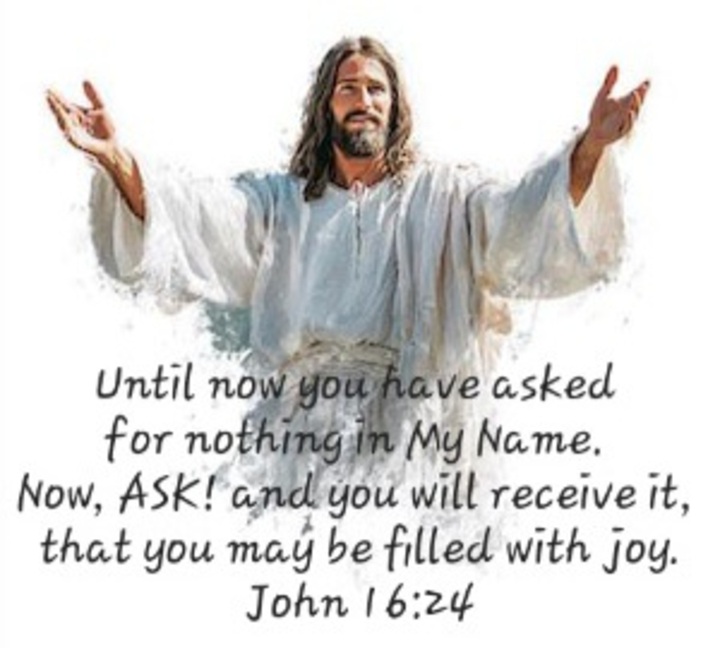
And now we who have believed in Him through His Son are invited to ask of Him:
🙏 REPEAT back to God in prayer:
The Name Elohim, in English, “the Mighty Creator God,” embodies His creative power. Use this name when you are calling upon God to create something new, something that you can’t see or imagine happening, something seemingly from nothing. Here are some verses with the pronouns changed as examples of how to pray God’s attributes back to Him in preparation to presenting your requests.New Testament: Jesus as the Creator:
Now, with God the Mighty Creator in mind, present your needs and requests to Him.