The next to last thing Paul indicated in Philippians 4:8 that we should fill our minds with is “virtue” (KJV/NKJV). This is a special Mother’s Day blog with some quotes from Proverbs chapter 31, often titled, “The Virtuous Woman,” along with some prayers to lift up for the mothers in our lives.This blog is dedicated to the mothers in our small group–Stacy, Lori, Shannon, Cindy, Missi, Joanna and Beverly. HAPPY MOTHER’S DAY!
God has given us mothers to raise, teach, and mold us into godly people. Every mother — from the one to whom being a mom comes naturally, to the one who struggles with the role — deserves honor and praise for doing the work God has given them.
Prayer of Blessing for Mothers
Almighty God, we ask Your blessing today on our mothers. Fill their hearts with laughter and joy. Surround them with love from family and friends. Grant them health, peace, and fulfillment as they pursue their holy calling. Let them feel and know their value and worth in Your eyes and in ours. Amen.
Prayer for Strength and Wisdom
Lord God, we lift up our mothers to You. Give them…
• Strength to face daily challenges with courage, • Wisdom to guide their children in obedience to You, • Encouragement when they are feeling down and, • Inspiration when they’re at the end of their resources.
Bless them with Your peace and love. Amen.
Prayer for Those Facing Difficulties
Heavenly Father, we lift up the mothers who are facing difficulties and trials. Whether they are dealing with health issues, with financial stress, or with relational struggles, please be their Rock and their Fortress. Provide them with Your protection and provision. Let Your presence be a comforting reminder that they are not alone in their journey. Amen.
May theme = Focus on the Good #1e. Philippians 4:8e – Think about Whatever isLovely
Paul’s list of qualities seemingly moves from objective reality (“true,” “right”) to qualities that relate to how we feel about something (“lovely,” “admirable”). However, Biblical loveliness is not just subjective fondness; it is a relational necessity that underpins true Christian fellowship and effective Body ministry.
‘Lovely’ is the Greek adjective prosphilés: translated pleasing, agreeable or lovely. It is from pro– toward, and the verb –phileo, to have affection for; the noun form of which is philos = friend. Properly, prosphilés means “inclubed toward personal affection and friendship.”
It’s use in Philippians 4:8 is a singular occurrence, so here we go again, a rare or unique adjective in the Greek New Testament, used only by Paul and only here.
In order to get some traction on what Paul might mean, let’s check some of the verses with the noun and verb forms such as the brotherly love (phil-adelphia) verses.
Romans 12:10 Being devoted (philo-storge) in brotherly love (philadelphia) means being friendly toward each other like they’re family.Hebrews 13:1 Brotherly love (philadelphia) should be continuous, no vacations!1 Peter 1:22 Purifying our heart by obedience to God’s truth prepares us for having a sincere love of the brethren (philadelphia).
There are several words in Greek that mean different kinds of love. The other one used frequently in the Greek New Testament is agape’ love. This is a kind of enduring love made by a choice rather than based on how you feel, like phileo.
There is a verse that contains both pf these Greek words that hints at the relationship between the two for Christians.
1 Thessalonians 4:9: brotherly love = philadelphia taught by God to love = agapan.
Paul’s language suggests friendship toward each other is driven by the greater commands from God and Jesus Christ to love agape’ style
The command to love each other, agape’ love, was a new commandment by our Lord and Savior Jesus Christ.
The new commandment to love by Jesus Christ in John 13:34–35 all are forms of agape’ = love times four. • Love (agapate) one another. • As I have loved (agapesa) you, • so you must love (agapate) one another. • if you love (agapen) one another…
But Jesus wasn’t the first to place an emphasis on love in the Bible. Buried within the Law were two key verses that Jesus said summarized all the Law and the Prophets–
1) Love God and 2) Love your neighbor.
The second one falls within the meaning of our Philippians 4:8 theme word for today, so let’s take a closer look at it.
The second greatest commandment of God is quoted in Mark 12:30-31, “You shall love (agapaseis) your neighbor as yourself.’ (Also Matthew 22:39).
Jesus, by labeling and agreeing that this command was the second most important command given by God in the Law, suggests that we should also make “loving our neighbors” our second priority in everything we think, say and do.
The FIRST priority should always be to love God Himself.
This Biblical priority order was put like this by the ill-fated football player, Gale Sayers:
The “second greatest command” is from Leviticus 19:18 and the context sums up some commands about interacting with your neighbors–the Old Testament equivalent of the New Testament ‘brothers.’
1. Leviticus 19:15 • NEGATIVE: DO NOT be partial against the poor or for the wealthy. • POSITIVE: Treat everyone fairly and without prejudice.2. Leviticus 19:16 • NEGATIVE: DO NOT gossip and criticize. • POSITIVE: Stand up for others, instead.3. Leviticus 19:17 • NEGATIVE: DO NOT secretly hate others. • POSITIVE: Be open and honest, instead.4. And in Leviticus 19:18 • NEGATIVE: DO NOT hold a grudge or seek revenge. • POSITIVE: Love others like yourself.The opposite of the two negatives in verse Leviticus 19:18 is FORGIVING each other. So, putting these two ideas together, we can infer that loving those around us (our neighbors) also means being forgiving of them.
There are also many similar qualities associated with forgiveness in the New Testament that we are commanded and/or exhorted to be toward each other.
“Loving our neighbors as ourselves” also reminds me of something else Paul wrote:
I wouldn’t be surprised if Paul borrowed this idea for husband-wife relationships from Leviticus 19.
Expanding Paul’s contribution to the idea of “loving our neighbor,” we get the idea that we should help build them up. This idea parallels Paul’s commands in Thessalonians:
All of these positive qualities add up to how we should be friends with each other within the Body of Christ. I believe that is the ‘loveliness’ to which Paul is referring in Philippians 4:8.
To summarize:
NOTE: “Good and pleasant” is a definition for “lovely” in English.
Be friendly toward EVERYONE without prejudice or partiality: 1. Be supportive. 2. Be open and honest. 3. Be forgiving. 4. Be encouraging. 5. Build them up.
🍎 APPLICATION Here are some nonBiblical synonyms for today’s theme word’s meaning, “leaning toward friendship,” and which offer suggestions for how to develop friendly relations:
• Show friendly interest.
• Look for ways to grow closer.
• Identify and develop affinities.
• Foster connections: Seek to actively build bonds.
• Build rapport. Means a harmonious relationship characterized by mutual trust, understanding, and empathy, allowing for easy communication between people.
• Be companionable. Someone who is friendly, pleasant, and sociable to be around, often acting as a pleasant, easy-going companion
• Cultivate camaraderie – A spirit of familiarity, trust, and friendship that develops among people who spend a lot of time together or work toward a common goal.
To summarize–‘loveliness’ is being intentional about becoming friends with your Christian ‘neighbors.’ Pick one of the techniques above that you feel you need to improve in and work on it this week. I know there are MANY that I need to work on!
So, even though the exact Greek adjective form for ‘lovely,’ only appears once in the New Testament, it is closely related to some very important Scriptures and might be why Paul says…
May theme = Focus on the Good#1d.Philippians 4:8d – Think about Whatever is Pure
4. Whatever is Pure = the Greek adjective h’agnos. Literally meaning a- , without, and –hagos, something awful, gross or nasty.
H’agnos is a form of the more familiar Greek adjective h’agios, which is most often translated as ‘holy’.
I find it very interesting that there is not a positive word for purity and holiness, but they use the negation of a negative word, the old “two negatives make a positive” rule. The implication is “not pure” is the common state and I guess we can more easily recognize when something is an exception to the ordinary?
In the Old Testament, the same principle is expressed in the translation “unblemished” (Hebrew: tamim) refering to sacrificial animals and priests needing to be physically perfect, “without defect, spot, or blemish.” This requirement symbolized holiness and purity, in other words, God demands our best.
This requirement prefigured the righteous perfection of Jesus Christ as the ultimate sacrifice for the sins of humankind. Some related verses:
Exodus 12:5 – The Passover Lamb must be “without blemish,” as should any animal offered for an atoning sacrifice.Leviticus 21:17-23 Priests must be withoutdefect to serve in the tabernacle (or later the temple).And the same language is used in Hebrews to describe Jesus. In Hebrews 9:14, Jesus is described as an ‘unblemished‘ sacrifice.
Getting back to the New Testament and Philippians… Whereas h’agios (holy) is used 235 times in the Greek New Testament, h’agnos (pure) joins the first two adjectives used by Paul in Philippians 4:8 as being rarely used, in this case, only 8 times. Let’s look at some of those verses and see what food for thought they provide about purity.
James portrays heavenly wisdom as “first of all pure,” declaring purity as the source from which all the other virtues flow.In Titus 2:5, Paul encourages young women to be “pure” so that the word of God will not be “dishonored,” highlighting the importance of personal integrity in being a witness to the gospel–that is, our purity is a testimony to God’s holiness.Peter recommends “pure… demeanor” for believing wives, showing that a testimony of purity carries persuasive power, even toward an unbelieving spouse.In 2 Corinthians 11:2, Paul pictures the Corinthian church as “a pure virgin presented to Christ.” Using bridal imagery from Jewish betrothal customs, he emphasizes the exclusiveness of the covenant relationship with God.John links purity to our future hope. Our focus on the second coming of Jesus Christ should motivate us to live a life of unparalleled purity.
In 2 Corinthians 7:11, Paul describes the Corinthian church as having proved itself “innocent” (pure) after Paul had called them to account for public sin in his first letter.
The Corinthian church’s response to this revealed sin was a deep godly sorrow that Paul greatly commended. Following is a closer look at the 7 qualities Paul associated with their repentance to the point of bring able to regain their purity as a church.1. Diligence. First, they moved quickly to deal with the sinful situation after receiving Paul’s letter.2. Pleas (apologia). Then there was much discussion and argument about it with all involved.3. Indignation. A single-use noun from a more common Greek word. The uniqueness of this word emphasizes the church’s response was not a generalized anger, but a focused, moral outrage.4. Fear. Although it doesn’t specify fear of God, the implication is there. Their fear might well have been that God’s grace, mercy and blessing would be taken away from the church. If you don’t think Jesus does that, read the letters to the 7 churches at the beginning of the Revelation of John.5. Earnest desire. An intense yearning that is more than simple emotion, but leads to fulfilling action. In the New Testament, it appears only in 2 Corinthians. Once they realized the sin needed to be dealt with, they knew they had to go beyond their feelings and take decisive, God-honoring action.6. Zeal. Greek = a ‘burning’ emotion; often translated ‘fervor.’ When the church had decided to deal with the sin, they “had their ire up,” to use another expression, and charged ahead in thorough, dedicated and complete implementation.7. Punishment of wrong. Greek ek-dikésis: A combination of ek- = out of and -dikeo = justice, one of the Philippians 4:8 qualities, it is used to refer to what comes out of the execution of justice. Here it means an appropriate punishment was applied to the sinner–not to condemn or totally expel, but rather appropriate for the wrong that was done that will also give the sinner a chance to repent and return to full fellowship with God and with the Church.
As you can see, there is a lot to the Biblical concept of purity. That is probably why Paul urges us…
May theme = Focus on the Good #1c. Philippians 4:8c – Think about right(eous) things.
3. Whatever is RIGHT = Greek adjective dikaios =Righteous, just, upright. From the noun dikē. Properly means”judicial approval.” Biblically it means keeping the commands of God.
The Philippians 4:8 adjective form of this Greek word is used 80 times in the New Testament. These 80 times do not count the noun construction, “righteousness.” This is in contrast to the words for the first two qualities where the adjective form is used only a few times. Let’s look at some of those verses that use “right(eous)” to provide some food for thought.
1. We are not righteous in and of ouselves–quite the opposite.
Paul makes the point clear that no one, absolutely no one, is righteous in and of themselves. Other qualities associated with lack of righteousness are:
• Lack of understanding of God, • Lack of desire to seek God, • Turning aside from obeying God, • Engaging in frivolous, unprofitable activities, • No desire to do good.
It’s interesting to turn those around and see what those of us who DO have righteousness as a gift from God have as the opposites:
• We have an understanding of who God is. • We have a desire to seek God and the things of God. • We may struggle with obeying God, but we keep working at it because we know it’s right. • We are trying to make our time count for eternity. • We try to choose the best options that lead to the most good as defined by God.
2. So, how do we get this gift of righteousness?
A. The “Great Exchange;” God exchanges our sin for His Son’s righteousness by laying the sins of everyone in the world–‘past, present and future–on Him at the cross.B. That righteousness is then credited to us by God when we choose to believe (have faith) in the truth of this information–which is the gospel.Three of the “solas” of Martin Luther that form the foundation of Protestant Christian faith.
3. What is the result of God’s gift of righteousness?
A. Our justification by faith in the Lord Jesus Christ brings us to a place of peace with God. You know how the unsaved are often afraid to come to God because innately they know God wants to punish them for their sins? They’re not wrong. Apart from faith in Jesus Christ, WE DO NOT HAVE peace with God!We can achieve that place of peace only by approaching God via faith in the “Lamb of God” who has paid the penalty for our sins, and not for ours only, but for those of the entire World–past, present and future.Righteous also means “Justified” = declared righteous in the eyes of God, by God and for God’s purposes.
B. The mechanism of salvation changes us–not only in the sight of God, that is our imputed righteousness, but on a practical level. We are cleansed within by the Holy Spirit when we are born again. And that same Holy Spirit, who will stay within us until we see Jesus face-to-face, that same Holy Spirit renews us on a day-by-day basis as we submit to His authority, and walk by the same faith with which we first believed.
C. This right-standing with God, plus the cleansing from sin within, then should result in us actively making changes in our lives. We must leave behind those things that displease God, that are not consistent with His Holy nature–that is ungodliness and the passions of the world–and live a righteous life.
4. This righteous walk with God requires a daily reboot.
1 John 1:9 summarizes this whole chain that I’ve just described, but as a regular practice:
A. It’s God who was faithful to His promise to make a way of salvation for humankind.
B. God is justified in forgiving our sins because the penalty was paid by Jesus Christ.
C. We have to confess–agree with God–about what is sin in our thoughts, words and actions; then make a choice to turn away from them and turn towards God and the things of God.
D. God will then, on a personal level, extend His forgiveness for our past mistakes and cleanse us within from the results of our sins, and even, through repetition, remove the power of that sin to control us.
Whew! I don’t know about you, but spending this time thinking about God’s righteousness and salvation has left me with a feeling of awe and gratefulness toward God and Jesus Christ!
So, since it is essential that we feel this way every day as a reminder of our salvation, don’t forget to obey Paul’s command today…
May theme = Focus on the Good #1. Philippians 4:8b – Think about noble things.
The Hebrew word for ‘noble‘ used 3 times.
2. ‘Noble‘ (‘honorable’ NASB) in Philippians 4:8 is the Greek word semnós, an adjective derived from the verb sébomai, “to revere, be in awe of, to worship.” It is used in Greek writings variously to mean:
Being august = dignified and deeply respected because of achievement over time.Having gravitas (means ‘weighty’) = earning a deep respect from others due to long-standing positive words and actions.Being grave, sober = taking things seriously.Being considered noble = describes rulers who discharge the duties of their position with great seriousness and dignity.Considered worthy of being praised / honored in an appropriate way.🍎 See if you can pick out the rest of the 10 traits of a noble person from this blog. 👀
From the various uses of the Greek word, some of the same English words emerge:
• Dignified (without being pompous), • Respected (without being demanding), • Serious (without being somber).
There are 3 other occurrences of this Greek adjective in the New Testament.
In 1 Timothy 3:8-11, Paul tells Timothy that when considering men to serve as deacons, both the men and their wives should be worthy of respect (noble), among other important qualities.Paul writes some similar advice to his other protégé, Titus, to teach the older men, who will serve as mentors for the younger men (same for the older women), how to be worthy of respect (noble). That would imply that we can and should learn this essential characteric needed for Christian leadership.The Greek word semnós conveys a quality of moral consistency, conduct and character that invites respect, because it reflects the holiness, gravitas, and worthiness of God Himself–in other words, the image of God.😑 Semnós never suggests somber aloofness, but urges believers to live involved with others in a manner that earns respect without demanding it.😇 Semnós especially calls those in ministry to live a life whose moral seriousness attracts genuine respect, and reflects the worthiness of the God that they serve.
If you feel like you need to grow in being worthy of respect, then follow Paul’s advice in Philippians 4:8…
🍎 APPLICATIONS:
🤔 Think about the things associated with the Greek word translated “noble“. Would you say all areas of your life exemplify these qualities?
🤔 Can you think of maybe one thing you can change in what you do or say that might lead people to respect you and your God more?
Growing in these qualities is why Paul is commanding Christians to think about them 🤔 in Philippians 4:8. It’s a worthy goal to strive for! 🏃♀️
Oh, and the 10 ‘noble‘ characteristics:
1. Worthy of being revered/honored. 2. Demonstrates wisdom. 3. Earns the respect of others. 4. Takes responsibilities seriously. 5. Discharges duties with appropriate aplomb. (Websters: confident composure, self assured; synonym = poise.) 6. Acts in a dignified way. 7. Consistent moral conduct. 8. Altruistic = Involved with meeting the needs of others; not just concerned about themselves. 9. Words and actions reflect God’s nature. 10. Words carry weight with others.
Paul has a list of 8 positive qualities that we as Christians should fill our thoughts with. I’m going to split them up into daily devotions.
I apologize in advance for the more academic tone of this blog. The concept of truth is at the ‘deep end of the pool,’ and when I take a deep dive in that end, I start to use my big words because they best communicate my understanding. I’ve tried to add the definition wherever I did that to help you understand what I’m trying to say. I hope it works!
Philosophers have been speculating throughout history: if you strip away the physical trappings of the Universe, what would be left? What is the ultimate truth? What is ultimate reality? The Bible provides an answer for those questions.
This Greek word for ‘truth‘ is used 26 times in the New Testament–to describe a person, a statement, a grace, or even food and drink. A-lethe is used to draw a sharp line between what merely seems to be and what genuinely is.
That dividing line between ultimate truth and ‘not truth’ is defined by God. Biblical truth is reality as seen by God. Anything else is just obfuscation, that is, ephemeral physical or psychological states that obscure the truth, making it more difficult to perceive and understand.

As Christians, we have the responsibility to proclaim God’s truth to every one we can, as often as we can. God’s Truth has a power beyond our own to liberate people from what really enslaves them–sin and the the enemy’s Kingdom of Darkness.
Ten of the 26 uses of this Greek adjective for truth in the New Testament are related to Jesus, with most of them used by John, culminating in Jesus’ great revelation of Himself:
Not that Jesus knows the truth, but that He IS the Truth. To know God’s truth as revealed through Jesus Christ is not like using the Bible as a textbook for study. Instead, it is reading it as a diary or letters from God in order to develop a personal relationship with Him. Once you come to know Him, THEN you will know the Truth.
This Greek word for truth is also used to describe witness testimonies and the witnesses themselves when it comes to testifying about Jesus and the gospel. That would be us! The more truth you know and the better you understand it, the better witness to gospel truth you can be.
In Philippians 4:8, Paul has placed God’s truth as the preeminent quality in his list of morally suitable subjects for Christian thought and meditation.
In Christian discipleship, Philippians 4:8 makes God’s truth not only a discipline of the mind, which we should use to shape our speech and daily decision-making, but it should also be used as a yardstick by which we evaluate our media consumption.
“Garbage in, garbage out,” is an old computer mantra that describes poor computing results by a machine. But it can also be used to describe poor decision-making by our built-in computer–our brain.
Let’s make sure we are filling our minds with the good things we need to make godly decisions, starting with–
🍎 APPLICATION: Have you been thinking about truth like Paul commands us to do? If so, what did you learn about it from this blog? Pick one of the following questions from the content of the blog that matches what you’ve been thinking about and use it to stimulate your thinking further.
1. How would you define ultimate truth?
2. How can you use God’s Word to separate truth from fiction, fantasy or wishful thinking? (Hebrews 4:12)
3. How can you use God’s Truth to liberate people from ignorance, falsehood and willful sin? (John 8:32)
4. What should we do in order to seek God’s truth in a situation? (John 18:37)
5. What can you do to get to know Jesus better so that you can understand God’s Truth better? (John 14:6)
6. What can you do to be a better witness to others about God’s Truth? (1 John 2:20)
7. Has God identified any areas of your life where you are stuffing your mind with garbage instead of God’s Truth?
8. What is one thing you can change in your routine so you can spend more time obeying Paul’s command, “Whatever is true…think on it.”
The aspects of God that Asaph, the choir director of King David’s time, refers to are the same qualities we have seen in our previous three April verses about God:
1. God’s glorious/praiseworthy deeds = te’hillah = asong of praise.
2. God’s power/might = ezuz = strength; from azaz; forcibleness.
3. God’s wonders/wonderful works = nif-l’ot = miracles. From verb to be wonderful, to be extraordinary, to be marvelous.
The new element in this Psalm is the importance of passing on the stories of God’s demonstrations of His glorious deeds, power and miracles to the next generation.
This ‘passing on’ was actually commanded by God. It was essential for Israel to keep their memories of what God had done for them fresh in order to maintain their identity as the chosen ones of God. Every parent was expected to be a historian of God’s grace to their family. The clearest statement of this mandate is found in Moses’ retelling of the Law in Deuteronomy, chapter 11:
5 It was not your children who saw what He did for you in the wilderness until yeou arrived at this place… 7 But it was with your own eyes that you saw all these great things the Lord has done.
Or, put into more modern language:
20 Write them on the doorframes of your houses and on your gates, so that your days, and the days of your children, may be many in the land the Lord swore to give your ancestors.
This mandate to the Jews to teach their children about God is echoed in our Great Commission to make disciples, that is, spiritual children, and teach them about Jesus Christ.
There are two great acts of redemption by God recorded in our Bible: First is God redeeming the children of Israel from slavery in Egypt and leading them to a land of their own that He promised, a land “flowing with milk and honey.”
The second is God’s provision of redemption for all humankind through the sacrifice of His Only Begotten Son on a cross, and through Him our journey in this life will end in a promised eternal life with God. These statements are the essence the Old Covenant and the New Covenant.
An interesting thing about the relationship between the two is the Old prefigures the New. It’s the same God who performed both great acts of redemption; as a result, it shouldn’t seem strange that there are parallels between both great events. For example:
The Exodus narrative serves as a prophetic shadow of Jesus the Messiah, with Jesus acting as a “new Moses” who delivers humanity from spiritual slavery rather than from physical bondage. Other parallels between the Exodus of Israel and Jesus Christ are:
1. Escaping a king’s infanticide: Newborn Moses escaped from Pharaoh pogrom against all newborn Israelite boys. Baby Jesus escsped Bethlehem before Herod had all the Jewish boys 2 years and under slaughtered.2. The Passover Lamb: The Exodus required a covering of lamb’s blood to save the Israelites from death. Jesus is identified as the ultimate “Lamb of God” whose sacrifice covers the sin of the whole world and can save from eternal death.3. The Water Crossing: The Red Sea crossing by Israel symbolizes baptism for Christians–a move from slavery to freedom, from death to eternal life4. Called by God out of Exile in Egypt: Both the children of Israel and the young Jesus were called by God to leave Egypt.5. Both established a new covenant from God: Moses delivered the Law on Mount Sinai, the Covenant between Jehovah God and Israel. Jesus delivered His blood and body as a covenant to free those who believe from the law of sin and death.6. 40 days/years in the wilderness: Jesus fasted 40 days in the wilderness, mirroring the 40 years Israel wandered in the wilderness.7. Miraculous Provision: God provided manna through Moses to feed Israel while traveling to the Promised Land. Jesus fed groups of 5,000 and 4,000 from just a few loaves and fish, and declared He was the “Bread of Life” that will satisfy forever.8. Intercessory Prayers: Both served as mediators in prayer between God and the people.
So, this Psalm is also an important reminder for us. We should be telling others of the great miracles God did through Jesus Christ as signs that He was really from God, and maybe even telling about some miraculous answers to prayers for ourselves? And not just to the children of our body, but to our spiritual children, as well.
That is part of the Great Commission, to witness to the Gospel of Jesus Christ, which includes His miracles, and then to teach those who believe in Him–those who are our children of the Spirit.
So, both for your family and for the family of God, Remember…
Remember Who God is, April #3, 1 Chronicles 16:11-12
Since we have two verses again this week, I’m looking at 1 Chronicles 16:12 in this second blog. He is a God of … wonders, miracles and…judgments.
Remember His MARVELOUS WORKS, And (Remember) His MIRACLES.
God’s miracles on behalf of Israel–from the 10 plagues on the Egyptians to effect their release, the parting of the Red Sea to escape the Egyptian army, the manna and water in the wilderness to provide for their needs, the destruction of the walls of Jericho–the list of God’s marvelous works in Israel’s history is long.
However, human tendency is to forget what’s happened in the past and to ask, “What has God done for me lately?”
Taking the time to remember and memorialize past miracles was essential for the Nation of Israel to maintain their faith and dependence on God, and provide motivation to continue to obey His laws. It is no less important for us today.
So, what is the one aspect of God in this verse that is not like the other two? His… judgments?
Why might David elevate God’s past judgments to the same degree of importance as His past miracles?
It’s easy to call up a litany of God’s miracles, but what about His judgments? I couldn’t think of what David might be referring to at first until I remembered I had recently run across a statement by God that intrigued me. When 10 out of the 12 spies convinced Israel that trying to take possession of Cana would be impossible, God said, “…these ten times have tested Me…” (Numbers 13 and 14)
Hmm…, there were 10 plagues in Egypt, there were 10 Commandments given by God to Israel, there were 10 rebellious spies, and there were 10 times when Israel responded by not believing God? I had to find out what those 10 times were!
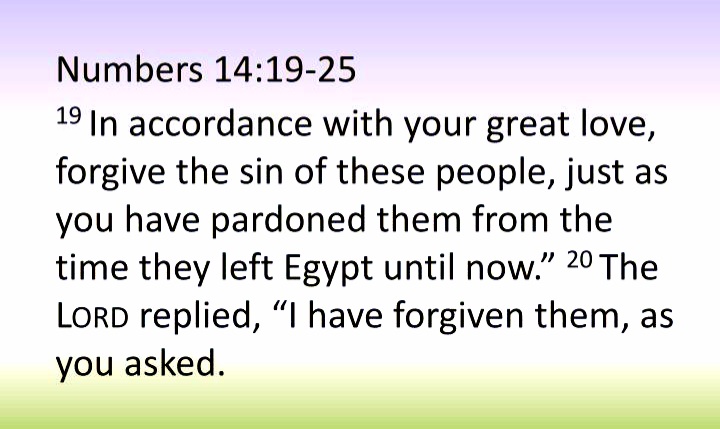
God’s Judgment, Numbers 14:22-23
As I was looking at the ten times, I realized that each time, in addition to the testing of God by an ungrateful nation of former slaves, God delivered a judgment and even a miracle, showing how these two things were associated in Israel’s history. I also noticed that the key to the judgment of God being limited to the instigators, instead of affecting the whole Nation, was the faithful intercession for the Israelites by Moses. That was one of the most awesome parts of this study, how often God extended mercy, but ONLY IN RESPONSE TO PRAYER.
Since walking through those 10 incidents in Exodus and Numbers would be extensive, I’m not going to present them in detail, but here’s the list if you’d like to go to the chapters and read about “these ten times,” when the Israelites grumbled, disobeyed, or doubted God’s power and provision after leaving Egypt, and then God’s acts of judgments in response.
1. Red Sea Panic (Exodus 14:11–12): Being afraid of Pharaoh’s army, saying they should have stayed in Egypt.2. Complaint About the Bitter Water at Marah (Exodus 15:23–24): Grumbling about the lack of drinkable water and wanting to go back to Egypt.3. Complaining in the Desert of Sin (Exodus 16: 2–3): Grumbling over lack of food and wishing to return to Egypt.4. Hoarding Manna (Exodus 16:19–20): Disobeying God’s instructions by keeping extra manna overnight so that it rotted.5. Attempting to collect Manna on the Sabbath (Exodus 16:27–29): Disregarding the command to rest on the seventh day.6. Lack of Water at Rephidim (Exodus 17:2–3): Testing God by complaining about thirst, questioning if He was even among them.7. The Golden Calf Worship (Exodus 32:7–10): Engaging in idolatry and breaking the covenant.8. Complaints at Taberah (Numbers 11:1–2): Complaining about their hardships before God.9. Craving Meat (Numbers 11:4–34): Lusting for the variety of Egyptian food and despising the sameness of the manna.10. Rebellion of the Ten Spies (Numbers 14:1–4): Refusing to enter the Promised Land and wanting to go back to Egypt after hearing the bad reports of ten of the spies.
These ten events represented failures of Israel to trust God’s faithfulness, despite witnessing His miracles, ultimately leading to that generation being barred from entering the Promised Land, and instead wandering for 40 years in the wilderness until they were all dead and buried.
After reading through those 10 instances of rebellion by Israel, the interceding prayers by Moses (NOW I see why he was such a great man of God and leader for God’s chosen people), and the 10 judgments of God, I had this reaction…
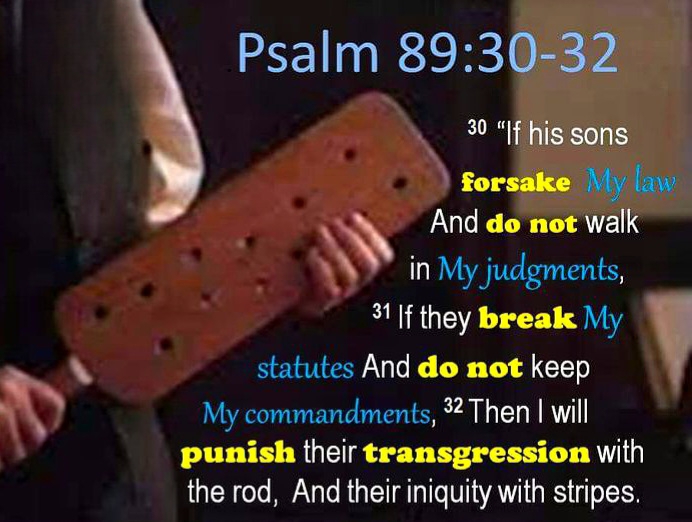
Whew! There is some serious harshness displayed by God toward His chosen people when they rebelled against Him, even in what we would consider a small thing like grumbling and complaining. Yet, David placed God’s judgments on par with His miracles (smaller scale) and His mighty acts (larger scale) in this psalm of praise.
I don’t think I would feel quite the same way if I suffered judgments from God like these, but remember, David was a “man after God’s own heart.” Might that mean David had a unique ability to appreciate God’s heart that maybe the rest of us lack?
But I have to be honest here, I HAVE suffered one of those judgments and I DO feel the same as David about it, that God’s judgments are perfectly fair. He gave me plenty of time to repent and obey Him, decades in fact. However, as much as I tried, I seemed to be powerless. I have no complaints that He has afflicted me because now I’m in a better position in my life to serve Him in ministry, and that has been a lifelong desire I was never able to realize.
Maybe remembering God’s past judgments is another way to be motivated to remember to OBEY God? Maybe if remembering His miracles and mighty works doesn’t generate enough “awe of God” to keep you “on the straight and narrow,” maybe remembering that He is also a God of judgment will inspire enough “fear of God” to do so?
So, there always looms the possibility that if NOTHING keeps you on the path of obedience to God, you’ll get to experience one of those scary judgments yourself. I think that might have been David’s point, if the Nation of Israel did NOT remember to obey God, for whatever reason, they could expect JUDGMENT from God…and that is EXACTLY what happened down the road in Israel’s history.
So, whatever the explanation might be for David praising God for His judgments, as well as His miracles, this week let’s…,
Remember Who God is #3. 1 Chronicles 16:11-12 – He is a God of strength, wonders, miracles, and fairness, but most important of all, He is SEEKABLE.
Since we have two verses again, let’s look at them in separate blogs.
1 Chronicles 16:11 in some other versions:
“Look to the LORD and His strength; seek His face always.” (NIV)
“Search for the LORD and for His strength; continually seek Him.” (NLT)
“Seek the LORD and His strength; Seek His face evermore!” (NKJV)
The context of 1 Chronicles 16 is the installation of the Ark of the Covenant in a tent (tabernacle) in Jerusalem. These verses are part of a psalm of praise and thanksgiving written for the event by King David.
The common Hebrew poetry technique of repeating a statement using different words is in evidence here. To SEEK Yahweh (the LORD) means the same as, To SEEK His prescence.
The modifier is to seek ALWAYS, and then the thing Israel is to seek is God’s STRENGTH, and the implication is… INSTEAD of their own.
The context helps us to understand that the mercy seat on the lid of the ark is where God can be sought AND FOUND by Israel, and where His strength can be obtained via prayer and supplication.
The Ark of the Covenant was designed by God, but built by Israel. It was designed to be the place where a portion of God actually lived with the Nation as a continual sign of His Presence and His blessing.
We have a similar privilege through Jesus Christ. The part of God that lives with each of us is His Holy Spirit and the ‘seat’ where He stays is the throne of our heart. As a result of the indwelling of God’s Spirit, Paul could write:
Do we really believe that? Do we always take the time to seek God/Jesus Christ first and receive His strength to do the things that He wants us to do?
A foundational verse about faith is Hebrews 11:6:
There are several aspects of this verse that relate to seeking God. First we must come to Him in faith. If we don’t believe that He even exists, then we won’t bother coming to Him. Secondly, we must truly believe that God will grant our requests. In other words, our faith in Him pleases God, however, He rewards us because that is His nature–to love us as His children.
That’s also what ‘waiting on the Lord’ is all about. When we’ve prayed and asked God/Jesus to do something that we realize we cannot do in our own strength, we have to TRUST that He will answer our prayer and wait for it.
So, when you’re having a problem and don’t know how you’re going to deal with it, remember:
Our theme for April is Remember Who God is. Tge second part od our second verse, Psalm 103:2-3, tells us He heals all our diseases.
Divine healing can sometimes be a sticking point to faith in Jesus Christ. There is no doubt God and Jesus supernaturally healed people in the Bible. I have heard many stories and testimonies of God/Jesus supernaturally healing people today. “Why some, though, and not others?” is the frequent question. Let’s look more closely at the Hebrew word that David used.
A. Heal (H7495) rapha. Root meaning is to stitch back together, to mend. As applied to people, it means to make whole from an infirmity or cure from a disease.
The best known use of this Hebrew word, rapha, is in Exodus 15 where, after turning bitter waters into sweet water, Moses stated this as one of the titles of their God, Jehovah Rapha.
B. Disease (H8463) ta’chalu , a strengthened form of the Hebrew word chala, to be sick, meaning here a grievous sickness, illness or disease; also called a malady or infirmity. This would be something more than the common cold or other everyday illness or injury that we can expect to normally recover from on our own.
This word is used in reference to the ten plagues God inflicted on Egypt. God promises Israel that He would not do the same to them AS LONG AS THEY OBEY HIS COVENANT. If/when they disobey…, all bets are off.
The implication of where and when this word is used in the Old Testament, in my opinion, is that when the nation disobeyed they are afflicted, if they repent and return to God, He will then forgive them and heal them from the associated diseases.
This understanding is reflected often in the New Testament. The difference is they focused on it as an individual thing rather than corporate punishment for the nation as a whole. One example was when Jesus and His disciples encountered a man blind since birth:
It wasn’t just the blind who were considered afflicted in Jesus’ day, it was the deaf, the dumb (could not speak), the lame, the leper and the paralyzed. When John the Baptist, locked away in Herod’s prison, needed reassurance that Jesus was indeed the Messiah, Jesus sent his disciples back with this message:
The message was that Jesus was delivering/healing the people from their afflictions, just like God did for Israel in the past, and also as prophesied by Isaiah that the Messiah would do!
When the paralyzed man was lowered down through the roof in front of Jesus, Jesus said, ‘Your sins are forgiven you.” Obviously there was a connection between his sin and his paralysis.
James, the brother of Jesus, applies this truth about the relationship between sin and sickness in the other direction–healing, THEN forgiveness. In James 5:14-15:
“Is any among you sick? Call for the elders of the church, and let them pray over him, anointing him with oil in the name of the Lord. And the prayer of faith will save the sick, and the Lord will raise him up. AND…
There seems to be a ‘before Christ death’ and an ‘after Christ death’ effect going on in relationship to what and how God heals between the Old Testament/gospel’s perspective on the relationship between sin and disease, and the epistles/modern perspective after the atoning sacrifice of Christ’s death on the cross.
The Scriptures seem to be saying that those living in sin, whether not yet saved or saved and fallen away, that illnesses associated with their sinful state will be healed when they repent and are either saved or restored. Sounds kind of harsh, and I’m sure there is much, much more to it.
So, until we figure it out…or not, remember about God from Psalm 103:2-3…