#4 Psalm 40:10 – Declare God’s faithfulness to others.
Psalm 40 starts out with a description by David, in general terms, of how God has answered his prayers in the past and delivered him from troubles that he could not extricate himself from, and then reestablished him in a place of confidence and security.
Psalm 40 isn’t so much a prayer as it is a prayer report. David is testifying how when he was having a hard time, he prayed to his God, Yahweh, and now David is sharing what God did in response to his prayers.
When God does something good for us today, do we testify about it afterwards? Our testimony might help someone else struggling with their faith or a similar problem. Testifying about God’s grace in our lives can even strengthen our own faith and our own sense of God’s goodness.
The good that God does isn’t always exactly what we might have asked for, but that is not a reason to not testify about it. In fact, it becomes an essential element–showing how God is not like a ‘genie in a bottle’ that we bring out whenever we need to make a wish. He is the Sovereign God, Lord and Creator of the Universe, with His own agenda for the World and for where He wants to fit us into it.
Our theme verse this week, Psalm 40:10, is actually the continuation of a point started in verse 9.
The Hebrew word translated here as ‘great assembly,’ was translated in the Septuagint as ‘ecclesia,’ which is the word used in the New Testament for ‘church.’ From the context, the ‘righteousness’ that David is proclaiming is God’s righteousness.
So we get the picture here that David is not just sharing about what God did for him with individuals, that he is not just sharing with small groups of friends, but that he was testifying to everyone when the Jews got together in one of their great assemblies three times a year. As the king, David spoke to the great assembly. As a ‘man after God’s own heart,’ his testimony was that he did not neglect to proclaim how God had answered his prayers for help since the last assembling. He even called God to be a witness by saying in effect, “As You Yourself know.”
David’s use of the negative to state a positive is an interesting way of making his point. He also uses the Hebrew method of parallelism in these two verses where the same point is made using different statements. Here is a list of the 5 things that David “did not neglect to do.”
A. Proclaim God’s righteousness, B. Speak of God’s faithfulness, C. (Speak of God’s) salvation, D. Reveal God’s acts of love, E. (Reveal God’s) faithfulness to His covenant.
Psalm 40:9-10 can also be looked at as a model of how to give a testimony, both in church and individually to others. Check out part B of the blog for some ideas along those lines. It is the real meat of my study this week.
Until then, don’t forget to proclaim God’s faithfulness!
I’ve been looking at an overview of the 5 books of Psalms this week. ‘Psalms’ comes from the Greek Septuagint translation of the Hebrew name for the book which means “praise.” Later it was changed to the “Book of Praise.”
Psalm 36 is in the last set of Psalms in Book 1, comprising Psalms 34 to the end, Psalm 41. Some label this set as the ‘Spiritual Warfare Psalms,’ because they deal with the conflict of the wicked against God and the righteous, and the protection and deliverance that God offers the righteous.
Psalm 36 is divided into 3 main sections with a conclusion:
1 Contemplating the wicked, verses 1 to 4.
2. Contemplating God:
a. His character, verses 5 to 7a.
b. His protection, verses 7b to 9.
3. Prayer for continuing protection against the wicked, verses 10 and 11.
4. Concluding comment on the fate of the wicked, verse 12.
The “meaningful center” of the psalm includes our theme verse for this week and the next one, Psalm 36:5,6.
Every time I read this psalm, I think of a great contemporary worship song based on it.
Your Love, Oh Lord (Psalm 36), by Third Day
I can’t think of anything better to do than to use this psalm for it’s intended purpose–to worship the Lord God, Yahweh, with its words and this song. For variety, I’ve included the lyrics in some other languages, as well.
SPANISH: Tu amor, O Señor, llega hasta los cielos.
GERMAN: Deine Liebe, O Herr, reicht bis an den Himmel.
LATIN: Amor tuus, O Domine, usque ad caelum pervenit.SPANISH: Tu fidelidad… llega hasta los cielos.
GERMAN: Deine Treue… reicht bis an den Himmel.
LATIN: Fides tua… usque ad caelum pervenit.
SPANISH: Tu justicia… es como los montes imponentes.
GERMAN: Deine Gerechtigkeit… ist wie die mächtigen Berge.
LATIN: Iustitia tua… sicut montes excellentes.
SPANISH: Tu justicia fluye… como la marea del océano.
GERMAN: Deine Gerechtigkeit strömt… wie die Flut des Ozeans.
LATIN: Iustitia tua fluit… sicut aestus oceani.SPANISH: Y alzaré mi voz… Para adorarte, mi Rey.
GERMAN: Und ich werde meine Stimme erheben.. Um dich, meinen König, anzubeten.
LATIN: Et vocem meam extollam… Ut te, Regem meum, adorem.SPANISH: Yo encontraré mi fuerza… Bajo la sombra de tus alas.
GERMAN: Ich werde meine Kraft finden… Im Schatten deiner Flügel.
LATIN: Inveniam vires meas… In umbra alarum tuarum.
(Repeat as desired)
Worshipping God in song in any language is just awesome. It is what we will be doing in heaven, according to Revelation, with people from “every tongue” singing in all languages at the same time. I hope singing worship songs to God is a regular part of your personal devotion, and using the Psalms, the original “Book of Praise”, is a good source to use.
#1. Lamentations 3:22-23 – Great is God’s Faithfulness!
We are down to the last 4 of the 26 verses for 2026 and “Remember God’s Faithfulness” is the theme for June. We’re starting off with one of the greatest verses from the Old Testament about God’s faithfulness.
The Book of Lamentations was written by the prophet Jeremiah during the Babylonian destruction of Jerusalem and exile of its people —a time of immense national tragedy and despair.
Jeremiah lamenting in the ruins of Jerusalem, by Eduard Bendemann, 1837
Right in the middle of this dark, grieving book, Jeremiah pauses to reflect on God’s character.
(Interlinear) It is through the mercies of Yahweh That we are not consumed, Because His compassions never fail, they are new every morning. Great is Your faithfulness!
Let’s look a little more closely at the key words that Jeremiah used to describe God.
1. The mercies of Yahweh… (H2617, ḥas·ḏê), from the Hebrew word for kindness = favor, a good deed, goodliness, goodness, kindly, kindness, lovingkindness, merciful, mercy, pity.
That we are not consumed = Completed, finished, cease.
Put these together and we see that despite hardships, human mistakes, or consequences, God’s lovingkindness is never ending.
God WILL NOT end His relationship with those He has covenanted with. He did not end it with Abraham or his descendents when they erred. God didn’t end His covenant with Israel through Moses when the people erred. And God will not end His covenant with us who have believed through Jesus Christ. That doesn’t mean there won’t be discipline for sinning, but what it DID mean is He would not continue to discipline Israel until they were ended, nor will He end His relationship with us when we stray. There is always a limit to His discipline–that is when His mercy kicks in.
2. His compassions (H7356, ra·cḥăm.) = tender love, tender mercy, pity, “bowels of compassion”.
…never fail, they are new every morning… God does not hold onto grudges or run out of patience. Each day is a clean slate; His forgiveness and grace are fresh and ready to be dispensed again with every new day.
3. …great is Your faithfulness! (H530, ’ĕ·mū·nā.) God’s reliability doesn’t depend on human perfection, but entirely on His own unchanging character.
Jeremiah’s subject was Israel, the people of God. His perspective of who God is, even in the middle of the losing war, defeat, and exile was that God would not allow Israel, His chosen people, to be totally destroyed by Babylon. Jeremiah’s trust was in the innate mercifulness of God.
Detail of Jeremiah, by Michaelangelo, painted between 1508 and 1512 on the Sistine Chapel ceiling.
Despite the nation being punished for their transgressions of the covenant, despite the penalty clause being invoked, despite Jeremiah’s abject grief leading to the writing of these Lamentations, still, STILL he cannot forget who God is, who He had revealed Himself to be.
How does Jeremiah know these things about God? In Exodus 34, we have a direct, personal revelation of God to Moses about Himself. This revelation is the most quoted one in the Old Testament.
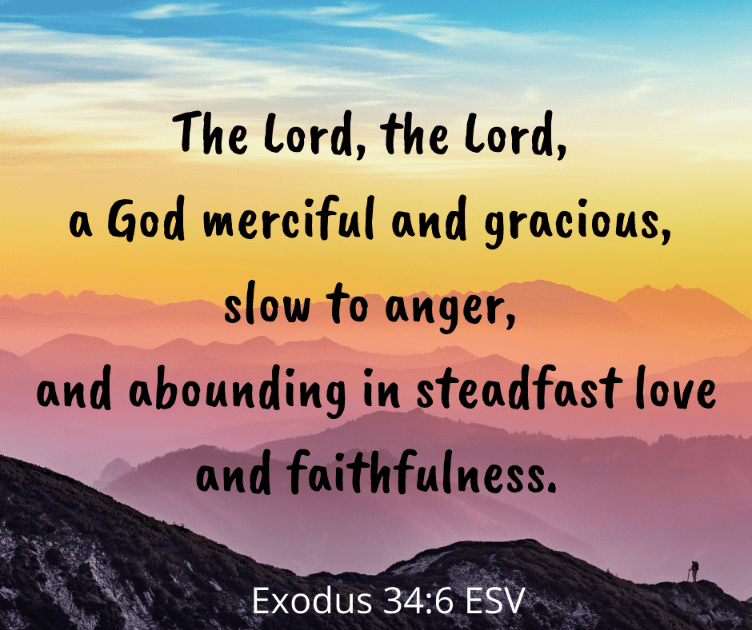
(Interlinear) And Yahweh passed before (Moses’) face and proclaimed, ‘Yahweh, Yahweh, a merciful (H7349, ra·ḥūm) and gracious, (H2587, ḥan·nūn;) God; slow to anger, and abounding in lovingkindness (H2617 ḥe·seḏ) and faithfulness.’ (H571, ’ĕ·meṯ.)
Note that the three qualities of God in Lamentations 3:22,23–merciful, compassionate and faithful–are also three of the five qualities God revealed about Himself to Moses. THIS is where Jeremiah learned who God is–a God of mercy and compassion.
Reading about how God interacted with Israel in their extended journey to the Promised Land, Jeremiah could see, as we can also read and see, how often God balanced His judgment and discipline of Israel with compassion and mercy.
That Jeremiah could pause in the middle of his Lamentations and bring this comforting truth to mind is, in my opinion, what we also need to be able to do in the middle of our own personal difficulties and tragedies.
Therefore, it would be helpful to spend time this week reflecting on Lamentations 3:22-23 and REMEMBER HOW GREAT IS GOD’S FAITHFULNESS.
___________________
PRAISE and WORSHIP:
I heard on the radio while I was writing some of this blog a snippet of one of my favorite praise songs, Great Are You Lord. After reading these verses on God’s great faithfulness, using that song to help praise God feels like an appropriate response.
___________________ ADDENDUM:
Some other places where Exodus 34:6 is quoted in the Old Testament:
1. Moses quoted God’s revelation of Himself several times:
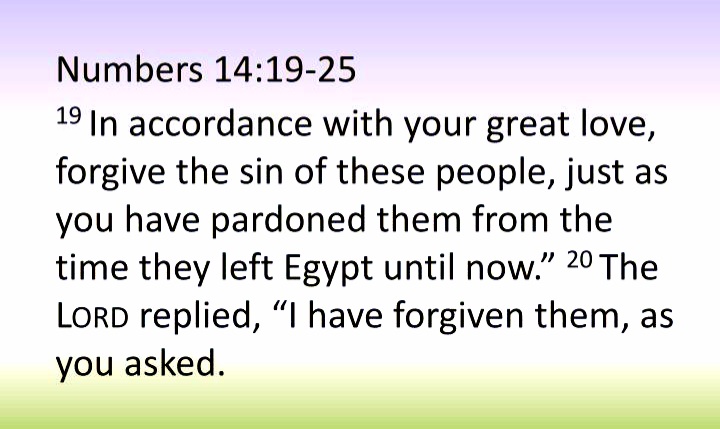
Moses refers to God’s revelation of His character when interceding for the rebellious Israelites–kind of talking God into living up to His declaration of being merciful.Moses quoted the second half of God’s revelation, Exodus 34:7, when reviewing the 10 Commandments with the next generation as a reminder that God WILL punish them if they disobey.
2. Other prophets besides Jeremiah quoted God’s revelation from Exodus 34:6:
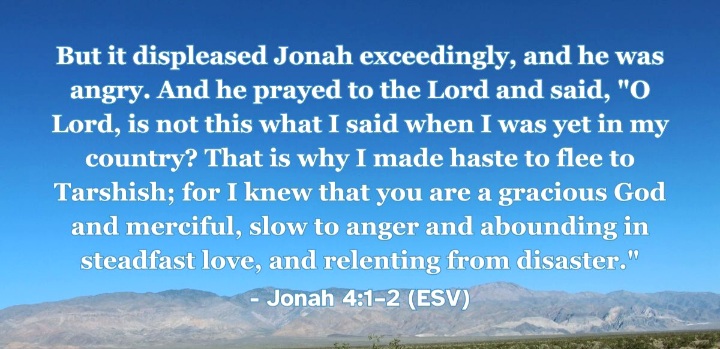
The prophet Joel exhorted Israel to repent because they could depend on God’s forgiving nature.Jonah complained to God and said that was why he didn’t want to go to Nineveh in the first place, because he knew God would end up forgiving them anyway.
3. There are quotes of Exodus 34:6 scattered throughout David’s Psalms:
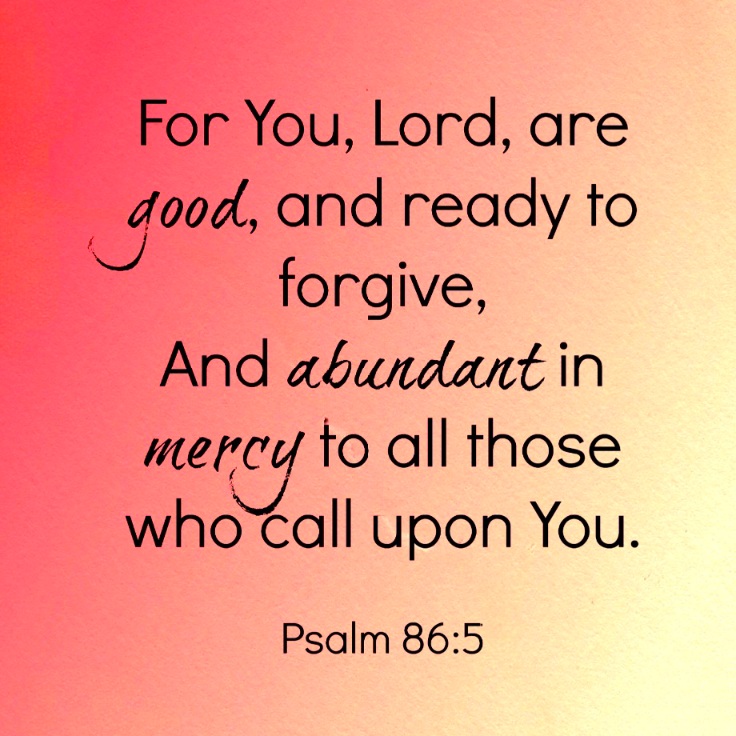
In Psalm 86:5 & 15: David quotes this revelation twice as the basis of his prayers,
“…save your servant who trusts in You. You are my God; have mercy on me, Lord, for I call to You all day long….”
In Psalm 103, David quotes Exodus 34:6…
…and uses it as the basis for his understanding of God’s awesome forgiveness:
“As far as the east is from the west, so far has He removed our transgressions from us.” Psalm 103:12
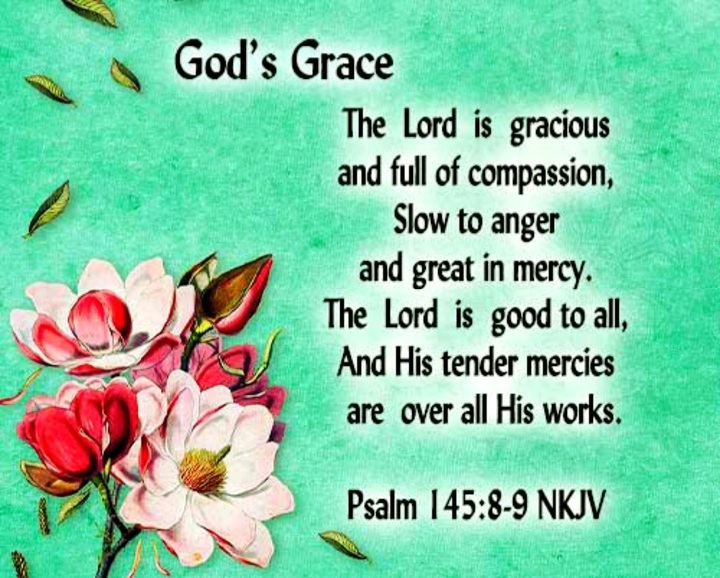
In Psalm 145, an awe-inspiring psalm of praise to his God, Yahweh, David includes the quote of Exodus 34:6…
…and then concludes, “The Lord is good to all…”
________________________ CONCLUSION:
God’s revelation of who He is in Exodus 34 forms much of the foundation for understanding God’s interaction with the nation of Israel in the Old Testament.
It also forms the foundation for understanding God’s ultimate act of mercy and compassion, when He sent His Only Begotten Son, Jesus Christ, into the world to die in payment for the sins of all humankind.That is the God Jesus brings us to when we believe in the gospel and respond to it in humility, repentance and obedience. Do that today if you’ve never responded before.Do that every day if you already have the first time, because God’s grace, His mercy, His forgiveness and His love are as necessary to receive every day for our spiritual life as air, food, and water are for our physical life. Amen!

























 Bill's Bible Blog